
Skip to content
  • Facebook
  • X
  • Linkedin
  • WhatsApp
  • YouTube
  • Associate Journalism
  • About Us
  • Privacy Policy
  • 033-46046046
  • editor@artifex.news
Artifex.News

Artifex.News

Stay Connected. Stay Informed.

  • Breaking News
  • World
  • Nation
  • Sports
  • Business
  • Science
  • Entertainment
  • Lifestyle
  • Toggle search form
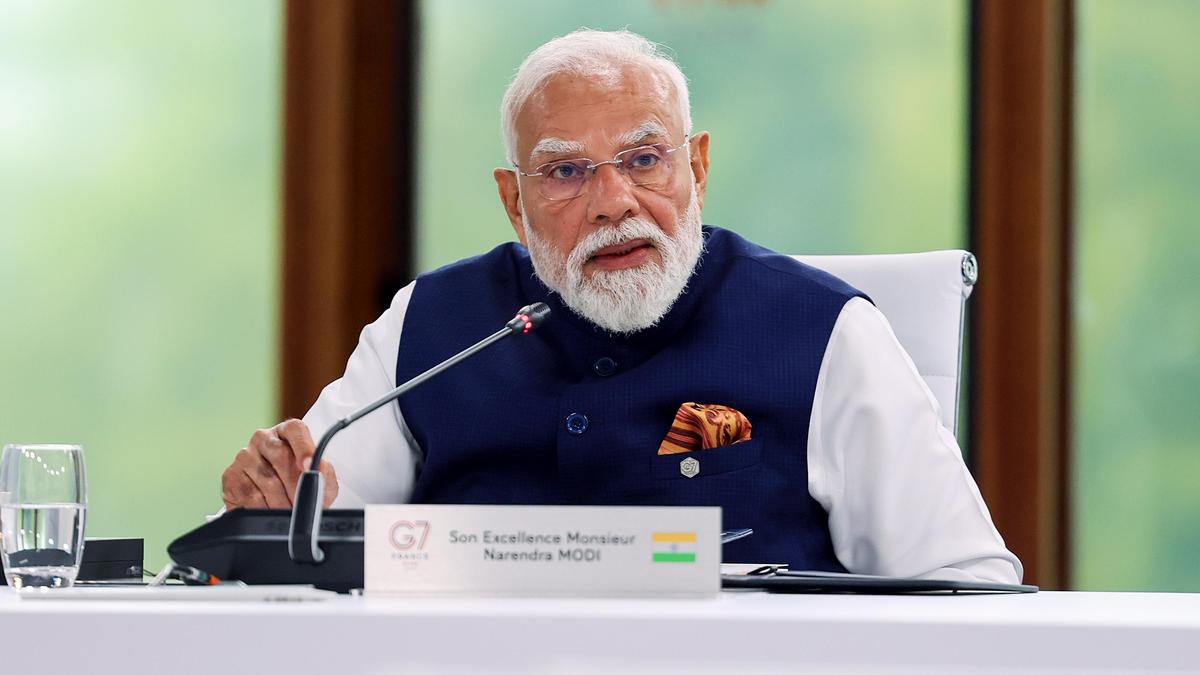
  • World suffers from shortage of trust: PM Modi to G7 leaders
    World suffers from shortage of trust: PM Modi to G7 leaders World
  • Access Denied Business
  • Access Denied World
  • Gautam Gambhir Wanted Cheteshwar Pujara For Australia Tour, Stunning Selection Details Emerge
    Gautam Gambhir Wanted Cheteshwar Pujara For Australia Tour, Stunning Selection Details Emerge Sports
  • Air India board meets to discuss incoming CEO’s salary, other matters
    Air India board meets to discuss incoming CEO’s salary, other matters Business
  • Leaders in Nepal, India call for engagement to prevent isolation of Nepal
    Leaders in Nepal, India call for engagement to prevent isolation of Nepal World
  • Access Denied
    Access Denied Nation
  • The Hindu Morning Digest – April 29, 2024
    The Hindu Morning Digest – April 29, 2024 World
Making health system push economic growth: a case of missed opportunity

Making health system push economic growth: a case of missed opportunity

Posted on February 3, 2025 By admin


To make our economy grow, we need to push private consumption. To increase private consumption, people need more disposable income. For that, one route is to reduce the money an ordinary person spends on basics such as health and education. The Union Budget 2025-26 seems to have missed this opportunity. We need to focus on ensuring higher uptake of public health facilities. A third-term government with stability and continuity can take higher risks to push for bolder programmes and structural changes. But the Budget does not seem to indicate this direction. It is business as usual.

The key department within the Health ministry, the Department of Health and Family Welfare (DoHFW), which runs most of the critical public health programmes, saw a meagre 11% increase in its annual Budget Estimates (BE) from last fiscal year’s (FY25) Revised Estimates (RE). This year’s increase has been the lowest in three years. When we compare what has been allocated in a given year versus what was fully spent by the department in the previous year, the limited financial envelop of the department becomes even more stark. We have data on actual spends by the DoHFW till 2023. In 2023, the actual spend was ₹80,292 crore and in 2024 the RE to the DoHFW was a mere 7.8% higher at ₹86,582 crore. Since 2021, a rise in allocations when compared with actual spends in the previous years has been between 6% and 8% only. This excludes the year 2022-23 when the money available to DoHFW fell by 7% from the actual spending the previous year in 2021-22.

Within health, the focus remains on the national level insurance programme- the Pradhan Mantri Jan Arogya Yojana (PMJAY), for which allocations have risen by 24% from last year’s RE. And a 41% higher allocation this year from actual usage in 2023, which is the latest data available. For the National Health Mission (NHM), the increase in allocations from 2024 (RE) to this year’s Budget is a meagre 3.4%. The urban component within NHM has increased allocation from last year (2024) Budget (RE) by a mere 4.3%. This is particularly worrying for NHM. It’s a national level programme covering rural and urban health. With slowing economic growth, its implications for jobs and wages, under financed and weak health system for rural and urban poor creates perfect conditions for a health crisis, and could further pull-down economic growth. What is most interesting about the NHM is that it is one of the government’s programmes that has been spending more than what has been estimated in that year every year since 2015, except in 2021- the pandemic year, when allocations were higher than the spends. The allocation is increased in the next year when compared with the actual spend in the previous one but the increase is a paltry amount at its best.

Insurance programmes increase the availability of hospital options by roping in private facilities. But by its nature, in an insurance-led health system, the focus remains on secondary and tertiary care and curative services. A public health system, on the other hand, provides primary care — basic illnesses, routine health check-ups, etc. and also preventive and proactive services which are not covered by insurance. Private hospitals can become options for eye surgery and with insurance, they become easily accessible to the poor but all other ailments need primary care, which isn’t in the ambit of insurance.

The Budget does not reveal numbers for primary care services, which it has been providing through the Health and Wellness Centres, but the NHM and NUHM estimates reveal that there haven’t been any meaningful rise in allocations.

Close to 50% of our health care is provided by the private sector, according to the most recent National Family Health Survey 5 data (2019-2021). At the primary care level, only 10% visit a government PHC in rural areas. In urban areas, this further reduces to 5%. But, there is immense pent up health demands, which insurance does not cover. Taking the example of urban primary care in parts of Rajasthan. When compared with hospitals, private clinics, etc. per day UPHC visits are very low, they exceed the capacities of many top class UPHCs. In places like Jaipur, Udaipur and Ajmer in Rajasthan, per day UPHC load goes up to 250 for many of the well-functioning, well-located accessible UPHCs. It appears that even though UPHCs are fulfilling a very small load of health services, they are providing a lot despite limited capacity.

But in many cases, the challenge is the lack of facilities. Karnataka, for example, has a 38% UPHC deficit. There are similar deficits of staff including specialists, Auxiliary Nurse-Midwifes, pharmacists, health programmes mangers nationwide. Uptake of facilities falls when staff is not available, or, if the time per visit is long.

While our out-of-pocket expense (OOPE) has fallen from 63% in 2014 to 39.4% in FY2021-22 as per the most recent available data provided in the National Health Accounts (NHA), it still remains high by global standards. According to a WHO’s global health expenditure database, India remains in the category of countries with the second highest range of OOPE in the world at 46% in 2022.

Low overall allocations to health when matched with a focus on insurance also means that we are really excluding the ‘middle classes’ – the ones whose consumption can fuel growth and the ones who need the extra spending capacity. But these are the classes who are not covered by the insurance programmes and rely on the public system to reduce health care expenses, particularly in urban India. And it’s this stratum, which will be much affected by the lukewarm Budget allocations to health.

As the year unfolds, the government will be well advised to revisit its health allocations and redirect its focus on the NHM. Within this, a strong focus on primary care, both for improving infrastructure and increasing staff hiring is fundamental to raising uptake and reducing time to care.

An economic growth led by a strong public health sector will be a sustained and rooted one, resistant to external shocks and responsive to new challenges. It’s time the Budget priorities align with this ideal.

(The writer is Fellow, Centre for Social and Economic Progress (CSEP). The views expressed are personal.)

Published – February 03, 2025 07:29 am IST



Source link

Business Tags:health system, Making health system push economic growth, National Health Accounts, out-of-pocket expense, primary care and health system resilience

Post navigation

Previous Post: With DeepSeek, are India’s foundational AI model dreams closer to reality?
Next Post: Rupee plunges 67 paise to hit record low of 87.29 against U.S. dollar in early trade

Related Posts

  • Rupee rises 8 paise to 87.50 against U.S. dollar in early trade
    Rupee rises 8 paise to 87.50 against U.S. dollar in early trade Business
  • Access Denied Business
  • Access Denied Business
  • Government approves 17 projects with ₹7,172 crore investment under electronics component manufacturing scheme
    Government approves 17 projects with ₹7,172 crore investment under electronics component manufacturing scheme Business
  • Access Denied Business
  • Auto retail sales up 11.21% in November riding on two-wheeler demand: FADA
    Auto retail sales up 11.21% in November riding on two-wheeler demand: FADA Business

More Related Articles

Access Denied Business
Markets will become less volatile after every phase of poll, says Jaishankar Markets will become less volatile after every phase of poll, says Jaishankar Business
Access Denied Business
SiteLock

Archives

  • October 2026
  • September 2026
  • August 2026
  • July 2026
  • June 2026
  • May 2026
  • April 2026
  • March 2026
  • February 2026
  • January 2026
  • December 2025
  • November 2025
  • October 2025
  • September 2025
  • August 2025
  • July 2025
  • June 2025
  • May 2025
  • April 2025
  • March 2025
  • February 2025
  • January 2025
  • December 2024
  • November 2024
  • October 2024
  • September 2024
  • August 2024
  • July 2024
  • June 2024
  • May 2024
  • April 2024
  • March 2024
  • February 2024
  • January 2024
  • December 2023
  • November 2023
  • October 2023
  • September 2023
  • August 2023
  • July 2023
  • June 2023
  • May 2023
  • April 2023
  • March 2023
  • February 2023
  • January 2023
  • December 2022
  • November 2022
  • October 2022
  • September 2022
  • August 2022
  • July 2022
  • June 2022
  • May 2022

Categories

  • Business
  • Nation
  • Science
  • Sports
  • World

Recent Posts

  • Search on after boat capsizes off Baja California coast; 16 rescued, others missing
  • Father of RG Kar victim upset with former principal’s bail
  • France demands Israel act after ‘criminal violence’ against visiting mayor
  • Andhra University delegation in U.S. for centenary outreach; MoU with University of Houston on the table
  • Rani Abbakka Chowta: the Warrior Queen of the Seas

Recent Comments

  1. RobertGat on UP Teacher Who Asked Students To Slap Muslim Classmate
  2. RobertGat on UP Teacher Who Asked Students To Slap Muslim Classmate
  3. RobertGat on UP Teacher Who Asked Students To Slap Muslim Classmate
  4. RobertGat on UP Teacher Who Asked Students To Slap Muslim Classmate
  5. Davidbrurf on UP Teacher Who Asked Students To Slap Muslim Classmate
  • Access Denied Sports
  • Who Are The 8 Indians Sentenced To Death In Qatar And What Is The Case Against Them?
    Who Are The 8 Indians Sentenced To Death In Qatar And What Is The Case Against Them? Nation
  • India-China talks: ‘Structural differences have not disappeared,’ says Chinese strategic affairs scholar
    India-China talks: ‘Structural differences have not disappeared,’ says Chinese strategic affairs scholar Nation
  • Top US Political Scientist To NDTV
    Top US Political Scientist To NDTV Nation
  • Access Denied World
  • Indian-origin ‘unsung heroes’ on King Charles’ 2025 New Year Honours List
    Indian-origin ‘unsung heroes’ on King Charles’ 2025 New Year Honours List World
  • Andhra Man Murders Wife With Sickle, Crowd Looks On, Films Brutal Attack
    Andhra Man Murders Wife With Sickle, Crowd Looks On, Films Brutal Attack Nation
  • Emmanuel Macron On Ratan Tata’s Death
    Emmanuel Macron On Ratan Tata’s Death Nation

Editor-in-Chief:
Mohammad Ariff,
MSW, MAJMC, BSW, DTL, CTS, CNM, CCR, CAL, RSL, ASOC.
editor@artifex.news

Associate Editors:
1. Zenellis R. Tuba,
zenelis@artifex.news
2. Haris Daniyel
daniyel@artifex.news

Photograher:
Rohan Das
rohan@artifex.news

Associate Journalists
1. Subrata Paul - AN/2020/01
2. Quamruz Zaman - AN/2021/22
3. Ahmed Sha - AN/2021/035
4. Ajay Kumar Shaw - AN/2021/39
5. Tahqiqul Hoda - AN/2021/21

Artifex.News offers Online Paid Internships to college students from India and Abroad. Interns will get a PRESS CARD and other online offers.
Send your CV (Subjectline: Paid Internship) to internship@artifex.news

Links:
Associate Journalism
About Us
Privacy Policy

News Links:
Breaking News
World
Nation
Sports
Business
Entertainment
Lifestyle

Registered Office:
72/A, Elliot Road, Kolkata - 700016
Tel: 033-22277777, 033-22172217
Email: office@artifex.news

Editorial Office / News Desk:
No. 13, Mezzanine Floor, Esplanade Metro Rail Station,
12 J. L. Nehru Road, Kolkata - 700069.
(Entry from Gate No. 5)
Tel: 033-46011099, 033-46046046
Email: editor@artifex.news

Copyright © 2023 Artifex.News Newsportal designed by Artifex Infotech.