Skip to content
  • Facebook
  • X
  • Linkedin
  • WhatsApp
  • YouTube
  • Associate Journalism
  • About Us
  • Privacy Policy
  • 033-46046046
  • editor@artifex.news
Artifex.News

Artifex.News

Stay Connected. Stay Informed.

  • Breaking News
  • World
  • Nation
  • Sports
  • Business
  • Science
  • Entertainment
  • Lifestyle
  • Toggle search form
  • India sets up its first diabetes biobank
    India sets up its first diabetes biobank Science
  • Access Denied Sports
  • Rishabh Pant Takes Kuldeep Yadav To Cleaners In Fiery Duleep Trophy Knock. Watch
    Rishabh Pant Takes Kuldeep Yadav To Cleaners In Fiery Duleep Trophy Knock. Watch Sports
  • Access Denied Sports
  • Access Denied World
  • What Delhi’s wilderness says about the city’s politics
    What Delhi’s wilderness says about the city’s politics Science
  • Access Denied Sports
  • Kangana Ranaut On Jyotirmath Shankaracharya’s Remark On Eknath Shinde: Will He Sell Golgappas
    Kangana Ranaut On Jyotirmath Shankaracharya’s Remark On Eknath Shinde: Will He Sell Golgappas Nation
How do bacteria resist antibiotics?

How do bacteria resist antibiotics?

Posted on February 8, 2025 By admin


The extensive use of antibiotics in health care has resulted in a rise in pathogenic bacteria and other microorganisms that are resistant to antibiotics. In the year 2021, about 1.2 million deaths worldwide were attributed to antimicrobial resistance to existing antibiotics. Surveys in Indian hospitals show that infections with drug-resistant bacteria have a 13% mortality rate. Therefore, the search for new antibiotics is a high-priority area of research.

Antibiotics literally means against life. But antibiotics are specifically used for killing bacteria and other microorganisms or for inhibiting their growth, without harming human cells.

Unique cell walls

A distinguishing feature of bacterial cells is the presence of a cell wall that forms a sheath over the cell membrane. Our cells do not have cell walls. Bacterial cell walls are primarily made of a unique substance called peptidoglycan, which is a mesh-like structure mostly made of two components.

Glycans are long chains of alternating sugar molecules called NAG (N-acetylglucosamine) and NAM (N-acetylmuramic acid). The NAM-NAG unit, linked into long chains, is unique to bacteria. This uniqueness makes it an important target for antibiotic development. Our immune system too looks for this signature to attack invading bacteria.

The ‘peptido’ portion of peptidoglycans are peptides (short amino acid chains) that link NAM sugars on adjacent glycan strands. The crosslinks form a strong, interconnected mesh. The first antibiotic to be discovered, penicillin, works by interfering with this crosslinking step. The result is a weakened cell wall that can no longer securely hold the cytoplasm, and the bacterial cell bursts open and dies.

Evolution of resistance

How did bacteria evolve resistance to penicillin? They came up with new enzymes, (e.g., penicillinase) which chop up penicillin molecules. Or, they evade antibiotic action by modifying the targets of penicillin.

Bacterial infection requires rapid division of bacterial cells, for which cell wall synthesis is needed. To understand bacterial cell division, let us use the children’s game LEGO as a simplified analogy. Picture a square cell that is six inches on each side, with walls made of LEGO tiles. To make this cell divide, you would add tiles to two opposite sides until it becomes a rectangle that is twelve inches by six inches. Then you would extend the walls along the middle, creating two six-inch square daughter cells. 

Real bacterial cells must synthesise their own wall material. And just as some links in a LEGO wall must be uncoupled to enable the addition of fresh tiles, bacteria selectively break and reform bonds within the existing wall to allow for growth and division. Before new cell wall components can be added, molecular scissors are used: enzymes called endopeptidases uncouple the peptide crosslinks, and lytic transglycosylases (LTs) cleave the backbone sugar chains. Both of these have to work in harmony, and the bacterial machinery that regulates this process is very complex — new components continue to be discovered.

The group of Dr. Manjula Reddy at the Centre for Cellular and Molecular Biology, Hyderabad, works on mechanisms that enable bacteria to precisely control cell division. In a study published last year in PLOS Genetics, they have shown that bacteria are clever and can make up for the loss of the crosslink-cutting scissors by making an excess of the chain-cutting LT scissors. New findings in this field facilitate a better understanding of how bacteria survive against all odds. Such insights will pave the way for new strategies to fight bacterial infections.

(The article was written in collaboration with Sushil Chandani, who works in molecular modelling. sushilchandani@gmail.com)

Published – February 08, 2025 10:00 pm IST


Source link

Science

Post navigation

Previous Post: Heart failure patients in India die 10 years earlier: study
Next Post: Tata Motors launches vehicle scrapping facility in Guwahati

Related Posts

  • By reusing old genes, bats became the only mammals able to fly
    By reusing old genes, bats became the only mammals able to fly Science
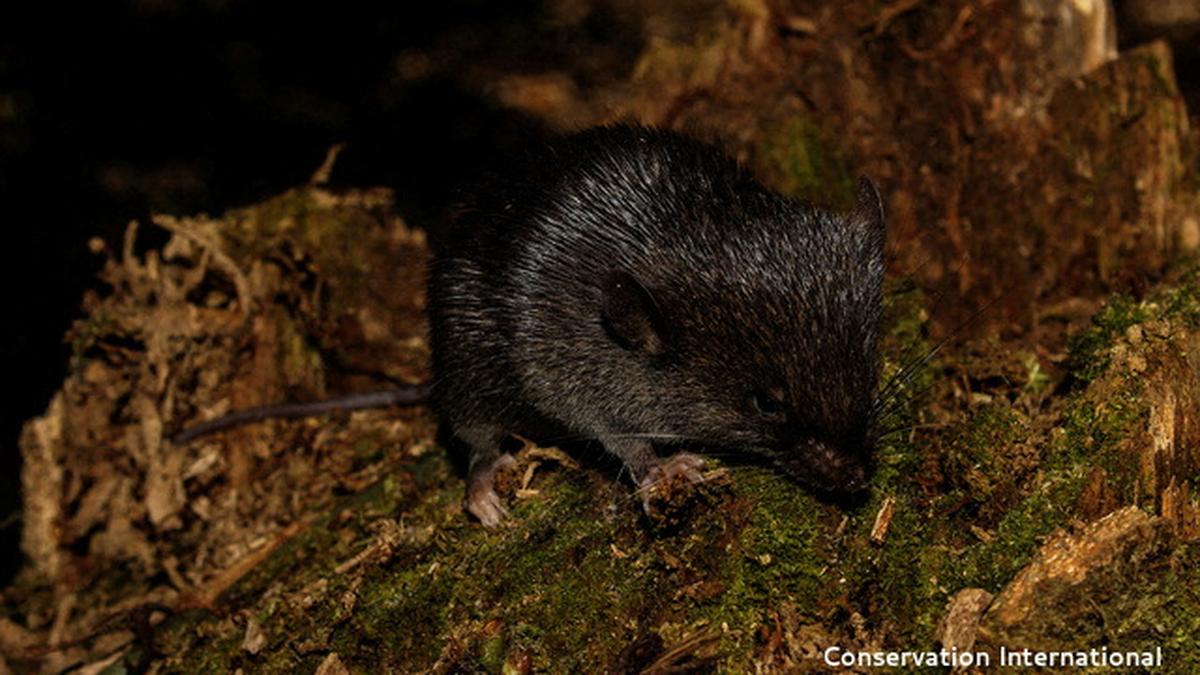
  • ‘Amphibious mouse’ among 27 new species discovered in Peru’s Amazon
    ‘Amphibious mouse’ among 27 new species discovered in Peru’s Amazon Science
  • Rising temperatures are leading to torrential rains in the Himalayas
    Rising temperatures are leading to torrential rains in the Himalayas Science
  • Negotiating a life with amyotrophic lateral sclerosis
    Negotiating a life with amyotrophic lateral sclerosis Science
  • What was the Chemistry Nobel Prize given for? | Explained
    What was the Chemistry Nobel Prize given for? | Explained Science
  • New discovery comes ‘close’ to challenging biology’s central dogma
    New discovery comes ‘close’ to challenging biology’s central dogma Science

More Related Articles

Brumation: Winter is coming for reptiles Brumation: Winter is coming for reptiles Science
Science for all newsletter How bird songs have evolved? Science for all newsletter How bird songs have evolved? Science
Questions arise over reproducibility in social, behavioural sciences Questions arise over reproducibility in social, behavioural sciences Science
Why you get better care when you stop nodding and start asking why Why you get better care when you stop nodding and start asking why Science
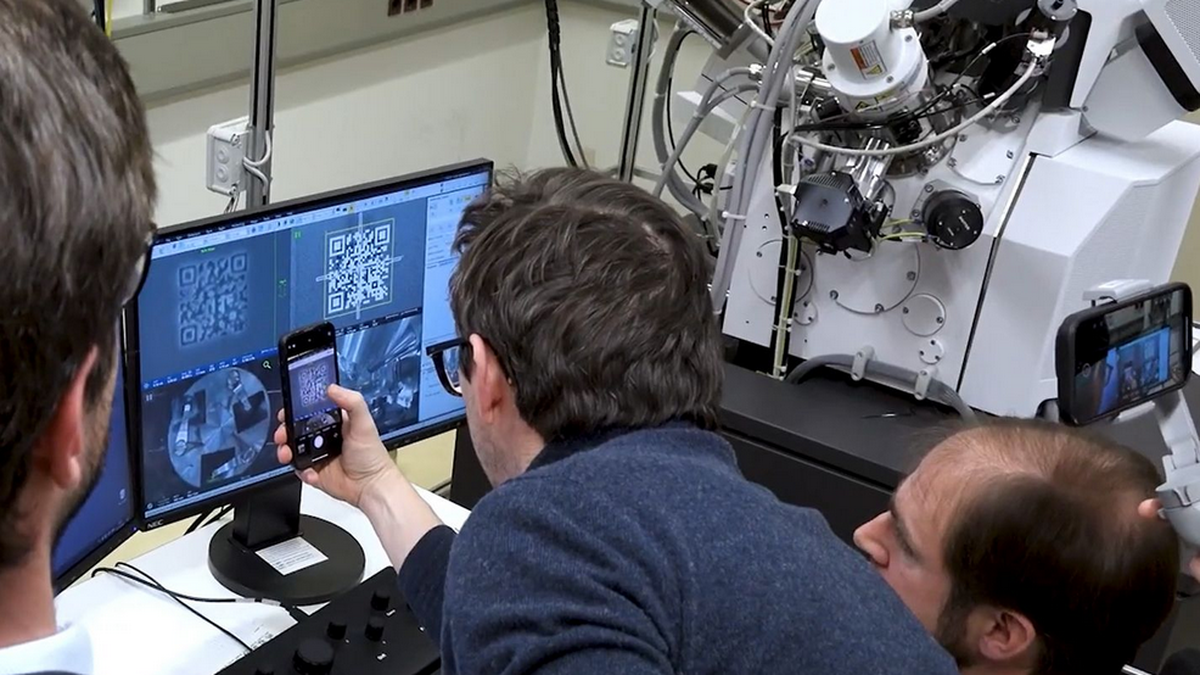
Team aims world’s smallest QR code at long-term data storage Team aims world’s smallest QR code at long-term data storage Science
SHAR expo at Andhra Loyola College on August 29 SHAR expo at Andhra Loyola College on August 29 Science
SiteLock

Archives

  • October 2026
  • September 2026
  • August 2026
  • July 2026
  • June 2026
  • May 2026
  • April 2026
  • March 2026
  • February 2026
  • January 2026
  • December 2025
  • November 2025
  • October 2025
  • September 2025
  • August 2025
  • July 2025
  • June 2025
  • May 2025
  • April 2025
  • March 2025
  • February 2025
  • January 2025
  • December 2024
  • November 2024
  • October 2024
  • September 2024
  • August 2024
  • July 2024
  • June 2024
  • May 2024
  • April 2024
  • March 2024
  • February 2024
  • January 2024
  • December 2023
  • November 2023
  • October 2023
  • September 2023
  • August 2023
  • July 2023
  • June 2023
  • May 2023
  • April 2023
  • March 2023
  • February 2023
  • January 2023
  • December 2022
  • November 2022
  • October 2022
  • September 2022
  • August 2022
  • July 2022
  • June 2022
  • May 2022

Categories

  • Business
  • Nation
  • Science
  • Sports
  • World

Recent Posts

  • Food safety officials inspect 100 sweet units on third day of drive, issue notices to 15
  • Central Bank of India Q2 net profit jumps 21% to ₹1,469 crore on higher core income
  • These are dark times for WI cricket, but I stay loyal: Roach
  • Himachal Pradesh hosts heavyweight Mumbai in ‘unfamiliar territory’
  • Cusat association requests V-C to revoke suspension of four officials

Recent Comments

  1. RobertGat on UP Teacher Who Asked Students To Slap Muslim Classmate
  2. RobertGat on UP Teacher Who Asked Students To Slap Muslim Classmate
  3. RobertGat on UP Teacher Who Asked Students To Slap Muslim Classmate
  4. RobertGat on UP Teacher Who Asked Students To Slap Muslim Classmate
  5. Davidbrurf on UP Teacher Who Asked Students To Slap Muslim Classmate
  • Kapp backs Jemimah’s leadership traits
    Kapp backs Jemimah’s leadership traits Sports
  • Chandrayaan-3 | Centre asks universities to organise special assemblies to watch Moon landing
    Chandrayaan-3 | Centre asks universities to organise special assemblies to watch Moon landing Science
  • T20 World Cup: Rashid Khan Refuses To Blame Teammates, Reveals Reason Behind Defeat To South Africa
    T20 World Cup: Rashid Khan Refuses To Blame Teammates, Reveals Reason Behind Defeat To South Africa Sports
  • Prudent approach: On the RBI’s interest rate-setting committee meeting
    Prudent approach: On the RBI’s interest rate-setting committee meeting Business
  • Hydrogen ‘tests’ basic physics more precisely after theory update
    Hydrogen ‘tests’ basic physics more precisely after theory update Science
  • Supreme Court upholds JSW Steel’s resolution plan for debt-ridden Bhushan Power and Steel
    Supreme Court upholds JSW Steel’s resolution plan for debt-ridden Bhushan Power and Steel Business
  • Access Denied Sports
  • Enforcement Directorate Mumbai attaches assets worth ₹43.52 crore in bank fraud case linking Ushdev International
    Enforcement Directorate Mumbai attaches assets worth ₹43.52 crore in bank fraud case linking Ushdev International Business

Editor-in-Chief:
Mohammad Ariff,
MSW, MAJMC, BSW, DTL, CTS, CNM, CCR, CAL, RSL, ASOC.
editor@artifex.news

Associate Editors:
1. Zenellis R. Tuba,
zenelis@artifex.news
2. Haris Daniyel
daniyel@artifex.news

Photograher:
Rohan Das
rohan@artifex.news

Associate Journalists
1. Subrata Paul - AN/2020/01
2. Quamruz Zaman - AN/2021/22
3. Ahmed Sha - AN/2021/035
4. Ajay Kumar Shaw - AN/2021/39
5. Tahqiqul Hoda - AN/2021/21

Artifex.News offers Online Paid Internships to college students from India and Abroad. Interns will get a PRESS CARD and other online offers.
Send your CV (Subjectline: Paid Internship) to internship@artifex.news

Links:
Associate Journalism
About Us
Privacy Policy

News Links:
Breaking News
World
Nation
Sports
Business
Entertainment
Lifestyle

Registered Office:
72/A, Elliot Road, Kolkata - 700016
Tel: 033-22277777, 033-22172217
Email: office@artifex.news

Editorial Office / News Desk:
No. 13, Mezzanine Floor, Esplanade Metro Rail Station,
12 J. L. Nehru Road, Kolkata - 700069.
(Entry from Gate No. 5)
Tel: 033-46011099, 033-46046046
Email: editor@artifex.news

Copyright © 2023 Artifex.News Newsportal designed by Artifex Infotech.