



Skip to content
  • Facebook
  • X
  • Linkedin
  • WhatsApp
  • YouTube
  • Associate Journalism
  • About Us
  • Privacy Policy
  • 033-46046046
  • editor@artifex.news
Artifex.News

Artifex.News

Stay Connected. Stay Informed.

  • Breaking News
  • World
  • Nation
  • Sports
  • Business
  • Science
  • Entertainment
  • Lifestyle
  • Toggle search form
  • Virat Kohli Irritated While Leaving For Australia Tests. Tells Fans, “Family Ko Rok Ke Thodi Na Selfie Lunga”. Watch
    Virat Kohli Irritated While Leaving For Australia Tests. Tells Fans, “Family Ko Rok Ke Thodi Na Selfie Lunga”. Watch Sports
  • Watch: ‘Hey Trump, you’re fired!’: Iran’s Revolutionary Guard mocks U.S President
    Watch: ‘Hey Trump, you’re fired!’: Iran’s Revolutionary Guard mocks U.S President World
  • Central Force Recce At Kolkata Hospital Where Doctor Was Raped, Murdered
    Central Force Recce At Kolkata Hospital Where Doctor Was Raped, Murdered Nation
  • Access Denied Sports
  • What to know about the BBC’s latest crisis after its apology to Donald Trump: Explained
    What to know about the BBC’s latest crisis after its apology to Donald Trump: Explained World
  • Gautam Gambhir Keen To Become India’s Head Coach, Says Report. But Has One Condition
    Gautam Gambhir Keen To Become India’s Head Coach, Says Report. But Has One Condition Sports
  • China’s Xi Jinping meets Serbian President Vucic; hails ‘ironclad’ friendship
    China’s Xi Jinping meets Serbian President Vucic; hails ‘ironclad’ friendship World
  • Access Denied
    Access Denied Nation
Retinal diseases: RNA therapeutics show promise but is India ready?

Retinal diseases: RNA therapeutics show promise but is India ready?

Posted on January 30, 2025 By admin


Vision is crucial to navigate the world, connect with others, and perform everyday tasks. It helps us perceive colours, shapes, and movement, which are essential to learn, work, and keep safe.

According to the World Health Organisation, more than 2.2 billion people worldwide experience some form of vision impairment. The causes range from cataracts and diabetic retinopathy to glaucoma, age-related macular degeneration, and inherited retinal diseases (IRDs).

IRDs are genetic conditions that lead to progressive vision loss, often resulting in blindness. These diseases stem from mutations in more than 300 genes responsible for the function of the retina, the light-sensitive tissue at the back of the eye. While some individuals may lose their sight shortly after birth, others experience gradual deterioration over time. In many cases, early intervention could slow down or even prevent the progression of blindness.

An estimated 5.5 million people suffer from IRDs around the world, with a prevalence rate of one in 3,450. However, the situation is more critical in India. Studies have revealed significantly higher prevalence, with one in 372 individuals in rural South India,one in 930 in urban South India, and one in 750 in rural Central India affected by these conditions.

A treatment breakthrough

In 2017, the U.S. Food and Drug Administration (FDA) made a historic move by approving the first gene therapy for blindness caused by mutations in the RPE65 gene. This approval sparked hope for patients with other genetic causes of blindness. Currently, more than 50 clinical trials are exploring gene therapy as an option to treat various inherited eye disorders.

In India, however, awareness among clinicians about the availability and potential of RPE65 gene therapy remains limited. While gene therapy has proven revolutionary, it is not yet a universal solution for all genetic eye diseases. This is where RNA-based therapies are poised to make a significant impact.

RNA-based precision therapeutics are emerging as a game-changer for genetic disorders, including IRDs. Unlike DNA or genome-editing therapies, RNA-based therapies offer a safer alternative as they make temporary changes that don’t carry over to future generations, reducing the risk of unintended long-term effects.

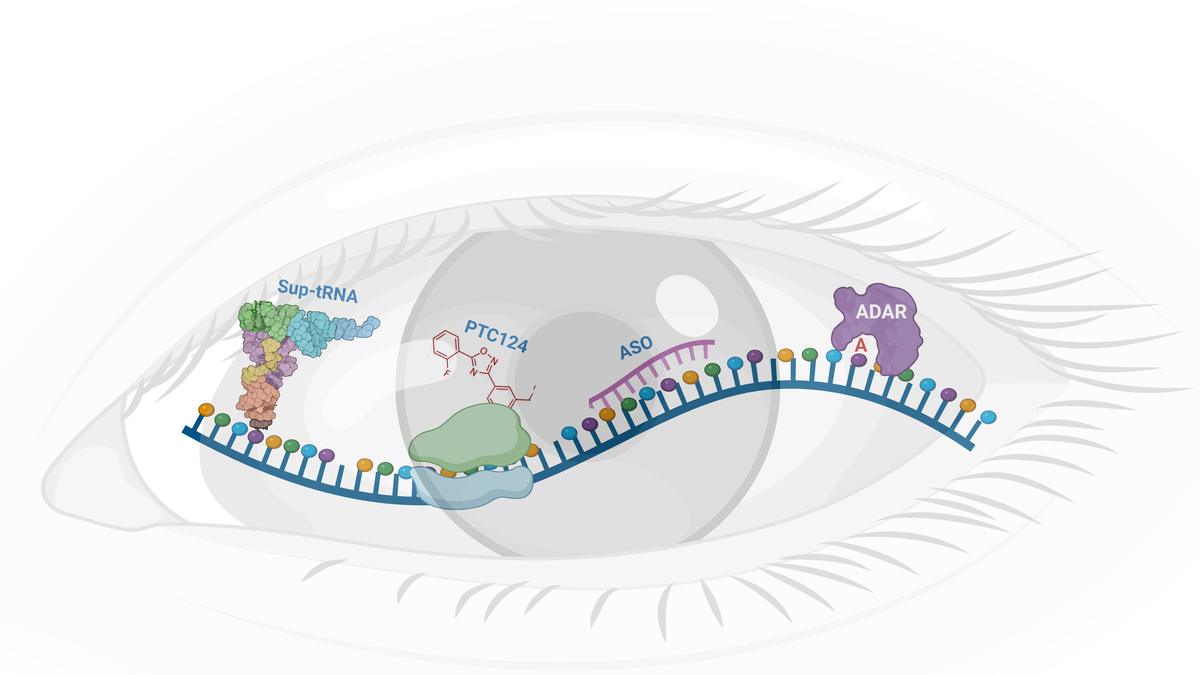
Recent advancements have introduced RNA-based therapies like antisense oligonucleotides (ASOs), which have already been used successfully to treat diseases such as spinal muscular atrophy and Duchenne muscular dystrophy. Medical researchers are now exploring ASO therapy for retinal conditions like Stargardt disease, Leber congenital amaurosis, and retinitis pigmentosa.

Beyond ASOs, researchers are also developing more advanced RNA-based options to address IRDs. One promising approach involves RNA-editing with ADAR enzymes, which can correct specific genetic mutations at the RNA level. This method has the potential to restore protein production in retinal cells without altering the underlying DNA, offering a new way to treat retinal degenerative diseases caused by single-point mutations.

Another innovative strategy is the use of suppressor tRNAs to bypass stop-codon mutations, which can prematurely halt protein synthesis in retinal cells. By enabling the production of full-length proteins, this approach could help restore proper retinal function in IRD patients, where stop-codon mutations disrupt vital protein production.

Another potential small molecule RNA-based therapy is PTC124, also known as ataluren, which is already being used to treat patients with cystic fibrosis and Duchenne muscular dystrophy. Recently, clinical trials have begun to investigate its use in treating a rare developmental eye disease called aniridia.

Taken together, these options offer a more targeted, personalised treatment approach that could halt the progression of IRDs and improve patient outcomes with greater precision.

India and precision therapeutics

Precision medicine is an approach that tailors treatments to an individual’s genetic makeup, lifestyle, and other factors, offering a more targeted alternative to the one-size-fits-all approach of traditional options.

For rare diseases like IRDs, understanding the genetic mutations prevalent in a population is essential for researchers to develop effective RNA-based therapies. Although researchers have linked more than 300 genes to IRDs, research in India has yet to fully map the genetic mutations responsible for these conditions in the local population.

In fact, there is currently no large cohort study in India (i.e. involving at least 500 patients) to describe the mutation spectrum of IRDs. Such extensive studies are vital for researchers to identify the most common genetic defects that can subsequently be targeted using precision medicine.

For example, the ABCA4 gene is commonly mutated in IRD patients worldwide and is a popular therapeutic target. However, we lack a clear understanding of whether it is just as prevalent in Indian populations and/or whether some other mutation is expressed more often in certain ethnic groups.

India’s large size and diverse population add another layer to this challenge. Genetic mutations can vary significantly across different communities, making it difficult to identify common mutations. Accurately mapping these mutations necessitates extensive, resource-intensive research across various subgroups.

Additionally, there are several barriers, including a lack of awareness of the genetic basis of IRDs among the people at large and healthcare providers alike, limited availability of genetic counselling services, insufficient research funding, and restricted access to diagnostic infrastructure in rural areas.

Thus, to fully unlock the potential of RNA-based therapeutics, India must prioritise genetic research with a particular emphasis on understanding the mutation profiles of people with IRDs, in collaboration with local research institutions and healthcare providers.

A notable example of such a collaboration is a June 2024 study by researchers from the CSIR-Institute of Genomics and Integrative Biology, New Delhi, and the L.V. Prasad Eye Institute, Hyderabad. The teams’ findings led to the development of a precision therapy for a specific form of IRD.

Expanding partnerships between global and local pharmaceutical companies, as well as research institutes, will also make these treatments more accessible to Indian patients. Raising awareness among clinicians and researchers about advances in RNA therapies will likewise be crucial to ensure they are implemented effectively.

Sandeep Sharma Asodu is a postdoctoral fellow at Hadassah Medical School, The Hebrew University of Jerusalem.

Published – January 30, 2025 05:30 am IST



Source link

Science

Post navigation

Previous Post: Meta To Pay Trump $25 Million To Settle 2021 Account Ban Lawsuit: Report
Next Post: Brookfield Corporation signs $12 billion MoU to invest in Mumbai’s infrastructure development

Related Posts

  • Understanding ovarian cancer: its causes, symptoms, and screening methods
    Understanding ovarian cancer: its causes, symptoms, and screening methods Science
  • Smoking leaves a lasting adverse impact on immune responses
    Smoking leaves a lasting adverse impact on immune responses Science
  • New low-cost MRI machine can improve access to diagnostics in India
    New low-cost MRI machine can improve access to diagnostics in India Science
  • How does potassium cyanide cause sudden death?
    How does potassium cyanide cause sudden death? Science
  • Tuvalu: Barely above water
    Tuvalu: Barely above water Science
  • Obaid Siddiqi lectures to commence in Bengaluru this July
    Obaid Siddiqi lectures to commence in Bengaluru this July Science

More Related Articles

Groups to prevent human-elephant conflict linked to more elephant deaths Groups to prevent human-elephant conflict linked to more elephant deaths Science
What is waste-to-energy technology? – The Hindu What is waste-to-energy technology? – The Hindu Science
Japan, India startups to study laser-equipped satellite to tackle space debris Japan, India startups to study laser-equipped satellite to tackle space debris Science
When the temperature climbs up after a cooler weekend, does the heat feel worse? When the temperature climbs up after a cooler weekend, does the heat feel worse? Science
What do SC guidelines say on DNA? | Explained What do SC guidelines say on DNA? | Explained Science
A new genetic analysis of animals in the Wuhan market in 2019 may help find COVID-19’s origin A new genetic analysis of animals in the Wuhan market in 2019 may help find COVID-19’s origin Science
SiteLock

Archives

  • October 2026
  • September 2026
  • August 2026
  • July 2026
  • June 2026
  • May 2026
  • April 2026
  • March 2026
  • February 2026
  • January 2026
  • December 2025
  • November 2025
  • October 2025
  • September 2025
  • August 2025
  • July 2025
  • June 2025
  • May 2025
  • April 2025
  • March 2025
  • February 2025
  • January 2025
  • December 2024
  • November 2024
  • October 2024
  • September 2024
  • August 2024
  • July 2024
  • June 2024
  • May 2024
  • April 2024
  • March 2024
  • February 2024
  • January 2024
  • December 2023
  • November 2023
  • October 2023
  • September 2023
  • August 2023
  • July 2023
  • June 2023
  • May 2023
  • April 2023
  • March 2023
  • February 2023
  • January 2023
  • December 2022
  • November 2022
  • October 2022
  • September 2022
  • August 2022
  • July 2022
  • June 2022
  • May 2022

Categories

  • Business
  • Nation
  • Science
  • Sports
  • World

Recent Posts

  • AIADMK, BJP leaders slam TVK-led Tamil Nadu government over electricity purchase at high rate
  • Two arrested for attacking security guard with knife in Besant Nagar
  • Women stage silent demonstration at Kathipara against police action on anti-CEC protesters in Delhi
  • DGCA bans specific power banks on flights
  • Saudi Supreme Court sets aside Sri Lankan migrant worker’s death penalty

Recent Comments

  1. RobertTes on UP Teacher Who Asked Students To Slap Muslim Classmate
  2. Manuelret on UP Teacher Who Asked Students To Slap Muslim Classmate
  3. RobertTes on UP Teacher Who Asked Students To Slap Muslim Classmate
  4. RobertTes on UP Teacher Who Asked Students To Slap Muslim Classmate
  5. BrentWes on UP Teacher Who Asked Students To Slap Muslim Classmate
  • Access Denied World
  • Access Denied
    Access Denied Nation
  • Air India concludes phase 1 of retrofit of old planes
    Air India concludes phase 1 of retrofit of old planes Business
  • Man, 29, Associated With Nishad Party Dies By Suicide In UP
    Man, 29, Associated With Nishad Party Dies By Suicide In UP Nation
  • Longer-lasting ozone holes over Antarctica expose seal pups and penguin chicks to much more UV
    Longer-lasting ozone holes over Antarctica expose seal pups and penguin chicks to much more UV Science
  • Supreme Court seeks government response on plea by Gulf students that ‘assessment scheme’ hurts prospects
    Supreme Court seeks government response on plea by Gulf students that ‘assessment scheme’ hurts prospects Nation
  • Survey for Bidadi Township ends in chaos as women farmers chase officials with brooms
    Survey for Bidadi Township ends in chaos as women farmers chase officials with brooms Nation
  • Access Denied Sports

Editor-in-Chief:
Mohammad Ariff,
MSW, MAJMC, BSW, DTL, CTS, CNM, CCR, CAL, RSL, ASOC.
editor@artifex.news

Associate Editors:
1. Zenellis R. Tuba,
zenelis@artifex.news
2. Haris Daniyel
daniyel@artifex.news

Photograher:
Rohan Das
rohan@artifex.news

Associate Journalists
1. Subrata Paul - AN/2020/01
2. Quamruz Zaman - AN/2021/22
3. Ahmed Sha - AN/2021/035
4. Ajay Kumar Shaw - AN/2021/39
5. Tahqiqul Hoda - AN/2021/21

Artifex.News offers Online Paid Internships to college students from India and Abroad. Interns will get a PRESS CARD and other online offers.
Send your CV (Subjectline: Paid Internship) to internship@artifex.news

Links:
Associate Journalism
About Us
Privacy Policy

News Links:
Breaking News
World
Nation
Sports
Business
Entertainment
Lifestyle

Registered Office:
72/A, Elliot Road, Kolkata - 700016
Tel: 033-22277777, 033-22172217
Email: office@artifex.news

Editorial Office / News Desk:
No. 13, Mezzanine Floor, Esplanade Metro Rail Station,
12 J. L. Nehru Road, Kolkata - 700069.
(Entry from Gate No. 5)
Tel: 033-46011099, 033-46046046
Email: editor@artifex.news

Copyright © 2023 Artifex.News Newsportal designed by Artifex Infotech.