



Skip to content
  • Facebook
  • X
  • Linkedin
  • WhatsApp
  • YouTube
  • Associate Journalism
  • About Us
  • Privacy Policy
  • 033-46046046
  • editor@artifex.news
Artifex.News

Artifex.News

Stay Connected. Stay Informed.

  • Breaking News
  • World
  • Nation
  • Sports
  • Business
  • Science
  • Entertainment
  • Lifestyle
  • Toggle search form
  • 30 Years On, Remembering How Rwanda Genocide Unfolded
    30 Years On, Remembering How Rwanda Genocide Unfolded World
  • India Sends “Crucial Budgetary Support” To Maldives Amid Strained Ties
    India Sends “Crucial Budgetary Support” To Maldives Amid Strained Ties Nation
  • Moscow court charges two suspects in concert hall attack – agencies
    Moscow court charges two suspects in concert hall attack – agencies World
  • Access Denied
    Access Denied Nation
  • Science for all newsletterScientists discover a binary star system near Milky Way’s supermassive black hole 
    Science for all newsletterScientists discover a binary star system near Milky Way’s supermassive black hole  Science
  • Access Denied
    Access Denied Nation
  • Access Denied
    Access Denied Nation
  • Access Denied
    Access Denied Nation
What do SC guidelines say on DNA? | Explained

What do SC guidelines say on DNA? | Explained

Posted on September 14, 2025 By admin


The story so far:

The Supreme Court, in Kattavellai @ Devakar v. State of Tamil Nadu, recently issued guidelines to maintain the integrity of deoxyribonucleic acid (DNA) samples in criminal cases. The court directed the Director Generals of Police of all States to prepare sample forms of the Chain of Custody Register and all other necessary documentation as directed, and to ensure their dispatch to all districts with instructions.

What was the need to issue such directions?

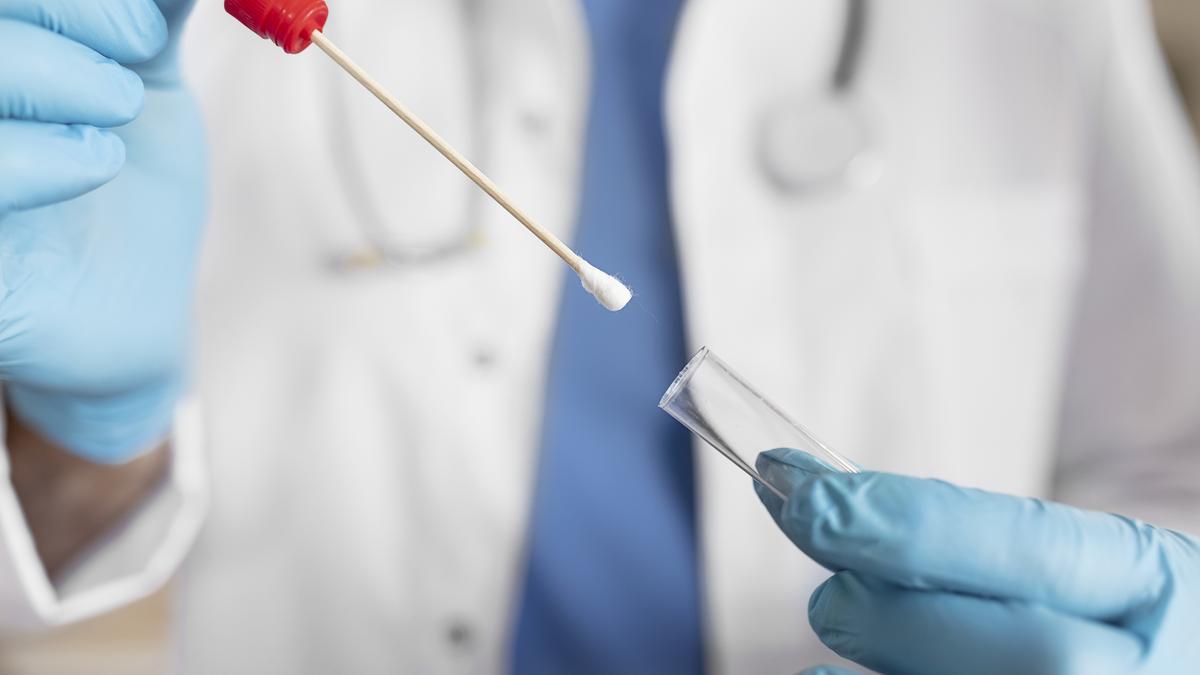
The court, in the above case involving rape, murder, and robbery with an attempt to cause death, found significant unexplained delays in sending samples of the vaginal swabs to the Forensic Science Laboratory (FSL) for DNA analysis. Moreover, the chain of custody of the sample could not be established. Under such circumstances, the court held that the possibility of sample contamination could not be ruled out.

The court observed that although some guidelines have been issued by various bodies, there is neither uniformity nor a common procedure required to be followed by all investigating authorities. Even though ‘Police’ and ‘Public Order’ are subjects mentioned in the State List of the Seventh Schedule of the Constitution, the Supreme Court deemed it necessary to issue these guidelines to have uniformity of procedure.

What are the guidelines?

The Supreme Court issued four guidelines for cases where DNA evidence is involved. The first guideline states that the collection of DNA samples once made after due care and swift and appropriate packaging, including FIR number and date, the sections and statutes involved, details of the investigating officer, the police station, and the requisite serial number, shall be duly documented. The document recording the collection must include the signatures and designations of the medical professional present, the investigating officer, and independent witnesses.

Second, the investigating officer shall be responsible for the transportation of the DNA evidence (sample) to the concerned police station or hospital, as the case may be. He must also ensure that the samples reach the concerned FSL within 48 hours of collection. In the event of any delay, the reasons must be recorded, and all efforts should be made to preserve the samples.

Third, while samples are stored pending trial or appeal, no package shall be opened, altered, or resealed without express authorisation from the trial court.

The fourth guideline states that from the time of collection to the logical end, i.e., conviction or acquittal of the accused, a Chain of Custody Register must be maintained. This register must be appended to the trial court record. The investigating officer is responsible for explaining any lapses in compliance.

What has the Supreme Court said so far?

The DNA profiles have a tremendous impact on criminal investigations. In Anil v. State of Maharashtra (2014), the Supreme Court observed that a DNA profile is valid and reliable, but this depends on quality control and procedure in the laboratory. However, in the Devakar case, the court said that quality control and procedure outside the laboratory are equally important to ensure that the best results can be derived from collected samples.

In a three-judge Bench decision in Manoj and Ors. v. State of Madhya Pradesh (2022), the Supreme Court rejected a DNA report on the ground that recovery was made ‘from an open area and the likelihood of its contamination cannot be ruled out’. It was also observed that the blood stains found on the articles were disintegrated, and the quantity was insufficient to run any classification test.

In another case, Rahul v. State of Delhi, Ministry of Home Affairs (2022), DNA evidence was ‘rejected because it remained in the police Malkhana for two months and during such time, the possibility of tampering could not be ruled out’. It was said that ‘the collection and sealing of the samples sent for examination were not free from suspicion’. The court also said the trial court and the High Court did not examine the underlying basis of the findings in the DNA reports or whether the techniques used had been reliably applied by the concerned expert.

Therefore, while the investigating agency needs to ensure that samples are collected properly, without any possibility of contamination, and sent to the FSL without any (unexplained) delay, the expert must also ensure proper quality control and procedure in the FSL.

How important is the DNA evidence in criminal cases?

DNA is a molecule that encodes the genetic information in all living organisms. It can be obtained from biological materials, such as bone, blood, semen, saliva, hair, or skin. Generally, when the DNA profile of a sample found at a crime scene matches the DNA profile of a suspect, it can be concluded that both samples have the same biological origin. However, it is not substantive evidence in criminal cases.

The Supreme Court, in the Devakar case, stated that DNA evidence is in the nature of opinion evidence as envisaged under Section 45 of the Evidence Act (Section 39 of the Bharatiya Sakshya Adhiniyam, 2023), and like any other opinion evidence, its probative value varies from case to case. Therefore, DNA evidence must be proved scientifically and legally.

R.K. Vij is a former IPS officer

Published – September 14, 2025 10:37 pm IST



Source link

Science

Post navigation

Previous Post: Access Denied
Next Post: Access Denied

Related Posts

  • Prevalence of NCDs tripled, infectious diseases doubled since 1995
    Prevalence of NCDs tripled, infectious diseases doubled since 1995 Science
  • The Science Quiz | Twilight time – the world between worlds
    The Science Quiz | Twilight time – the world between worlds Science
  • Daily quiz: on nuclear fusion reaction
    Daily quiz: on nuclear fusion reaction Science
  • What is coding, and when did it all begin?
    What is coding, and when did it all begin? Science
  • Can science’s peer-review system guarantee academic rigour?
    Can science’s peer-review system guarantee academic rigour? Science
  • Caterpillars may sense threats using electric fields
    Caterpillars may sense threats using electric fields Science

More Related Articles

Experts underscore the importance of extracting only relevant data Experts underscore the importance of extracting only relevant data Science
The number of rhinos is slightly up but poaching has increased too The number of rhinos is slightly up but poaching has increased too Science
H5N1 remains infectious on milking equipment for over one hour H5N1 remains infectious on milking equipment for over one hour Science
Sci-Five | The Hindu Science Quiz: On Amoeba Sci-Five | The Hindu Science Quiz: On Amoeba Science
Dial it up to Category 6? As warming stokes storms, some want a bigger hurricane category Dial it up to Category 6? As warming stokes storms, some want a bigger hurricane category Science
BITS Pilani Hyderabad scientists develop smart wound dressing to kill infection-causing bacteria BITS Pilani Hyderabad scientists develop smart wound dressing to kill infection-causing bacteria Science
SiteLock

Archives

  • May 2026
  • April 2026
  • March 2026
  • February 2026
  • January 2026
  • December 2025
  • November 2025
  • October 2025
  • September 2025
  • August 2025
  • July 2025
  • June 2025
  • May 2025
  • April 2025
  • March 2025
  • February 2025
  • January 2025
  • December 2024
  • November 2024
  • October 2024
  • September 2024
  • August 2024
  • July 2024
  • June 2024
  • May 2024
  • April 2024
  • March 2024
  • February 2024
  • January 2024
  • December 2023
  • November 2023
  • October 2023
  • September 2023
  • August 2023
  • July 2023
  • June 2023
  • May 2023
  • April 2023
  • March 2023
  • February 2023
  • January 2023
  • December 2022
  • November 2022
  • October 2022
  • September 2022
  • August 2022
  • July 2022
  • June 2022
  • May 2022

Categories

  • Business
  • Nation
  • Science
  • Sports
  • World

Recent Posts

  • Suspended SI held for sexually assaulting woman on pretext of marriage
  • Three killed in separate road accidents
  • Global fire outbreaks hit record high as ‘unprecedented’ heat extremes loom, scientists say
  • Government hikes paddy MSP by ₹72 to ₹2,441/qtl; sunflower seed sees steepest rise at ₹622
  • Russia continues Ukraine attacks as Trump talks of possible peace

Recent Comments

  1. Bryandut on UP Teacher Who Asked Students To Slap Muslim Classmate
  2. NathanJobre on UP Teacher Who Asked Students To Slap Muslim Classmate
  3. DavidNup on UP Teacher Who Asked Students To Slap Muslim Classmate
  4. JeffryFok on UP Teacher Who Asked Students To Slap Muslim Classmate
  5. Jesusetexy on UP Teacher Who Asked Students To Slap Muslim Classmate
  • Access Denied
    Access Denied Nation
  • RSS affiliate condemns 90-hour work week remark
    RSS affiliate condemns 90-hour work week remark Business
  • Access Denied Business
  • Airline Launches “Adult-Only” Section On Flights. Here’s What It Means
    Airline Launches “Adult-Only” Section On Flights. Here’s What It Means World
  • Decade Of No Dialogue, Then A 20-Second Greeting, India, Pak De-Hyphenated
    Decade Of No Dialogue, Then A 20-Second Greeting, India, Pak De-Hyphenated Nation
  • Way to peace is through ‘dialogue and diplomacy’: PM Modi tells Volodymyr Zelenskyy
    Way to peace is through ‘dialogue and diplomacy’: PM Modi tells Volodymyr Zelenskyy World
  • Access Denied Business
  • Gang Rape Victim Dies By Suicide In Rajasthan: Cops
    Gang Rape Victim Dies By Suicide In Rajasthan: Cops Nation

Editor-in-Chief:
Mohammad Ariff,
MSW, MAJMC, BSW, DTL, CTS, CNM, CCR, CAL, RSL, ASOC.
editor@artifex.news

Associate Editors:
1. Zenellis R. Tuba,
zenelis@artifex.news
2. Haris Daniyel
daniyel@artifex.news

Photograher:
Rohan Das
rohan@artifex.news

Artifex.News offers Online Paid Internships to college students from India and Abroad. Interns will get a PRESS CARD and other online offers.
Send your CV (Subjectline: Paid Internship) to internship@artifex.news

Links:
Associate Journalism
About Us
Privacy Policy

News Links:
Breaking News
World
Nation
Sports
Business
Entertainment
Lifestyle

Registered Office:
72/A, Elliot Road, Kolkata - 700016
Tel: 033-22277777, 033-22172217
Email: office@artifex.news

Editorial Office / News Desk:
No. 13, Mezzanine Floor, Esplanade Metro Rail Station,
12 J. L. Nehru Road, Kolkata - 700069.
(Entry from Gate No. 5)
Tel: 033-46011099, 033-46046046
Email: editor@artifex.news

Copyright © 2023 Artifex.News Newsportal designed by Artifex Infotech.