




For over a decade, the Bashar al-Assad regime in Syria seemed to have weathered the storm of a brutal civil war with help from powerful allies like Russia and Iran. The 59-year-old Syrian president’s grip on power appeared resolute, despite the chaos around the country. Yet, much like the slogan “Our leader forever” during the reign of his father, Hafez al-Assad, the idea of eternal rule was always fragile.
When the Arab Spring began in 2011, toppling regimes across the region, many predicted the end of the Assad dynasty. Protests in Syria quickly escalated into a civil war, challenging Assad’s hold on power. His regime survived, thanks to the intervention of Russia, Iran and Hezbollah. Over the years, the Syrian government held on to key territories while the opponents remained divided.
The situation has rapidly changed in the last few days. Just this week, opposition forces, led by Hayat Tahrir al-Sham – formerly al-Qaeda’s affiliate – launched an offensive that quickly advanced through northern Syria, capturing large swathes of territory, including parts of Aleppo.
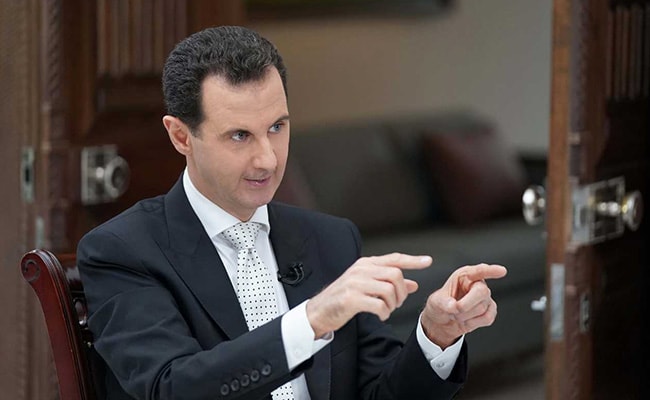
Who is Bashar al-Assad?
Bashar al-Assad has been the president of Syria since 2000, following the death of his father, Hafez al-Assad, who had ruled the country for nearly 30 years.
Early Life And Education
Born on September 11, 1965, in Damascus, Bashar al-Assad is the second son of Hafez al-Assad, a military officer and leader of the Ba’ath Party who became president after a 1971 coup. The Assad family belongs to a Syrian minority sect that makes up about 10 per cent of the population but has had a dominant role in politics since the 1960s.
Bashar al-Assad attended school in Damascus where he learnt English and French. He earned a medical degree in ophthalmology from the University of Damascus in 1988. He served as an army doctor before moving to London in 1992 to continue his studies.
Entry To Politics
In 1994, Bashar al-Assad’s older brother Basil, who was supposed to succeed their father, died in a car accident. With no political or military experience, Bashar Al-Assad, then 29, was called to Syria and prepared to take his brother’s place. He trained at a military academy, earning the rank of colonel in the Republican Guard.
He led an anti-corruption campaign that removed several officials, though it left senior regime members untouched. He was also appointed chairman of the Syrian Computer Society, positioning himself as a moderniser.
Presidency
When Hafez al-Assad died on June 10, 2000, the Syrian parliament swiftly amended the constitution to lower the minimum age for presidential candidates from 40 to 34, making his son, Bashar al-Assad, eligible for the office. He officially took office on July 11, 2000, becoming the leader of the Ba’ath Party and commander-in-chief of the military.
He was elected president with over 97 per cent of the vote. In his inaugural speech, he rejected Western-style democracy as a model for Syria. Although many Syrians were uneasy about the transfer of power from father to son, Bashar al-Assad’s youth, education and Western exposure evoked hope for change. His regime, however, largely maintained the same authoritarian practices, with a heavily policed state and a struggling economy reliant on dwindling oil resources.
He maintained his father’s hardline stance on Syria’s conflict with Israel and opposed the US invasion of Iraq, using anti-Western rhetoric.
By 2005, Bashar al-Assad sidelined his father’s aides and replaced them with younger faces, often family members.
After the 2005 assassination of Lebanese Prime Minister Rafik Hariri, Assad withdrew Syrian troops from Lebanon under international pressure, though Syria’s involvement in the assassination was never conclusively proven.
In 2007, Assad was re-elected in a widely criticised election and sought to improve relations with regional powers like Saudi Arabia and Turkey, though Syria remained largely isolated.
Tensions With Lebanon
Bashar al-Assad faced a volatile relationship with Israel, worsening ties with Lebanon and tensions with Turkey over water rights.
In 2000, he began withdrawing Syrian troops from Lebanon who had been in the country since 1976. Syrian troops entered Lebanon in 1976 during the Lebanese civil war.
The removal of soldiers hastened when Syria was accused of involvement in the assassination of former Lebanese Prime Minister Rafik Hariri.
Hariri’s death led to a public uprising in Lebanon and international pressure on Syria to remove its troops. Assad denied any involvement, saying that if Syrians were found responsible, they would be considered traitors and face legal consequences. “If the UN investigation concludes Syrians were involved, those people would be regarded as traitors who would be charged with treason and face an international court or the Syrian judicial process,” he was quoted as saying by CNN.
The backlash in Lebanon led to hundreds of thousands of people protesting in Beirut, demanding an end to Syrian influence. On April 26, 2005, Syria withdrew its last soldier from Lebanon.
2011 Civil Unrest In Syria
In March 2011, mass protests broke out in Syria, inspired by the Arab Spring. Bashar al-Assad initially offered reforms, such as abolishing emergency laws and releasing political prisoners, but violence against protesters escalated. The government deployed troops and tanks, while Assad claimed Syria was the victim of an international conspiracy. By September 2011, armed opposition groups gained momentum, leading to a full civil war by mid-2012.
In July 2012, Assad’s inner circle suffered a major blow when several senior officials were killed in a bombing. As the war intensified, both sides received support from international allies.
In August 2013, attacks involving chemical weapons near Damascus killed hundreds, leading to calls for international military action. An agreement between the US, Russia and Syria led to Syria’s chemical weapons being placed under international control, avoiding military intervention. Despite this, Assad’s forces continued using indiscriminate weapons, such as barrel bombs in rebel-controlled areas.
As the war progressed, Assad’s hold on power grew stronger. The rise of ISIS in 2013 refocused international efforts, including those of the US, on defeating the extremist group. Russia’s military intervention in 2015 also strengthened Assad’s position. By 2017, Assad regained control of most major cities, with remaining rebels confined to pockets of territory.
In 2018, Assad’s army advanced in Idlib, where Turkish forces had intervened to protect rebel-held areas. As the conflict neared its end, Assad began rebuilding Syria through infrastructure projects and attracting foreign investment. One controversial measure, Law 10, allowed the government to seize property from displaced Syrians, enabling property redistribution to loyalists.
Controversies
Civilian Deaths: In the early months of the Syrian protests in 2011, civilian deaths increased and refugees fled to neighbouring countries. In December 2011, when asked about the government’s violent crackdown on protesters, Assad denied responsibility, claiming that he had not ordered security forces to kill or act brutally. He claimed that they’re not his forces and suggested that no government intentionally kills its people, unless it is led by a “crazy person.”
2014 Elections: In June 2014, Bashar al-Assad held elections widely considered a sham. Voting was only allowed in government-controlled areas, excluding large parts of northern and eastern Syria held by rebels. Assad’s campaign slogan was “sawa,” meaning “together”, but he made no public appearances to discuss his plans. He claimed 88 per cent of the vote. His position was strengthened when Russia agreed to support his forces militarily in September 2014. By February 2016, the conflict had killed around 4.7 lakh and created a refugee crisis.
Chemical Weapons: In August 2013, the Assad regime faced international condemnation for using chemical weapons against civilians. Despite global outrage, Assad managed to avoid foreign intervention with the help of Russian President Vladimir Putin, who facilitated the removal of Syria’s chemical weapons stockpile. By 2013, more than 70,000 people had been killed since 2011. In April 2017, following a new chemical weapons attack, then US President Donald Trump ordered air raids on a Syrian airbase, drawing strong reactions from Assad and his allies, Russia and Iran. In April 2018, another chemical weapons attack led to further international condemnation. Trump called Assad an “animal” and criticised Putin. The US, along with the UK and France, launched air strikes on Syria in 2018.