



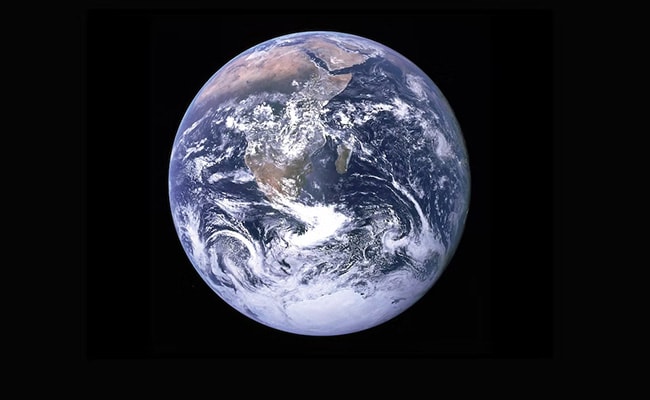
The young Earth was also rich in hydrogen, thanks to fierce geological and volcanic activity.
Sydney, Australia:
Three-quarters of all matter in the universe is made up of hydrogen. The young Earth was also rich in hydrogen, thanks to fierce geological and volcanic activity.
Just as stars burn hydrogen to produce heat and light through nuclear reactions, life emerged by extracting energy from this simple molecule via chemical reactions.
Some of these early life forms were archaea: an enigmatic third form of life only discovered in the 1970s. (The other two forms are bacteria and eukaryotes, the group that includes all animals, plants and fungi.)
We have studied thousands of species of archaea to understand how they have thrived for billions of years on our constantly changing planet. In their genetic blueprints we found instructions for producing special enzymes (called hydrogenases) to harvest energy from hydrogen gas, which lets them survive in some of the most punishing environments on Earth. Our latest research is published in Cell and Nature Communications.
A life powered by hydrogen
Archaea are found in places where no other life can survive. For example, some flourish in boiling hot springs where the water is so acidic it would dissolve iron.
Here, hydrogen is continually formed from the geothermal processes in Earth’s crust. Archaea devour this hydrogen to repair their bodies and even sometimes grow in otherwise deadly conditions.
We found some archaea can even make use of the minute amounts of hydrogen present in the air as an additional food source. This ability would likely help them survive transport through the atmosphere from one hydrogen-rich hot spring to another.
Surviving in the dark
Many archaea are not found on the surface, but live a humble life far underground. Plants and animals can’t survive in this environment because there is no light or oxygen to sustain them.
Archaea have found a solution: they break down deeply buried organic matter from plant or animal remains. They do so through a process called “hydrogen-forming fermentation”.
Just as in the process of beer fermentation yeasts convert sugar to produce carbon dioxide, these dark-dwelling archaea convert organic matter to produce hydrogen gas.
This process releases some energy, but only a little. To survive, some archaea form ultra-small cells to minimize their energy needs. Many are also parasites of other microbes, stealing organic matter to fuel their own growth.
Archaea making methane
Many archaea live in extreme environments, but some find a warm home in animals.
In the animal intestine, many bacteria help digest food through hydrogen-forming fermentation. But a group of archaea known as methanogens eat hydrogen and breathe out the potent greenhouse gas: methane.
Methanogens are especially abundant and active in the guts of cattle, which are responsible for around one-third of human-caused methane emissions. We have also been working on ways to inhibit the activity of gut methanogens to reduce these emissions.
These same archaea are also responsible for methane emissions from lots of other sources, from termite mounds to thawing permafrost and even trees.
Learning from archaea’s hydrogen economy
As our societies try to move away from fossil fuels, we may be able to learn from the hydrogen economy of archaea, which has thrived for billions of years.
Much of Earth’s hydrogen is tied up in water. (It’s the H in H₂O.) To extract the hydrogen and work with it, industries currently need expensive catalysts such as platinum. However, there are also biological hydrogen catalysts, enzymes called hydrogenases, that don’t require precious metals and work under a wider range of conditions.
We have found that some archaea make highly streamlined hydrogenases. These enzymes can form a basis for more efficient and economical hydrogen catalysts.
![A diagram showing a complex molecule, labelled 'Ultraminimal H2-producing [FeFe]-hydrogenases'.](https://images.theconversation.com/files/601109/original/file-20240617-17-xoiij1.png?ixlib=rb-4.1.0&q=45&auto=format&w=754&fit=clip)
Hydrogen and the history of life
Perhaps hydrogen is a key to our future energy. But it’s worth mentioning that hydrogen also helps explains our past.
The first eukaryotes (the ancestors of all animals, plants and fungi) evolved some two billion years ago, when an archaeal cell and a bacterial cell merged together.
Why did they merge? The most widely accepted theory, known as “the hydrogen hypothesis”, suggests the merger of two cells allow them to more efficiently exchange hydrogen gas. A likely scenario is the archaeal cell survived by making hydrogen, which the bacterial cell then ate to make its own energy.
Eventually, this process gave rise to all eukaryotes over a billion years of evolution. Most modern eukaryotes, including humans, have since lost the ability to use hydrogen.
But traces of the ancient archaea and bacteria still exist. The body of our cells come from archaea, while the energy-producing organelles inside the cells called mitochondria are derived from bacteria.
Hydrogen may be simple, but it has helped create much of the complexity on Earth.
(Authors:Pok Man Leung, Research Fellow in Microbiology, Monash University and Chris Greening, Professor, Microbiology, Monash University)
(Disclosure Statement: Chris Greening receives funding from the Australian Research Council, National Health & Medical Science Council, Australian Antarctic Division, Human Frontier Science Program, and Wellcome Trust. Pok Man Leung does not work for, consult, own shares in or receive funding from any company or organization that would benefit from this article, and has disclosed no relevant affiliations beyond their academic appointment)
This article is republished from The Conversation under a Creative Commons license. Read the original article.
(Except for the headline, this story has not been edited by NDTV staff and is published from a syndicated feed.)
Waiting for response to load…