


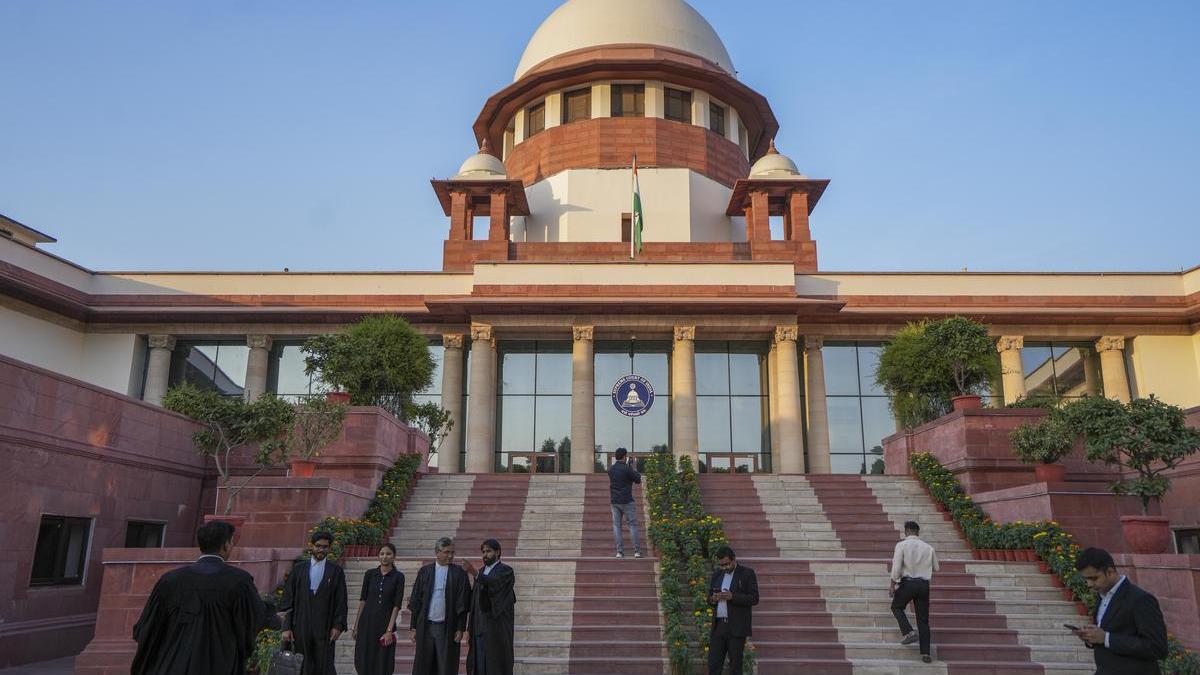

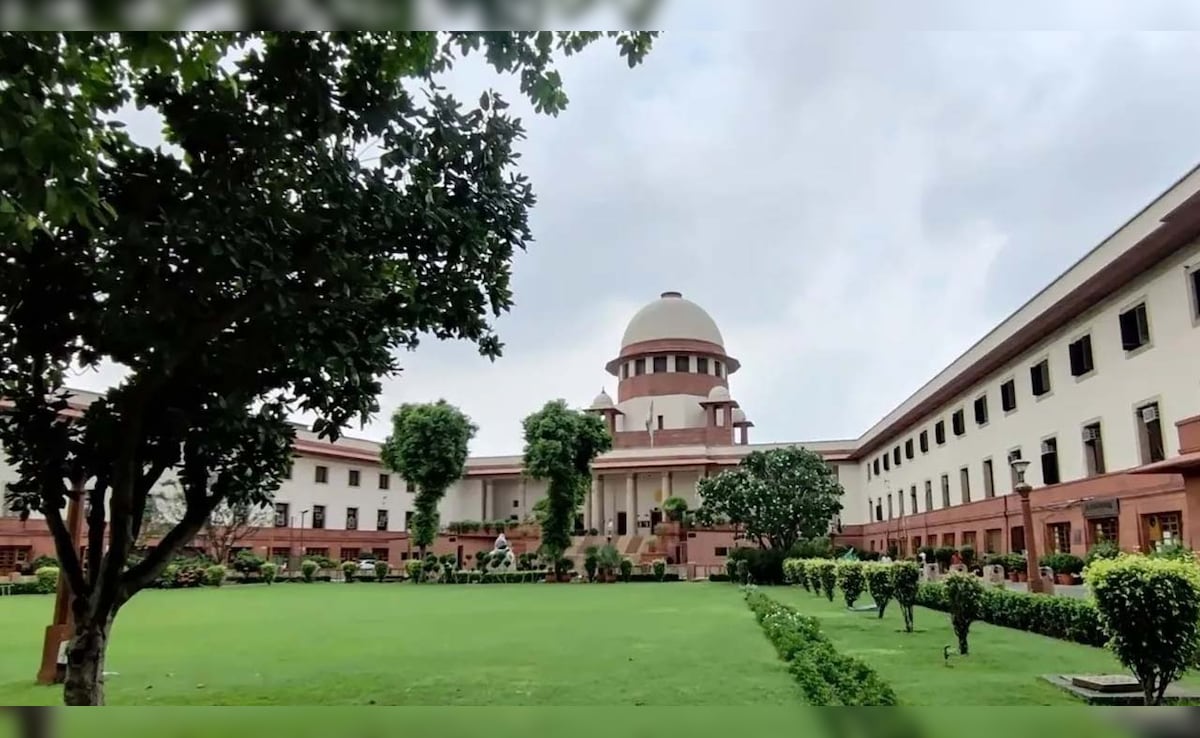
Recently, an ideological dialogue happened in the Indian Supreme Court on Article 39(b) of the Constitution. The judgment by a nine-judge Bench in Property Owners Association v. State of Maharashtra last Tuesday reflects a division of opinion on the topic, though the majority on the Bench laid down the law.
Constitutional socialism, like political socialism, has remained a controversial issue in the Indian juridical discourse. Article 39(b) of the Constitution, together with other provisions under the directive principles in part IV of the Constitution, embodies an idea of constitutional socialism. This, however, is a contested argument. To understand the legal and political ramifications of the verdict, let us now examine the crux of the judgment.
The Fundamentality Of Directive Principles
The Court in the current case broadly did two things. First, it said that the annulment of certain amendments made to Article 31-C of the Constitution would not nullify Article 31-C in the unamended form. This is the Article that gives immunity to certain laws from judicial review if the laws are made to further the directive principles of state policy stated in the Constitution. The Article says that such laws cannot be assailed on grounds of violation of the equality clause (Article 14) or the freedom clause (Article 19) in the Constitution. This signifies the fundamentality of directive principles in the process of governance, which are otherwise not enforceable. This takes us to the second and the more vital part of the judgment. The majority held that the interpretation given to Article 39(b) of the Constitution by Justice Krishna Iyer in a minority judgment in 1977 in Ranganatha Reddy endorsed by the five-judge Bench in Sanjeev Coke (1982) was not good law on Article 39(b). Thus, the Court overturned the precedential materials in the Article that gave an expanded connotation to this constitutional provision.
Article 39(b) says that the State shall strive for policy to secure that “the ownership and control of the material resources of the community are so distributed as best to subserve the common good”. In a minority judgment in State of Karnataka v. Ranganatha Reddy (1977) Justice Krishna Iyer analysed the Article and said that all individual wealth is part of the community’s wealth and therefore, private property is well within the ambit of “material resources of the community”. He said that “material resources of the community in the context of re-ordering the national economy embraces all the national wealth, not merely natural resources, all the private and public sources of meeting material needs, not merely public possessions”. He added that “to exclude ownership of private resources from the coils of Article 39(b) is to cipherise its very purpose of redistribution the socialist way”. This minority verdict in Ranganatha Reddy was endorsed by a five-judge Bench in Sanjeev Coke. Thus, the minority verdict [which essentially has not expressly disagreed on the point of Article 39(b)] got an authoritative endorsement in Sanjeev Coke. This interpretation was validated in a series of judgments that followed Sanjeev Coke. Thus, the ”Krishna Iyer doctrine”, as CJI Chandrachud calls it, got judicially reaffirmed.
What Ambedkar Said
It is this constitutional landscape that is now thoroughly altered by the majority judgment in the Property Owners Association case. According to CJI Chandrachud, Dr. B.R. Ambedkar did not perceive the Article in the way Krishna Iyer did. Relying on the reply given by Dr Ambedkar to Prof. K.T. Shah in the Constituent Assembly, Justice Chandrachud said that the Court is unable to subscribe to “the expensive view” of Justice Iyer. He wrote: ”…(T)his Court must not tread into the domain of economic policy, or endorse a particular economic ideology while undertaking constitutional interpretation”.
The counter view on Article 39(b) is well reflected in Justice Dhulia’s minority view. He endorses Krishna Iyer’s approach on the ground that the Constitution in general and the directive principles [including Article 39(b)] are essentially socialist in their tone and tenor. Curiously again, Justice Dhulia relies on Dr Ambedkar’s reply (relied on by Chandrachud) to say quite the opposite of what Justice Chandrachud said. According to him, the very scheme of the directive principles reflected the idea of constitutional socialism. He also relied on Ambedkar’s famous speech in the Constituent Assembly on November 25, 1949, underscoring the absence of socio-economic equality in the country. He also put forward a blunt commonsensical reading of the Article, saying that for utilising public assets for public good, no constitutional provision is required, and the very purpose of Article 39(b) is to empower the state to ensure public good by resorting to privately owned resources. He said public property will be used for public good only, even if it is not contemplated in the directive principles. Criticism of the ‘Krishna Iyer doctrine’ by Chief Justice Chandrachud is not endorsed by Justice Nagarathna either, though the judge agreed substantially with the majority judgment.
Law, Politics, And The ‘Iyer Doctrine’
It is necessary to understand the constitutional, political and economic context in which the ‘Iyer doctrine’ evolved. The era of Land Reforms Acts by different states, laws for abolition of the Zamindari system and privy purses, and nationalisation of private banks were all developments that facilitated a political climate of Nehruvian socialism that paved the way to the Krishna Iyer doctrine. Laws are essentially political statements made by the regime of the day. The preambular addition of the word “socialist” did not indicate anything new but only restated the socialist inclination of the Constitution, which was otherwise clear, as elaborated by Justice Dhulia in the present minority verdict.
The present judgment also held that Article 31-C in the unamended form will hold good. Certain additions to this Article made by way of the 42nd amendment in 1977 were struck down in the Minerva Mills Case (1980). The curious aspect, however, is that the Centre argued in favour of the State’s power to treat private properties as “material resources of the community”, relying on Krishna Iyer’s doctrine. This argument was repelled by the majority on the Bench. In an era of privatisation of public properties, this gesture may appear to be a bit ironic.
At any rate, the present regime at the Centre is not a proponent of Nehruvian socialism. Political and ideological shifts play a big role in determining what the Constitution means, what it says and how it is invoked. The distance that the nation has travelled since 1977 is reflected in the Property Owners Association case and the dissent in the judgment shows the other side of the coin. The judgment will carry forward the eternal discourse on the socialist traits in the country’s Constitution. The juridical discourse on the topic underlines the quality of deliberative democracy within the system of judiciary.
(Kaleeswaram Raj is a lawyer at the Supreme Court of India)
Disclaimer: These are the personal opinions of the author