


Skip to content
  • Facebook
  • X
  • Linkedin
  • WhatsApp
  • YouTube
  • Associate Journalism
  • About Us
  • Privacy Policy
  • 033-46046046
  • editor@artifex.news
Artifex.News

Artifex.News

Stay Connected. Stay Informed.

  • Breaking News
  • World
  • Nation
  • Sports
  • Business
  • Science
  • Entertainment
  • Lifestyle
  • Toggle search form
  • Assam Gets Contempt Notice From Supreme Court For “Bulldozer Action”
    Assam Gets Contempt Notice From Supreme Court For “Bulldozer Action” Nation
  • Access Denied Sports
  • Beau Webster And Sean Abbott: At Ease With Being The Men In Waiting” Of Australia Cricket
    Beau Webster And Sean Abbott: At Ease With Being The Men In Waiting” Of Australia Cricket Sports
  • Congress Leader Asks Why PM Didn’t Visit Manipur, Chief Minister Replies
    Congress Leader Asks Why PM Didn’t Visit Manipur, Chief Minister Replies Nation
  • Bangladesh Army chief gives timeline for democracy, seeks election in 18 months
    Bangladesh Army chief gives timeline for democracy, seeks election in 18 months World
  • What is mathematical realism? – The Hindu
    What is mathematical realism? – The Hindu Science
  • Access Denied Business
  • Social Media Platform X Down For Thousands Of Users: Report
    Social Media Platform X Down For Thousands Of Users: Report World
More Than 80% Of Indians Exposed To Climate-Related Health Risks: Ex-WHO Chief Scientist

More Than 80% Of Indians Exposed To Climate-Related Health Risks: Ex-WHO Chief Scientist

Posted on November 15, 2024 By admin


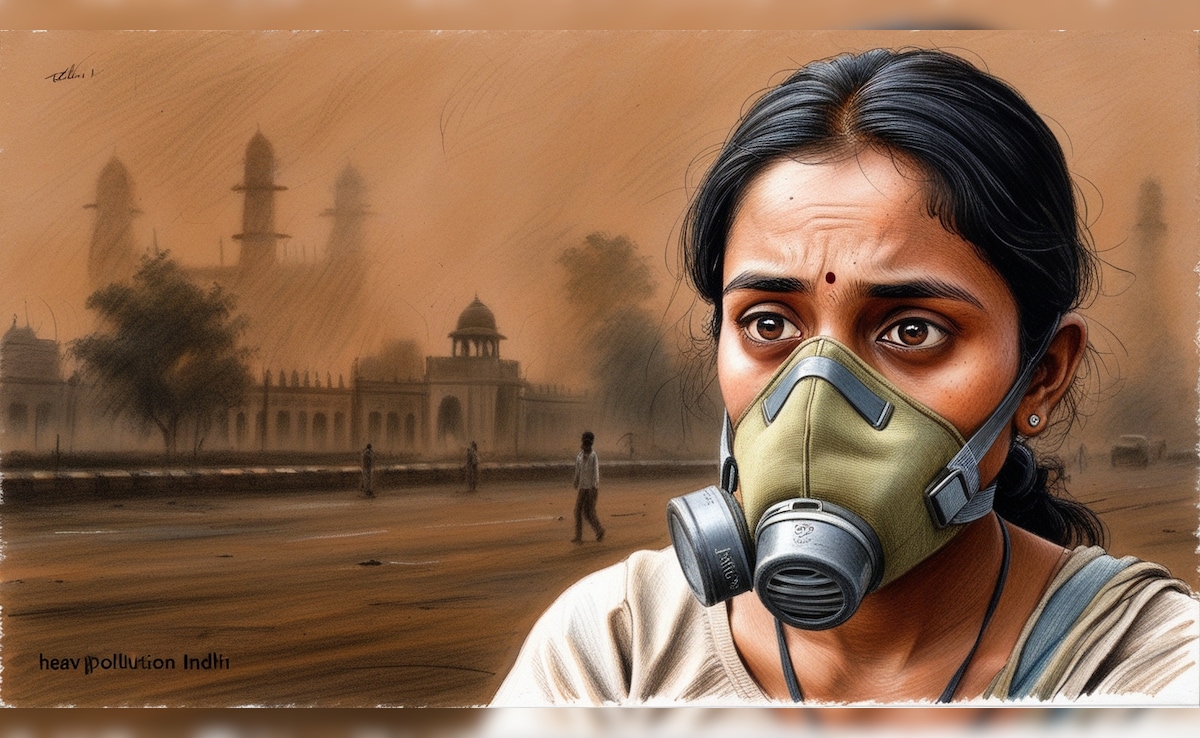
Almost everyone in India is now vulnerable to the impacts of climate change, former chief scientist of the World Health Organisation Dr Soumya Swaminathan has said, underscoring the urgent need for cross-ministerial and international collaboration to address its effects on health, gender and economic stability in the country.

Swaminathan pointed to women and children as especially vulnerable to these climate-driven health risks.

In an interview with PTI on the sidelines of global climate talks COP29 here in Azerbaijan’s capital, Swaminathan called for a concerted approach, saying, “practically everyone in India is now vulnerable to climate change impacts, from extreme heat to vector-borne diseases. Addressing this requires close cooperation.”

“We know that climate change has disproportionate impacts on women and children,” she explained, noting how women, particularly in rural areas, face increased health risks due to continued reliance on solid fuels for cooking.

She emphasised that “access to clean energy for everyone is a priority.”

This, she argued, would not only reduce health risks associated with indoor air pollution but also lessen India’s carbon footprint, marking a crucial step toward sustainable development.

Climate-related health risks in India are varied, ranging from immediate effects such as respiratory illnesses due to air pollution, to long-term issues like malnutrition stemming from disrupted agricultural cycles.

Swaminathan noted that more than 80 per cent of India’s population is now exposed to these risks, emphasizing that “everybody is now vulnerable,” from rural farmers to urban migrants.

She highlighted the specific challenges faced by the urban poor, especially migrants who live in peri-urban areas with inadequate housing and sanitation, which exposes them to greater risks during floods and extreme weather events.

With health as a central theme, Swaminathan stressed the benefits of green public transportation, an initiative she described as a “win-win solution.”

“Carbon-neutral public transport will not only reduce air pollution but also promote physical activity and thereby improve health,” she said, adding that reducing pollution would positively impact public health by curbing respiratory and cardiovascular diseases.

She also highlighted that India’s urban centres are hotspots for these health issues due to dense populations and high pollution levels.

Swaminathan called for policies that integrate both health and climate objectives, stressing that this approach can drive development while building resilience against climate risks.

“If we do that kind of analysis, we can invest in actions that promote both development and reduce our carbon footprint,” she noted, advocating for policies that prioritise “development with a climate-resilient focus.”

Examples of such integrated actions include promoting clean cooking fuels, improving access to safe drinking water, and investing in infrastructure that can withstand extreme weather.

Dr Swaminathan went further to advocate for a gendered approach to climate policy, urging policymakers to “put a spotlight on women but also the poorest communities.”

She argued that gender equity and social equity are essential to effective climate policy, explaining that “by taking a gendered perspective in all policies, we can ensure more inclusive and effective climate action.”

Swaminathan called for greater research on climate impacts that are gender-specific, noting that this data would help policymakers create more targeted, meaningful interventions.

The economic costs of climate-driven health impacts are also severe.

Swaminathan pointed to recent studies indicating that climate-related air pollution alone costs the global economy trillions of dollars annually, affecting productivity, agriculture, and even tourism.

“If you look at the GDP loss and workplace productivity lost due to air pollution, it’s enormous – in the trillions,” she said. This, she argued, makes climate action not just a moral imperative but an economic necessity.

Addressing air pollution as a cross-border issue, Swaminathan noted that pollution does not recognise borders, making it crucial for India and other nations to engage in global collaborations.

“Air pollution today is the single largest risk factor to health,” she said, adding “It’s not a problem one country can solve on its own.”

She referenced the Our Common Air (OCA) Commission, a global effort she is part of, which has been working with international bodies like WHO and UNEP to promote global standards and monitoring mechanisms for air quality.

“We need a system where every country has air quality monitors and updates its data, including on super pollutants like methane and black carbon,” Swaminathan said, adding that these pollutants are highly dangerous yet often overlooked.

Swaminathan further explained the value of local data, which she argued would give a more accurate picture of pollution’s impact on different regions of India.

“Policymakers want to see data from their own regions; it makes the issue real for them and helps design local solutions,” she said.

Reflecting on the invisible nature of pollution’s health impacts, Swaminathan commented, “When the air pollution is visible, people recognize it as a problem, but often it’s invisible, and people become accustomed to it.”

She stressed that while death rates from pollution-related illnesses are often discussed, policymakers should focus on the widespread chronic illnesses caused by poor air quality.

“It’s not only about death – it’s about chronic ill health that impacts quality of life and productivity,” she said, pointing out that young children and the elderly are especially vulnerable.

For Swaminathan, tackling climate change is fundamentally linked to India’s development goals.

“For us, development is still a key priority,” she asserted. While India has made strides in increasing access to electricity and clean water, she stressed that much work remains, especially in rural areas where communities lack basic infrastructure.

Her vision for India’s climate adaptation involves not only mitigating health risks but also ensuring that development initiatives – from housing to sanitation – are climate-resilient.

Swaminathan expressed optimism about India’s potential to lead in climate adaptation through innovation, global cooperation, and commitment to sustainable development goals.

She pointed to Indian cities as potential leaders in air quality initiatives and green infrastructure, stating that “India can be a model for sustainable urbanization if we prioritize both development and environmental health.”

(This story has not been edited by NDTV staff and is auto-generated from a syndicated feed.)


Source link

World Tags:Climate change, COP29, Pollution, population, world health organisation

Post navigation

Previous Post: Mike Tyson vs Jake Paul Prediction: Indian Boxer Bets His Property Worth Rs 8.4 Crore On…
Next Post: Saudi Minister Cites India’s Efforts In Fighting Land Degradation, Drought

Related Posts

  • Morning Digest | Gaza crossing opens for foreigners and wounded; October gross GST collections climb to ₹1.72 lakh crore, and more
    Morning Digest | Gaza crossing opens for foreigners and wounded; October gross GST collections climb to ₹1.72 lakh crore, and more World
  • ‘Nostradamus’ Of US Predicted Harris Win. Moment He Realised He Was Wrong
    ‘Nostradamus’ Of US Predicted Harris Win. Moment He Realised He Was Wrong World
  • Access Denied World
  • Japan urges China to protect Japanese citizens after schoolboy stabbing incident
    Japan urges China to protect Japanese citizens after schoolboy stabbing incident World
  • UN Report Says Rapes Committed During Hamas’ October 7 Attacks On Israel
    UN Report Says Rapes Committed During Hamas’ October 7 Attacks On Israel World
  • Earth To Get A Mini-Moon For 2 Months? All You Need To Know
    Earth To Get A Mini-Moon For 2 Months? All You Need To Know World

More Related Articles

U.S. approves first military sale to Taiwan since Donald Trump’s return U.S. approves first military sale to Taiwan since Donald Trump’s return World
Access Denied World
Donald Trump on decision-making over Iran attack: Pete said, ‘Let’s do it’ Donald Trump on decision-making over Iran attack: Pete said, ‘Let’s do it’ World
Migrants face ‘unimaginable horrors’ crossing Africa says U.N. Migrants face ‘unimaginable horrors’ crossing Africa says U.N. World
Japan PM unveils 3 billion stimulus as poll numbers slump Japan PM unveils $113 billion stimulus as poll numbers slump World
Trump appoints Dan Scavino as White House personnel office head Trump appoints Dan Scavino as White House personnel office head World
SiteLock

Archives

  • May 2026
  • April 2026
  • March 2026
  • February 2026
  • January 2026
  • December 2025
  • November 2025
  • October 2025
  • September 2025
  • August 2025
  • July 2025
  • June 2025
  • May 2025
  • April 2025
  • March 2025
  • February 2025
  • January 2025
  • December 2024
  • November 2024
  • October 2024
  • September 2024
  • August 2024
  • July 2024
  • June 2024
  • May 2024
  • April 2024
  • March 2024
  • February 2024
  • January 2024
  • December 2023
  • November 2023
  • October 2023
  • September 2023
  • August 2023
  • July 2023
  • June 2023
  • May 2023
  • April 2023
  • March 2023
  • February 2023
  • January 2023
  • December 2022
  • November 2022
  • October 2022
  • September 2022
  • August 2022
  • July 2022
  • June 2022
  • May 2022

Categories

  • Business
  • Nation
  • Science
  • Sports
  • World

Recent Posts

  • Don’t be ‘self-centred’, RTE is for the benefit of children: Supreme Court tells teachers, States in TET review
  • West Asia conflict hit lubricants industry starts price hike, more increases shortly
  • BDA to allot sites to land losers for S.K. Layout project
  • IPL 2026 | Profligate bowling and abysmal fielding hurting Punjab Kings
  • Oil India net profit increases 12.5% YoY fuelled by better crude price realisation

Recent Comments

  1. RichardClage on UP Teacher Who Asked Students To Slap Muslim Classmate
  2. Leonardren on UP Teacher Who Asked Students To Slap Muslim Classmate
  3. NathanQuins on UP Teacher Who Asked Students To Slap Muslim Classmate
  4. Davidcag on UP Teacher Who Asked Students To Slap Muslim Classmate
  5. Jesusetexy on UP Teacher Who Asked Students To Slap Muslim Classmate
  • The environment, another casualty of war in West Asia
    The environment, another casualty of war in West Asia Science
  • Were 2 FIRs Filed In Kolkata Rape-Murder Case? Petitioner Says Possible
    Were 2 FIRs Filed In Kolkata Rape-Murder Case? Petitioner Says Possible Nation
  • Did MS Dhoni’s 110m Six End Up Costing CSK A Spot In IPL Playoffs – Explained
    Did MS Dhoni’s 110m Six End Up Costing CSK A Spot In IPL Playoffs – Explained Sports
  • Kuki-Zo Body Meets Home Ministry Officials, Seeks Separate Administration
    Kuki-Zo Body Meets Home Ministry Officials, Seeks Separate Administration Nation
  • Access Denied
    Access Denied Nation
  • 17 people arrested in attempted coup that shook Bolivia, government says
    17 people arrested in attempted coup that shook Bolivia, government says World
  • Access Denied Business
  • Dr. Reddy’s recalls Sapropterin Dihydrochloride oral solution powder in U.S. due to ‘sub potency’
    Dr. Reddy’s recalls Sapropterin Dihydrochloride oral solution powder in U.S. due to ‘sub potency’ Business

Editor-in-Chief:
Mohammad Ariff,
MSW, MAJMC, BSW, DTL, CTS, CNM, CCR, CAL, RSL, ASOC.
editor@artifex.news

Associate Editors:
1. Zenellis R. Tuba,
zenelis@artifex.news
2. Haris Daniyel
daniyel@artifex.news

Photograher:
Rohan Das
rohan@artifex.news

Artifex.News offers Online Paid Internships to college students from India and Abroad. Interns will get a PRESS CARD and other online offers.
Send your CV (Subjectline: Paid Internship) to internship@artifex.news

Links:
Associate Journalism
About Us
Privacy Policy

News Links:
Breaking News
World
Nation
Sports
Business
Entertainment
Lifestyle

Registered Office:
72/A, Elliot Road, Kolkata - 700016
Tel: 033-22277777, 033-22172217
Email: office@artifex.news

Editorial Office / News Desk:
No. 13, Mezzanine Floor, Esplanade Metro Rail Station,
12 J. L. Nehru Road, Kolkata - 700069.
(Entry from Gate No. 5)
Tel: 033-46011099, 033-46046046
Email: editor@artifex.news

Copyright © 2023 Artifex.News Newsportal designed by Artifex Infotech.