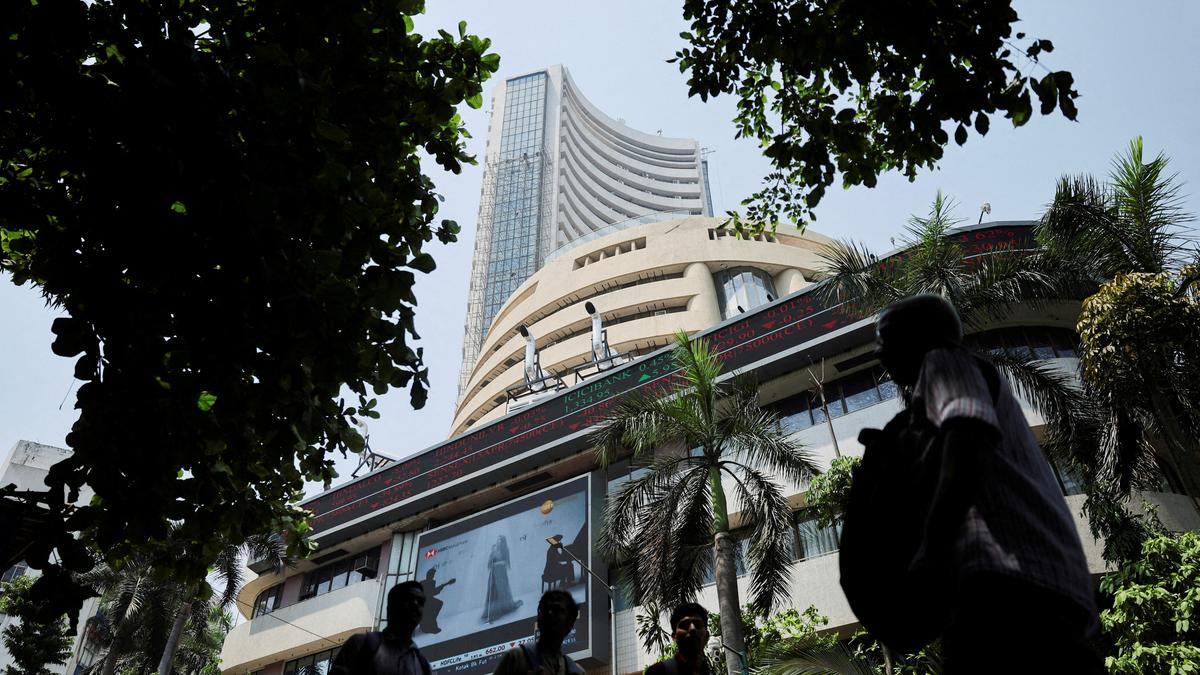








The Nifty Bank index has staged a strong recovery from its April losses, rising nearly 26% from its April 2 low of 49,955 and gaining around 7% year-to-date in 2026. Much of the rebound came in November, driven by renewed foreign portfolio investor (FPI) inflows, strong quarterly earnings and improving sector fundamentals.
Domestic brokerages remain positive on banks’ earnings growth and return on equity (RoE) prospects, supported by healthy credit expansion, stabilising margins and resilient balance sheets.
“The trend in balance sheets in the banking sector has been strong, with capital adequacy ratios and provisioning coverage at some of their best levels in recent times,” said Yuvraj Chaudhary, research analyst at Anand Rathi Institutional Equities.
The brokerage expects the growth momentum to continue through FY27-28, supported by robust credit demand, stable net interest margins (NIMs), improving asset quality and comfortable capital buffers.
System-wide credit growth stood at 18-20% in Q2FY27, against 10-11% a year earlier. Industrial credit expanded around 18.2% year-on-year, while gold loans also recorded strong demand. Public sector banks (PSBs) outperformed private lenders, reporting credit growth of 18.4% against 16.8%.
“On the asset quality front, PSBs are, in fact, outperforming private banks,” Mr. Chaudhary noted.
Deposit growth also accelerated from 13.3% in June 2026 to around 17.3% in September, aided by strong FCNR(B) inflows. The brokerage expects medium-term system-wide credit growth of 15-16%.
Asset quality indicators remain encouraging. The gross slippage ratio improved 39 basis points year-on-year to 0.99%, while PSBs reported slippage ratios below 0.8%. Provisioning coverage stood at around 76%, providing an additional cushion against potential defaults.
However, risks remain. Anand Rathi flagged possible deterioration in prime retail loans from AI-led white-collar job losses, alongside stress in subprime retail and MSME portfolios due to El Niño-related disruptions and elevated inflation.
Valuations offer further headroom
Despite the rally, banking stocks remain relatively inexpensive, trading at around 1.6 times trailing consolidated price-to-book value (P/B), about 5% below their five- and 10-year averages.
PSBs trade at 1.2 times P/B against nearly 2 times for private banks, a discount of around 42%. Anand Rathi expects this gap to narrow as public lenders sustain comparable RoEs, asset quality and operating efficiency.
Strong credit growth, resilient balance sheets and attractive valuations underpin the sector’s outlook, although any deterioration in retail and MSME asset quality remains a key risk.
Published – November 26, 2026 09:06 pm IST