





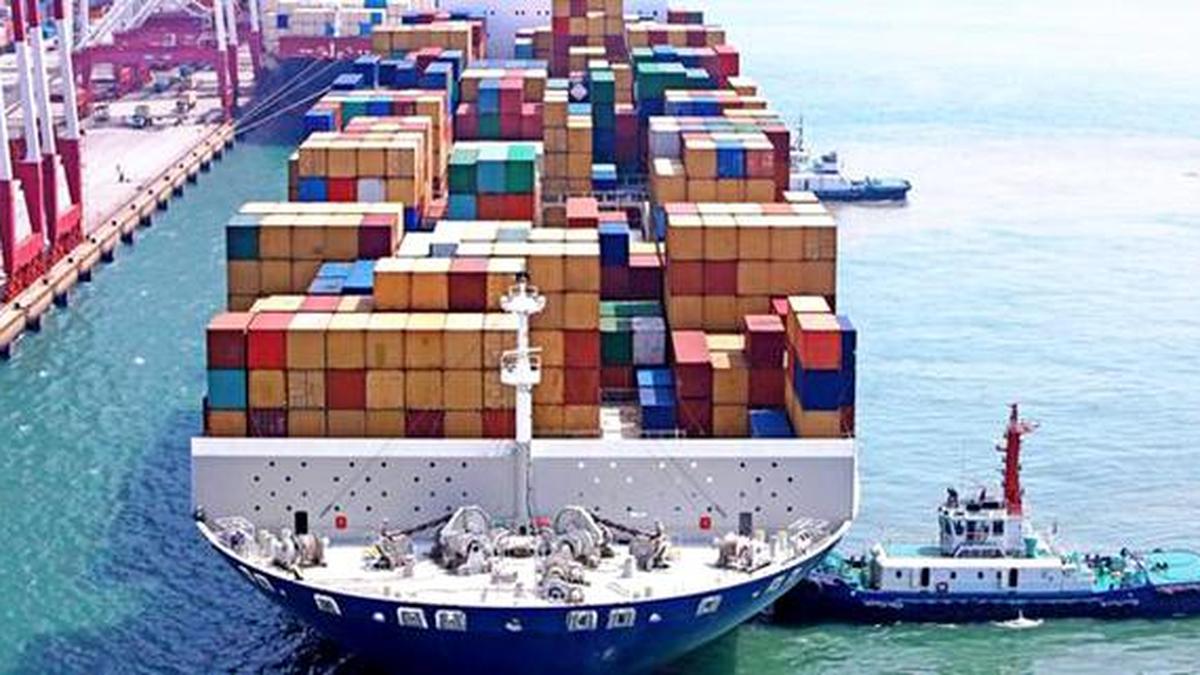
Between February and June 2026, scheduled container capacity increased 53% at Mundra and 47% at Nhava Sheva as shipping lines diverted vessels towards Indian ports
Global maritime trade is heading for stagnation in 2026 as geopolitical conflicts and shipping disruptions choke major sea routes, even as India emerges as a beneficiary of shifting shipping networks. While the closure of the Strait of Hormuz and disruptions in the Red Sea, Black Sea and Panama Canal have severely strained global shipping, diversions have strengthened the position of Indian ports in long-haul container networks, according to the UN Conference on Trade and Development’s (UNCTAD) Review of Maritime Transport 2026, released on November 26.
Global seaborne trade grew 1.9% to 12.3 billion tonnes in 2025, against 3.9% in 2024. UNCTAD expects no growth in 2026, although trade could recover by 3.2% in 2027. Traffic through the Strait of Hormuz, which normally handles 37% of seaborne crude oil and 19% of oil products, plunged nearly 95% by early March and remained severely depressed in late July.

The disruption stranded more than 20,000 seafarers in the Persian Gulf, a substantial proportion of them Indians. Oil prices crossed $100 a barrel, while container spot freight rates more than doubled between January and August. UNCTAD estimates that a sustained fuel-price shock could push consumer prices in least developed countries to nearly twice the global average increase.
For India, however, the disruptions have created opportunities. Between February and June 2026, scheduled container capacity increased 53% at Mundra and 47% at Nhava Sheva as shipping lines diverted vessels towards Indian ports. Colombo nevertheless retained 56% of the subcontinent’s scheduled capacity. The arrival of crude tankers and gas carriers stranded in the Gulf or waiting near Indian ports also intensified congestion. Indian Customs eased procedures for vessels unable to transit Hormuz, including waiving bills of entry in certain cases.
India’s exposure to Gulf energy supplies has increased significantly, with crude imports rising from around 72 million tonnes in 2000 to 240 million tonnes in 2024. Meanwhile, domestic coal production in India and China is moderating seaborne coal demand. Rising steel production in India and Southeast Asia could support dry-bulk trade, although not on the scale of China’s construction-driven expansion.

India’s container trade is also expanding. Between 2015 and 2025, India-US volumes increased by 6.26 lakh TEUs, or 95%, while Chinese exports to India rose 131%. However, India ranks ninth on the Liner Shipping Connectivity Index, behind Vietnam, which has climbed from 28th in 2006 to sixth.
India led global ship recycling in 2025 with a 35.4% share, scrapping around three million gross tonnes, ahead of Bangladesh’s 32.3%. Indian shipowners control 1,178 vessels with 28.8 million deadweight tonnes (dwt), placing the country 20th globally. The Merchant Shipping Act, 2025, could strengthen India’s flag registry by relaxing ownership requirements.

Under the Maritime Amrit Kaal Vision 2047, India also hopes to become a complementary player in global shipbuilding.
Globally, fleet capacity expanded 3.5%, outpacing cargo growth, while more than two in five vessels are over 20 years old. The Hazardous and Noxious Substances Convention, providing compensation of up to 250 million SDRs per incident, will enter into force in November 2027.
Published – November 27, 2026 06:30 am IST