




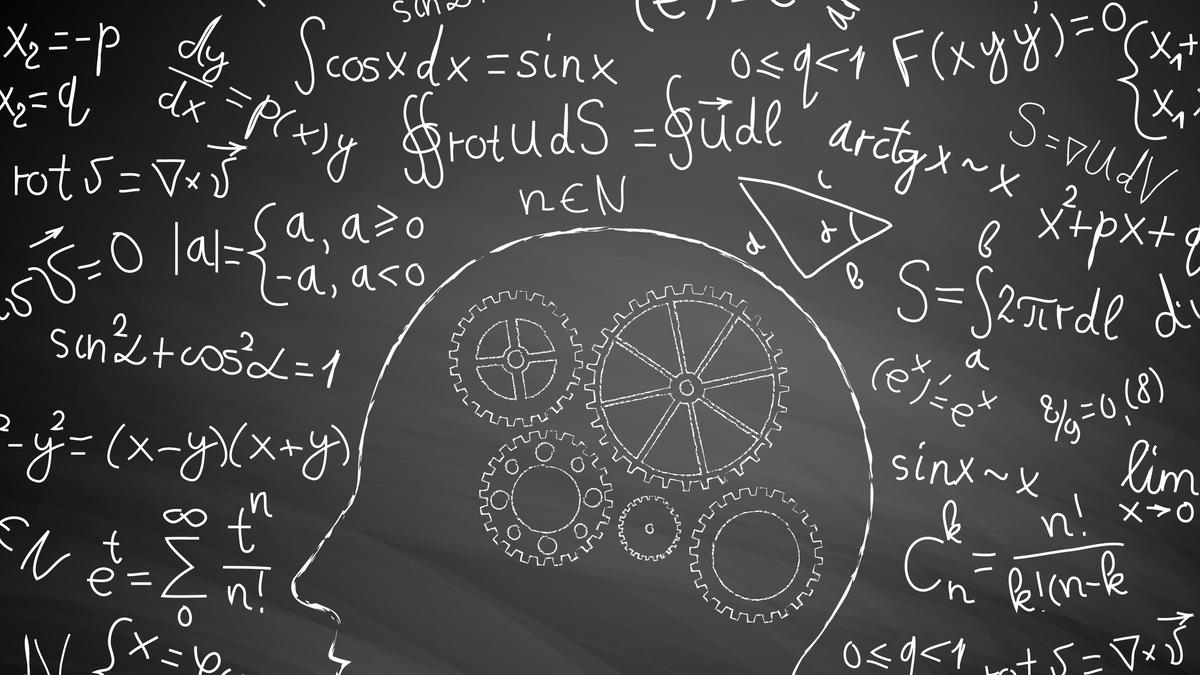
Image used for representation purpose only.
| Photo Credit: Getty Images/iStockphoto
A flurry of announcements landed in the third week of November claiming that various artificial intelligence (AI) models had solved longstanding mathematical problems. Among them, on November 25, OpenAI said one of its internal models had established the theoretical speed limit for multiplying matrices — a question that had occupied mathematicians and computer scientists for more than half a century, setting their communities aflutter.
On July 20, Turkish-American mathematician Levent Alpöge used Anthropic’s Claude AI model, to which he has virtually unfettered access as an Anthropic employee, to disprove the Jacobian conjecture. Since then, AI companies have announced a series of purported solutions to major open problems in mathematics. While some mathematicians have hailed the advances, others have objected to the solutions’ unintelligibility and the companies’ disregard for mathematics education and research.

The following is a list of ten significant mathematical problems that AI models, either working autonomously or with human mathematicians, have produced claimed solutions for. The list is neither definitive nor exhaustive, although it counts a few that have defined their respective fields.
(In fact, on November 25, the well-regarded computer scientist Scott Aaronson wrote on his blog that he believed AI companies were withholding historic breakthroughs in cryptography. He also wrote: “I now feel in my bones, for the first time ever, that a proof of [P versus NP] is not far.”)
10 problems
The ten problems are presented in no particular order.
1. Jacobian conjecture (formulated in 1939) — Whether certain mathematical operations involving polynomials can always be undone by using other polynomials. Alpöge and Claude produced a counterexample in three dimensions and disproved the conjecture in higher dimensions. Computers have verified the proof.
2. Navier-Stokes existence and smoothness (2000) — OpenAI claimed that an initially smooth three-dimensional fluid flow could develop an undefined state in finite time as an external force is continuously applied to it. On November 20, New York University mathematician Tristan Buckmaster and Alpöge presented a separate AI-assisted proof showing that such a state could form without an external force as well. Both proofs are still being checked.

3. Hilbert’s tenth problem over the rationals — Whether an algorithm can always determine whether a polynomial equation has a solution in rational numbers. Mathematicians settled the corresponding problem for integers in 1970. OpenAI claimed a negative answer for rational numbers as well. The proof is still being checked.
4. Unique games conjecture (2002) — Proposed by Indian mathematician Subhash Khot, it concerns the difficulty of finding approximately optimal solutions to certain computational problems. Its resolution would set limits on the performance of algorithms designed for several optimisation problems. OpenAI has claimed to have proved the conjecture based on one of its internal models. The proof is still being checked.
5. Kakeya conjecture (originally 1917) — Asks how small a region of space can be if it must contain a straight line of a fixed length pointing in every possible direction. Hong Wang and Joshua Zahl solved the three-dimensional case in 2025. OpenAI claimed a solution in all dimensions. The proof is still being checked.
6. Exponential time hypothesis (2001) — That for certain computational problems, the time required to solve them must grow exponentially as the size of the problem increases. OpenAI and Anthropic independently claimed to have developed algorithms disproving it, both using unreleased, internal models. The proofs are still being checked.
7. Riemann hypothesis (1859) — Concerns certain solutions of the Riemann zeta function, with profound implications for the distribution of prime numbers on the number line. Alpöge and Claude claimed to have proved it. The Lean and Mathlib communities, which use certain computer programmes to check math proofs, independently certified the hypothesis’s formal proof on November 21. Human mathematicians are still making sense of it, however.

8. VP versus VNP (1979) — Leslie Valiant’s algebraic counterpart to the P versus NP problem. Whether every polynomial that can be expressed as a sum of many easily computable terms can itself be computed efficiently. Anthropic and OpenAI released separate proofs that the two complexity classes are different. The proofs are still being checked.
9. Smale’s ninth problem (1998) — Whether certain optimisation problems can be solved using a number of calculation steps that depends only on the number of variables and constraints rather than also on the size or precision of the numbers involved. OpenAI claimed to have developed such an algorithm. The claim is still being checked.
10. Matrix multiplication exponent (1969) — If the number of steps taken to multiply two matrices, each with n rows and n columns, is around n^ω, what is the minimum value of ω? Mathematicians had conjectured it would be 2 — i.e. that you could multiply those two square matrices in two steps — but OpenAI claimed the exponent could be reduced to 2.25 at best. The proof is still being checked.
Published – November 26, 2026 10:12 am IST