
Skip to content
  • Facebook
  • X
  • Linkedin
  • WhatsApp
  • YouTube
  • Associate Journalism
  • About Us
  • Privacy Policy
  • 033-46046046
  • editor@artifex.news
Artifex.News

Artifex.News

Stay Connected. Stay Informed.

  • Breaking News
  • World
  • Nation
  • Sports
  • Business
  • Science
  • Entertainment
  • Lifestyle
  • Toggle search form
  • Access Denied
    Access Denied Nation
  • Medical Student Dies After Being Pushed Off Building By Friend In Maharashtra: Cops
    Medical Student Dies After Being Pushed Off Building By Friend In Maharashtra: Cops Nation
  • Access Denied
    Access Denied Nation
  • “When I Dismissed Sachin Tendulkar…”: Shoaib Akhtar’s Question Stumps Viral Dolly Chaiwala. Video
    “When I Dismissed Sachin Tendulkar…”: Shoaib Akhtar’s Question Stumps Viral Dolly Chaiwala. Video Sports
  • Access Denied Sports
  • Minister Virendra Kumar Launches India’s First Indoor Navigation App For A National Institute
    Minister Virendra Kumar Launches India’s First Indoor Navigation App For A National Institute Nation
  • Access Denied
    Access Denied Nation
  • Netherlands vs Morocco, FIFA World Cup LIVE updates: Heavyweights clash in Round of 32
    Netherlands vs Morocco, FIFA World Cup LIVE updates: Heavyweights clash in Round of 32 Sports
From climate targets to energy justice

From climate targets to energy justice

Posted on October 26, 2026 By admin


The global trend towards electrification has been recognised by the climate process, and the policy challenge is that the shift will involve less commonality and greater differentiation.

This suggests shifting the discussion from the global impact of coal-based emissions to the role of electricity in national well-being. The shift will be away from reliance on global models to a review of national actions. Global emissions of carbon dioxide deal with the symptoms, not the root cause of the problem: national energy use.

The G7 should not be allowed to set the agenda, as the Paris Agreement did 10 years ago. Shifting the global policy focus from production to consumption patterns will require a reframing of the climate process. Real collaboration will only come with a new conceptual framework that treats the global crisis as a collection of national inactions.

The limits of global ‘consensus’

Academics in the West, acting as “epistemic communities”, set up the framework of climate policy and law. This framework comprises interlinked ‘global values’ that are universal, ‘global goods’ that are determined by global science, complex ‘global models’ based on global projections and ‘global rules’ arrived at through multilateral conference diplomacy in global organisations.

Official experts described complex issues as the best available knowledge to be universally accepted. They achieved this by using institutions of the United Nations as mechanisms to produce technical reports and frame policies, lending them legitimacy under the banner of international cooperation. International law was then used to enforce within countries the decisions driven by global ‘consensus’.

In the case of climate change, the gap between the evolving science of global ecological limits and the growing energy needs of urbanising countries seeking comparable levels of well-being was resolved through arm-twisting in an unequal world. There was no commitment to transfer financial resources as ‘means of implementation’.

Western diplomats converted a political claim in a vaguely worded treaty into workshops and meetings, where the Global South gained nothing but empty resolutions. Technology transfer has been treated as a ‘scientific’ issue rather than an ‘implementation’ issue. This framing ensured continuing dialogue without any outcome.

Alternate models of growth

The lesson from 35 years of diplomatic negotiations as well as alternate models of growth to those of the West is the need to reframe climate policy.

First, in a major reversal the United States is echoing reservations of the Global South. The Executive Order “Putting America First in International Environmental Agreements”, January 20, 2025, underlines that the United States shall “henceforth prioritise economic efficiency, the promotion of American prosperity, consumer choice, and fiscal restraint in all foreign engagements that concern energy policy”.

Second, as energy use in the Global South grows to achieve comparable levels of well-being, ‘carbonising’ will precede ‘decarbonising’. This is only partly recognised in the UN’s new call for stabilisation, rather than reduction, of emissions. Third, the amount of energy needed for human well-being has never been discussed. China has emerged as the world’s second-largest economy and a major global manufacturing power, achieving levels of well-being comparable to those in the West with much lower energy use.

Fourth, China’s nationally driven path to achieving stabilisation has been missed in UN Reports even though it provides an alternate to the approach of the West. U.S. emissions increased by 133 megatons in 2025. China’s significant steps suggest that the technology aspect of the energy transition should look forward to electrification using renewable sources, rather than focus backwards on eliminating fossil fuels.

Fifth, China’s and India’s insight lies is limiting consumption as a percentage of GDP, replacing the internal combustion engine, and meeting new energy demand through solar, wind and hydropower. China’s more rapid progress shows that because solar and wind power have become “cheaper” than coal and gas, they will not drive the energy transition by themselves. Renewable energy is decentralised, intermittent and has zero-marginal-cost energy, requiring a strategic decision by the state on how to transform the energy system.

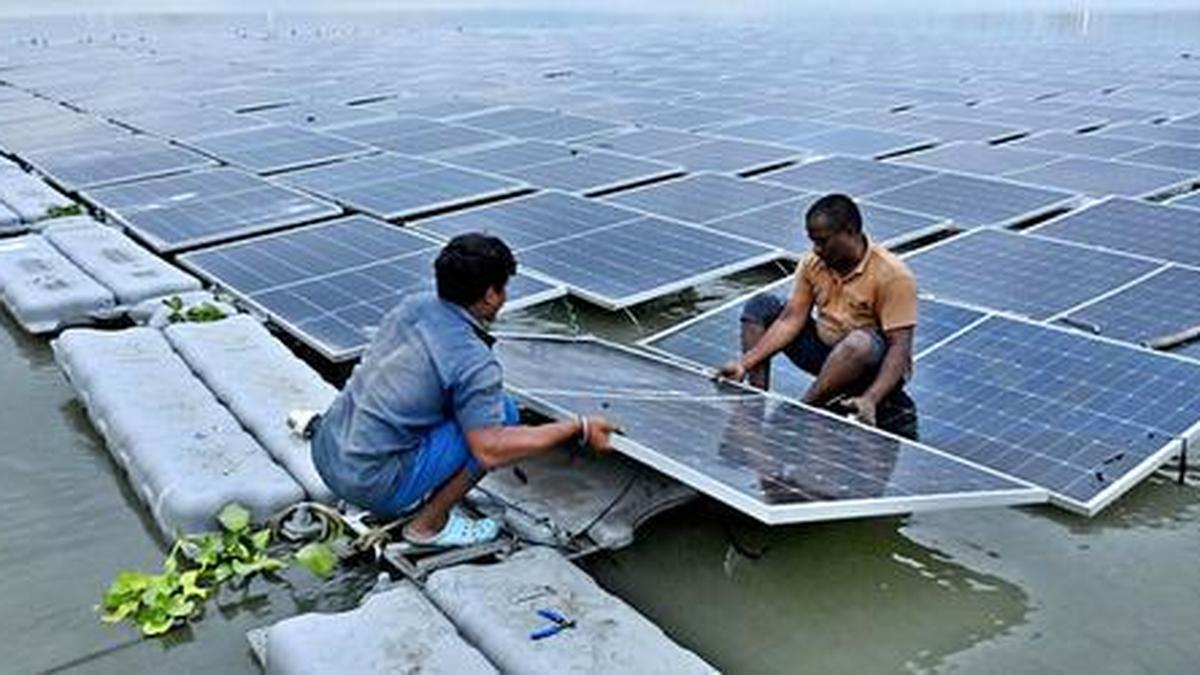
China installed more wind turbines and solar panels in 2025 than all other nations combined, adding about ten times as much capacity as the U.S. As this trend is expected to continue, 50% of electricity generation could come from non-fossil- fuel sources by 2030. About 5.62 million new energy vehicles were registered in China during the first half of 2025.

Global trends

Climate policy should now by driven by practice, as a societal problem and not through global models, natural science and environmental law. First, emerging countries are using much less energy to achieve well-being in cities than the West did earlier, redefining lifestyles and ecological limits. Electrification is making the internal combustion engine redundant. Yet this technological trend in energy use is not captured in global emissions models used by the UN.

Second, in material use, the West’s much smaller share of the global population, around one-fifth, is balanced by the sustainable development of the Rest. The demographic trend is now towards ageing. These societal trends are ignored in global models, and taken together with West’s continuing disproportionate use of energy, suggest there is no global crisis, but rather a few national crises.

Third, given the increasing intensity and frequency of extreme events which affect the Global South, where insurance coverage is limited, continuing with token provision of climate finance by developed countries in negotiations needs to be reviewed. More practical measures include global early warning and regional technical cooperation in disaster relief.

The real question for India is how to build support for a new agenda centred on climate justice. The coming discussions on electrification offer an opportunity to shift UN policy development from finger-pointing towards achieving comparable levels of well-being., leveraging India’s status as the third largest economy with emissions half the global average.

(Mukul Sanwal is a Former UN Diplomat and Policy Adviser UNFCCC.)

Published – October 27, 2026 07:00 am IST


Source link

World Tags:Climate change, climate justice, electrification, epistemic communities, solar panels, wind turbines

Post navigation

Previous Post: Tata Communications to invest ₹4,350 crore in 10,000-km AI data centre network
Next Post: IOB net profit up 56 pc at ₹1,962.67 crore in September quarter, bank plans to launch QIP in Q4

Related Posts

  • Zelensky Says “Unpredictable” Trump Could Help End War
    Zelensky Says “Unpredictable” Trump Could Help End War World
  • Chinese premier focuses on critical minerals and clean energy on final day of Australian visit
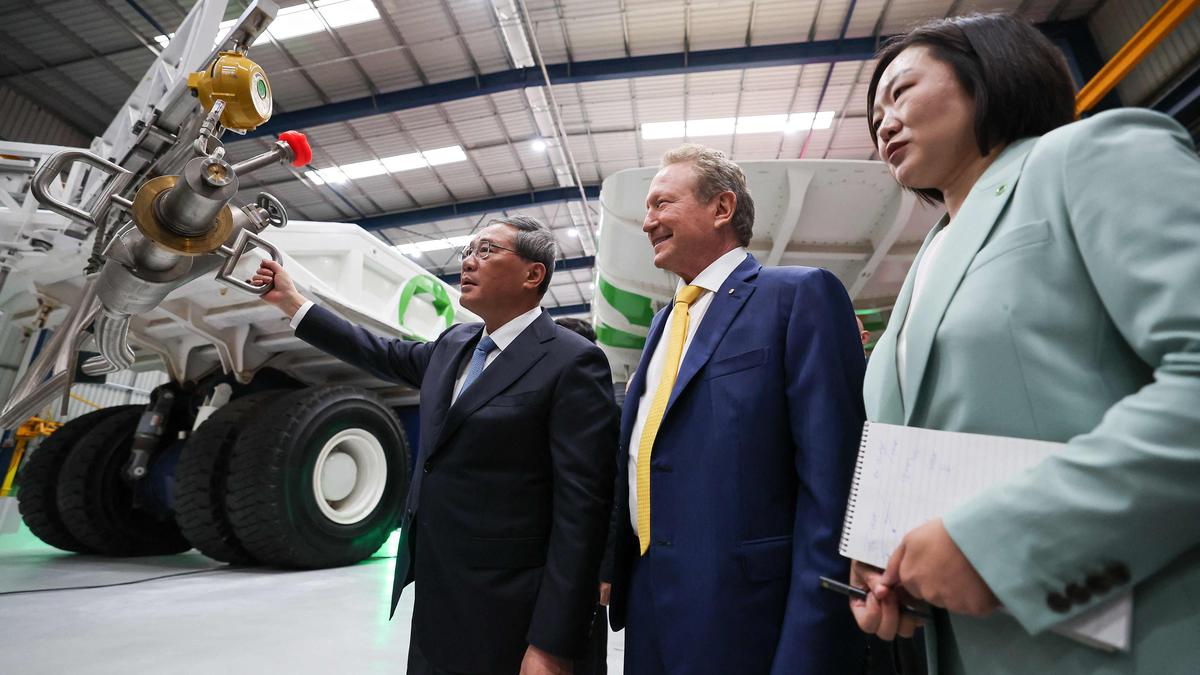
    Chinese premier focuses on critical minerals and clean energy on final day of Australian visit World
  • J.D. Vance’s ‘cat ladies’ comment triggers fury from Harris supporters
    J.D. Vance’s ‘cat ladies’ comment triggers fury from Harris supporters World
  • Access Denied World
  • H-1B Visa Renewal To Get Major Boost In 2025. Indians To Benefit Most
    H-1B Visa Renewal To Get Major Boost In 2025. Indians To Benefit Most World
  • President Trump will not attend U.S. team’s World Cup opener
    President Trump will not attend U.S. team’s World Cup opener World

More Related Articles

Trump says weighing ‘massive increase’ in tariffs on Chinese imports, no reason to meet with President Xi Trump says weighing ‘massive increase’ in tariffs on Chinese imports, no reason to meet with President Xi World
Access Denied World
Pakistan sees 27% increase in terror attacks in May: Report Pakistan sees 27% increase in terror attacks in May: Report World
Prince William Reveals Hilarious Gift He Once Gave Kate Middleton Prince William Reveals Hilarious Gift He Once Gave Kate Middleton World
U.S. judge bars government from sending Guatemalan children back, for now U.S. judge bars government from sending Guatemalan children back, for now World
Yellen says US, Europe must respond jointly to China’s industrial overcapacity Yellen says US, Europe must respond jointly to China’s industrial overcapacity World
SiteLock

Archives

  • October 2026
  • September 2026
  • August 2026
  • July 2026
  • June 2026
  • May 2026
  • April 2026
  • March 2026
  • February 2026
  • January 2026
  • December 2025
  • November 2025
  • October 2025
  • September 2025
  • August 2025
  • July 2025
  • June 2025
  • May 2025
  • April 2025
  • March 2025
  • February 2025
  • January 2025
  • December 2024
  • November 2024
  • October 2024
  • September 2024
  • August 2024
  • July 2024
  • June 2024
  • May 2024
  • April 2024
  • March 2024
  • February 2024
  • January 2024
  • December 2023
  • November 2023
  • October 2023
  • September 2023
  • August 2023
  • July 2023
  • June 2023
  • May 2023
  • April 2023
  • March 2023
  • February 2023
  • January 2023
  • December 2022
  • November 2022
  • October 2022
  • September 2022
  • August 2022
  • July 2022
  • June 2022
  • May 2022

Categories

  • Business
  • Nation
  • Science
  • Sports
  • World

Recent Posts

  • Five-year-old girl of Anganwadi centre in Khammam dies after suspected insect bite
  • ‘Cruel’ jail conditions caused dozens of Nigerian miners to suffocate: probe
  • India must make its defence chips end-to-end, say scientists
  • Guntur Collector directs officials to safeguard election materials
  • Nobel committee says Venezuela needs democratic change despite Maria Machado’s return

Recent Comments

  1. JamesHon on UP Teacher Who Asked Students To Slap Muslim Classmate
  2. ArnoldCit on UP Teacher Who Asked Students To Slap Muslim Classmate
  3. DonaldFow on UP Teacher Who Asked Students To Slap Muslim Classmate
  4. RubenDER on UP Teacher Who Asked Students To Slap Muslim Classmate
  5. RubenDER on UP Teacher Who Asked Students To Slap Muslim Classmate
  • Rupee falls 4 paise to close at 83.52 against U.S. dollar
    Rupee falls 4 paise to close at 83.52 against U.S. dollar Business
  • Dyf, Rampage and Flight Of Fancy impress
    Dyf, Rampage and Flight Of Fancy impress Sports
  • After brief disruption, officials restart talks for Bangladesh PM Tarique Rahman’s India visit
    After brief disruption, officials restart talks for Bangladesh PM Tarique Rahman’s India visit Nation
  • Access Denied
    Access Denied Nation
  • Not going to overthink, says skipper Harmanpreet Singh about over-reliance on PCs
    Not going to overthink, says skipper Harmanpreet Singh about over-reliance on PCs Sports
  • As BSF mulls 90-km Sundarbans fence, security clashes with ecology
    As BSF mulls 90-km Sundarbans fence, security clashes with ecology Science
  • Access Denied Sports
  • Access Denied Sports

Editor-in-Chief:
Mohammad Ariff,
MSW, MAJMC, BSW, DTL, CTS, CNM, CCR, CAL, RSL, ASOC.
editor@artifex.news

Associate Editors:
1. Zenellis R. Tuba,
zenelis@artifex.news
2. Haris Daniyel
daniyel@artifex.news

Photograher:
Rohan Das
rohan@artifex.news

Associate Journalists
1. Subrata Paul - AN/2020/01
2. Quamruz Zaman - AN/2021/22
3. Ahmed Sha - AN/2021/035
4. Ajay Kumar Shaw - AN/2021/39
5. Tahqiqul Hoda - AN/2021/21

Artifex.News offers Online Paid Internships to college students from India and Abroad. Interns will get a PRESS CARD and other online offers.
Send your CV (Subjectline: Paid Internship) to internship@artifex.news

Links:
Associate Journalism
About Us
Privacy Policy

News Links:
Breaking News
World
Nation
Sports
Business
Entertainment
Lifestyle

Registered Office:
72/A, Elliot Road, Kolkata - 700016
Tel: 033-22277777, 033-22172217
Email: office@artifex.news

Editorial Office / News Desk:
No. 13, Mezzanine Floor, Esplanade Metro Rail Station,
12 J. L. Nehru Road, Kolkata - 700069.
(Entry from Gate No. 5)
Tel: 033-46011099, 033-46046046
Email: editor@artifex.news

Copyright © 2023 Artifex.News Newsportal designed by Artifex Infotech.