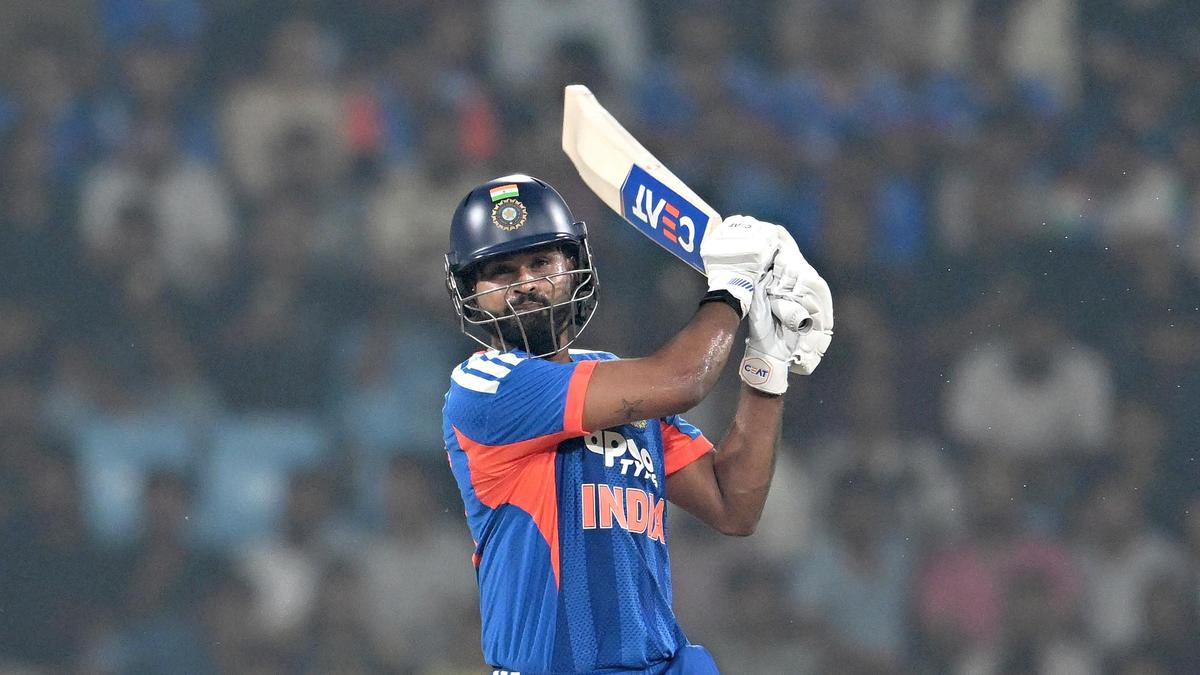
Shreyas Iyer’s return to the international 20-over set-up has been a mixed bag. Jettisoned into the wilderness for more than two and a half years from December 2023 and therefore missing out on India’s back-to-back World Cup triumphs, the right-hander kept plugging away, first leading Kolkata Knight Riders to the title in 2024 and then taking Punjab Kings to the IPL final the following year. Along the way, Shreyas served notice of not just his exceptional batting skills in the middle-order but also a shrewd, calm and astute brain which, allied with his excellent man-management skills, helped him get the best out of his colleagues, India and international, at both outfits.
It’s debatable if Shreyas had reconciled to more time on the T20I sidelines when Suryakumar Yadav skippered the country to a fabulous title defence at home this February-March. Suryakumar, like Shreyas also from Mumbai, was handpicked to succeed Rohit Sharma in July 2024 as India moved on to a new era in the 20-over format. Having run a fantastic ship at the home 50-over World Cup in October-November 2023 when India scythed unbeaten through the draw, only to be felled by Australia in the final, Rohit found a little bit of consolation and worthwhile silverware for his commitment to aggressive batting and to his wonderful captaincy skills by helping India lift their second T20 World Cup trophy, nearly 17 years after Mahendra Singh Dhoni had done the unthinkable in the inaugural edition in South Africa.
Within hours of that grand conquest of the Proteas in Bridgetown, Rohit followed Virat Kohli into T20I retirement. A day later, Ravindra Jadeja called time on his career too, which meant in one fell swoop, India lost a lot of experience and expertise. The process of rebuilding for the title defence, still 20 months away, began in earnest immediately. Contrary to popular perception that pointed to Rohit’s World Cup deputy, Hardik Pandya, taking over as the leader, the decision-making group of chief selector Ajit Agarkar and new head coach Gautam Gambhir – Rahul Dravid’s extension ended with the World Cup success – plumped for Suryakumar, mainly because question marks continued to hang over the all-rounder’s sustained availability, given his repeated dalliances with injury.
Immediate impact
Suryakumar made an immediate impact as batter and captain, leading India to a 3-0 sweep in Sri Lanka in his first assignment in July 2024. But while India continued to stack up victories and dominate the T20I landscape, the dashing batter’s willow started to grow cold from the beginning of 2025. He went the entire calendar year without a single half-century, an unbeaten 47 against Pakistan in the first of three consecutive showdowns in the Asia Cup in Dubai, his highest score in 19 innings. He was, however, in no danger of losing his place because his middling form wasn’t doing any significant or tangible damage to the team’s fortunes. The unbeaten charge to the Asia Cup crown was another feather in his captaincy cap, and when Suryakumar broke the dry run with scores of 32, 82 not out, 57 not out, 8 and 63 against New Zealand in January to kick off 2026, normal service seemed to have been restored.
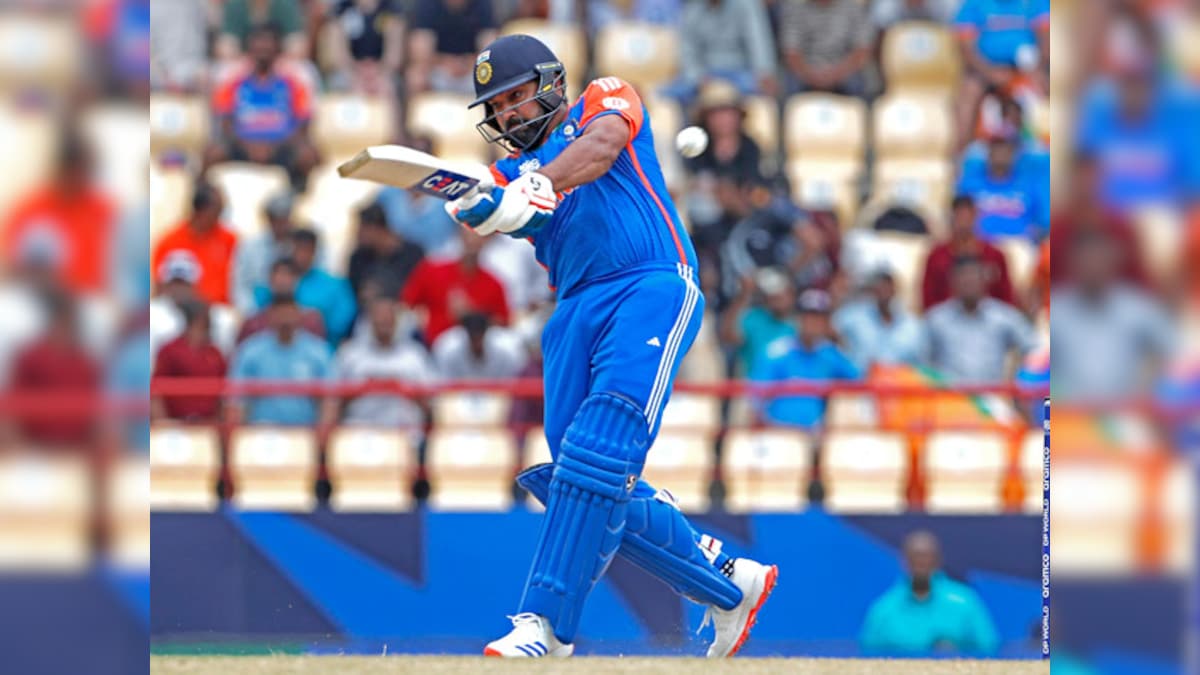
His best knock in a year and a quarter came in India’s World Cup opener against United States, at his home ground, the Wankhede Stadium. The foreboding sound of silence was deafening as the unfancied Americans worked their way through the Indian top-order with Shadley van Schalkwyk doing the bulk of the damage. At 77 for six in the 13th over, a seismic upset of monumental proportions loomed until the captain came charging to the rescue. Shepherding the lower-order expertly and choosing the right moments – and bowlers – to attack, Suryakumar remained unconquered on a crucial 84, off just 49 deliveries, to catalyse what in the end became a routine 29-run victory.
Unlike in the Americas in 2024 when India were unstoppable, even on the dicey surfaces in New York, the 2026 run was anything but perfect. India were crushed by South Africa in their first Super Eight encounter in Ahmedabad, which meant that if Suryakumar was to hold the trophy aloft at the same venue two weeks later, his side had to come through four consecutive must-win encounters. India were compelled to rejig their batting order to break up an all-left top three, and Sanju Samson answered the prayers by shedding a lean trot with three blazing knocks on the bounce, culminating in a breathtaking 89 against New Zealand in the title clash.
But while India gathered momentum and peaked at the right time, Suryakumar’s form was patchy. He wasn’t terrible – he did conjure 32 against Pakistan on a dicey Premadasa Stadium surface in Colombo, weighed in with 34 against the Netherlands and delivered the final kick with a 13-ball 33 against Zimbabwe in Chennai – which, coupled with the fact that India became the first nation to successfully defend the World Cup and to win at home, should have earned him a longer rope. At least one more assignment at the very least.
Moving on
But no. Agarkar’s panel decided enough was enough, that it was time to move on post-haste from the Suryakumar era and turn to a fresh face who would be around for the next World Cup, in Australia and New Zealand in October-November 2028. Suryakumar was 35 and a half at the time of the successful defence, which further encouraged the core panel to invest in a younger man. And thus transpired the 31-year-old Shreyas’ return to a format in which he had held his own, but from which he was forcibly excluded because there was no place for him in the crowded middle-order.
The contention was that Shreyas was too good a player to be picked in the 15 and be kept out of the 11, in which the marked emphasis was on multi-skilled players. Like Suryakumar, Shreyas is a batter alone, and the think-tank felt it was difficult to have both right-handers in the mix. But when the call to move on from the older Mumbaikar was made, Shreyas became an automatic choice – as batter and, in the eyes of those occupying the corridors of power, as the captain.
Shreyas must have felt the weight of the world on his shoulders on his comeback. Never mind that he had 150 international appearances across all three formats to his credit, the return to the 20-over iteration was inevitably and understandably accompanied by butterflies and nervous anticipation. His baptism was the stuff nightmares are made of. India were stunned 2-0 by Ireland and then surrendered a five-match series 4-0 in England (the first game was abandoned). Shreyas held his own with the bat – 68, 37, 5, 80 not out and 28 against the English – but he needed to start moving into the black column from the predominantly red one when it came to team victories.
The tide had to turn, because India were too good a team to keep courting defeats. They were caught out by the conditions in the United Kingdom and were slow to react and adapt, but once they travelled to Harare in July for a three-match showdown against Zimbabwe, they have embarked on a stunning course correction that has netted them 10 wins on the bounce, among them Tuesday’s eight-wicket pounding of West Indies in the first of five matches in Lucknow.
India crushed Zimbabwe 3-0, ran rings around Afghanistan in Delhi last month by an identical scoreline, then eked out a narrow two-run win over Japan in Sano just before the start of the Asian Games. It was a five-over fixture on a terribly slow pitch where the ball turned a mile and all 10 overs were sent down by the spinners. India only managed 32 in their five overs – can you even believe that? – and got somewhat lucky in restricting the Japanese to 30, but 12 days later, they defended their Asian Games gold medal with a very good win over Pakistan in the final in Nisshin.
Shreyas thus became the second Indian after Ruturaj Gaikwad to lead the cricket team to the Asiad gold, though he had the luxury of a full-strength side including Jasprit Bumrah, the perennial game-changer. While those nine victories in a row were commendable, Shreyas the batter hadn’t really left a lasting impression. He did have a clutch of 20s – five of them, to be exact – but there wasn’t the defining knock that he would have been desperate for.
That came on Tuesday in Lucknow. Jet-lagged and almost running on empty after having made the long haul from Nisshin to the Uttar Pradesh capital just two days before the contest – the Asian Games final was on October 3, this West Indies fixture was on October 6 – Shreyas put mind over matter in a sterling exhibition of stroke-making, comprehensively eclipsing the multitude of power-hitters under Shai Hope’s command and his own trio of ball-bashers in Abhishek Sharma, Samson and Ishan Kishan.
India’s bowlers had done remarkably well to bowl the visitors out for 171, and while they were not in any great danger even at 35 for two, given the depth in their batting, they needed a partnership to calm slightly jangling nerves. Enter Shreyas, stage left, to reduce it to a no-contest, embarking on a majestic display of controlled, risk-free aggression that left the former two-time World Cup winners scurrying for cover.
Dominant
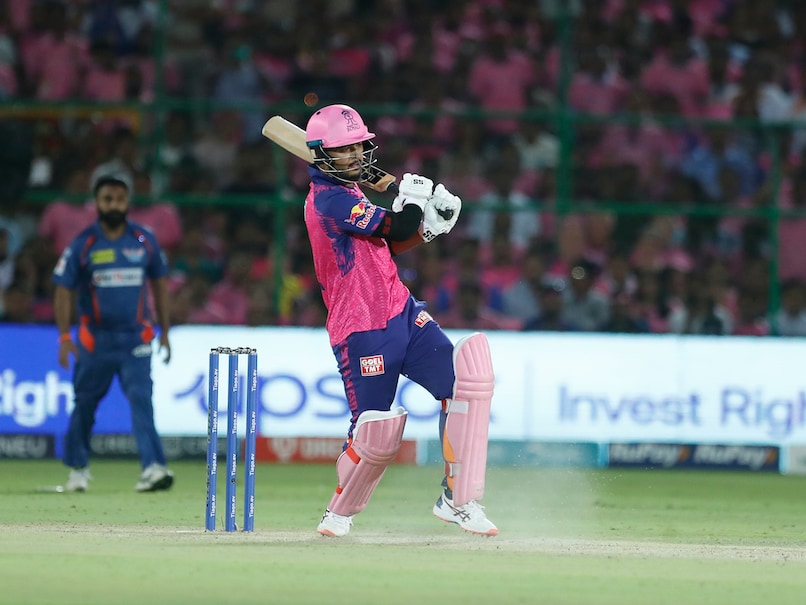
Completely dominating an unbroken third-wicket stand of 137 with Kishan, Shreyas brought up his first T20I ton off the penultimate ball of the chase, off 42 deliveries. He needed just 14 balls for his second 50, courtesy six towering sixes as the ball went exactly where he intended it to. Abhishek and Kishan and some of the others have made it a fine art of battering the hapless cricket ball. Shreyas chose a less violent methodology, but the impact was still as bruising – perhaps even more so – because there is little that can match the beauty of orthodoxy even in the hustle and bustle of the 20-over version.
It took Shreyas his 64th try to reach three-figures for the first time. Given that the No. 4 slot is entirely his own – he has batted there all 17 times since assuming the captaincy mantle – one can safely surmise that the next won’t be as long in coming.