



The story so far: In late August, Ukrainian President Volodymyr Zelenskyy warned allies of a roughly €27-billion hole in his country’s defence budget for the year. On October 1, after weeks of technical talks with Kyiv, the European Commission declared that Ukraine’s financial and military needs for 2026 were now “fully covered.” Yet the manner of that reassurance has exposed a widening gap between Europe’s commitment to Ukraine and its comfort with how Ukrainian money is spent.
The €27-billion figure referred specifically to the 2026 defence gap, not to Ukraine’s total needs, which the International Monetary Fund has estimated at around €137 billion across 2026 and 2027.
Kyiv wanted the gap filled quickly, and asked the European Union (EU) to accelerate disbursements already promised under existing €90-billion instruments. Brussels declined to front-load those payouts. In a letter in early October, European Commissioners Valdis Dombrovskis and Marta Kos informed the Speaker of Ukraine’s Parliament that early disbursement had been refused, and the 2026 gap was instead closed through re-allocation and coordinated contributions, with fresh conditions attached.
To release the roughly €34 billion still outstanding for 2026, the Commission required Ukraine to abolish a value-added-tax exemption on small parcels, to introduce taxation of income earned through digital platforms such as OLX, Airbnb and Bolt, and to strengthen oversight of ‘politically exposed persons’, the last an explicit anti-corruption safeguard.
Conditionality and risk
The practical effect is that this year has been patched rather than resolved, and the Commission itself has acknowledged that 2027, when Ukraine’s needs are larger and American support more uncertain, will be the far harder test.
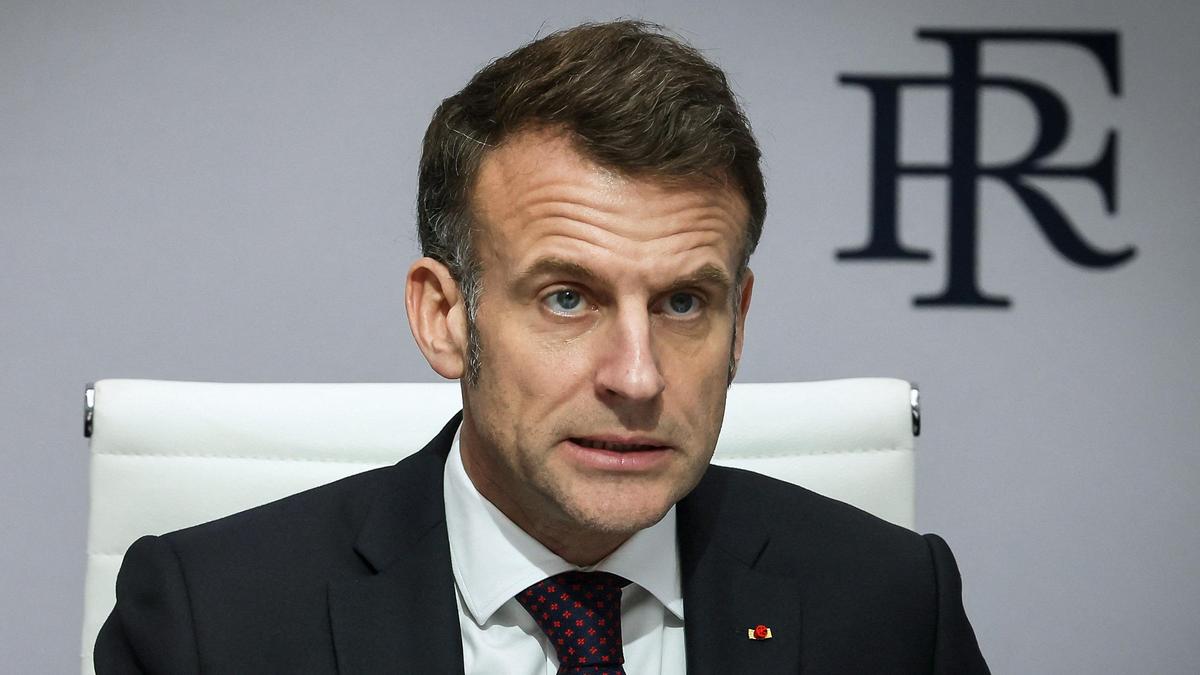
There is near-unanimous agreement among member states that Ukraine cannot be allowed to collapse financially, a position backed firmly by German Chancellor Friedrich Merz, French President Emmanuel Macron and the front line EU members of the north and east.
After a brief Hungarian veto of the bloc’s €90-billion loan package, European Commission President Ursula von der Leyen insisted in Kyiv in February that “we will deliver on the loan one way or the other.”
Public opinion has mirrored that resolve: a Standard Eurobarometer survey in spring 2026 (March, April, and May) found 75% of EU citizens in favour of providing financial and humanitarian support to Ukraine, and 76% in favour of sustaining that support until a just and lasting peace is achieved.
There is no equivalent agreement on how the money should be raised or on what terms it should flow. Taxpayer fatigue in several capitals, a parallel and contentious negotiation over the EU’s 2028-2034 budget, and persistent doubts about Ukrainian governance all pull against open-handedness.
The headline consensus on funding Ukraine therefore conceals a sharper disagreement about conditionality and risk.
The principal financial instrument to support the war effort is the Ukraine Facility, in force since March 2024, which provides over €50 billion in grants and loans for the 2024-2027 period.
Crucially, every disbursement is tied to the Ukraine Plan, a roadmap of reforms weighted heavily toward the rule of law and anti-corruption. In practice the conditionality has proved elastic. In May, the European Council released close to €2.8 billion on the Facility’s seventh tranche after Kyiv had completed only 11 of 20 required reform steps, with roughly 15 overdue indicators according to the Kyiv Post.
In July, the European Council amended the Plan to add €8.3 billion and new anti-corruption benchmarks, and the IMF released a $690-million tranche the same month while expressly noting missed targets.
In July 2025, Mr. Zelenskyy signed a law subordinating the two independent anti-corruption bodies, the National Anti-Corruption Bureau (NABU) and the Specialised Anti-Corruption Prosecutor’s Office (SAPO), to the prosecutor general, provoking the first mass protests of the war and an explicit warning from the European Commission that EU accession was at risk.
Growing scrutiny
Mr. Zelensky reversed course within days as subsequent reporting linked the move to investigations closing in on figures near the presidency.
Those fears were then borne out: in November 2025, NABU exposed an alleged $110-million scheme at the state nuclear company Energoatom, the largest corruption case of Mr. Zelensky’s presidency, which cost him his chief of staff.
A further investigation in August, this year, saw a deputy head of the presidential office dismissed.
Polling in September reported by the Kyiv Independent found that more than 70% of Ukrainians hold Mr. Zelensky responsible for corruption within his circle, and earlier surveys recorded a majority naming graft a greater threat than the war itself.
The uncomfortable point for Europe is that these exposures are themselves evidence that NABU and SAPO work, which is precisely why their independence sits at the centre of EU conditionality.
The European Council meeting in Brussels is the moment these strands converge. Ukraine funding, the contested plan to mobilise some €210 billion in frozen Russian assets for a “reparations loan,” and European defence readiness all sit at the top of the agenda. Most of the roughly €210 billion in immobilised Russian assets is held by Euroclear, a central securities depository in Belgium, which leaves Belgium, rather than the EU as a whole, exposed to Russian retaliation and litigation.
The Russian central bank has filed a claim of around €196 billion against the depository.
A reparations loan could in principle be adopted by qualified majority, requiring 15 of the 27 member states representing 65% of the EU’s population, and so could not be blocked by Belgium alone. Yet Belgian Prime Minister Bart De Wever has demanded open-ended guarantees covering any damages beyond the frozen sum should Russia prevail in court, and no member state can legally commit to unlimited liability; other capitals have been reluctant to force a vote that would leave Belgium bearing a risk it alone considers unmanageable.
Whatever leaders decide in Brussels, the structural tension between the scale of Ukraine’s needs and Europe’s appetite to underwrite them will outlast the summit.
(Writer is a graduate student specialising in EU external affairs at Sciences Po university, Paris)
Published – October 09, 2026 06:03 am IST