






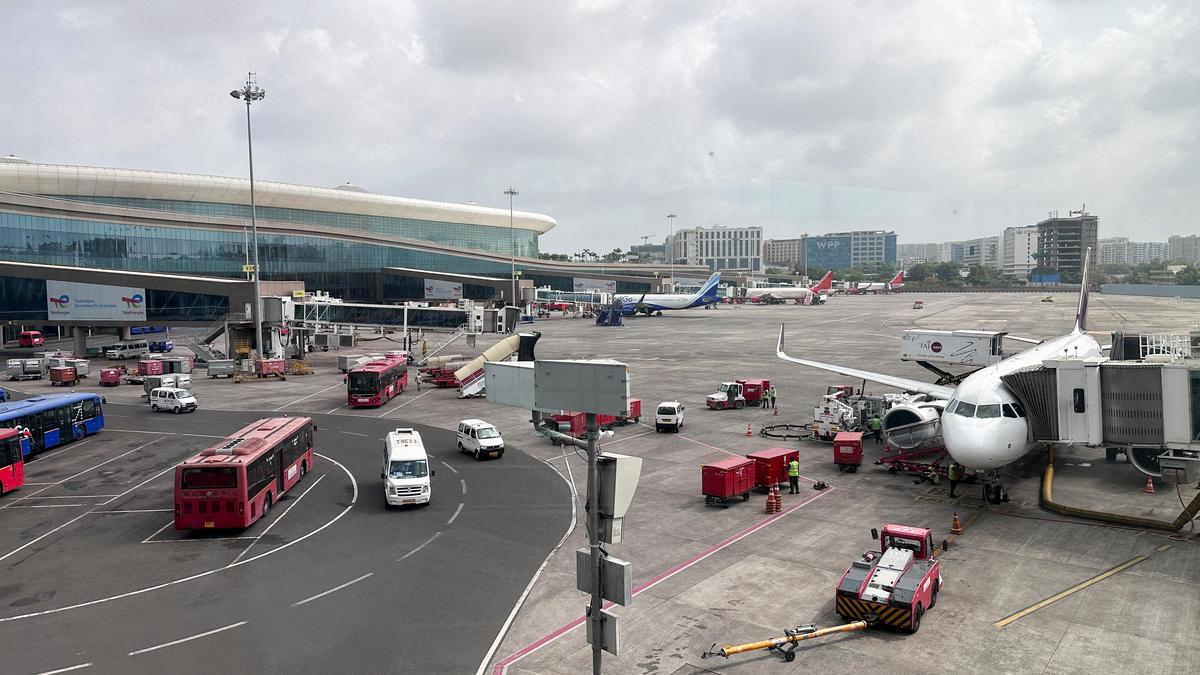
A general view of the Chhatrapati Shivaji Maharaj International Airport in Mumbai, India
| Photo Credit: Reuters
NEW DELHI
The Ministry of Civil Aviation has stepped in to pause Adani Airports’ proposed reduction in international flight operations at Mumbai’s Terminal 2, giving airlines and the airport operator until October 20 to finalise a transition plan for the redevelopment of Terminal 1.
The intervention follows strong opposition from airlines to Mumbai International Airport Ltd’s (MIAL) plan to cut 265 of Terminal 2’s 770 weekly international departure slots from October 26. The proposed reduction, equivalent to about 34% of international departure slots, would affect 46 carriers. IndiGo faces 74 slot cuts, Air India 33, and Emirates and Etihad Airways 10 each.

MIAL said the cuts are necessary to free up Terminal 2 facilities—including check-in counters, baggage belts, gates and office space—for domestic operations shifting from Terminal 1 during its phased redevelopment. The move is aimed at accommodating around five million additional passengers annually.
Airlines, however, have argued that the proposed timelines are too aggressive and operationally difficult to implement.
The civil aviation ministry has now asked Adani Airports, airlines and other stakeholders to reconvene and work out an “agreeable” and “win-win” transition plan. It has also directed Adani Airports to submit its request for the Major Development Plan for Terminal 1 redevelopment, a key requirement for taking the broader exercise forward.
Adani Airports has called a fresh stakeholder meeting on October 13. The ministry’s October 20 deadline gives airlines additional time to assess operational requirements and formulate a coordinated response.

The dispute is part of a larger reshuffle of Mumbai’s airport operations. Domestic traffic from Terminal 1 is to be shifted to Terminal 2, while some international services could eventually move to the new Navi Mumbai International Airport. The International Air Transport Association (IATA) has opposed any forced relocation, arguing that transfers should be voluntary and based on consultation.
Published – October 06, 2026 07:44 pm IST