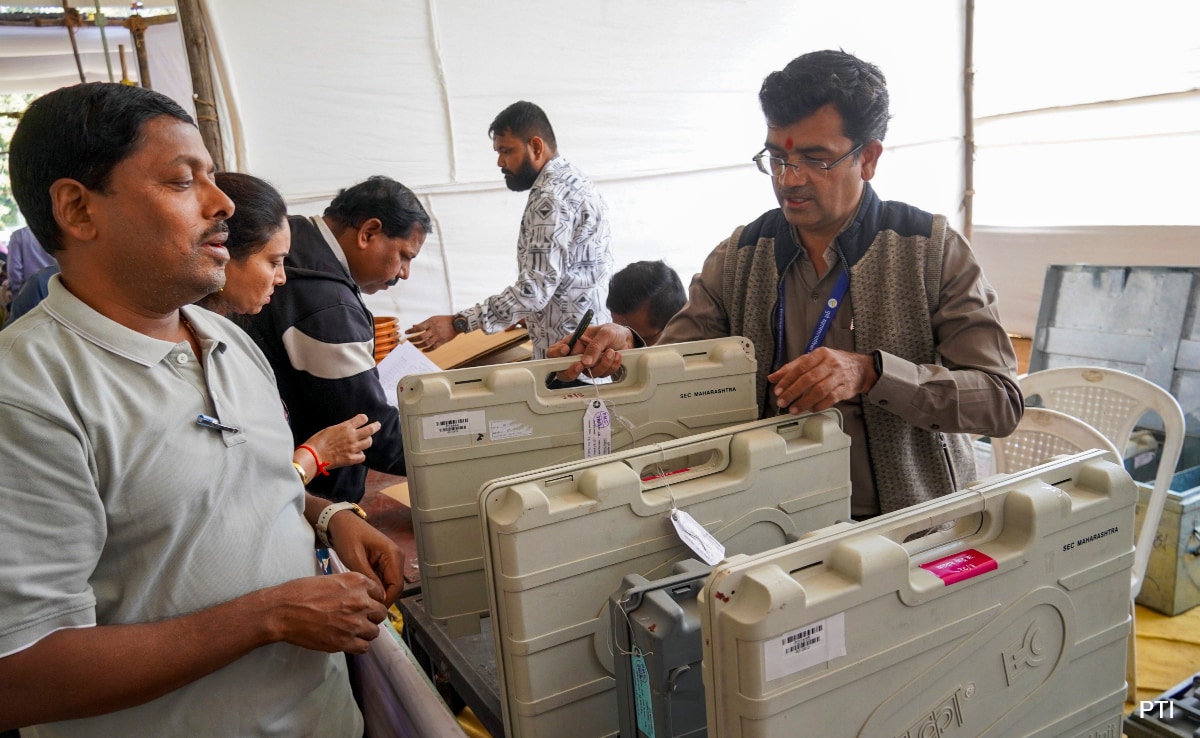






New options have been introduced on the Election Commission’s ECINET portal allowing Electoral Registration Officers (EROs) in Delhi to mark an elector as eligible without requiring documents or a hearing to dispose of a notice issued against the elector’s name, officials told The Hindu on Friday.
The change comes amid allegations of “centralisation” of the functioning of ECINET, which is being used by poll officials for the special intensive revision of electoral rolls in several States.
Sources said a new dialogue box, which now lets EROs clear voters for the final roll without scheduling a hearing or seeking documents, was not available before September 30. While clearing an elector, the ERO is required to upload a declaration that they are satisfied with the voter’s eligibility and have completed the verification.
EROs exercise the final authority over the preparation of the roll and decide on all claims and objections. Officials across constituencies said the options should have been made available from the beginning of the notice phase on August 31.
“The option to bypass hearings on a case-by-case basis should have been available to us from the start. We should have been allowed to take calls in cases where none of the prescribed documents is available,” said an ERO.
Another ERO said, “I first saw the options on Wednesday. So now if I am satisfied with cases where electors don’t have prescribed documents, I can submit a declaration that I have completed verification and proceed. I have disposed of hundreds of cases a day since then.” He could not clear more than 50 cases a day earlier.
‘Nov. 30 deadline’
According to latest data, proceedings have been concluded in fewer than 5 lakh of the 33.1 lakh cases in which notices were generated. In one West Delhi constituency, only two cases have been cleared so far.
The last date for the disposal of notices is November 30.
The limited options had been a concern for EROs dealing with cases where electors were struggling to produce the required documents within the stipulated hearing period.
More than 350 electors were marked ‘ineligible’ for not turning up for hearings, prompting Delhi Chief Electoral Officer (CEO) Ashok Kumar to caution EROs against choosing the option without proper verification.
When reached for response on the new options and why they were introduced at this stage, the Delhi CEO’s Office and the EC did not respond.
What changed
Earlier, uploading a hearing order was mandatory only in cases involving deletion or marking an elector ‘ineligible’.
For an elector to be marked for the final roll after a notice and hearing, the process involved the BLO and ERO and, in ‘no-mapping’ cases, the District Election Officer (DEO).
After the BLO uploaded documents along with an undertaking and photo attendance, the ERO checked the case and sent it to the DEO for verification. The ERO would then place the elector on the final roll based on the DEO’s feedback.
“Even electors who have not been flagged for any notice do not get marked for the final roll automatically. The ERO has to do it case by case,” said a source.
The new options alter that process. EROs can now place an elector in the final roll without uploading documents and, in certain cases, without scheduling a hearing.
Published – October 03, 2026 01:47 am IST