
Skip to content
  • Facebook
  • X
  • Linkedin
  • WhatsApp
  • YouTube
  • Associate Journalism
  • About Us
  • Privacy Policy
  • 033-46046046
  • editor@artifex.news
Artifex.News

Artifex.News

Stay Connected. Stay Informed.

  • Breaking News
  • World
  • Nation
  • Sports
  • Business
  • Science
  • Entertainment
  • Lifestyle
  • Toggle search form
  • U.S. waives 26 federal laws to allow border wall construction in South Texas
    U.S. waives 26 federal laws to allow border wall construction in South Texas World
  • Pakistan launches first home-made observation satellite
    Pakistan launches first home-made observation satellite World
  • Ukrainian attacks prompt Russian-held Crimea to halt civilian gasoline sales
    Ukrainian attacks prompt Russian-held Crimea to halt civilian gasoline sales World
  • Netanyahu thanks Trump, Biden for help with Gaza hostage deal: PM office
    Netanyahu thanks Trump, Biden for help with Gaza hostage deal: PM office World
  • “Sorry, My Love”: Olympics High Jumper Gianmarco Tamberi Apologizes To Wife After Losing Wedding Ring In Seine River
    “Sorry, My Love”: Olympics High Jumper Gianmarco Tamberi Apologizes To Wife After Losing Wedding Ring In Seine River Sports
  • Science for all Why did scientists create a new type of nanopasta which is thinner than spaghetti
    Science for all Why did scientists create a new type of nanopasta which is thinner than spaghetti Science
  • Access Denied Business
  • Access Denied
    Access Denied Nation
The evidence gap in dole politics

The evidence gap in dole politics

Posted on September 13, 2026 By admin


In May 1795, English magistrates met at the Pelican Inn in Speenhamland, Berkshire. With food prices rising and the French Revolution unsettling the English establishment, they decided to top up agricultural wages from parish funds, linking payouts to bread prices and family size. Hungarian economic historian Karl Polanyi later saw this as an early assertion of a human “right to live” against the harshness of the market.

Critics, however, held a different view. Once wage support, relief for the poor, and public finance were folded into one instrument, it became unclear what the system was protecting: poor families, the wage structure, employers, or social peace. By subsidising wages from public funds, the Speenhamland system blurred price signals and weakened incentives. While relief could be justified, the instrument still had to be judged by its effects. India’s dole politics must now face the same test.

Cash support can indeed be essential in a poor, informal economy. The Economic Survey 2025-26 notes that transfers to women amount to 11-24% of the monthly income of women daily-wage workers, and 11-87% of self-employed women. But a transfer that begins as relief can also become a permanent fiscal commitment unless there is a clear account of who receives it, what it changes, and what it displaces.

These concerns assume importance because dole politics is now a regular feature of Indian statecraft. It appears as free electricity, free bus travel, monthly cash transfers, subsidised food, and utility subsidies.

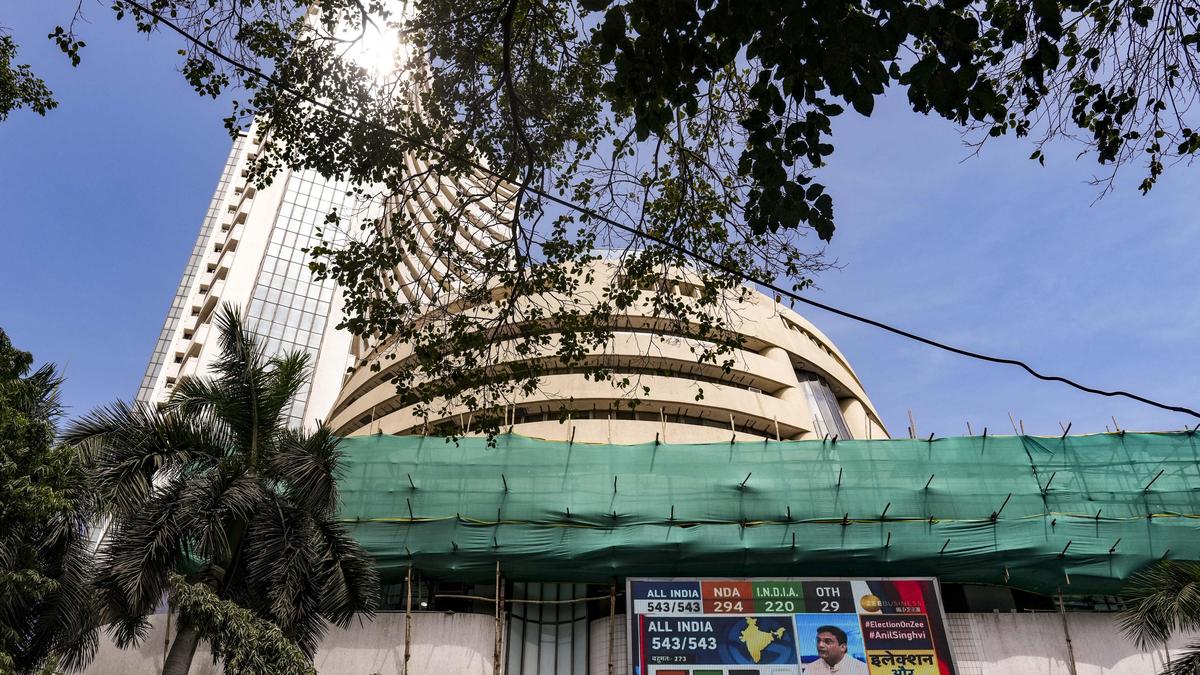
PRS Legislative Research estimates that unconditional cash transfers to women alone rose from two States in 2022-23 to 12 states in 2025-26, with an estimated annual cost of ₹1.68 lakh crore (about 0.5% of GDP). For example, West Bengal has moved from Lakshmir Bhandar to Annapurna Yojana, budgeting ₹36,000 crore for a ₹3,000 monthly transfer to about 1.3 crore women. Tamil Nadu allocated ₹14,412 crore for the Kalaignar Magalir Urimai Thogai in its 2026–27 interim budget, and Assam set aside ₹5,000 crore for Orunodoi. Such schemes stake major claims on State finances.

Need for accountability

Cash may improve welfare, but it should not become a substitute for the public goods that make welfare durable. The same woman who values ₹1,500-₹3,000 may also need a functioning health centre, childcare, a good government school, or access to better work. A cash transfer may soften the strain created by weak institutions, but it cannot, by itself, address them.

Governments often attach lofty social purposes such as dignity and empowerment to these transfers, but rarely publish the model that links payments to outcomes. Who exactly is being targeted? What baseline data justifies the scheme? What effect is anticipated on consumption, debt, nutrition, schooling, health spending, labour supply, or women’s bargaining power? Without such answers, it is unsurprising that much of India’s dole politics today is defended by the moral language of welfare rather than evidence. An ADB study, prepared for the 16th Finance Commission, found that India lacks a systematic dataset of government expenditure on cash-transfer schemes.

Other democracies also redistribute and are not immune to welfare politics. However, benefits such as unemployment insurance, food support, and healthcare subsidies are usually tied to eligibility rules, contribution records, job-search obligations, or periodic reassessment. India need not copy these systems mechanically. Some transfers, especially to women in poor households, may be better left unconditional. But the fewer the conditions placed, the greater must be the obligation on governments to provide evidence.

A large recurring transfer should therefore include a welfare impact statement before rollout, detailing the objective, eligibility rule, expected coverage, five-year fiscal cost, alternatives considered, likely leakage and exclusion errors, and measurable outcomes. After rollout, household surveys should record not only whether the transfer was received but also how it affected consumption, debt, health spending, schooling, mobility, work incentives, control over household expenditure, and subjective well-being. Anonymised microdata should then be made available for independent research. Schemes that spend public money on this scale must survive severe scrutiny.

The case for evidence is also one of democratic fairness. Evidence will not remove politics from welfare, but it could make that politics more honest.

Sayantan Kundu is Assistant Professor of Finance at IMI Kolkata. Amarendu Nandy is Associate Professor of Economics & Public Policy at IIM Ranchi. Views are personal

Published – September 14, 2026 12:56 am IST


Source link

Business Tags:Annapurna Yojana, DBT to women, Direct Benefit Transfers, Kalaignar Magalir Urimai Thogai, Lakshmir Bhandar, Orunodoi, Unconditional cash transfers to women

Post navigation

Previous Post: Want to ‘reset’ ties with India, should be done through bilateral discussions: Bangladesh
Next Post: Russian drone hits train near Ukraine-Poland border soon after Boris Johnson, other visiting dignitaries passed through

Related Posts

  • HCLTech wins .14 billion deal with European firm
    HCLTech wins $1.14 billion deal with European firm Business
  • Access Denied Business
  • FPIs pull out ₹27,000 crore in May; 2026 outflows hit ₹2.2 lakh crore-mark
    FPIs pull out ₹27,000 crore in May; 2026 outflows hit ₹2.2 lakh crore-mark Business
  • Sensex, Nifty decline in early trade on foreign fund outflows, weak U.S. peers
    Sensex, Nifty decline in early trade on foreign fund outflows, weak U.S. peers Business
  • ‘Unequal growth post the globalisation boom of the 1990s and 2000s led to the current inward looking trade policies’
    ‘Unequal growth post the globalisation boom of the 1990s and 2000s led to the current inward looking trade policies’ Business
  • Union Budget 2025 hikes funds for roads by 2.4%
    Union Budget 2025 hikes funds for roads by 2.4% Business

More Related Articles

Rupee falls 21 paise to 94.71 against U.S. dollar in early trade Rupee falls 21 paise to 94.71 against U.S. dollar in early trade Business
GST has helped people with a pro-poor approach, says Nirmala Sitharaman GST has helped people with a pro-poor approach, says Nirmala Sitharaman Business
None of Adani portfolio firms subject to any legal case: Group CFO None of Adani portfolio firms subject to any legal case: Group CFO Business
Access Denied Business
Know a good forecaster? – The Hindu Know a good forecaster? – The Hindu Business
Access Denied Business
SiteLock

Archives

  • September 2026
  • August 2026
  • July 2026
  • June 2026
  • May 2026
  • April 2026
  • March 2026
  • February 2026
  • January 2026
  • December 2025
  • November 2025
  • October 2025
  • September 2025
  • August 2025
  • July 2025
  • June 2025
  • May 2025
  • April 2025
  • March 2025
  • February 2025
  • January 2025
  • December 2024
  • November 2024
  • October 2024
  • September 2024
  • August 2024
  • July 2024
  • June 2024
  • May 2024
  • April 2024
  • March 2024
  • February 2024
  • January 2024
  • December 2023
  • November 2023
  • October 2023
  • September 2023
  • August 2023
  • July 2023
  • June 2023
  • May 2023
  • April 2023
  • March 2023
  • February 2023
  • January 2023
  • December 2022
  • November 2022
  • October 2022
  • September 2022
  • August 2022
  • July 2022
  • June 2022
  • May 2022

Categories

  • Business
  • Nation
  • Science
  • Sports
  • World

Recent Posts

  • Trump reiterates support for united Ireland, says won’t talk about Scotland ‘yet’
  • Asia Cup: Indian women’s cricket team refuses to accept trophy from ACC head Mohsin Naqvi
  • Asia Cup: Indian women’s cricket team refuses to accept trophy from ACC head Mohsin Naqvi
  • Keralam CM V.D. Satheesan takes a trip down memory lane at alumni meet
  • Russian drone hits train near Ukraine-Poland border soon after Boris Johnson, other visiting dignitaries passed through

Recent Comments

  1. Charlesvig on UP Teacher Who Asked Students To Slap Muslim Classmate
  2. Michaelbib on UP Teacher Who Asked Students To Slap Muslim Classmate
  3. JamesRuido on UP Teacher Who Asked Students To Slap Muslim Classmate
  4. WilliamnuP on UP Teacher Who Asked Students To Slap Muslim Classmate
  5. LarryBoume on UP Teacher Who Asked Students To Slap Muslim Classmate
  • What Neeraj Chopra Said On Being Replaced By PR Sreejesh As India’s Closing Ceremony Flag Bearer
    What Neeraj Chopra Said On Being Replaced By PR Sreejesh As India’s Closing Ceremony Flag Bearer Sports
  • Andrew Tate Detained In Romania Over UK Sex Offence Charges
    Andrew Tate Detained In Romania Over UK Sex Offence Charges World
  • Madras Day 2026: an old market in Mylapore puts on a brave front
    Madras Day 2026: an old market in Mylapore puts on a brave front Nation
  • Las Vegas Nightmare For Max Verstappen As Red Bull Bring Wrong Wing
    Las Vegas Nightmare For Max Verstappen As Red Bull Bring Wrong Wing Sports
  • BJP’s Manoj Tiwari Demands Probe Into Delhi Classroom Construction “Scam”
    BJP’s Manoj Tiwari Demands Probe Into Delhi Classroom Construction “Scam” Nation
  • Kremlin says it sticks to conditions for return to Black Sea grain deal
    Kremlin says it sticks to conditions for return to Black Sea grain deal World
  • Ticket Checker’s CPR Revives Elderly Man After Heart Attack In Train
    Ticket Checker’s CPR Revives Elderly Man After Heart Attack In Train Nation
  • Access Denied Sports

Editor-in-Chief:
Mohammad Ariff,
MSW, MAJMC, BSW, DTL, CTS, CNM, CCR, CAL, RSL, ASOC.
editor@artifex.news

Associate Editors:
1. Zenellis R. Tuba,
zenelis@artifex.news
2. Haris Daniyel
daniyel@artifex.news

Photograher:
Rohan Das
rohan@artifex.news

Artifex.News offers Online Paid Internships to college students from India and Abroad. Interns will get a PRESS CARD and other online offers.
Send your CV (Subjectline: Paid Internship) to internship@artifex.news

Links:
Associate Journalism
About Us
Privacy Policy

News Links:
Breaking News
World
Nation
Sports
Business
Entertainment
Lifestyle

Registered Office:
72/A, Elliot Road, Kolkata - 700016
Tel: 033-22277777, 033-22172217
Email: office@artifex.news

Editorial Office / News Desk:
No. 13, Mezzanine Floor, Esplanade Metro Rail Station,
12 J. L. Nehru Road, Kolkata - 700069.
(Entry from Gate No. 5)
Tel: 033-46011099, 033-46046046
Email: editor@artifex.news

Copyright © 2023 Artifex.News Newsportal designed by Artifex Infotech.