






It has been a little over a week since Gloria Steinem, the iconic American feminist, died. The media has been full of stories about this extraordinary woman whose achievements were considerable, as were the controversies she was caught in.
Will the history of feminism give us another such hero? It’s hard to say. Steinem was an influential woman and her fame traversed many borders. She was also somebody who did not fear the limelight, although she did not necessarily actively seek it out. In the history of feminism, there aren’t too many icons like her. Perhaps, this is why many are asking the question: is feminism no longer the force it was, has it had its day or has it morphed into something else?
But, feminism isn’t the same the world over. Nor is it that easy to kill. Once the battle against injustice and discrimination begins, the route it takes may not be straightforward or linear but it continues to be resilient. Further, in each location, in each context, feminist histories are localised and shaped by particular ground realities.
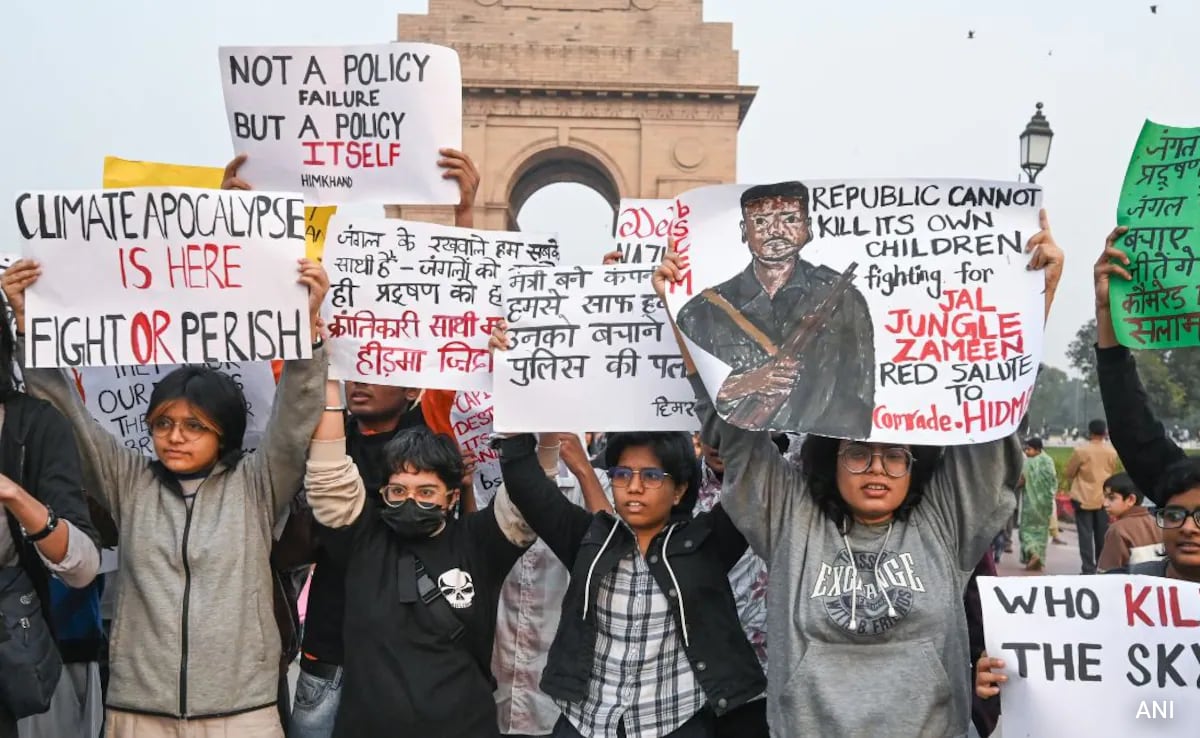
In many parts of the world then, feminism is alive and well. Take India, for example. Here, questions of land, labour, caste, health, the environment and violence have long been central to women’s activism. Indeed, one of the early slogans of the feminist movement defiantly claimed women’s right to ‘jal, jangal, zameen’ (water, forest and earth).
Village women hug trees as part of the Chipko Movement in the 1970s.
| Photo Credit:
Getty Images
Perhaps, then, the search for another Steinem is itself the wrong question. In India, feminist activism has often found its power not in a single figure, but in collective mobilisation around concrete struggles. Maharashtra offers a particularly revealing example.
Last December, women’s groups all over the State came together under the collective banner of the Maharashtra Stree Mukti Parishad to mark 50 years of feminist activism in the State. Days of commemoration showed the richness and range of issues taken up by women activists. “Women came together from all over Maharashtra, rural, urban, everywhere. They looked at old and new issues. The conference was a wonderful example of how much work has happened in 50 years,” says Nandita Gandhi, co-director of Akshara, an organisation born of the early days of the movement.

Three years earlier, in a major 65-day march called the Dignity March, survivors of sexual violence from across 24 States in India walked over 10,000 kilometres to draw attention to sexual violence. And during the many months of the farmers’ protest outside Delhi, hundreds of women farmers came together to demand their rights. Multiply these instances many times over and you will still only have a snapshot of the Indian women’s movement.
Among those who undertook the Dignity March were women from different villages in Madhya Pradesh. With the support of Maraa, a Bengaluru-based group, they were inspired to form a theatre group called Freeda. Today, they take the message of the importance of battling sexual violence across India through theatre. “This is our life now. Theatre allows us to give voice to issues we cannot talk about easily at home,” says a member of the group.

Village women in Palghar, Maharashtra, on a cleanliness awareness campaign. (File photo)
| Photo Credit:
Getty Images
The 70s momentum
This kind of activism is not something new. When Steinem first came to India in the 1950s, she spent some years travelling around the country. Among the Gandhian activists who were her travel companions, there must have been considerable numbers of women because in those years, and the ones that followed, women across India were centrally involved in many different movements.

American feminist activist Gloria Steinem (centre) with Indian writers and activists such as Ruth Manorama (left), Devaki Jain (right), Shashi Deshpande (back row) and others, at an events in Bengaluru, February 2007.
| Photo Credit:
V. Sreenivasa Murthy
For activists of my generation, the 70s were the turbulent and exciting years in which we came into our feminisms. The Supreme Court’s shocking acquittal in 1979 of two policemen accused of raping a minor Adivasi girl called Mathura acted as a catalyst for a countrywide movement against violence. Small and large collectives, and organised groups sprung up to deal with domestic violence, health, coercive contraception, caste discrimination, communalism, unfair laws; they brought out magazines such as Baiza (Marathi), Manasi (Kannada), Stree Sangharsh (Hindi) and many more.
Our inspiration thus came not only from our mothers and grandmothers who were involved in the freedom movement but also from the thousands of women all over the country who were part of major movements, and were raising important questions.

Women protest against rising prices of essential commodities in New Delhi, October 1978.
| Photo Credit:
Getty Images
The 60s and early 70s had already given us the Shahada movement, a grassroots Adivasi mobilisation against the exploitation and oppression of landless agricultural labourers in Dhulia district of Maharashtra. It brought large numbers of Adivasi and Dalit women into campaigns against exploitative landlords. Among the key issues was the sexual exploitation women faced, and this was the focus of several discussions in the shivirs (gatherings) that were held.
The 70s also brought the anti-price rise movement, an all-woman agitation against hoarding and high prices that, at any given time, had as many as 25,000 women staging unique protests with songs, posters, and kitchen implements as part of their arsenal. Their protests were an inspiration for the Navnirman Andolan in neighbouring Gujarat.

A student protest at Gujarat University as part of the Navnirman Andolan, May 1973.
| Photo Credit:
Getty Images
In Bihar, Jayaprakash Narayan led a large group of students under the banner of the Chhatra Yuva Sangharsh Vahini in what came to be called the Bodhgaya movement. Chetna Gala Sinha, a student activist then, went on to make her life in Bihar and set up a bank, the Mann Deshi Mahila Sahakari Bank, for rural women. “I learnt so much from the women in my village,” she says.
Recalling how their application to start a bank was rejected the first time because its founding members — poor rural women — were not literate, Sinha says they persuaded her not to lose heart. “‘We will learn to read and write and apply again,’ they said. And so they did, and they succeeded,” says Sinha, who remains active with Mann Deshi Bank and was awarded the Nari Shakti Puraskar, India’s highest civilian honour for women’s empowerment, in 2018.

Chetna Gala Sinha, Founder of Mann Deshi Mahila Sahakari Bank.
| Photo Credit:
N. Ramakrishnan
In the Bodhgaya movement too, women were central to the cause, and they questioned all forms of patriarchy: why, they asked, in a protest designed to redistribute land taken from the Mahabodhi Temple management, were the land deeds allocated only in the names of men?
In northern India, the Chipko movement brought women out of their homes to protect their trees from being wantonly cut up and sold, a move designed to preserve the soil, water, and climate.
And in urban Maharashtra, the Dalit Panther movement, begun by Dalit (male) writers, eventually led to women writers pushing open the door and bringing to the forefront the question of caste discrimination. Authors like Urmila Pawar, Kumud Pawde, Kaushalya Baisantri, Malika Amar Shaikh became household names, leading the way for others like Anita Bharti who turned into writer-activists. “For me, my writing became my weapon,” says Bharti, a prominent figure in Hindi Dalit literature who helped establish Dalit feminism as a parallel stream within mainstream Indian feminism.

Anita Bharti, author and activist
Speak out, speak aloud
It is against this context that we see the coming into activism of various women, individually and collectively, on what have become central issues in the feminist movement. In the early 70s, Fatima Burnad, a Dalit woman from Arakkonam in Tamil Nadu, was just out of college when she began work on social issues with a local group, Action for Political and Cultural Change. The only woman among a bunch of men, albeit of a reasonably progressive bent of mind, she was given to understand that because she was a woman, the only work she could take up was tailoring.
But she refused and fought to be allowed to work in areas she felt were important. “I managed to get them to let me use a Bobby scooter,” says Burnad, now 73. The scooter gave her mobility and freedom, and she began work among agricultural labourers and women, encouraging them to farm government land, grow food, and beat poverty, as well as address problems of domestic violence, alcoholism among men, and so on. The organisation Burnad set up, Society for Rural Education and Development, today works with poor rural women.

Fatima Burnad, founder of Society for Rural Education and Development.
Burnad was not alone in this: in a remarkable commitment to women, 23 organisations came together to build a community centre for rural women that still stands in Arakkonam and is widely used today. The media did not come rushing to Burnad to write about her work, but she continues regardless.
In neighbouring Karnataka, Burnad’s friend Ruth Manorama, also a well-known Dalit activist and the founder of Women’s Voice, a Karnataka-based organisation, was cutting her political teeth. Manorama’s family had moved to Bengaluru where she came in contact with poor urban Dalit populations who were being displaced to make space for the homes and offices of the wealthy. Starting with the rights of slum dwellers, Manorama went on to work with marginalised women, encouraging them to speak out, to speak aloud, to articulate their issues.
Ruth Manorama, founder of Women’s Voice in Karnataka.
| Photo Credit:
H.S. Manjunath
“I found,” she says, referring to the ways in which women’s groups at the time were focusing on issues to do with patriarchy, “that for us, Dalit women, the issues were beyond patriarchy. They had to do with housing, education, violence, and fundamentally, with caste discrimination.” This is why, Manorama explains, many Dalit women felt the need to set up their own organisations. She went on to found the National Federation of Dalit Women, an organisation that, along with others, took the issue of caste to the international stage.
Women at the protests against the Citizenship (Amendment) Act in Delhi’s Shaheen Bagh, January 2020.
| Photo Credit:
R.V. Moorthy
Nor are they the only ones. A new generation of feminists, young women, men, queer and trans people, are today owning their identities, coming together to campaign and fight for their rights. During the 2019-20 protests against the Citizenship (Amendment) Act in Delhi’s Shaheen Bagh, it was young Muslim women who took centrestage. Two of them, Gulfisha Fatima and Safoora Zargar, both barely out of college, had to face imprisonment as a result.
In the battle to reclaim women’s right to enter the Haji Ali shrine in Mumbai, it was again Muslim women who went to court and won. In the disability rights movement, it is younger women who are taking the lead. And in the recent protests led by the Cockroach Janta Party, youth cutting across caste, class and identity came together to demand accountability from the government.

Young students at the protest led by the Cockroach Janta Party at Delhi’s Jantar Mantar this July.
| Photo Credit:
Shiv Kumar Pushpakar
Manorama and Burnad’s trajectories are thus not atypical: across India, there are groups like theirs and women like them who have dedicated their lives, quietly, doggedly, without seeking publicity and recognition, to fighting for women. This is what marks the Indian women’s movement as different from the West.
They have set up institutions that will remain long after they’re gone, trained younger women to enter fields like journalism, published reports and papers to create knowledge, and worked for years with rural communities. But the remarkable, and distinguishing, feature of their work is that there is no one single woman who can be said to represent a whole movement. This remains true for the older feminists as much as it does for the younger ones who have taken on their mantle.
Perhaps, that is why the Indian women’s movement will survive.
The writer is an activist and the founder of Zubaan Books.