
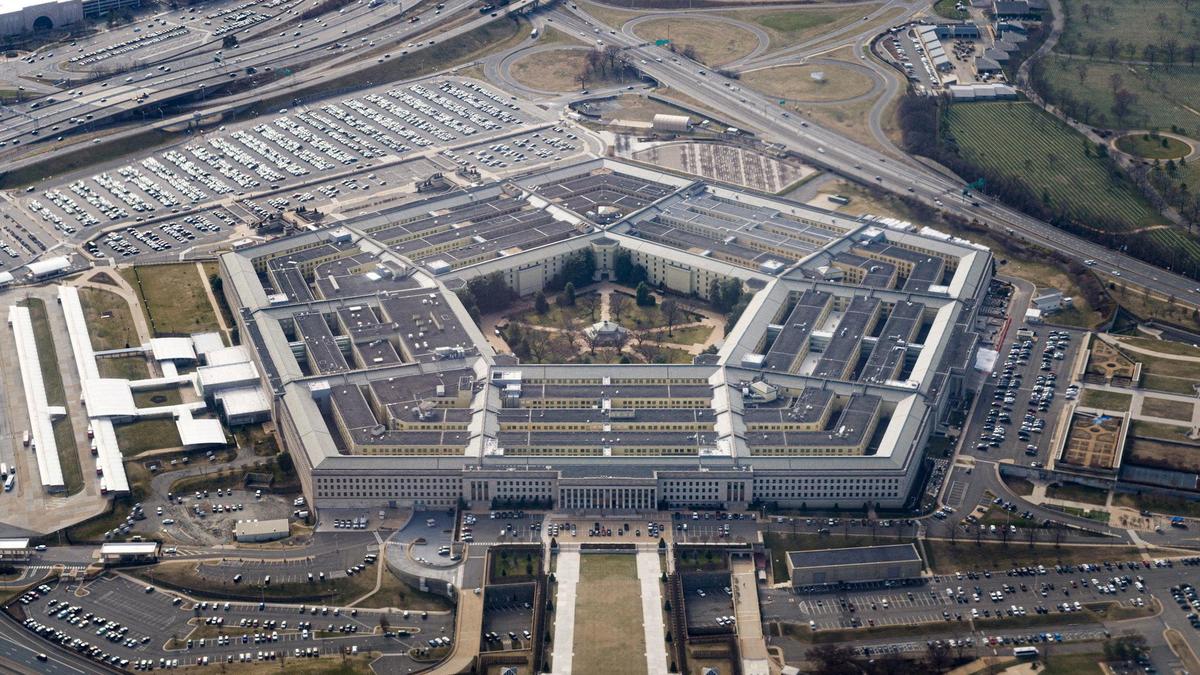



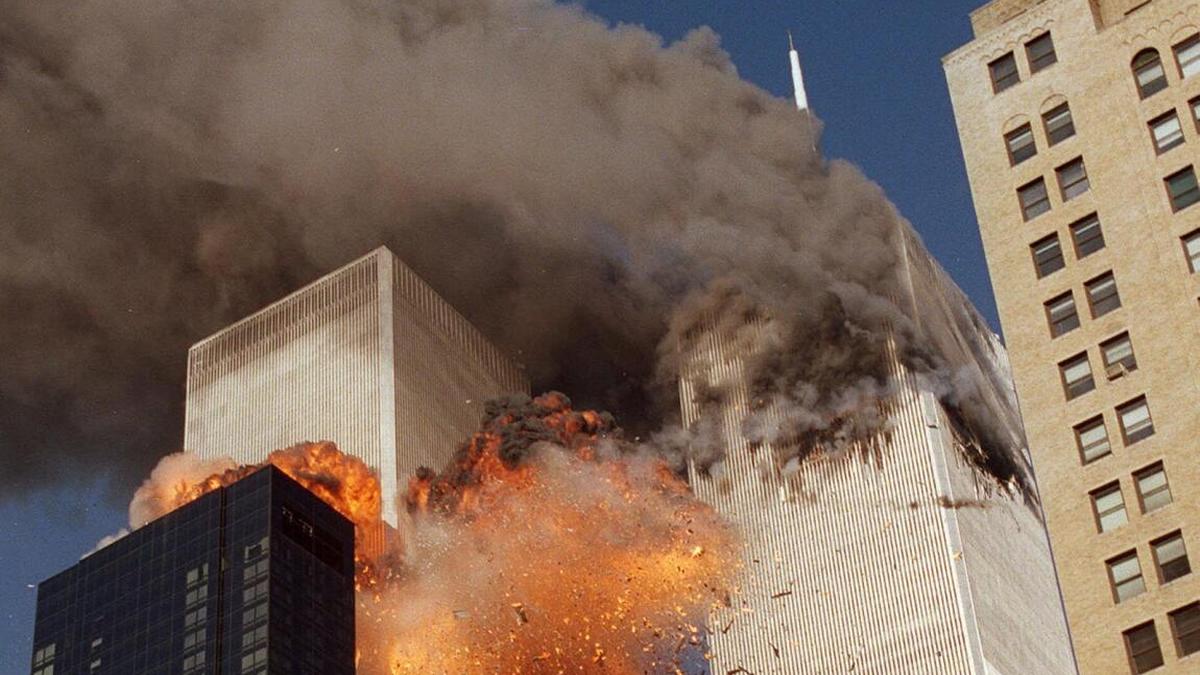
The 9/11 terror attacks are forever etched in the collective memory of the world. On September 11, 2001, the world witnessed horrors hitherto unseen as the Twin Towers in New York City, USA, came crumbling down after two commercial flights crashed into them. Another jetliner hit the Pentagon, and a fourth crashed in Pennsylvania.
Also read | 25 years after 9/11: What is at Ground Zero where the Twin Towers once stood
The moment and its aftermath, chronicled by The Hindu from the ground, completely changed the way the world looked at terrorism. Its scars are still visible 25 years later, in the form of the 9/11 Memorial and Museum and the accounts of many who lost loved ones.
Also Read: Our coverage of the 20th year of the 9/11 attacks
What happened on 9/11?
At its core, the 9/11 terror attacks involved four planes that were hijacked by terrorists. Their intended targets were the North and South Towers of the World Trade Center in New York and the Pentagon. The target of the fourth flight has been speculated widely, with some saying that even the White House could have been the final destination of that fateful aircraft.
From 2021: Worldview with Suhasini Haidar | 20 years after 9/11, what have we learned?
The four flights that were involved were American Airlines Flight 11, United Airlines Flight 175, American Airlines Flight 77, and United Airlines Flight 93. The world watched in horror as the city descended into chaos and smoke spread across New York with people jumping from the Twin Towers.
A jet airliner is lined up on one of the World Trade Center towers in New York, September 11, 2001
| Photo Credit:
AP
9/11 victims
Nearly 3,000 people died on 9/11, according to the FBI, which adds that the victims of the attack were from New York, Washington, D.C. and 27 other states of the country. The US Army lost 75 personnel in the attack. More than 400 first responders, including 60 law enforcement officers, were killed, and nearly 3,000 children lost a parent.
Who was responsible?
According to the FBI, the 19 men who hijacked and crashed the four planes were all trained by terrorist organisation al-Qaeda. Three of the suspected pilots – Mohamed Atta, Marwan Al-Shehhi, and Zaid Jarrah – were part of the terror cell in Hamburg, Germany. Fifteen of the hijackers came from Saudi Arabia, two from the United Arab Emirates or UAE, one from Egypt, and one from Lebanon. The FBI adds that the hijackers began entering the US in January 2000, and all nineteen of them were in the country by early July 2001, three months before that tragic day.

A person falls headfirst from the north tower of New York’s World Trade Center, September 11, 2001
| Photo Credit:
AP
How The Hindu covered 9/11

Front page of The Hindu, September 12, 2001
“America under attack” was the front-page headline of The Hindu on the day after, with images of a crumbling World Trade Centre dominating the coverage.
The Hindu’s then foreign correspondent Sridhar Krishnaswami, while reporting on the immediate aftermath, wrote that “what has stunned intelligence and law enforcement agencies, as also the common man, is the kind of coordination and precision the terrorist acts had been executed.” Describing the horrifying scenes that he witnessed, Mr. Krishnaswami wrote about how smoke and shock spread all over New York and that “the first impression here and elsewhere is where intelligence went wrong and some are already talking about colossal intelligence failure.”
9/11 attacks: Photos that defined the day of terror

An American flag flies near the base of the destroyed world trade center in new york, September 11, 2001. Planes crashed into each of the two towers, causing them to collapse.

Emergency personnel work in the debris of the World Trade Centre in New York, Wednesday, September 12, 2001. Rescue workers dug for bodies in mountains of rubble as the city struggled to recover from an airborne attack on the World Trade Centre on Tuesday that shut down the nation’s financial capital and created a new skyline etched in terror.

Rescue workers and vehicles are deployed near the site of the World Trade Centre in New York, Wednesday, September 12, 2001.

Combo TV images show a tower of the World Trade Centre collapsing after two planes crashed into the complex on September 11, 2001, destroying New York’s mighty twin towers.

The 9/11 attack’s “falling man” was one of the most iconic and haunting images, depicting a person falling headfirst from the north tower of New York’s World Trade Centre on Tuesday, September 11, 2001.

Smoke, flames and debris erupt from one of the World Trade Centre towers as a plane strikes it on September 11, 2001. The first tower was already burning following a terror attack minutes earlier. Terrorists crashed planes into the two buildings, causing both towers to collapse.

The south tower of the World Trade Centre bursts into flames after being struck by United Airlines Flight 175 in New York on September 11, 2001.

With the Brooklyn Bridge in the foreground, a plane explodes after hitting the second tower of the World Trade Centre as the other tower burns, in New York, September 11, 2001. Both towers of the complex collapsed after hijacked planes hit them.

The remaining tower of New York’s World Trade Centre, Tower 2, dissolves in a cloud of dust and debris about a half hour after the first Twin Tower collapsed September 11, 2001. The pictures were taken from across the Hudson River in Jersey City, New Jersey.

Firemen work around the World Tade Center after both towers collapsed in New York on September 11, 2001. The kamikaze airplane attacks that destroyed New York’s World Trade Centre and damaged the Pentagon on Tuesday were unprecedented in the history of civil aviation, security experts said.

In this September 11, 2001 photo made by the New York City Police Department and provided by ABC News, smoke and ash engulf lower Manhattan after terrorists flew two airliners into the World trade Centre towers.

A rescue helicopter surveys damage to the Pentagon as firefighters battle flames after an airliner crashed into the building in this September 11, 2001, file photo.

The World Trade Centre in New York City burns as a police helicopter flies nearby early September 11, 2001. Both towers were hit by planes crashing into the building. Shortly after this photo was taken, both towers fell.

Firefighters and emergency personnel remove debris from the site of the World Trade Centre towers’ collapse in New York, September 13, 2001.

An original piece of the Twin Towers, known as a “trident,” is lowered into its permanent location at the 9/11 Memorial Museum at ground zero in New York, Tuesday, September 7, 2010. Behind the “trident” is One World Trade Center, still under construction.

Firefighters raise a flag late in the afternoon on Tuesday, September 11, 2001, in the wreckage of the World Trade Centre towers in New York. In the most devastating terrorist onslaught ever waged against the United States, knife-wielding hijackers crashed two airliners into the World Trade Centre, toppling its twin 110-story towers.

Photos of victims of the attacks of September 11, and messages from their loved ones, are shown at a news conference on September 10, 2012 in New York. On the eve of the September 11 anniversary, the faces and recorded voices of those who died were unveiled as part of the future 9/11 Memorial Museum.

A family member of an Israeli victim of the September 11 attacks, points to the victim’s name, engraved on a monument, during a memorial event at the 9/11 Living Memorial Plaza in Jerusalem on September 11, 2016.
1/3
The attacks predominantly covered the front page, which also ran an AP report that questioned whether terrorists had their own pilots. Inside pages featured more details, with Mr. Krishnaswami’s ‘Needle of suspicion on Osama bin Laden’ pointing out that attacks appeared to be extremely well planned and coordinated. “In spite of all the denials of the Taliban, the needle of suspicion is on Osama bin Laden and the fundamentalist outfit in Kabul that is known to protect him. At this time, Osama bin Laden is the prime suspect, especially after what happened to the American Embassies in Africa in 1998 and last year’s bombing of the USS Cole.”
On September 13 too, the focus was on the perpetrators of the crime as Mr. Krishnaswami’s ‘The Hunt Is On For The Culprits’ described about how the US was tracking down the assailants.
In ‘A giant grievously wounded’ report on September 16, 2001, Mr. Krishnaswami explained how America will never be the same again. “There is a lot of pain in America. There is a lot of anger as well,” he wrote in the aftermath of the attack. C. Raja Mohan, in his ‘Dealing with the enemy’ report, pointed out that homeland defence will now take precedence in the U.S.
First-person accounts of victims, emergency operators, and The Hindu journalists themselves reveal the human scale of the tragedy even years later.
A year after 9/11, Mr. Krishnaswami recounted the horrors in ‘A day that changed America’. He wrote “for someone who had come to New York two days earlier on a routine assignment to the United Nations, the day literally started with a jolt…”.
An April 2006 report in The Hindu, provided by the New York Times News Service, notes how tapes from 9/11 provide details of victims from the Towers calling emergency operators, saying final goodbyes, and asking for help.
“Just hold on one second, Sir,” a police operator is taped saying to a victim of the attack. ‘”Hold on, I hear the fire alarms. They’re coming. My God, this- don’t worry. God is there. God is there. God is- don’t worry,” he adds .“Take care” “Bye” “Bye” “Were you able to call your family?”, says another emergency operator to a victim of the attack.
Global reactions
Nations across the globe condemned the attacks. Notably, Russia, who had shared prickly foreign relations with the US, also joined this cohort. A Reuters report, published in The Hindu, noted how Russian President Vladimir Putin, in a televised address, said that the attack was an “unprecedented act of aggression on the part of international terrorism” and a “brazen challenge to all mankind.” Mr. Putin sent out a message of condolence to President Bush referring to him as “Dear George.”
The then UK correspondent of The Hindu, Hasan Suroor, reported on how PM Tony Blair said that “we stand with the USA on this.” Mr Blair added that 9/11 had consequences “right around the world” and the “international community as a whole should consider the nature of the groups behind such acts, how they were financed, how they operated and how they should be defeated.”
The UN General Assembly expressed shock over 9/11 and postponed the commencement of its 56th session. Mr. Krishnaswami noted in The Hindu that the Secretary-General said that everyone was “traumatised” by the tragedy and that terrorism must be fought resolutely “wherever it appears.”
India’s response to 9/11
The Hindu report, dated September 12, 2001, quoted the then External Affairs Minister Jaswant Singh saying that India offers its “deepest condolences” to the people, the Government, and the President of the U.S. The attack cast a shadow on India’s then PM Atal Bihari Vajpayee’s scheduled visit to New York for the UN General Assembly. Mr Singh spoke to the US Ambassador to India and assured more security to US citizens in the country. Security was beefed up across New Delhi, with Air India flights bound for New York and Chicago being called back as a precaution.
What happened to the fourth flight?
United Airlines Flight 93 took off from Newark towards San Francisco when it was hijacked. It did not, however, reach its intended target and crashed into a field in Shanksville, Pennsylvania, killing all 44 on board. But the heroism of the passengers against their hijackers led to many hundreds of lives being possibly saved.
A report in The Hindu, on November 19, 2001, , describes what happened. Captain Jason Dahl, the pilot, could be heard asking air traffic controllers, “Did you say that they weren’t accepting any traffic into the New York area?” The controller replied: “They’re not, they’re having a problem with World Trade Centre.”
Moments later, there were screams and shouts of “Get out of here!” Captain Dail and his co-pilot Leroy Homer were being attacked. One of the hijackers then spoke to the passengers, saying, “Hi this is the captain, we’d like you all the remain seated. There is a bomb aboard. And they have our demands so please stay quiet.”
A passenger, Todd Beamer, then uttered words to other passengers. These were later quoted by President George Bush. “Are you guys ready!, let’s roll,” he said.
How did US respond?
The Bush administration went after the Taliban in Afghanistan and invaded the country in October 2001 to dismantle al-Qaeda. Iraq was invaded by the US in 2003 in the continuance of its war against terrorism. The Obama administration in 2011 killed the chief of al-Qaeda, Osama bin Laden, in an overnight operation in Abbottabad, Pakistan, on May 2, 2011.
A report in The Hindu, dated May 7, 2011, noted that ‘the CIA had Osama’s compound under surveillance for months before U.S. commandos killed him, watching and photographing residents and visitors from a rented house nearby, according to several officials briefed on the operation.’
The Bush administration ran a military prison at Guantánamo Bay in Cuba to imprison terror suspects. Internet whistleblower site Wikileaks revealed that the inmates linked to the U.S. “war on terror” were subjected to torture, abuse and “enhanced interrogation techniques”. It continues to be operational since 2002 even as the Obama and Biden administrations tried to shut it down.