

Skip to content
  • Facebook
  • X
  • Linkedin
  • WhatsApp
  • YouTube
  • Associate Journalism
  • About Us
  • Privacy Policy
  • 033-46046046
  • editor@artifex.news
Artifex.News

Artifex.News

Stay Connected. Stay Informed.

  • Breaking News
  • World
  • Nation
  • Sports
  • Business
  • Science
  • Entertainment
  • Lifestyle
  • Toggle search form
  • Deputy Superintendent of Police Sunil Kumar On UP’s Hathras Stampede
    Deputy Superintendent of Police Sunil Kumar On UP’s Hathras Stampede Nation
  • Access Denied
    Access Denied Nation
  • Bumrah’s ball to Rizwan shows energy conservation law in action
    Bumrah’s ball to Rizwan shows energy conservation law in action Science
  • Dominant Australia proves to be in a league of its own
    Dominant Australia proves to be in a league of its own Sports
  • Rupee rises 2 paise to 83.23 against U.S. dollar in early trade
    Rupee rises 2 paise to 83.23 against U.S. dollar in early trade Business
  • Access Denied Sports
  • “If India Go Over The Top…”: Australia Legend Ian Chappell’s Sharp Warning To Team India
    “If India Go Over The Top…”: Australia Legend Ian Chappell’s Sharp Warning To Team India Sports
  • Tamim Iqbal Accuses Alex Hales Of ‘Verbally Abusing’ 18-Year-Old, Bangladesh Premier League Spat Gets Ugly
    Tamim Iqbal Accuses Alex Hales Of ‘Verbally Abusing’ 18-Year-Old, Bangladesh Premier League Spat Gets Ugly Sports
Why is New York City pausing some AI tools in schools? | Explained

Why is New York City pausing some AI tools in schools? | Explained

Posted on September 5, 2026 By admin


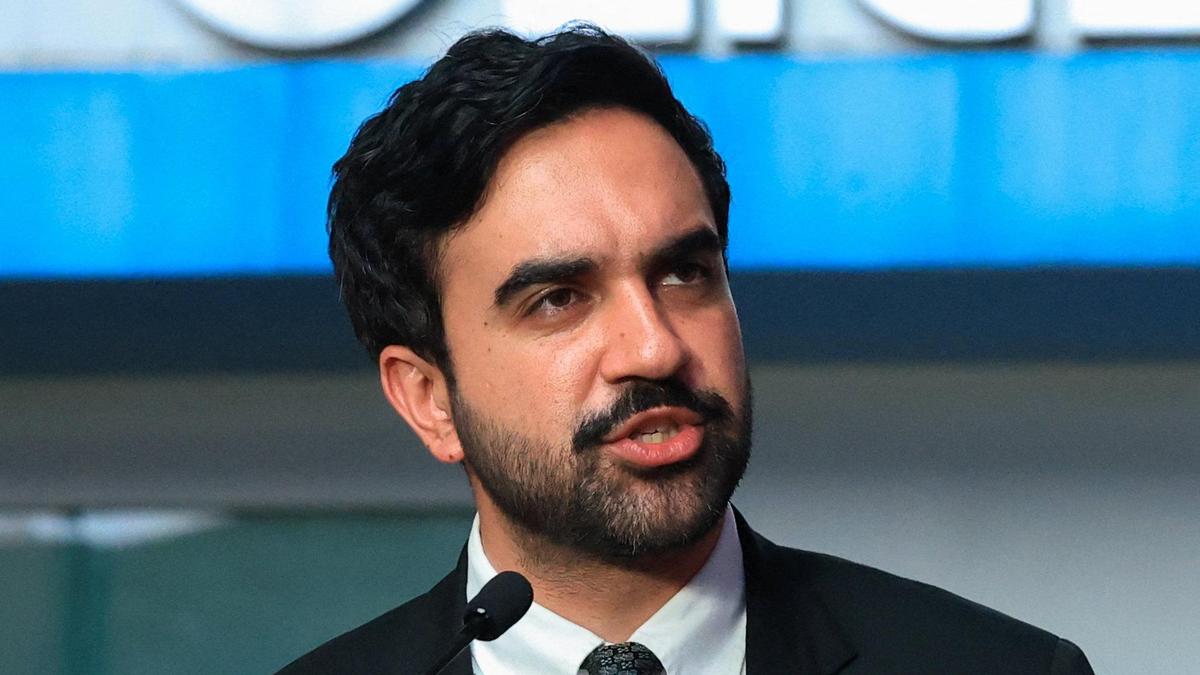
“A six-year-old child is too young to slice an onion, to fry an egg or to use a stove safely. But once that child becomes 16, that knowledge becomes something they are mature enough to learn,” stressed New York’s Mayor Zohran Mamdani, while announcing a one-year moratorium on AI tools for students.

In what has been described as one of “the most expansive student-facing AI policies in the country”, the Mayor and Schools Chancellor Kamar H. Samuels on September 2 imposed a one-year moratorium on student-facing generative AI for pupils up to eighth grade for the 2026–27 academic year.

Here’s what you need to know about the moratorium, why NYC introduced it, and why the move could set a global precedent.

This move will affect nearly 6,00,000 public school students across the United States’ largest school district. Companion chatbots will be prohibited across all grades, while the AI components of more than 38 previously approved programmes that fail to meet the new standards will be disabled or discontinued.

However, not all AI has been banned. Teachers can continue to use approved tools for planning and administrative work. Assistive technologies required by students with disabilities, as well as certain AI tools used in career-readiness programmes, remain permitted where necessary and under the policy’s safeguards.

Five limited AI pilots will also operate throughout the year for high school classrooms. These select tools are Quill (15 minutes per week) for English language arts; Edia (20 minutes per week) for mathematics; Brisk Teaching (10 to 20 minutes once or twice weekly) for teacher-created activities; Playlab (two assignments per marking period; 45 minutes per week) for assignment-specific applications; and Intel AI-Ready Schools (one period per week) to assist students in identifying community issues and developing solutions through term-long projects.

Every high school student will complete two 45-minute modules per year aimed at developing critical thinking around AI use, including its risks, limitations, and scope. Alongside AI restrictions, tighter individual screen-time limits have also been introduced. Children from 2-K through to second grade will have no routine screen time. For those in grades three to five, NYC Public Schools recommends no more than 30 minutes a day of individual screen use; for grades six to eight, the recommendation is 45 minutes. These restrictions do not prohibit teacher-led use of computers, tablets, or interactive whiteboards during lessons.

Throughout the academic year, a panel comprising students, educators, parents, elected officials, union partners, and field experts will assess the impact of the moratorium and pilots, delivering a report with policy recommendations in April 2027.

“Children need teachers and human connection in order to learn and grow,” Mr. Mamdani said. “They need to develop skills alongside their peers, build relationships with educators, and wrestle with tough problems on their own.” Mr. Samuels also made a similar argument. Learning, he said, involves getting something wrong, trying again and eventually getting it right. That struggle is not an inconvenience that technology should eliminate; it is part of the learning process.

This move arrives amidst growing concern over screen time harming youth mental health. Studies have linked excessive scrolling, social media exposure and reliance on AI in children to lower critical thinking abilities, shorter attention spans, anxiety, and depression. While evidence connecting AI chatbots to suicide risk remains limited, several cases have prompted lawsuits alleging that interactions with chatbots contributed to young people’s deaths. Mr. Mamdani’s decision follows OpenAI’s launch of a teenage version of ChatGPT on August 18 featuring parental controls and content restrictions regarding self-harm and suicide. On August 26, Meta similarly announced stricter time limits, night-time blocking, and muted notifications during school hours for teenage accounts on Instagram and Facebook.

“The tech industry wants us to believe that AI-powered early education is not only inevitable but necessary. We do not see it that way,” Mr. Mamdani added.

Research supports a cautious stance. A 2026 CEPR discussion paper by researchers at Stockholm University and the University of Hong Kong examined more than 26,000 students in China over 30 months. They found that access to generative AI increased homework scores by 18% and reduced completion time by 30%. However, after roughly six months, the same students’ closed-book examination scores had fallen by 20%. A broader review by the Brookings Institution’s Centre for Universal Education, analysing over 400 studies and interviews with 500 educators and pupils across 50 countries, concluded that the potential harms of generative AI in primary and secondary education currently outweigh the benefits—though tailored applications with proper safeguards can enrich learning.

How are other parts of the world dealing with a similar dilemma? The United Arab Emirates is moving towards more structured AI education, rather than a moratorium. It has announced an AI curriculum across public and private schools covering areas such as data, algorithms, applications, risks and ethical use. It also plans to train about 22,000 educators in using AI for teaching, assessment, curriculum analysis and lesson planning.

Norway has adopted a more cautious approach. Its education authorities have recommended that pupils in grades one to seven should not be given access to generative AI, while students in eight to 10 should be introduced to it gradually.

Australia has taken another route: a national framework for responsible and ethical use of generative AI in schools, rather than a blanket prohibition. The European Union, meanwhile, has sought to regulate high-risk uses of AI. Under the EU AI Act, certain systems used in education — including those involved in evaluating learning outcomes or determining access to education — can fall into the high-risk category. The legislation does not amount to a general ban on generative AI in schools.

Poland is going further in the opposite direction, investing almost 1.9 billion zloty to equip 12,000 schools with AI laboratory sets as part of its broader digital education push.

And where does India stand? India is closer to the integration camp. The National Education Policy (NEP) 2020 identifies artificial intelligence and other emerging technologies as important to India’s changing educational and employment landscape, and calls for contemporary subjects such as AI to be introduced at appropriate stages, alongside greater emphasis on computational thinking.

The Central Board of Secondary Education (CBSE) introduced Artificial Intelligence as an optional sixth subject in Class IX from the 2019-20 academic session. More recently, for 2026-27, CBSE launched a dedicated Computational Thinking and Artificial Intelligence curriculum for Classes III to VIII, with AI and allied-subject curricula for Classes IX to XII also finalised. The curriculum emphasises logical reasoning, pattern recognition, algorithm design, data literacy and responsible and ethical AI use.

[Assistance for overcoming suicidal thoughts is available on the State’s health helpline 104, Tele-MANAS 14416 and SNEHA’s suicide prevention helpline – 044 24640050 or from any of the numbers in this link]

Published – September 05, 2026 01:02 pm IST



Source link

World Tags:AI ban in New York, AI pause for students, AI tools for students, York City pausing some AI tools, zohran mamdani

Post navigation

Previous Post: India needs stronger MSME supply chain, say experts
Next Post: India, Japan set for historic T20I clash ahead of Asian Games

Related Posts

  • Man Knocks Out Passenger Who Fell Asleep On His Shoulder In New York Train
    Man Knocks Out Passenger Who Fell Asleep On His Shoulder In New York Train World
  • India-Bangladesh ties have been maintained despite political changes, can’t be reduced to ‘single issue’, says Indian envoy
    India-Bangladesh ties have been maintained despite political changes, can’t be reduced to ‘single issue’, says Indian envoy World
  • Study Of Craters Suggests Earth Once Had Saturn-Like Rings
    Study Of Craters Suggests Earth Once Had Saturn-Like Rings World
  • Federal judge tosses Trump’s defamation lawsuit against New York Times
    Federal judge tosses Trump’s defamation lawsuit against New York Times World
  • Quiet channel between ICE and Iran shaped deportation flights, newly released emails show
    Quiet channel between ICE and Iran shaped deportation flights, newly released emails show World
  • Canada Opposition Party Tries To Topple Trudeau, But Success Not Guaranteed
    Canada Opposition Party Tries To Topple Trudeau, But Success Not Guaranteed World

More Related Articles

Japan confirms joint yen intervention with U.S., signals readiness for more action Japan confirms joint yen intervention with U.S., signals readiness for more action World
Jaishankar in France for G7 meet; West Asia crisis tops agenda Jaishankar in France for G7 meet; West Asia crisis tops agenda World
Access Denied World
How Syria’s Bashar Al-Assad Reached Russia How Syria’s Bashar Al-Assad Reached Russia World
Canadian investigation into Nijjar case is not yet complete, cannot comment on evidence, says New Zealand Deputy PM Canadian investigation into Nijjar case is not yet complete, cannot comment on evidence, says New Zealand Deputy PM World
Israel-Hamas war, day 11 LIVE updates | Biden to visit Israel on Wednesday Israel-Hamas war, day 11 LIVE updates | Biden to visit Israel on Wednesday World
SiteLock

Archives

  • September 2026
  • August 2026
  • July 2026
  • June 2026
  • May 2026
  • April 2026
  • March 2026
  • February 2026
  • January 2026
  • December 2025
  • November 2025
  • October 2025
  • September 2025
  • August 2025
  • July 2025
  • June 2025
  • May 2025
  • April 2025
  • March 2025
  • February 2025
  • January 2025
  • December 2024
  • November 2024
  • October 2024
  • September 2024
  • August 2024
  • July 2024
  • June 2024
  • May 2024
  • April 2024
  • March 2024
  • February 2024
  • January 2024
  • December 2023
  • November 2023
  • October 2023
  • September 2023
  • August 2023
  • July 2023
  • June 2023
  • May 2023
  • April 2023
  • March 2023
  • February 2023
  • January 2023
  • December 2022
  • November 2022
  • October 2022
  • September 2022
  • August 2022
  • July 2022
  • June 2022
  • May 2022

Categories

  • Business
  • Nation
  • Science
  • Sports
  • World

Recent Posts

  • In Teachers’ Day post, Keralam Higher Education Minister takes a dig at V-Cs attending RSS events
  • India, Japan set for historic T20I clash ahead of Asian Games
  • Why is New York City pausing some AI tools in schools? | Explained
  • India needs stronger MSME supply chain, say experts
  • Nepal flash floods: Indian tunnel rescue team makes progress at flood-hit Chilime hydropower site

Recent Comments

  1. Philipchoca on UP Teacher Who Asked Students To Slap Muslim Classmate
  2. DexterGaito on UP Teacher Who Asked Students To Slap Muslim Classmate
  3. AlfredoTuh on UP Teacher Who Asked Students To Slap Muslim Classmate
  4. Curtisnoult on UP Teacher Who Asked Students To Slap Muslim Classmate
  5. Marionlem on UP Teacher Who Asked Students To Slap Muslim Classmate
  • India Trio Wins Men’s Team Gold In Junior Shooting World Championship, India Stay Top Of Medal Tally
    India Trio Wins Men’s Team Gold In Junior Shooting World Championship, India Stay Top Of Medal Tally Sports
  • Rupee turns flat at 83.96 against U.S. dollar in early trade
    Rupee turns flat at 83.96 against U.S. dollar in early trade Business
  • Thousands rally to save Bengaluru’s Lalbagh, oppose tunnel road project
    Thousands rally to save Bengaluru’s Lalbagh, oppose tunnel road project Nation
  • Saif Ali Khan’s Attacker Admits To Crime, Says “Yes, I Did It”: Sources
    Saif Ali Khan’s Attacker Admits To Crime, Says “Yes, I Did It”: Sources Nation
  • Found in translation – The Hindu
    Found in translation – The Hindu Nation
  • Access Denied Business
  • Elon Musk Donates Nearly  million For Donald Trump’s Presidential Cause
    Elon Musk Donates Nearly $75 million For Donald Trump’s Presidential Cause World
  • Access Denied Business

Editor-in-Chief:
Mohammad Ariff,
MSW, MAJMC, BSW, DTL, CTS, CNM, CCR, CAL, RSL, ASOC.
editor@artifex.news

Associate Editors:
1. Zenellis R. Tuba,
zenelis@artifex.news
2. Haris Daniyel
daniyel@artifex.news

Photograher:
Rohan Das
rohan@artifex.news

Artifex.News offers Online Paid Internships to college students from India and Abroad. Interns will get a PRESS CARD and other online offers.
Send your CV (Subjectline: Paid Internship) to internship@artifex.news

Links:
Associate Journalism
About Us
Privacy Policy

News Links:
Breaking News
World
Nation
Sports
Business
Entertainment
Lifestyle

Registered Office:
72/A, Elliot Road, Kolkata - 700016
Tel: 033-22277777, 033-22172217
Email: office@artifex.news

Editorial Office / News Desk:
No. 13, Mezzanine Floor, Esplanade Metro Rail Station,
12 J. L. Nehru Road, Kolkata - 700069.
(Entry from Gate No. 5)
Tel: 033-46011099, 033-46046046
Email: editor@artifex.news

Copyright © 2023 Artifex.News Newsportal designed by Artifex Infotech.