

Skip to content
  • Facebook
  • X
  • Linkedin
  • WhatsApp
  • YouTube
  • Associate Journalism
  • About Us
  • Privacy Policy
  • 033-46046046
  • editor@artifex.news
Artifex.News

Artifex.News

Stay Connected. Stay Informed.

  • Breaking News
  • World
  • Nation
  • Sports
  • Business
  • Science
  • Entertainment
  • Lifestyle
  • Toggle search form
  • Mamata Banerjee’s Challenge To BJP For 2024 Polls
    Mamata Banerjee’s Challenge To BJP For 2024 Polls Nation
  • IPL | Punjab’s varied attack can spoil Pant’s comeback
    IPL | Punjab’s varied attack can spoil Pant’s comeback Sports
  • CBI Registers Case Into Alleged Irregularities In UGC-NET Exam
    CBI Registers Case Into Alleged Irregularities In UGC-NET Exam Nation
  • Access Denied
    Access Denied Nation
  • Access Denied Sports
  • The Hindu Morning Digest: July 23, 2024
    The Hindu Morning Digest: July 23, 2024 World
  • Access Denied World
  • BBMP to build 12-km flyover to decongest Kanakapura Road at a cost of ₹1,200 crore
    BBMP to build 12-km flyover to decongest Kanakapura Road at a cost of ₹1,200 crore Nation
A BIT of a reset, with a wider debate

A BIT of a reset, with a wider debate

Posted on September 4, 2026 By admin


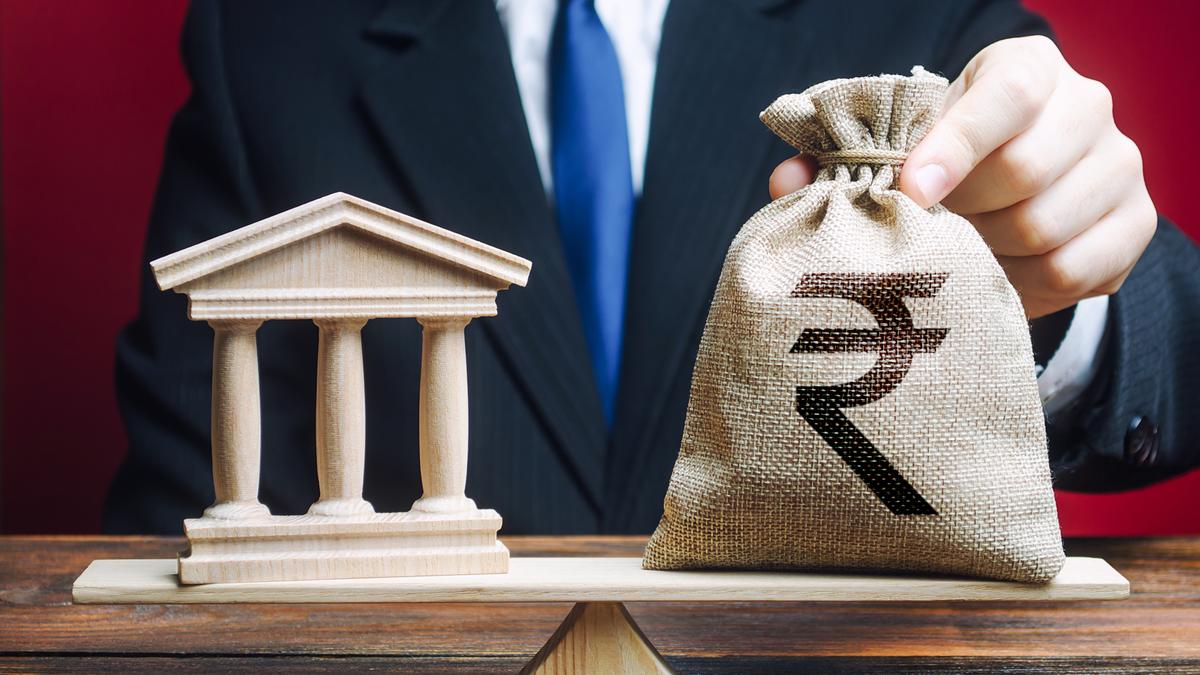
It has been widely reported that India is revising its model bilateral investment treaty (BIT) and that the revised text will soon be placed before the Union cabinet. The seeds of this were sown when Finance Minister Nirmala Sitharaman said in the Union Budget speech in 2025, that India was considering revamping its 2015 Model BIT. The treaty was adopted as part of a broader appraisal process launched after several foreign investors sued India for BIT breaches. The two key outcomes of this appraisal were the unilateral termination of BITs and the adoption of a new model BIT as the basis to launch new negotiations.

A model that is out of balance

In the last decade or so, India has managed to conclude only a handful of BITs based on its 2015 model. This reveals the many limitations of the 2015 model, which many scholars, including this writer, have repeatedly pointed out. If investment treaties aim to balance the two competing objectives of investment protection (one end of the spectrum) and the state’s right to regulate (the other end), the Indian model BIT tilts heavily towards the latter. This creates doubts among countries that export capital to India about the legal protection afforded to their investments. These doubts are exacerbated by high regulatory risks, not-so-well-developed governance models, and an agonisingly tardy judicial system. As these concerns have grown louder, India has rightly decided to revisit the model, apparently with the objective of pulling the pendulum back towards the centre.

Any process of review of BITs has two core components. The first is on what substantive and procedural changes need to be made to the law; and the second is about what processes need to be followed to ensure the robustness of the outcome. The first aspect has attracted considerable attention, with experts pointing out the necessary legal reforms, such as making it easier for foreign investors to use international arbitration for treaty claims, enhancing the substantive protections for foreign investment, and having more investment facilitation measures. However, the second issue has not been deliberated much.

Concerns about democratic deficit

Since international economic treaties, including those on foreign investment, have a conspicuous impact on citizens, it brings into play the all-affected principle in democracy. In other words, whether those affected by, say, an investment treaty should have a right to participate in decision-making. If those affected are not able to participate effectively in decision-making, say, through their elected representatives or other civil society organisations, it raises concerns about ‘democratic deficit’ in the treaty-making process. Originating in debates in Europe, ‘democratic deficit’ refers to the insufficient oversight of technocrats and bureaucracies, or the executive in general, including the political executive, who negotiate and evolve treaty frameworks behind closed doors. The lack of oversight may take many forms, such as a lack of or inadequate parliamentary supervision of the treaty-making process, and an absence of an external consultative process with other stakeholders, including subject-matter experts and civil society organisations.

To overcome the charge of ‘democratic deficit’, many countries, such as the United Kingdom and Australia, mandatorily place the text of the negotiated treaty before ratification on the floor of the Parliament, enabling it to express its views. Specifically, in the context of model BITs, Norway held two rounds of public consultations — in 2008 and 2015 — on an updated draft. Likewise, Colombia released its model BIT for public consultation. India, too, in March 2015, circulated its draft 2015 model BIT for public comment. This provided an opportunity for the Law Commission of India (LCI) to assemble a team of experts to study the draft model BIT. The LCI, in its 260th report, made recommendations on how to improve the draft model BIT. India finally adopted the revised version in December 2015, though not all of the LCI’s recommended changes were reflected in it.

Have a consultative process

Presumably, the government must have already undertaken widespread internal consultations, i.e., intra-governmental deliberations on the model BIT. As regards external consultation, the following may be considered. First, form a core team of experts, external to the government, who have demonstrated proficiency in international investment law or foreign investment, and engage with them. This would ideally include international lawyers and economists drawn from universities, research institutions and think tanks. This core team could act as the sounding board for the government. Second, invite industry bodies, arbitrators, law firms, and other civil society organisations to offer their views on the model BIT.

Following these first two steps, the third step will be to prepare a draft and place it in the public domain, inviting comments from the public at large, as done in March 2015. In the fourth step, or simultaneously, the draft model BIT should be placed on the floor of Parliament for discussion. The relevant department-related parliamentary committees can also be roped in for the same. Most notably, this consultative process should not be carried out merely as a box-ticking exercise, but as a meaningful activity that upholds the spirit of participatory democracy, which would necessarily include engagement with dissenting views.

Prabhash Ranjan is Professor and Vice Dean (Research), Jindal Global Law School, and was part of the team of experts assembled by the Law Commission of India to study the 2015 draft model bilateral investment treaty (BIT)

Published – September 05, 2026 12:08 am IST


Source link

Business Tags:adoption of a new model BIT, Finance Minister and Union Budget speech in 2025, impact on citizens, India and revision of its model bilateral investment treaty, international economic treaties, intra-governmental deliberations on model BIT, Law Commission of India, legal protection afforded to investments, revamping its 2015 Model BIT, text of the negotiated treaty and ratification on floor of Parliament, unilateral termination of BITs

Post navigation

Previous Post: Congress MLA Ramya Haridas hospitalised after late-night fracas at party colleague’s house
Next Post: Three bonded labour victims rescued from cold storage at West Bengal’s Alipurduar

Related Posts

  • Price of premium petrol up ₹2 per litre, government says no impact on common man
    Price of premium petrol up ₹2 per litre, government says no impact on common man Business
  • Gold rebounds ₹2,600 to ₹1,24,400/10g on strong global cues
    Gold rebounds ₹2,600 to ₹1,24,400/10g on strong global cues Business
  • Airfare surges during festivals ‘exploitative’, says Supreme Court
    Airfare surges during festivals ‘exploitative’, says Supreme Court Business
  • Why is India’s trade deficit with China a concern? What is the risk of increasing dependence? | Explained
    Why is India’s trade deficit with China a concern? What is the risk of increasing dependence? | Explained Business
  • Union government eases Quality Control Order rules for several sectors for five years
    Union government eases Quality Control Order rules for several sectors for five years Business
  • Access Denied Business

More Related Articles

Access Denied Business
High Income Group: ‘The Budget is a study in contrasts’ High Income Group: ‘The Budget is a study in contrasts’ Business
Rupee falls 15 paise to 82.77 against US dollar Rupee falls 15 paise to 82.77 against US dollar Business
Sensex, Nifty decline on selling in banking, financial stocks; weak global trends Sensex, Nifty decline on selling in banking, financial stocks; weak global trends Business
SiteLock

Archives

  • September 2026
  • August 2026
  • July 2026
  • June 2026
  • May 2026
  • April 2026
  • March 2026
  • February 2026
  • January 2026
  • December 2025
  • November 2025
  • October 2025
  • September 2025
  • August 2025
  • July 2025
  • June 2025
  • May 2025
  • April 2025
  • March 2025
  • February 2025
  • January 2025
  • December 2024
  • November 2024
  • October 2024
  • September 2024
  • August 2024
  • July 2024
  • June 2024
  • May 2024
  • April 2024
  • March 2024
  • February 2024
  • January 2024
  • December 2023
  • November 2023
  • October 2023
  • September 2023
  • August 2023
  • July 2023
  • June 2023
  • May 2023
  • April 2023
  • March 2023
  • February 2023
  • January 2023
  • December 2022
  • November 2022
  • October 2022
  • September 2022
  • August 2022
  • July 2022
  • June 2022
  • May 2022

Categories

  • Business
  • Nation
  • Science
  • Sports
  • World

Recent Posts

  • Despite zoonotic diseases threat, Keralam’s proposed veterinary public health wing yet to take shape
  • New, sophisticated drugs did not move the needs on hearts attacks, strokes: what this teaches us
  • Fact, fiction and flying objects: This new docufiction journeys across prehistory, colonial records and UFO encounters in Pavagada
  • Government can bear cost of maintaining UPI network: BJD MP Santrupt Misra
  • Sri Lankan lawmaker seeks Modi’s intervention in Saudi case involving Tamil youth

Recent Comments

  1. AlvinNet on UP Teacher Who Asked Students To Slap Muslim Classmate
  2. AlvinNet on UP Teacher Who Asked Students To Slap Muslim Classmate
  3. Jamesslits on UP Teacher Who Asked Students To Slap Muslim Classmate
  4. MichaelClear on UP Teacher Who Asked Students To Slap Muslim Classmate
  5. Jamesslits on UP Teacher Who Asked Students To Slap Muslim Classmate
  • Delhi HC asks Customs to respond to IndiGo’s plea seeking refund of ₹900 crore duty
    Delhi HC asks Customs to respond to IndiGo’s plea seeking refund of ₹900 crore duty Business
  • Access Denied World
  • The Hindu Morning Digest, December 15, 2024
    The Hindu Morning Digest, December 15, 2024 World
  • FIFA World Cup | Bosnia and Herzegovina vs Qatar LIVE updates: Group B match gets underway
    FIFA World Cup | Bosnia and Herzegovina vs Qatar LIVE updates: Group B match gets underway Sports
  • Rupee recovers 41 paise from its all-time closing low to 96.45 per U.S. dollar in early trade
    Rupee recovers 41 paise from its all-time closing low to 96.45 per U.S. dollar in early trade Business
  • After ED Case Against Siddaramaiah, His Wife Offers To Surrender Plots
    After ED Case Against Siddaramaiah, His Wife Offers To Surrender Plots Nation
  • With Focus On ‘Act East’ Policy, PM Modi Meets Top Asian Leaders In Laos
    With Focus On ‘Act East’ Policy, PM Modi Meets Top Asian Leaders In Laos World
  • Chad announces intent to withdraw from International Criminal Court
    Chad announces intent to withdraw from International Criminal Court World

Editor-in-Chief:
Mohammad Ariff,
MSW, MAJMC, BSW, DTL, CTS, CNM, CCR, CAL, RSL, ASOC.
editor@artifex.news

Associate Editors:
1. Zenellis R. Tuba,
zenelis@artifex.news
2. Haris Daniyel
daniyel@artifex.news

Photograher:
Rohan Das
rohan@artifex.news

Artifex.News offers Online Paid Internships to college students from India and Abroad. Interns will get a PRESS CARD and other online offers.
Send your CV (Subjectline: Paid Internship) to internship@artifex.news

Links:
Associate Journalism
About Us
Privacy Policy

News Links:
Breaking News
World
Nation
Sports
Business
Entertainment
Lifestyle

Registered Office:
72/A, Elliot Road, Kolkata - 700016
Tel: 033-22277777, 033-22172217
Email: office@artifex.news

Editorial Office / News Desk:
No. 13, Mezzanine Floor, Esplanade Metro Rail Station,
12 J. L. Nehru Road, Kolkata - 700069.
(Entry from Gate No. 5)
Tel: 033-46011099, 033-46046046
Email: editor@artifex.news

Copyright © 2023 Artifex.News Newsportal designed by Artifex Infotech.