


An aerial view of Hyderabad
| Photo Credit: Serish Nanisetti
Hyderabad has long been welcoming of new investments and over the decades come to boast of a diversified industrial landscape.
From pharmaceuticals, chemicals and engineering to cutting-edge work in Life Sciences, defence and aerospace, space technology, electric mobility, electronics manufacturing and data centres, the city is home to a blend of old-economy industries and new-age enterprises.
Also Read: The Hyderabad that was, and the city it is now
In recent years, it has emerged as a preferred destination for Global Capability Centres (GCCs) of multinational corporations. The sector has added a new dimension to the city’s technology ecosystem, complementing the software products and services industry that helped Hyderabad earn comparisons with Bengaluru. Unlike back office operations of MNCs, often operated in India by third parties, the GCCs function as integral parts of their parent organisations, creating value across information technology, research and development (R&D), customer support operations and even intellectual property-related functions. By leveraging the city’s deep talent pool, they also help achieve significant cost efficiencies though labour arbitrage is no longer the main reason driving firms set up GCCs in India.
Real estate consultancy JLL, on the occasion of the opening 1.20 lakh sq. ft. GCC of JLL Business Services (JBS) in the city in early August, said Hyderabad is on course to be a powerhouse for GCCs in India driven by a strong talent base, world-class infrastructure and a business-friendly ecosystem. The city commanded 16% of the country’s total GCC leasing activity during the 2024 to mid-2026 period. GCCs accounted for an impressive 42% of all office leasing activity within Hyderabad itself. Speaking at the event, Telangana IT and Industries Minister D. Sridhar Babu said Hyderabad had attracted nearly 150 GCCs in a span of 20 months, generating more than 1.5 lakh high-value technology jobs.
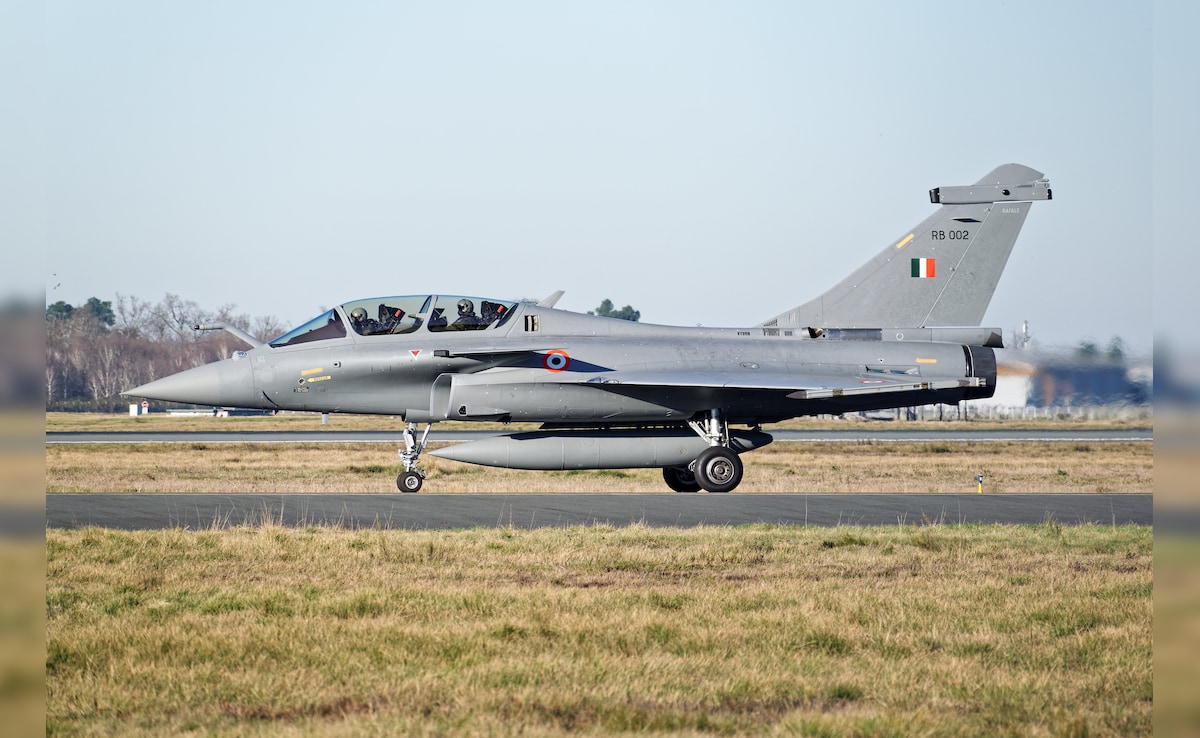
In recent years the city has also consolidated its position as a major defence and aerospace solutions hub and emerged as a leading drone manufacturer. Spacetech is another area where the city is making significant strides. While companies such as Ananth Technologies and MTAR Technologies have long contributed to ISRO missions as critical component suppliers, the defining moment came recently when Hyderabad-based Skyroot Aerospace, founded by two former ISRO scientists, became the first private Indian company to launch an orbital-class rocket from Indian soil.
Data centres, backed by investment commitments worth billions of dollars, and electric mobility are among the other new-age sectors drawing attention to Hyderabad. At the heart of these developments is a robust ecosystem comprising deep technology and engineering talent, premier research and strategic institutions, and enabling platforms such as the T-Hub incubator.
Hyderabad is home to major organisations including the Defence Research and Development Organisation (DRDO), Defence Research and Development Laboratory (DRDL), Research Centre Imarat (RCI), National Remote Sensing Centre (NRSC) and the Advanced Data Processing Research Institute (ADRI), an ISRO facility focused on satellite data processing, remote sensing and geospatial intelligence. Together, these institutions have built deep expertise across propulsion, advanced electronics, aerospace systems, remote sensing, satellite data and space technologies. Hyderabad is also home to a strong network of aerospace and defence SMEs, emerging technology companies, engineering firms and fabrication facilities. Global players such as Lockheed Martin, GE Aerospace, Collins Aerospace and Boeing that add further depth to the ecosystem.
This is supported by experienced industry talent and a strong pipeline of young engineers from institutions such as the IITs, IIITs and BITS. Together, these strengths give Hyderabad a strong foundation to build complex frontier technologies and advanced hardware, and a natural advantage in shaping the next phase of India’s space-tech growth, the Minister had said after an interaction with leadership of about 14 spacetech firms.
What comes next? As the city looks to scale up its presence across emerging technologies, much would depend on how quickly the proposed Future City and with it the AI City, the Space City and Data Centre hub take shape.
(ravikumar.n@thehindu.co.in)
Published – September 04, 2026 09:06 am IST