

Skip to content
  • Facebook
  • X
  • Linkedin
  • WhatsApp
  • YouTube
  • Associate Journalism
  • About Us
  • Privacy Policy
  • 033-46046046
  • editor@artifex.news
Artifex.News

Artifex.News

Stay Connected. Stay Informed.

  • Breaking News
  • World
  • Nation
  • Sports
  • Business
  • Science
  • Entertainment
  • Lifestyle
  • Toggle search form
  • National Supercross: Prajwal excels; Ikshan edges Rugved in opening race
    National Supercross: Prajwal excels; Ikshan edges Rugved in opening race Sports
  • Access Denied
    Access Denied Nation
  • APJAC urges govt. against ‘hasty’ implementation of Presidential Orders
    APJAC urges govt. against ‘hasty’ implementation of Presidential Orders Nation
  • Man Stabs 3, Including Wife, Daughter With Sword In Arunachal Hospital
    Man Stabs 3, Including Wife, Daughter With Sword In Arunachal Hospital Nation
  • China offers to collaborate on lunar mission as deadlines loom
    China offers to collaborate on lunar mission as deadlines loom Science
  • APJAC urges govt. against ‘hasty’ implementation of Presidential Orders
    Vikram Sarabhai Space Centre Director to interact with students Nation
  • National Indoor Athletics Championships | When the technique is right, performance follows: record-breaker Baranica’s mantra for success
    National Indoor Athletics Championships | When the technique is right, performance follows: record-breaker Baranica’s mantra for success Sports
  • Access Denied Business
Models struggled to predict the 2026 monsoon’s rapid changes

Models struggled to predict the 2026 monsoon’s rapid changes

Posted on August 25, 2026 By admin


Climate models predicted the 2026 El Niño during early spring, just as they had in 2023. And the predictions have turned out to be accurate, with the robust evolution of a strong El Niño by the summer.

Models had predicted the 2023 monsoon to be slightly deficient, and the final seasonal total, at 94% of the long-period average, essentially validated the forecasts. Monsoon predictions this year have already called for a deficit of greater than 10% and it will also likely hold true.

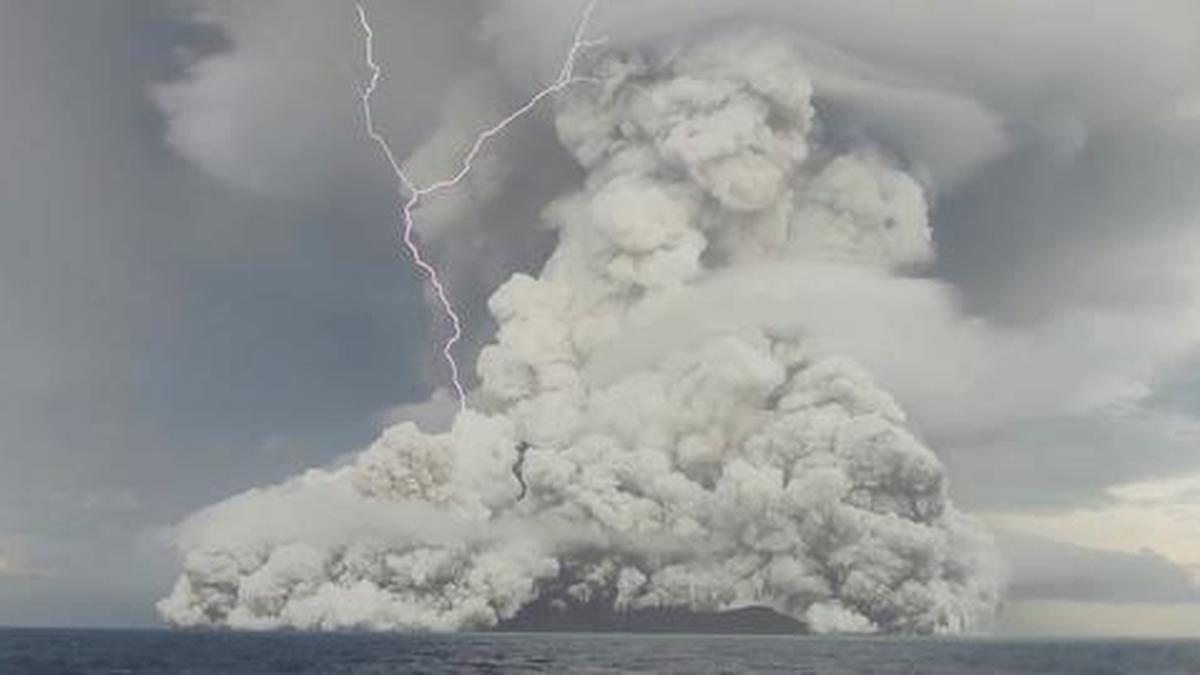
But the real cause for concern is the erratic, and unprecedented, evolution of the monsoon across space and time in 2026, which the models have not been able to capture even a few days in advance.

The key question now is whether the challenges posed by the 2026 predictions were an aberration, and, if so, why. In other words, do the models need to do anything dramatic to ensure they do better in the coming years? Or is it just a trend to be expected for the monsoon system, which has only become more notorious for its vagaries?

Expectations of improvements

The El Niño is one of the most predictable modes of natural variability. But models being able to predict its occurrence to the tune of 80% still means they will be wrong one-fifth of the time. The failed La Niña prediction of 2024 is a good example. Models’ ability to predict the monsoon is much lower, hovering at around 60%, which means prediction failures will also occur more often. And this is for the all-Indian monsoon rainfall (AIMR); long-lead forecasting of monsoon onset and space-time evolution are even greater challenges.

This year’s monsoon onset over Kerala was predicted to be delayed, and it was, by a few days. But everything after that has been a whiplash. Rainfall in June was 40% below normal but July recovered quickly to 1% above normal. At the same time, these AIMR values hardly captured the heartache of farmers, who suffered much larger deficits over their arable land.

India’s multi-tiered prediction systems cover short (days 1-3), medium (days 3-10), and extended (weeks 2 and longer) range demands for weather information. Seasonal to interannual predictions of AIMR are relatively easier; long-lead predictions of spatial and temporal monsoon evolutions face irreducible uncertainties at present.

While one bad year is no reason to panic, it must also serve as an opportunity to identify the key issues that remain. For instance, are we going to have more years of such erratic monsoon evolution? Will combinations of the El Niño and global warming make the monsoon unpredictable at subseasonal and local scales? And how will models prepare for such a future, to better help the country maintain its progress towards becoming economically developed?

Knowns and unknowns

The monsoon domain is blessed with more than a century’s worth of data. Experts have extracted significant knowledge from this rich dataset of monsoon variabilities in space and time, and have made considerable advances in understanding the intrinsic timescales of active-break cycles, the onset becoming more erratic, delayed withdrawal, switching between extreme dry and wet events, more frequent extreme wet spells over Northwest India, and so on. However, their understanding of the mechanisms underlying these events remains incomplete.

The hope is that complete climate models with coupled land-ocean-atmosphere components can shed light on the missing links and help scientists make better, more skillful predictions. The multi-tiered approach taken to develop separate tools for short, medium, and extended range predictions has yielded many impressive advances in useful predictions for various sectors, including agriculture, water, energy, health, and so on.

At present, the most promising avenues for further advances in improving models and predictions are likely to come from using artificial intelligence (AI) tools. The dearth of mechanistic understanding is not a limitation for AI since these tools can extract patterns from the data and based on that make predictions, without any knowledge of the governing physics. That said, experts must overcome one critical limitation in the course of combining AI with climate models: they must ensure they collect sufficient data to cover all aspects of the monsoon and its drivers at all the relevant spatial and temporal scales. In fact, this data must also account for the local amplifiers of extreme weather, such as land use change, urbanisation, deforestation, and irrigation.

That said, given new technologies and platforms, the volume and value of data will only grow. And AI models are already advancing optimal and cost-effective observation networks and improving our knowledge of processes, models, and predictions. AI is also proving to be indispensable for bringing global predictions at the scale of several kilometres down to farm and neighbourhood scales, for sector-specific advisories and early warnings.

Public-private partnerships are also part of the landscape today when it comes to delivering weather and climate services.

Predictions and expectations

As predictions get better, so do the expectations. Specifically, advances in predictions related to the monsoon, including its onset, evolution, extreme dry/wet events, and withdrawal, also allow the users of these data to believe they can expect even better in future.

To this end, hybrid dynamic and AI models could deliver sector-specific predictions at the requisite space-time scales for users to better manage disasters, farm-related decisions, and water and energy use. Extensively engaging users with sustained feedback can pave the way for decision-support products to be co-produced with the people who make those decisions.

Predictions will never be perfect but they can continue to serve user needs by staying within the level of uncertainty a user can tolerate. In the coming years, policymakers, lawmakers, farmers, health workers, energy companies, and insurance providers can expect to be served  bespoke forecasts. Global warming will keep throwing monkey wrenches into prediction systems but observations, dynamic models, and AI will continue to step up to the challenges. 

Raghu Murtugudde is an Earth Systems Scientist and a visiting professor at IIT-Kanpur.

Published – August 26, 2026 09:00 am IST


Source link

Science

Post navigation

Previous Post: What is a launch window?
Next Post: The bygone movie theatres of Chennai: a compilation

Related Posts

  • Remembering V. Rajaraman, a tireless evangelist of computer education in India
    Remembering V. Rajaraman, a tireless evangelist of computer education in India Science
  • Dung beetles prefer dog poop, but their children pay the price
    Dung beetles prefer dog poop, but their children pay the price Science
  • Loud music may damage your hearing before you realise it
    Loud music may damage your hearing before you realise it Science
  • Why do we aim with one eye closed?
    Why do we aim with one eye closed? Science
  • RRI team use quantum magnetometry to make more precise atomic clocks
    RRI team use quantum magnetometry to make more precise atomic clocks Science
  • Google’s new AI model offers new pathway in cancer drug research
    Google’s new AI model offers new pathway in cancer drug research Science

More Related Articles

Mystery solved: meteorite caused Tunguska devastation Mystery solved: meteorite caused Tunguska devastation Science
Breakthrough Prizes 2024 winners include innovative cancer treatment Breakthrough Prizes 2024 winners include innovative cancer treatment Science
Science for all newsletter data analysis finds a common cricket wisdom may be a myth Science for all newsletter data analysis finds a common cricket wisdom may be a myth Science
Do songbirds socialise during migration? Do songbirds socialise during migration? Science
Obaid Siddiqi lectures to commence in Bengaluru this July Obaid Siddiqi lectures to commence in Bengaluru this July Science
Quantum test shows cause, effect need not follow a set order Quantum test shows cause, effect need not follow a set order Science
SiteLock

Archives

  • September 2026
  • August 2026
  • July 2026
  • June 2026
  • May 2026
  • April 2026
  • March 2026
  • February 2026
  • January 2026
  • December 2025
  • November 2025
  • October 2025
  • September 2025
  • August 2025
  • July 2025
  • June 2025
  • May 2025
  • April 2025
  • March 2025
  • February 2025
  • January 2025
  • December 2024
  • November 2024
  • October 2024
  • September 2024
  • August 2024
  • July 2024
  • June 2024
  • May 2024
  • April 2024
  • March 2024
  • February 2024
  • January 2024
  • December 2023
  • November 2023
  • October 2023
  • September 2023
  • August 2023
  • July 2023
  • June 2023
  • May 2023
  • April 2023
  • March 2023
  • February 2023
  • January 2023
  • December 2022
  • November 2022
  • October 2022
  • September 2022
  • August 2022
  • July 2022
  • June 2022
  • May 2022

Categories

  • Business
  • Nation
  • Science
  • Sports
  • World

Recent Posts

  • Hyena gave birth to two cubs at the Thiruvananthapuram Zoo
  • World leaders return to UN amid wars in West Asia and Ukraine
  • Free mega medical camp promotes Health and Legal awareness in Gajuwaka
  • After October 1, only smaller 5 or 10 kg LPG refills await non-eKYC households
  • Six companies line up IPOs worth ₹3,825 crore amid brisk primary market activity

Recent Comments

  1. Glennalbub on UP Teacher Who Asked Students To Slap Muslim Classmate
  2. PhilipLog on UP Teacher Who Asked Students To Slap Muslim Classmate
  3. DennisDum on UP Teacher Who Asked Students To Slap Muslim Classmate
  4. DonaldFrosy on UP Teacher Who Asked Students To Slap Muslim Classmate
  5. DonaldFrosy on UP Teacher Who Asked Students To Slap Muslim Classmate
  • Access Denied Sports
  • Russia will never swap Ukrainian territory for Kyiv-held parts of Kursk region: Kremlin
    Russia will never swap Ukrainian territory for Kyiv-held parts of Kursk region: Kremlin World
  • Access Denied
    Access Denied Nation
  • APJAC urges govt. against ‘hasty’ implementation of Presidential Orders
    DDA launches online FAQs to explain Delhi Master Plan 2047 Nation
  • Video Shows People Running In Panic As Earthquake Hits Wedding Venue In Morocco
    Video Shows People Running In Panic As Earthquake Hits Wedding Venue In Morocco World
  • Access Denied World
  • Deep Respect wins the feature event
    Deep Respect wins the feature event Sports
  • Watch: What does Dissanayake’s victory mean for Sri Lanka and India?
    Watch: What does Dissanayake’s victory mean for Sri Lanka and India? World

Editor-in-Chief:
Mohammad Ariff,
MSW, MAJMC, BSW, DTL, CTS, CNM, CCR, CAL, RSL, ASOC.
editor@artifex.news

Associate Editors:
1. Zenellis R. Tuba,
zenelis@artifex.news
2. Haris Daniyel
daniyel@artifex.news

Photograher:
Rohan Das
rohan@artifex.news

Artifex.News offers Online Paid Internships to college students from India and Abroad. Interns will get a PRESS CARD and other online offers.
Send your CV (Subjectline: Paid Internship) to internship@artifex.news

Links:
Associate Journalism
About Us
Privacy Policy

News Links:
Breaking News
World
Nation
Sports
Business
Entertainment
Lifestyle

Registered Office:
72/A, Elliot Road, Kolkata - 700016
Tel: 033-22277777, 033-22172217
Email: office@artifex.news

Editorial Office / News Desk:
No. 13, Mezzanine Floor, Esplanade Metro Rail Station,
12 J. L. Nehru Road, Kolkata - 700069.
(Entry from Gate No. 5)
Tel: 033-46011099, 033-46046046
Email: editor@artifex.news

Copyright © 2023 Artifex.News Newsportal designed by Artifex Infotech.