

Skip to content
  • Facebook
  • X
  • Linkedin
  • WhatsApp
  • YouTube
  • Associate Journalism
  • About Us
  • Privacy Policy
  • 033-46046046
  • editor@artifex.news
Artifex.News

Artifex.News

Stay Connected. Stay Informed.

  • Breaking News
  • World
  • Nation
  • Sports
  • Business
  • Science
  • Entertainment
  • Lifestyle
  • Toggle search form
  • Ukraine claims attack on oil depot serving air base for Russian nuclear bombers
    Ukraine claims attack on oil depot serving air base for Russian nuclear bombers World
  • North Korea’s Kim drives new-type tank during drills and calls for efforts to prepare for war
    North Korea’s Kim drives new-type tank during drills and calls for efforts to prepare for war World
  • Bhagwad Gita To 400 Euro Fines: Manu Bhaker’s Journey To Olympics Medal
    Bhagwad Gita To 400 Euro Fines: Manu Bhaker’s Journey To Olympics Medal Sports
  • Access Denied World
  • Access Denied
    Access Denied Nation
  • In pictures: Lunar eclipse enthrals skywatchers across India and the globe
    In pictures: Lunar eclipse enthrals skywatchers across India and the globe Science
  • Political ads on social media rife with misinformation and scams, new research finds
    Political ads on social media rife with misinformation and scams, new research finds World
  • Access Denied Business
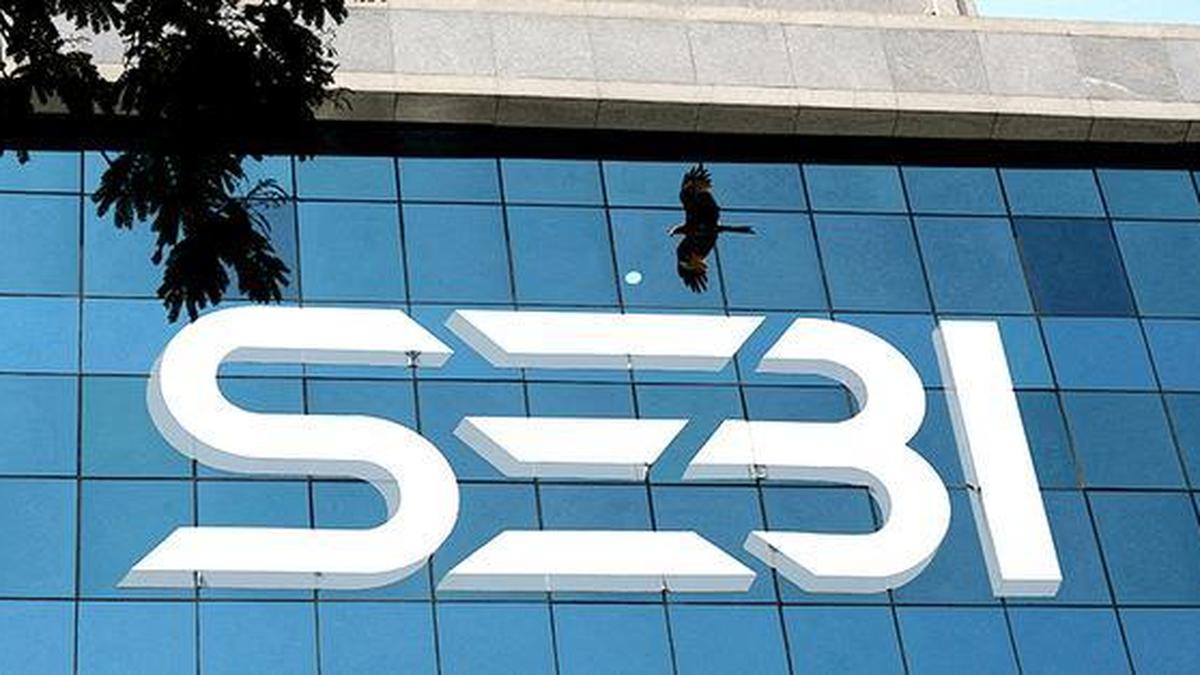
SEBI’s ITRI — a global test for India’s future-ready financial architecture | Explained

SEBI’s ITRI — a global test for India’s future-ready financial architecture | Explained

Posted on August 25, 2026 By admin


The story so far: Market regulator Securities and Exchange Board of India (SEBI) has introduced a technology health scorecard for market infrastructure institutions (MIIs) to measure the robustness of their critical IT systems rather than merely checking routine compliance.

SEBI’s IT Resilience Index (ITRI) appears to be among the first attempts globally by a regulator to design a quantitative resilience barometer, as measurable as capital adequacy for banks, for MIIs such as stock exchanges, clearing corporations and depositories.

Why SEBI is introducing the IT Risk Index (ITRI) for capital markets?

The move to assess MII vulnerabilities comes in view of the rising technological dependence of Indian capital markets, where even a few minutes of disruption can affect millions of investors and billions of rupees in trades.

The ITRI will gauge whether the IT systems supporting trading, clearing, settlement and securities holding are capable of handling operational shocks, cyber threats, technical failures and sudden spikes in market activity.

The foundation for the proposed index was laid in 2015, when SEBI, through a circular, termed MIIs as “systemically important”, thus calling for a “robust” cybersecurity framework to perform systemically critical functions.

How will the ITRI work and measure market technology risk?

The need for ITRI comes at a time when India’s securities market is experiencing sea changes in digital transformation, as seen from increased participation of retail investors through online platforms, higher algorithmic trading volumes and faster settlement cycles. Market efficiency has now become inseparable from technology reliability, making it a boardroom issue.

The proposed index, which seeks to shift from a pure compliance-based mode to a quantitative risk-monitoring framework, will be based on nine parameters, each weighted on the basis of a systemic-risk hierarchy, even as questions remain on the statistical estimation of the proposed weights, which have been assigned after discussions with its Technical Advisory Committee. The Industry Standards Forum of MIIs would further define the detailed sub-parameters and measurement criteria.

The weighting exercise implies a risk-prioritisation approach, giving greater importance to parameters whose failure can immediately disrupt the functioning of MIIs.

Availability and security have been accorded the highest weight, at 20% each, as they represent the first line of defence for a financial market’s functioning.

The 10% weightage on Business Continuity and Reliability reflects a change in regulatory perspective. The focus was earlier on preventing failures, but over time, resilience frameworks have focused on absorbing shocks and recovering quickly.

Scalability has been assigned a 5% weight amid SEBI’s view that Indian markets are growing rapidly but do not pose an immediate stability risk.

The present weights should, at best, be seen as a starting framework because the market regulator may have to refine them using actual outage data, cyber incidents and stress tests.

MIIs would also develop an Early Warning System (EWS) to detect any deterioration in ITRI parameters that could potentially lead to performance issues, system slowness or other disruptions, and take remedial measures.

How does SEBI’s ITRI compare to global regulatory standards?

Several markets have created similar operational resilience frameworks, though not always in the form of a single ITRI.

The U.K.’s Financial Conduct Authority and Prudential Regulation Authority have put in place operational resilience rules requiring financial institutions to identify important business services, set disruption tolerances and demonstrate their ability to recover from severe operational shocks.

Unlike SEBI’s proposed index, the European Union’s most comprehensive Digital Operational Resilience Act (DORA) is a regulatory rulebook rather than a numerical scorecard.

The U.S. does not have a single ITRI for bourses. Instead, technology resilience is embedded into regulatory oversight.

Singapore’s Monetary Authority of Singapore has one of Asia’s strongest technology risk guidelines, which could be particularly relevant for India since both countries have highly digital financial ecosystems and a large retail presence.

Hong Kong’s regulators have developed cyber resilience assessment frameworks for financial institutions and market intermediaries, closer to SEBI’s strategy as it uses measurable maturity levels, and regulators rely on comprehensive operational resilience frameworks and cross-sectoral exercises rather than a numeric scoring index.

Australia follows a resilience-based approach through regulators such as the Australian Securities and Investments Commission and the Australian Prudential Regulation Authority, but its focus areas are critical operations mapping, technology dependencies, outsourcing risks and cyber recovery.

How is ITRI different?

Most regulators worldwide follow a principle-based operational resilience model, but SEBI’s distinctive model attempts to convert resilience into a measurable index.

With India’s capital markets becoming among the most technology-intensive globally, a failure at an exchange or clearing corporation level is not just an IT problem but a financial stability risk. The EWS identifies weaknesses before they become failures.

With increasing dependence on AI (artificial intelligence), cloud infrastructure, high-frequency trading and digital settlement, technology risks would become more complex. SEBI has already initiated discussions on a long-term technology roadmap for MIIs covering areas such as AI, cloud computing, distributed ledger technology and quantum-safe systems.

SEBI has already constituted a working group to formulate a short-term and long-term technology roadmap for MIIs, taking a holistic view on the adoption of emerging technologies including AI/machine learning, Suptech, RegTech and tokenisation.

What are the key implementation challenges facing the ITRI?

The biggest challenge before SEBI is the pace of technological change because technology risks evolve faster than regulatory frameworks.

Questions may arise on a common index when stock exchanges, clearing corporations and depositories have different technology architectures and functions.

Cybersecurity remains unpredictable because institutions with sophisticated systems have suffered global cyber incidents.

Moreover, substantial investments are needed to build automated monitoring systems, conduct continuous testing and maintain redundant infrastructure.

Can the ITRI secure the future of India’s capital markets?

SEBI’s ITRI is a global assessment of India’s ability to build a future-ready financial market architecture. The real test will be whether a high score translates into faster recovery in the event of an actual cyberattack, system outage or technology shock.

If implemented effectively, it could become a global template to safeguard the digital foundations of finance.


Source link

Business Tags:cybersecurity in Indian capital markets, financial market technology resilience, market infrastructure institutions, SEBI IT Resilience Index (ITRI), SEBI ITRI

Post navigation

Previous Post: Integrating Mangaluru with SWR: Capt. Chowta urges Karnataka CM to throw his weight behind Railway’s decision
Next Post: ‘Datura’ lands e-commerce platforms in trouble in Karnataka: What is the plant?

Related Posts

  • RBI Monetary Policy Meeting: RBI keeps repo rate unchanged at 6.5%
    RBI Monetary Policy Meeting: RBI keeps repo rate unchanged at 6.5% Business
  • Audi embarks on 2.0, eyes to double market share in three years in India
    Audi embarks on 2.0, eyes to double market share in three years in India Business
  • Access Denied Business
  • Adani Power, Druk Green Power to set up a 570MW hydro power project in Bhutan
    Adani Power, Druk Green Power to set up a 570MW hydro power project in Bhutan Business
  • Sensex, Nifty hit fresh all-time high levels in early trade
    Sensex, Nifty hit fresh all-time high levels in early trade Business
  • Tata Motors JLR cyber-hack worst in U.K. history that hit 5,000 firms, research finds
    Tata Motors JLR cyber-hack worst in U.K. history that hit 5,000 firms, research finds Business

More Related Articles

Oil Ministry confirms Iranian crude purchases, rejects claims of payment-led tanker diversion Oil Ministry confirms Iranian crude purchases, rejects claims of payment-led tanker diversion Business
Rupee falls 12 paise to close at 86.82 against U.S. dollar Rupee falls 12 paise to close at 86.82 against U.S. dollar Business
Access Denied Business
VST Group plans expansion in all three business verticals VST Group plans expansion in all three business verticals Business
Access Denied Business
U.S. sanctions Indian nationals and firms in global crackdown on Iran’s oil network U.S. sanctions Indian nationals and firms in global crackdown on Iran’s oil network Business
SiteLock

Archives

  • September 2026
  • August 2026
  • July 2026
  • June 2026
  • May 2026
  • April 2026
  • March 2026
  • February 2026
  • January 2026
  • December 2025
  • November 2025
  • October 2025
  • September 2025
  • August 2025
  • July 2025
  • June 2025
  • May 2025
  • April 2025
  • March 2025
  • February 2025
  • January 2025
  • December 2024
  • November 2024
  • October 2024
  • September 2024
  • August 2024
  • July 2024
  • June 2024
  • May 2024
  • April 2024
  • March 2024
  • February 2024
  • January 2024
  • December 2023
  • November 2023
  • October 2023
  • September 2023
  • August 2023
  • July 2023
  • June 2023
  • May 2023
  • April 2023
  • March 2023
  • February 2023
  • January 2023
  • December 2022
  • November 2022
  • October 2022
  • September 2022
  • August 2022
  • July 2022
  • June 2022
  • May 2022

Categories

  • Business
  • Nation
  • Science
  • Sports
  • World

Recent Posts

  • After October 1, only smaller 5 or 10 kg LPG refills await non-eKYC households
  • Pakistan forces kill five terrorists, rescue 23 abductees in Balochistan
  • Asian Games 2026: Smriti Mandhana surpasses Suzie Bates to become women’s T20I cricket’s leading run-scorer
  • Hope flows anew with revival of Andhra’s Veligonda project
  • NMDC looks to hit 60 MT iron ore production mark this fiscal: Chairman

Recent Comments

  1. Glennalbub on UP Teacher Who Asked Students To Slap Muslim Classmate
  2. PhilipLog on UP Teacher Who Asked Students To Slap Muslim Classmate
  3. DennisDum on UP Teacher Who Asked Students To Slap Muslim Classmate
  4. DonaldFrosy on UP Teacher Who Asked Students To Slap Muslim Classmate
  5. DonaldFrosy on UP Teacher Who Asked Students To Slap Muslim Classmate
  • Access Denied
    Access Denied Nation
  • Dhanashree Verma’s Epic Reaction On Yuzvendra Chahal’s India Comeback For T20 World Cup
    Dhanashree Verma’s Epic Reaction On Yuzvendra Chahal’s India Comeback For T20 World Cup Sports
  • Zimbabwe vs Pakistan 3rd T20I Live Score Updates
    Zimbabwe vs Pakistan 3rd T20I Live Score Updates Sports
  • PM Modi To Inaugurate 18th Pravasi Bharatiya Divas Today
    PM Modi To Inaugurate 18th Pravasi Bharatiya Divas Today Nation
  • Access Denied World
  • How Baba Siddique Murder Was Planned
    How Baba Siddique Murder Was Planned Nation
  • Ex-Proud Boys leader sentenced to 22 years for role in U.S. Capitol attack
    Ex-Proud Boys leader sentenced to 22 years for role in U.S. Capitol attack World
  • Probe Agency Goes To Top Court Challenging Hemant Soren’s Bail In Land Scam Case
    Probe Agency Goes To Top Court Challenging Hemant Soren’s Bail In Land Scam Case Nation

Editor-in-Chief:
Mohammad Ariff,
MSW, MAJMC, BSW, DTL, CTS, CNM, CCR, CAL, RSL, ASOC.
editor@artifex.news

Associate Editors:
1. Zenellis R. Tuba,
zenelis@artifex.news
2. Haris Daniyel
daniyel@artifex.news

Photograher:
Rohan Das
rohan@artifex.news

Artifex.News offers Online Paid Internships to college students from India and Abroad. Interns will get a PRESS CARD and other online offers.
Send your CV (Subjectline: Paid Internship) to internship@artifex.news

Links:
Associate Journalism
About Us
Privacy Policy

News Links:
Breaking News
World
Nation
Sports
Business
Entertainment
Lifestyle

Registered Office:
72/A, Elliot Road, Kolkata - 700016
Tel: 033-22277777, 033-22172217
Email: office@artifex.news

Editorial Office / News Desk:
No. 13, Mezzanine Floor, Esplanade Metro Rail Station,
12 J. L. Nehru Road, Kolkata - 700069.
(Entry from Gate No. 5)
Tel: 033-46011099, 033-46046046
Email: editor@artifex.news

Copyright © 2023 Artifex.News Newsportal designed by Artifex Infotech.