




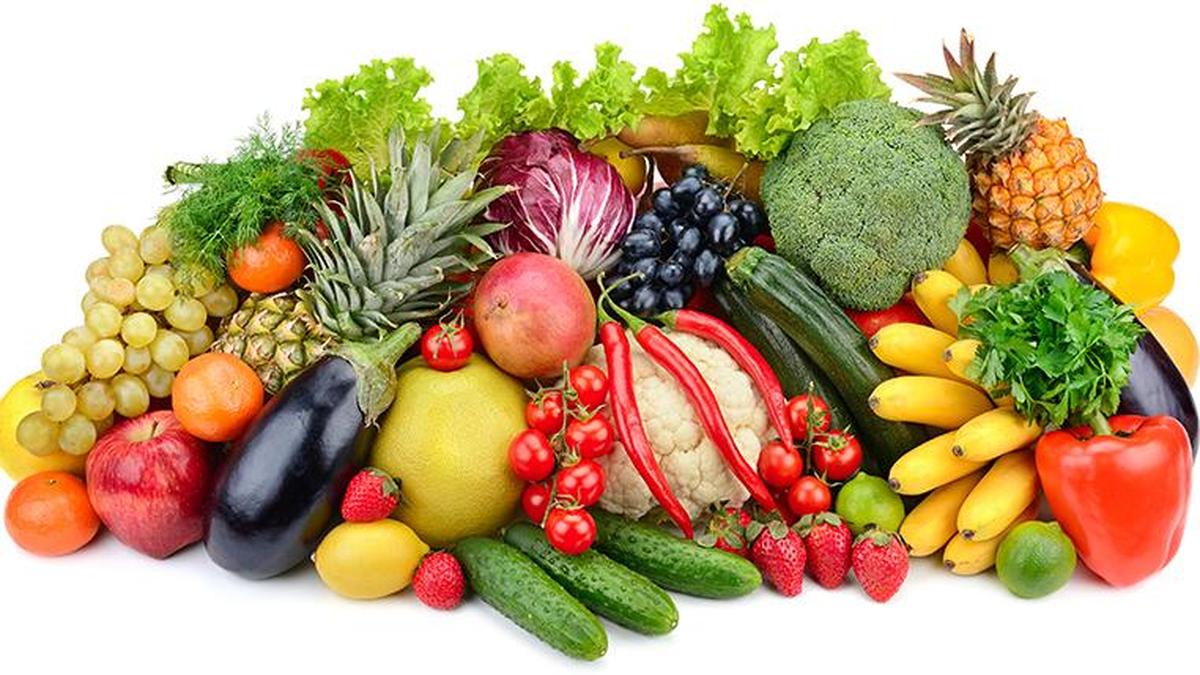
The study argues that natural sugars and starch found in fruits and honey delivered the required glucose to power a rapidly-expanding human brain. Image used for representational purposes only
| Photo Credit: istock/Serg_Velusceac
Was it meat or glucose that fueled the growth of the human brain? If evolutionary science told us, hitherto, that human brain expansion relied on meat to grow, a new study has an interesting addition to this theory. Published in a recent issue of Science, the study posits a dual fuel strategy – sugar and meat – as having powered brain expansion in humans.
The multi-centre study by Jennie Brand-Miller et al, does not discount the role of meat in brain expansion, but argues that natural sugars and starch found in fruits and honey delivered the required glucose to power a rapidly-expanding human brain. “What foods enabled the evolution of the large human brain? Currently, that diet is usually framed around increasing intake of animal foods: meat, protein, fat, and omega-3 fatty acids,” the authors explain, but go on to model the glucose needs of humans and their ancestors from four million years ago, until recently.

How the brain grew
Over a period of four million years, the size of the human brain is said to have increased from around 300 grams in early hominins (bipeds) to about 1,500 grams in modern humans. As brains grew, so did demand for glucose, which is required by other tissues including red blood cells, kidneys and reproductive organs. “The human brain is unusually large for our body size and requires substantial amounts of energy,” Jennie Brand-Miller, professor of human nutrition at the University of Sydney Charles Perkins Centre and School of Life and Environmental Sciences, said.
The study does not dismiss the importance of hunting or animal protein; rather, it establishes that human brain expansion relied on a balanced, dual-fuel strategy. Meat provided critical amino acids and micronutrients, while natural sugars and starches delivered the essential glucose required to power a metabolically expensive brain.
These findings discover a new glucose pathway to brain development – natural sugars may have supplied the energy needed to support brain metabolism before the advent of cooking which made starch-rich foods easier to digest. The paper is co-authored by archaeologist Karen Hardy, professor of prehistoric archaeology at the School of Humanities, University of Glasgow.

A quarter of dietary energy
Prof. Brand-Miller explained that raw starch will not release glucose, meaning that early humans likely relied on naturally-sweet foods long before cooked grains became a regular part of the diet. The modelling employed by the researchers suggests that sugars provided over 25% of dietary energy, fulfilling the obligatory glucose demand. Pounding and cooking (grains) releases glucose specifically, not merely energy. The evolution of a bigger brain is therefore a story of carbohydrate foods as much as animal foods. “While animal foods were important, the brain’s need for glucose has largely received little attention from anthropologists,” she added.
Explaining the element that the modelling brings to current evolutionary theory, Prof. Hardy, said: “The human evolutionary diet has a strong focus on meat eating and the need for protein. But we also require energy and this is best provided by glucose obtained from plants.”
The earliest hominins such as ‘Lucy’, whose brain was the same size as a chimpanzee, as well as Homo habilis and Homo erectus, were therefore likely highly reliant on carbohydrate-rich foods, particularly fruit, the modelling establishes. It was only later, as the use of fire and cooking became more widespread, that starch from underground food sources such as wild yams, water lily rhizomes and African potato contributed to glucose intake. This might also explain to some extent why humans crave sweet foods.
Published – August 19, 2026 12:44 pm IST