Skip to content
  • Facebook
  • X
  • Linkedin
  • WhatsApp
  • YouTube
  • Associate Journalism
  • About Us
  • Privacy Policy
  • 033-46046046
  • editor@artifex.news
Artifex.News

Artifex.News

Stay Connected. Stay Informed.

  • Breaking News
  • World
  • Nation
  • Sports
  • Business
  • Science
  • Entertainment
  • Lifestyle
  • Toggle search form
  • First Steve Smith, Now Naveen-ul-Haq: Virat Kohli Asking Fans To Stop Mocking Shows Magnanimity
    First Steve Smith, Now Naveen-ul-Haq: Virat Kohli Asking Fans To Stop Mocking Shows Magnanimity Sports
  • “Don’t Know What Najam Sethi Is Smoking…”: Harbhajan Singh Blasts Ex-PCB Chief For ‘India Afraid’ Comment
    “Don’t Know What Najam Sethi Is Smoking…”: Harbhajan Singh Blasts Ex-PCB Chief For ‘India Afraid’ Comment Sports
  • Access Denied
    Access Denied Nation
  • WWE Royal Rumble 2025 LIVE Updates: John Cena, Roman Reigns Headline Men’s Rumble Match
    WWE Royal Rumble 2025 LIVE Updates: John Cena, Roman Reigns Headline Men’s Rumble Match Sports
  • I don’t try to over-teach: Jasprit Bumrah on mentoring India’s young pacers
    I don’t try to over-teach: Jasprit Bumrah on mentoring India’s young pacers Sports
  • Home Ministry To Talk To Kukis, Meiteis To Bridge Ethnic Divide: Amit Shah
    Home Ministry To Talk To Kukis, Meiteis To Bridge Ethnic Divide: Amit Shah Nation
  • A ban, a split verdict, and a health concern
    A ban, a split verdict, and a health concern Business
  • Access Denied World
UPI and the cost of policy reversal

UPI and the cost of policy reversal

Posted on August 11, 2026 By admin


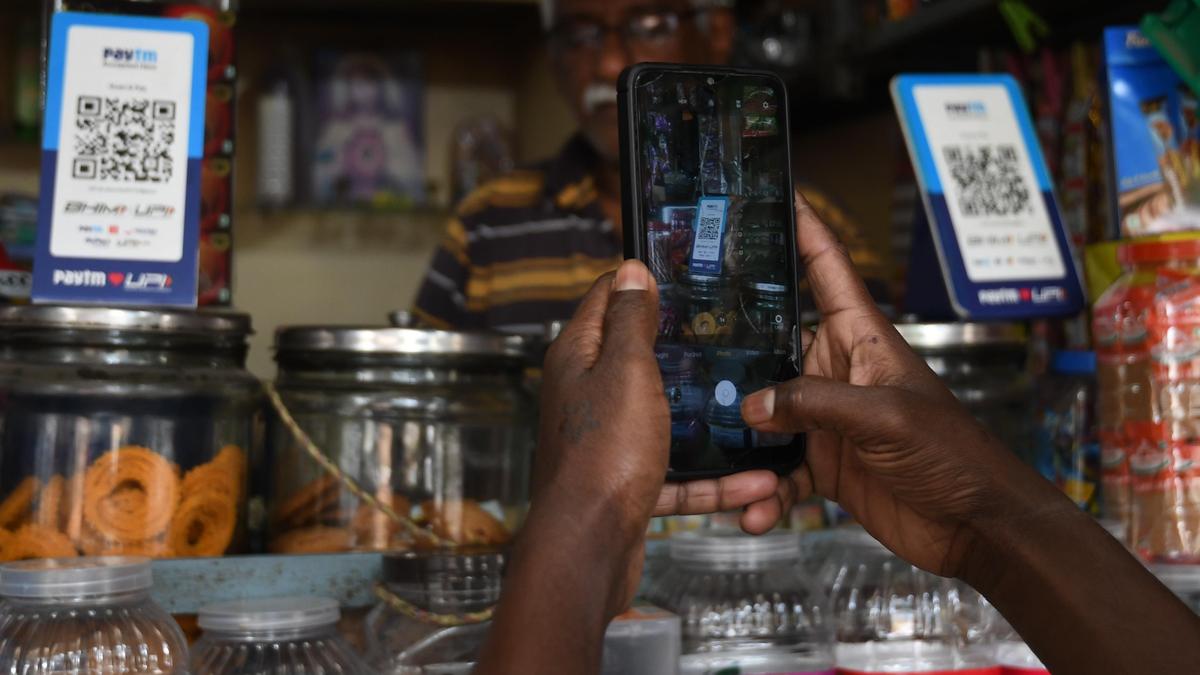
The government has just given itself the legal room to tax the very payment habit it spent a decade building. Tucked into the Taxation and Other Laws (Amendment) Bill, 2026, is an amendment to Section 10A of the Payment and Settlement Systems Act, 2007, which would allow the government to notify charges on specified electronic payment modes. The number being proposed is a Merchant Discount Rate (MDR) of 0.25–0.5% on UPI transactions above ₹2,000. The official stand is that this threshold would touch only about five per cent of transactions by volume, sparing the milk-and-vegetable payments that make up the bulk of UPI’s use. But it would cover roughly 65% of transaction value, which is precisely why it matters.

This is not a small, technical fix. It runs counter to a decade-long policy commitment and deserves more scrutiny than it has received.

The policy reversal

Consider the arc. Demonetisation in November 2016 was justified, among other things, as a push towards a less-cash economy. UPI, launched earlier that year, became the vehicle for that push, and its zero-MDR regime was a deliberate subsidy to get merchants and consumers off cash. It worked spectacularly. UPI now processes more transactions each month than most of the world’s card networks combined. Having successfully weaned the country away from cash and towards electronic payments, the government now wants to undercut the very success it engineered.

There seems to be a continued pattern of privileging one payment mode over others via policy. India has long taxed even credit cards. Credit card interest and fees attract 18% GST, making the use of credit cards unnecessarily costly. Taxing interest on revolving credit is unusual by international standards; most jurisdictions treat consumer credit interest as a private financial cost, not a taxable service. India taxes it as if using a credit card itself is a luxury.

Now UPI, the payment rail the government spent political capital promoting, is in line for similar treatment. The pattern suggests a need for a more coherent payments policy than giving in to the temptation to tax every transaction that can be observed.

There are at least two problems with this specific move beyond the optics.

Who really pays?

First, basic economic theory tells us that the person on whom a tax is levied and the person who actually bears its cost are not always the same. Moreover, UPI or any payments interface is a two-sided market, and taxing two-sided markets is genuinely tricky.

The MDR would nominally fall on merchants, as argued by the government, collected via banks and the National Payments Corporation of India’s ecosystem. But whether that cost gets passed through to merchants, on to consumers, or absorbed by banks and payment service providers depends on competitive intensity on each side of the market. Banks and fintechs compete for merchant relationships and cannot easily raise prices without losing volume to a rival offering free UPI acceptance.

The more likely outcome is that intermediaries — the banks and PSPs that built and maintain the plumbing — absorb the cost, which erodes their incentive to invest in reliability, fraud prevention and expansion into underserved segments. A tax that cannot be reliably passed through does not disappear; it most likely shows up later as degraded service or slower innovation. This is completely counterintuitive if government is proposing this tax as necessary to fund the next stage of UPI growth.

Cost to inclusion

Second, UPI has done real work on financial inclusion at the margin. It has pulled informal transactions into a recorded, traceable digital trail — the very outcome that formalisation and tax-compliance advocates have wanted for years. There have also been attempts to provide credit based on the digital trail created by electronic payments. Every rupee that moves through UPI instead of cash is a rupee the financial institutions can eventually see and use to build a spending profile.

Charging the rail directly could undercut the incentive to use it, cutting against long-standing financial inclusion goals. The government does not need to raise revenue from every rupee that moves electronically; it needs those rupees to keep moving electronically, because that is what delivers the inclusion and compliance dividends it has been chasing since 2016.

Ideally, which payment mode to adopt should be an economic decision for participating actors. Factors such as the size of the business, consumer preferences, and relative cost of using alternative payment systems should determine their usage. Deliberate policy intervention and the current government’s war on cash tilted the scales in favour of UPI. Taxing it now — however nominal or small — could change its usage patterns, and policymakers should not be surprised if one outcome is reduced UPI usage.

The proposal is being dressed up as a modest, targeted measure affecting only large-value transactions. But modest measures on payment rails have a way of expanding once the legal architecture exists. Section 10A, once amended, does not expire when this particular MDR proposal is shelved. The better outcome is for the government to leave the payments system alone, let UPI’s network effects keep compounding, and find its revenue elsewhere.

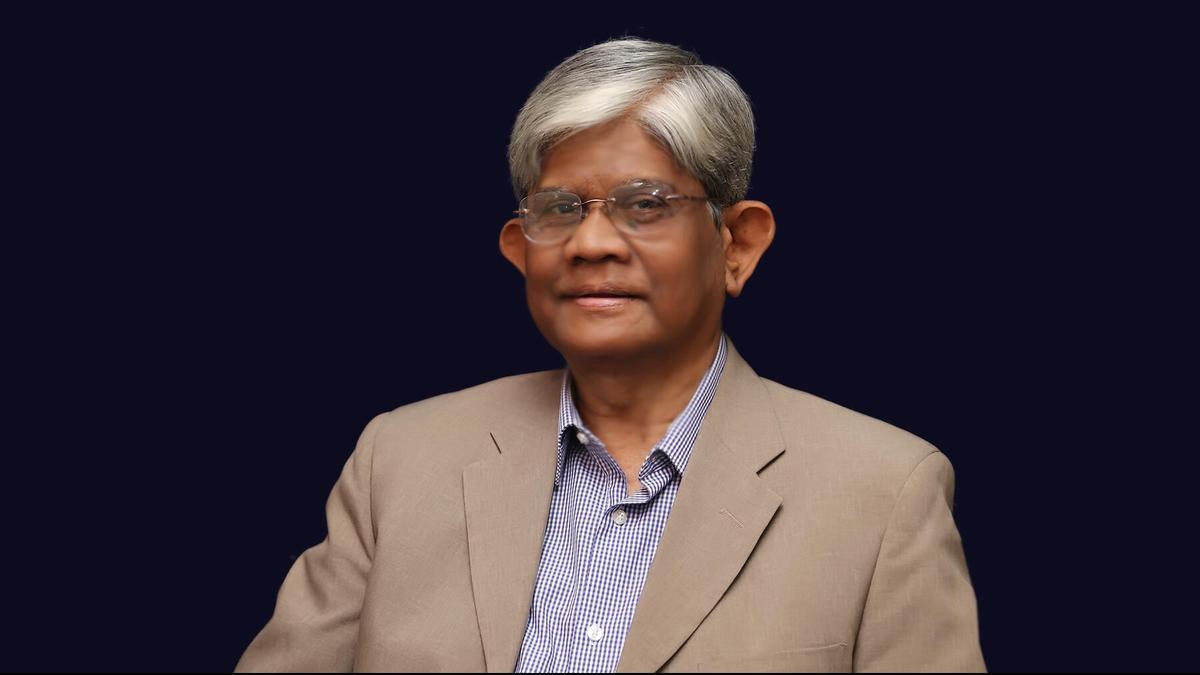
(Parag Waknis, Professor & Head, Economics Department, SRM University AP)

Published – August 11, 2026 08:30 am IST


Source link

Business

Post navigation

Previous Post: Former Air Force Secretary says he’ll sue Trump administration to restore his security clearance
Next Post: Trump says would be ‘terrible mistake’ to replace FIFA’s Infantino

Related Posts

  • OPEC expects share of Indian oil imports to rise again
    OPEC expects share of Indian oil imports to rise again Business
  • An exploration of India’s minerals diplomacy
    An exploration of India’s minerals diplomacy Business
  • Access Denied Business
  • Shortage of petrol, diesel ‘baseless’; no need to panic: IndianOil
    Shortage of petrol, diesel ‘baseless’; no need to panic: IndianOil Business
  • Access Denied Business
  • New Angel Tax Rules For Valuing Investments In Unlisted Start-Ups Investors
    New Angel Tax Rules For Valuing Investments In Unlisted Start-Ups Investors Business

More Related Articles

Economy on speedy rebound, India to remain fastest growing nation: Sitharaman Economy on speedy rebound, India to remain fastest growing nation: Sitharaman Business
Budget 2023 | Choosing the path of prudence and continuity: T.T. Srinivasaraghavan Budget 2023 | Choosing the path of prudence and continuity: T.T. Srinivasaraghavan Business
Stock markets fall for second day, dragged by HDFC Bank, West Asia crisis; Sensex down 238 points Stock markets fall for second day, dragged by HDFC Bank, West Asia crisis; Sensex down 238 points Business
Vodafone Idea approves offer price of ₹11 per equity share for ₹18,000 cr-FPO Vodafone Idea approves offer price of ₹11 per equity share for ₹18,000 cr-FPO Business
RBI includes PM Vishwakarma under PIDF scheme; extends tenure of scheme by another two years RBI includes PM Vishwakarma under PIDF scheme; extends tenure of scheme by another two years Business
India set to allow 5 mn tonnes of sugar exports in first tranche India set to allow 5 mn tonnes of sugar exports in first tranche Business
SiteLock

Archives

  • August 2026
  • July 2026
  • June 2026
  • May 2026
  • April 2026
  • March 2026
  • February 2026
  • January 2026
  • December 2025
  • November 2025
  • October 2025
  • September 2025
  • August 2025
  • July 2025
  • June 2025
  • May 2025
  • April 2025
  • March 2025
  • February 2025
  • January 2025
  • December 2024
  • November 2024
  • October 2024
  • September 2024
  • August 2024
  • July 2024
  • June 2024
  • May 2024
  • April 2024
  • March 2024
  • February 2024
  • January 2024
  • December 2023
  • November 2023
  • October 2023
  • September 2023
  • August 2023
  • July 2023
  • June 2023
  • May 2023
  • April 2023
  • March 2023
  • February 2023
  • January 2023
  • December 2022
  • November 2022
  • October 2022
  • September 2022
  • August 2022
  • July 2022
  • June 2022
  • May 2022

Categories

  • Business
  • Nation
  • Science
  • Sports
  • World

Recent Posts

  • Trump says would be ‘terrible mistake’ to replace FIFA’s Infantino
  • UPI and the cost of policy reversal
  • Former Air Force Secretary says he’ll sue Trump administration to restore his security clearance
  • Australia adds optional gender identity, sexual orientation questions to census
  • Gautam Adani denies any deal linked to dismissal of U.S. criminal case in sworn affidavit

Recent Comments

  1. TracyGof on UP Teacher Who Asked Students To Slap Muslim Classmate
  2. Charlesuplig on UP Teacher Who Asked Students To Slap Muslim Classmate
  3. Charlesuplig on UP Teacher Who Asked Students To Slap Muslim Classmate
  4. Charlesuplig on UP Teacher Who Asked Students To Slap Muslim Classmate
  5. RichardCeX on UP Teacher Who Asked Students To Slap Muslim Classmate
  • Badani named Delhi Capitals head coach; Rao replaces Ganguly as men’s Director of Cricket
    Badani named Delhi Capitals head coach; Rao replaces Ganguly as men’s Director of Cricket Sports
  • “Will Feed Her Churma, Halwa….”: Vinesh Phogat’s Mother Gets Emotional As Wrestler Returns From Paris
    “Will Feed Her Churma, Halwa….”: Vinesh Phogat’s Mother Gets Emotional As Wrestler Returns From Paris Sports
  • Access Denied World
  • Access Denied
    Access Denied Nation
  • Cricket World Cup: The Science Behind Virat Kohli’s Acrobatic Catch vs Australia Revealed By Indian Cricket Team Coach
    Cricket World Cup: The Science Behind Virat Kohli’s Acrobatic Catch vs Australia Revealed By Indian Cricket Team Coach Sports
  • India Calls For UN Security Council Reform, Stresses Need For Representation
    India Calls For UN Security Council Reform, Stresses Need For Representation Nation
  • 8 Dead After South Korean Chemical Tanker Capsizes Off Japan’s Coast
    8 Dead After South Korean Chemical Tanker Capsizes Off Japan’s Coast World
  • Holger Rune withdraws from French Open
    Holger Rune withdraws from French Open Sports

Editor-in-Chief:
Mohammad Ariff,
MSW, MAJMC, BSW, DTL, CTS, CNM, CCR, CAL, RSL, ASOC.
editor@artifex.news

Associate Editors:
1. Zenellis R. Tuba,
zenelis@artifex.news
2. Haris Daniyel
daniyel@artifex.news

Photograher:
Rohan Das
rohan@artifex.news

Artifex.News offers Online Paid Internships to college students from India and Abroad. Interns will get a PRESS CARD and other online offers.
Send your CV (Subjectline: Paid Internship) to internship@artifex.news

Links:
Associate Journalism
About Us
Privacy Policy

News Links:
Breaking News
World
Nation
Sports
Business
Entertainment
Lifestyle

Registered Office:
72/A, Elliot Road, Kolkata - 700016
Tel: 033-22277777, 033-22172217
Email: office@artifex.news

Editorial Office / News Desk:
No. 13, Mezzanine Floor, Esplanade Metro Rail Station,
12 J. L. Nehru Road, Kolkata - 700069.
(Entry from Gate No. 5)
Tel: 033-46011099, 033-46046046
Email: editor@artifex.news

Copyright © 2023 Artifex.News Newsportal designed by Artifex Infotech.