





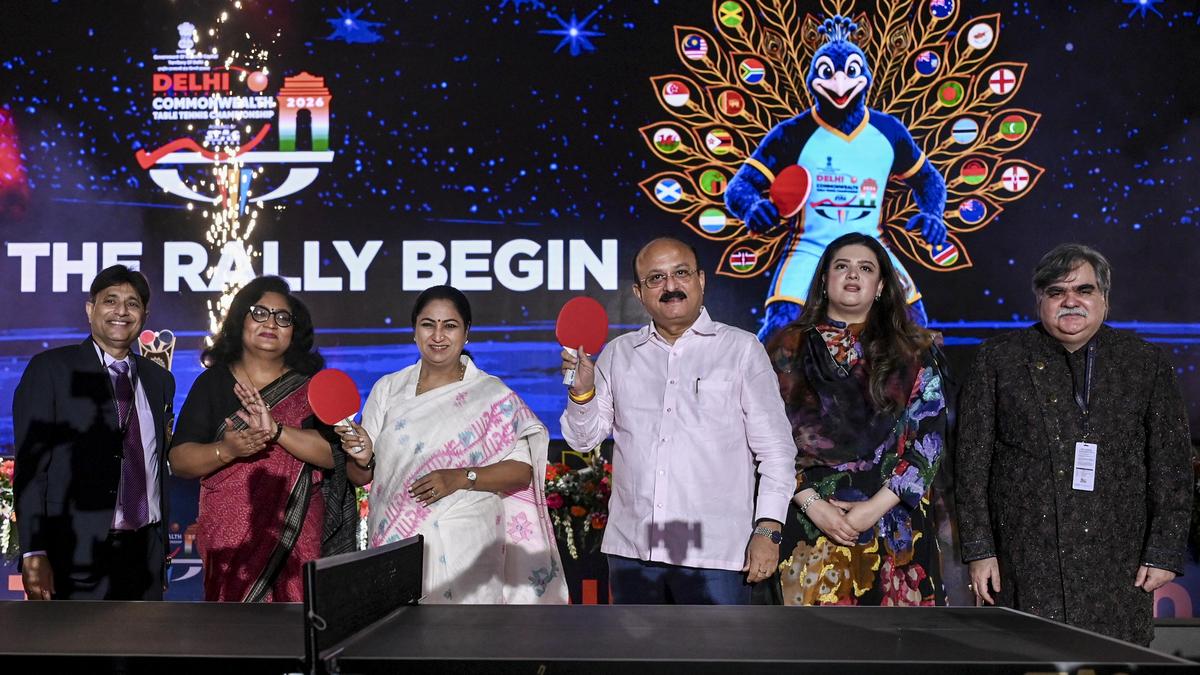
Even before the first point at the 22nd Commonwealth Table Tennis Championship was played in New Delhi on July 27, the tournament found itself at the centre of a controversy. The International Table Tennis Federation distanced itself from the event, denied it world ranking points and questions were raised about the Commonwealth Table Tennis Federation’s legal status. Yet, as India swept the titles and the championships concluded successfully, Commonwealth Table Tennis Federation chairman Vivek Kohli remained unapologetic.
In an interview with The Hindu, Kohli addresses the ITTF row, the Federation’s legal standing, the proposed Commonwealth ranking system, concerns over the tournament’s relevance and why he believes the Commonwealth can chart an independent future.
Excerpts
The 22nd edition of the Commonwealth Table Tennis Championship returned after seven years. Why did it take so long to revive the event?
We continued conducting several events during that period — youth championships, veterans’ events, coaching education programmes and regional competitions. But organising the senior championships is a completely different challenge because every country has to travel, and affordability is a major issue, particularly for African nations. We also wanted to find the right sponsor because it is the Federation’s responsibility to ensure that countries can participate. Earlier, Odisha had fully supported the championships in Cuttack, but when we approached various governments later, many were reluctant because of budget constraints.
Fortunately, we found the right partner in Delhi. One of our conditions was that we wanted to organise a world-class event while providing free hospitality to participating nations. Initially, we planned for 25 countries, then expanded it to 35. Eventually, we had entries from 32 countries, with 21 nations competing.
Nigeria skipped the event while England and Singapore fielded relatively inexperienced teams. It has led to criticism that the Commonwealth Championship has lost some of its relevance. Do you agree?
No, I don’t. Table tennis is not like cricket where countries have multiple teams of similar quality. Participation depends on player availability. Aruna Quadri, for instance, is injured and is undergoing surgery. Australia brought its strongest available players, including top-40 players. Malaysia sent its best team. Whether a country changes its squad because of injuries or other reasons is entirely its decision. When India beats England, the result simply reads “India beats England”. Nobody adds an asterisk about which players were missing. We cannot control whom countries select.
The ITTF’s decision not to award world ranking points generated considerable debate before the tournament. Do you think it affected participation?
I cannot say for certain whether it affected participation, but naturally players prefer ranking points. At the same time, the decision gave us an opportunity. We have decided to create our own Commonwealth ranking system. The current world ranking system benefits only around 40 to 50 countries that can regularly afford to play WTT events. Many nations simply don’t have that opportunity. Even some of Malaysia’s leading players have barely played WTT tournaments.
The Commonwealth consists of 74 countries and nearly 2.7 billion people. We have 56 active members today and hope to eventually have all 74 participating actively. We are the second-largest table tennis organisation after the ITTF.
How will the Commonwealth rankings work?
We’ll use multiple parameters. World rankings will obviously form one component. We will also incorporate performances in continental and regional championships across Africa, Europe and Asia. Importantly, we also intend to include national rankings because many talented players never get opportunities to compete internationally.
It’s a complex exercise, but technology and AI make processing such data much easier. We hope to launch the senior Commonwealth rankings within the next two to three weeks, followed by junior, sub-junior and cadet rankings.
There has also been considerable discussion about the Federation’s legal status. Has the AGM resolved those issues?
That process is already underway. The Commonwealth Table Tennis Federation itself was established in 1969. Later, a charitable company was registered in England to safeguard administrative matters. Following the change in office-bearers after the 2024 elections, certain statutory filings were delayed because the registered office remained linked to the previous directors. That eventually resulted in the company being struck off. We approached Companies House, obtained permission to re-submit the documents and have now completed that process. It’s important to understand that the company is merely an administrative vehicle. The Federation itself is governed by its member associations.
Could the Federation eventually shift its headquarters outside England?
That is certainly under consideration. We already operate an office in Delhi, and there have been discussions about opening bank accounts here as well. Maintaining operations in England has become increasingly expensive, particularly banking costs. The AGM discussed various possibilities and we will take a final decision in due course.
How satisfied are you with the response to this edition of the championships?
Very satisfied. This has been our largest-ever championship. Countries such as Namibia, Zimbabwe and Zambia participated for the first time. Zimbabwe, for example, won its first Commonwealth Table Tennis Championship match in 88 years. For them, it became national news. That is exactly what we want. My vision is to make table tennis truly global and accessible. Sport should be about opportunity and freedom, not restrictions.
Finally, what is your message to those within Indian table tennis who criticised the championship?
Love everyone. Love the sport. Criticism actually gives me strength because it pushes us to work even harder. If you’re doing the right thing, you shouldn’t be afraid. My message is simple: keep loving the sport and keep playing it.
Published – August 06, 2026 10:03 pm IST