


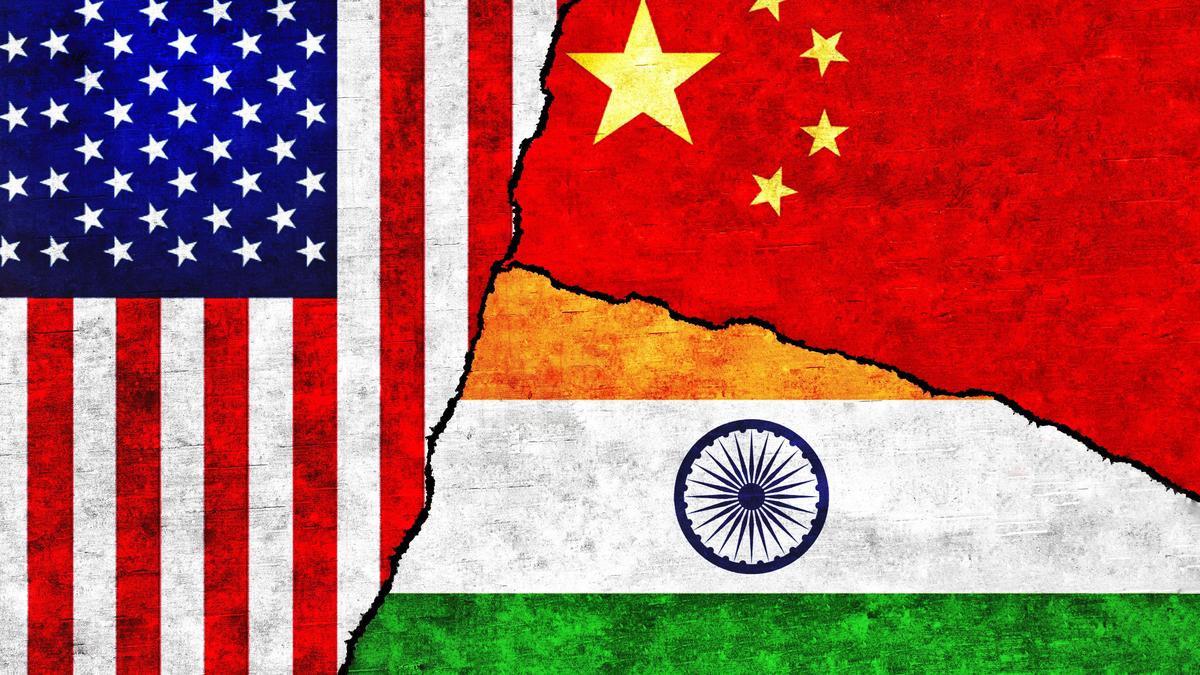
The Indian government has over the last few months been walking a tightrope between maintaining its strategic objectives and encouraging more trade and investment from the two largest economies in the world — the U.S. and China
This balancing act has seen gradual and incremental relaxations in several long-held policies of the government — whether it has to do with foreign direct investment (FDI) in e-commerce, allowing FDI from companies with Chinese ownership, or taking action against the dumping of goods in India by its trade partners.
Anti-dumping rejections
Data compiled by the Centre for Digital Economy Policy (C-DEP) and shared with The Hindu shows that one arena in which this balancing act is playing out is in the manner in which the country uses its anti-dumping duties.
The usual procedure is for domestic industry to petition the Directorate General of Foreign Trade (DGTR) to initiate an investigation into whether a particular item is being dumped or sold at below-cost rates in India by its trade partners. The DGTR conducts an extensive investigation, examining the data, the impact on domestic industry, consults all relevant stakeholders, and then arrives at its conclusion.
If it finds that dumping is indeed taking place, the DGTR then makes a recommendation to the Ministry of Finance to either impose an anti-dumping duty on the import of that good or to extend an existing duty for a further period of time.
The data from C-DEP shows that the DGTR made 1,052 such recommendations to the Ministry of Finance in the approximately 30 years between 1991 and 2020. Of these, the Finance Ministry had rejected just 5, or 0.5%. The rest were accepted.
However, since 2020, this trend has changed. The data shows that, while the average annual number of recommendations has remained largely the same, the rejection rate increased to between 50-62% in each of the years 2020-21, 2021-22, and 2022-23. It subsequently fell to 20.8% in 2023-24 and further to 6.1% in 2024-25, before rising again to 41.5% in 2025-26 up to December 31, 2025.

The data also shows that cases against China made up the bulk of the rejections since 2000. That is, cases that involved goods from China — either singularly, or as part of a group of countries — made up 72% of the total rejections between 2000 and December 2025.
“This in itself is not surprising,” a senior government official told The Hindu on the condition of anonymity given the strategic sensitivity of the matter. “China has a higher share of rejections because it also has a higher share of investigations and subsequent recommendations against it.”
Changing nature of imports
This increase in rejections of anti-dumping duty recommendations also coincides with a changing composition of what India imports from China, with the focus shifting from finished products to intermediate goods that can be finished within India and exported onwards.

For example, electronic components made up 3.3% of India’s imports from China in the first quarter of 2015-16. This has grown to nearly 13% as of the first quarter of 2026-27. Several other types of goods used in manufacturing within India, such as electric machinery, chemicals, plastics, have seen their shares rise over the same period.
On the other hand, finished goods such as telecom instruments have seen their share fall, from about 18% to 11%, over the same period of time. Similarly, manufactured fertiliser saw its share fall from about 7.5% in 2015 to less than 1% in 2026. Consumer electronics have seen their share in imports from China halve over the same period.
“Most of the goods imported from China are capital goods, intermediate goods and raw materials like active pharmaceutical ingredients, auto components, electronic parts and assemblies, mobile phone parts, etc, which are used for making finished products which are also exported out of India,” the Minister of State for Commerce and Industry Jitin Prasada told the Lok Sabha in February 2026.
Pushback from the RSS
However, this approach also comes with its political sensitivities, as can be seen in the reaction of the Swadeshi Jagaran Manch, the economic wing of the Rashtriya Swayamsevak Sangh (RSS).
“There is a mindset among those who advise the government that restricting any kind of import is protectionist,” Ashwani Mahajan, National Co-Convener of the Swadeshi Jagaran Manch told The Hindu. “But in my opinion, this mindset is wrong. Why it is wrong is because anti-dumping duty is a remedy, not a protection.”

“This rejection phenomena is unfortunate,” he added. “There is a whole process and an approximately 100-200 page report is created taking inputs from all angles, including international experience of the sector [before a recommendation is made]. It is not based on the whims of the DGTR, but based on the data.”
Mr. Mahajan added that, if the Ministry of Finance was not accepting the data in these reports, then it should provide reasons for this.
Investment relaxations for China
In a bid to increase investments into India, the government has made several other changes to long-held policies pertaining to China.
In 2020, in order to prevent “opportunistic” takeovers or acquisitions of Indian companies due to the COVID-19 pandemic, the Government had amended the FDI Policy to mandate that investment from companies in countries that share a land border with India can enter the country only following government approval.
In March 2026, the Union Cabinet approved a small dilution of this by allowing investments from companies with up to 10% Chinese ownership to enter the country through the automatic route. That is, they do not need express government approval.
“This would help in leveraging and enhancing India’s competitiveness as a preferred investment and manufacturing destination,” the government had said at the time. “Increased FDI inflows would supplement domestic capital, support the objectives of Atmanirbhar Bharat, and accelerate overall economic growth.”
In a sign of a further thawing in India’s stance on Chinese investments, the government in July issued an order allowing four companies with Chinese ownership or links to bid for projects tendered by the Indian government in the power sector.
Balancing the U.S. for trade
In a bid to help Indian companies export more, the Indian government also recently diluted its strict stance on FDI by e-commerce companies.
For almost a decade, India completely banned FDI in e-commerce companies that held inventory in India. That is, FDI was allowed only in companies that acted purely as marketplaces and did not use those marketplaces to sell their own products.
Companies like Amazon have long been lobbying for a relaxation, while domestic trader bodies such as the Confederation of All India Traders (CAIT) have been pushing back against any such relaxation.
On July 23, the government diluted this rule by saying FDI would be allowed in e-commerce companies that hold inventory in India for the express purpose of exports.
The government said this move was made “in order to facilitate greater exports through easier and increased access of global markets by Indian sellers”.
The Indian government also won lower tariffs from the U.S. through the publication of a separate notification. In March 2026, the U.S. government launched an investigation into whether 60 of its trade partners, including India, were doing enough to prevent the import of goods made using forced labour.
The draft report of the investigation released in June proposed a 12.5% tariff on India. Soon after, the Indian government notified a ban on the import of goods made using forced labour. According to experts, the ban itself would be difficult to impose since it would involve countries like China and Malaysia allowing Indian government officials to visit and investigate their working conditions.
Nevertheless, the notification resulted in the U.S. imposing a final tariff of 10% on India, lower than what it had proposed.