

The language of world politics has become remarkably predictable. Every military strike, diplomatic initiative, economic sanction, or strategic partnership is justified in the name of national interest. Television debates and commentaries have a common vocabulary — power, deterrence, balance of power, strategic autonomy, and security. It almost appears as though International Relations has become an emotionless discipline, focused on power concentration, where morality and ethics have little place. Yet the defining geopolitical crises of recent years tell a very different story.
Influence of Western traditions
International Relations, both as an academic discipline and as a practice of diplomacy, has been largely shaped by Western intellectual traditions, with much of academic research originating in the United States of America. No wonder, famous IR scholar, Stanley Hoffman, in his article, argued that IR is an American Social Science. It is difficult to refute Hoffman’s argument because initially the modern international order emerged when European powers dominated much of the world, leaving the Global South with little role in designing the institutions, norms, and rules that continue to govern global politics. However, the discipline itself acquired its modern identity after the Second World War, with the U.S. based scholar, Hans Morgenthau’s Realism becoming the dominant framework for understanding international affairs. Realism portrays the international system as anarchic and argues that states, in the absence of a central authority, are compelled to pursue their national interests. Although the theory is far more nuanced than its popular interpretation suggests, public discourse has reduced it to two defining ideas—anarchy and national interest. Over time, Realism travelled from classrooms to newsrooms, becoming the default language through which foreign policy is interpreted.
There is much to appreciate in the Realist tradition. It reminds us that power, military capability, and strategic calculations remain central to international politics. However, the dominance of Realism has also encouraged the belief that foreign policy is little more than a rational pursuit of national interest. Ethical considerations are often dismissed as idealistic, while emotions are treated as irrational distractions. Yet certain recent scholarships in International Relations have increasingly challenged this assumption. Scholars such as Neta Crawford have argued that emotions are not the opposite of rationality; rather, they are integral to political judgment. Fear, grief, anger, humiliation, empathy, and pride actively shape how leaders interpret threats, define interests, and respond to crises. Foreign policy, therefore, is not merely an exercise in cold strategic calculation, but also a product of moral perceptions and collective emotions. This dynamic is encapsulated by scholar Brent Sasley, who notes that while state leaders make formal decisions as members of a group, “they do so within a particular (social) context and on that (social) basis”.
Question of political legitimacy
The recent U.S.-Iran conflict illustrates this point. Much of the strategic analysis focused on military capabilities, damage assessments, and the future balance of power in West Asia. Comparatively little attention was paid to the emotional and ethical consequences of the conflict. The assassination of Ayatollah Ali Khamenei, who was not only Iran’s Supreme Leader but also one of the most influential religious figures in the Shia world, produced consequences that extended far beyond military calculations. Rather than weakening the Iranian state, his death generated an extraordinary wave of national solidarity. A society that had appeared politically divided only months earlier united around a shared sense of loss, nationalism, and religious identity. Crawford’s observation that grief and the desire for revenge continue to shape political behaviour long after the battlefield has fallen silent is particularly relevant in this context. Military planners may calculate strategic gains, but societies often respond through memory, identity, and emotion. Therefore, it is important to note that foreign policy must not be judged solely by the actions of a government, but also by how those actions shape and influence global public opinion. The debate surrounding the assassination largely focused on how Washington would engage with a post-Khamenei Iran. Far less attention was devoted to the ethical questions raised by such an operation and its implications for America’s moral standing. Strategic success does not automatically translate into political legitimacy.
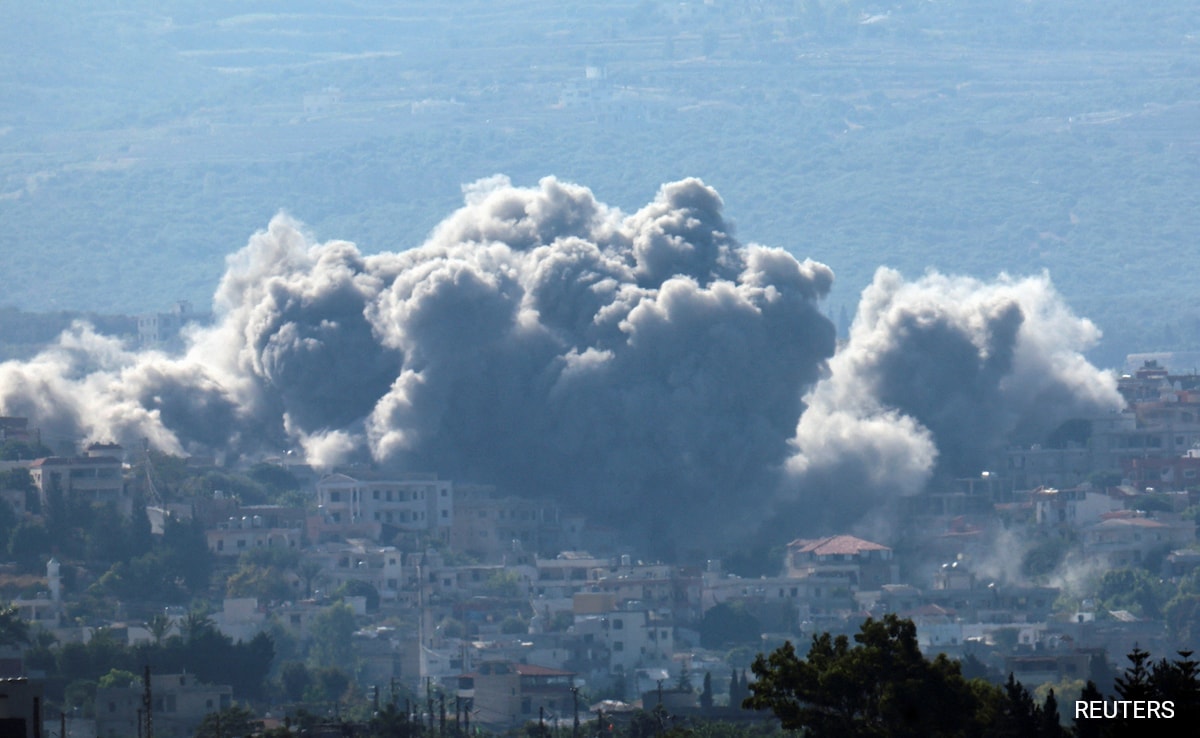
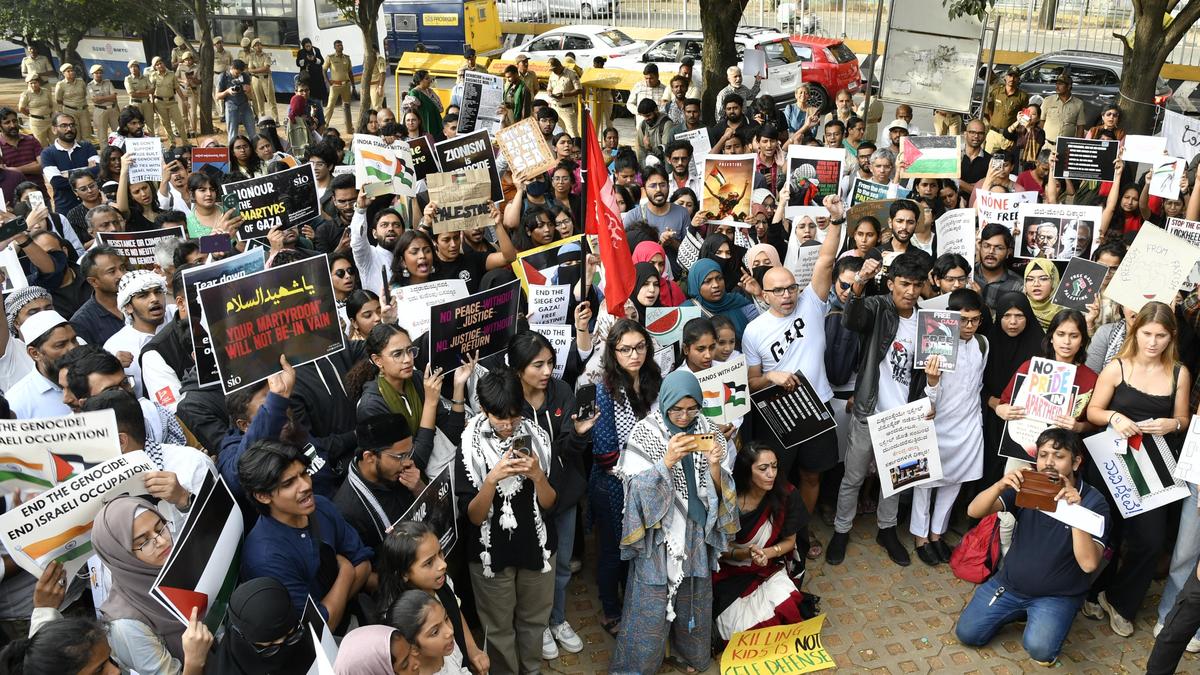
The changing international perception of Israel offers another important example. Following the Hamas attacks of October 2023, Israel received widespread sympathy and support across much of the world. Most governments affirmed Israel’s right to defend itself. However, as the humanitarian crisis in Gaza deepened, due to mindless aggression shown by the Israeli army, public opinion began to shift. Large demonstrations across Europe and North America reflected growing concerns over civilian suffering and questioned the proportionality of Israel’s military response. In this, governments and societies increasingly spoke in different voices. While many governments continued to emphasise security considerations, public opinion became increasingly influenced by humanitarian concerns. Thus, while military superiority can alter realities on the battlefield, it cannot prevent the erosion of moral legitimacy.
Ethical concerns over globalisation
History offers numerous examples of ethics shaping international politics. Throughout the Cold War, the U.S. consistently presented itself as the defender of democracy, human rights, and individual liberty while portraying Soviet communism as an authoritarian system hostile to political freedom. The post-war liberal international order derived much of its legitimacy not merely from military and economic strength but also from its claim to uphold universal values. Even globalisation was promoted as a project that would bring societies closer together through greater interdependence and cooperation. Although globalisation generated unprecedented economic growth, it failed to bridge the structural inequalities between the Global North and the Global South, leading many to question whether the liberal international order had fulfilled its ethical promises.
The position of Global South
Historically, the Global South has been among the most vocal in injecting moral considerations into international politics. The Non-Aligned Movement (NAM) was not merely a strategy to avoid Cold War rivalries; it represented a normative vision of sovereign equality and a collective call for a more just world order. Contemporary India continues to invoke similar ideas through its emphasis on the Global South and the civilisational philosophy of ‘Vasudhaiva Kutumbakam’— the world is one family. Notably, India’s international standing has historically rested not only on its growing economic and strategic capabilities but also on its democratic institutions, pluralism, and anti-colonial legacy. During the Bangladesh Liberation War of 1971, for instance, international public opinion gradually shifted in India’s favour after the humanitarian catastrophe in East Pakistan became widely known. More recently, India’s consistent opposition to cross-border terrorism has enjoyed broad international support because it resonates with widely accepted ethical norms.
This moral capital, however, cannot be taken for granted; it must be continuously reinforced through consistent foreign policy choices. For instance, India’s relatively restrained response to recent developments in West Asia has generated debate over whether its pursuit of strategic autonomy truly aligns with the ethical principles it frequently projects on the international stage. Ultimately, India’s international standing is built on more than just its market size. It is widely applauded as a vibrant, multicultural nation where democracy has successfully endured, even when it faltered in other developing countries facing similar socio-economic conditions.
In conclusion, it is a mistake to interpret International Relations merely as the study of the redistribution of power; it is equally crucial to understand how that power is evaluated. In a world defined by Artificial Intelligence, digital media, transnational activism, and instantaneous communication, wars are no longer judged solely by governments or strategic analysts. Instead, real-time images of civilian suffering, humanitarian crises, and political violence actively shape international narratives as they unfold. While Realism remains highly relevant for explaining why states pursue power and security, achieving a comprehensive and nuanced understanding of world politics requires us to examine how societies accept, reject, or morally evaluate that power.
(Dhananjay Tripathi teaches International Relations at the South Asian University, New Delhi.)
Published – July 29, 2026 08:00 am IST