






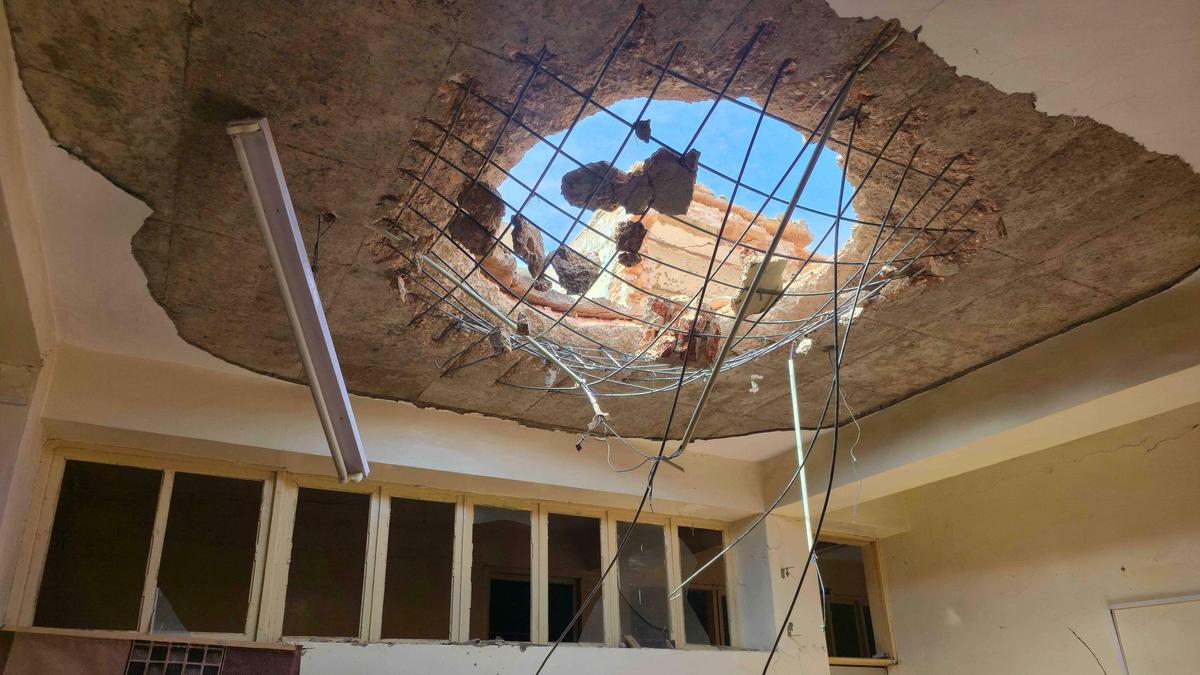
This photograph shows a damaged interior view of the Agricultural Bank of Sudan after it was reportedly targeted by the Rapid Support Forces in El-Obeid on July 27, 2026.
| Photo Credit: AFP
Drone strikes blamed on paramilitary forces shook the Sudanese flashpoint of El-Obeid on Monday (July 27, 2026), hours after the Army regained control of the city’s highway to the capital, Khartoum.
The Army’s rival, the paramilitary Rapid Support Forces (RSF), has for months amassed troops around El-Obeid, attempting to encircle it ahead of an apparent large-scale assault.

Following a days-long advance across North Kordofan state, the Sudanese Army on Sunday (July 26, 2026) managed to push the RSF west off the 400-kilometre (250-mile) highway that connects Khartoum with the embattled Kordofan region’s largest city, two army sources told AFP onMonday (July 27, 2026) on condition of anonymity.
Drone strikes were reported on the city at dawn, with local officials attributing them to the RSF.
The local lawyers’ association and a branch of the Agricultural Bank of Sudan were left in ruins, an AFP reporter saw, though no casualties were reported.

Since the start of the year, drone strikes by both forces have killed more than 1,000 people in Kordofan alone, according to the UN.
Since April 2023, the war between Sudan’s army and their one-time allies the RSF has torn the country apart and killed more than 200,000 people, aid workers estimate.
It has also created the world’s largest displacement and hunger crises, with over 33 million people in need of humanitarian aid.
For months, each side has sought to cut off the other’s supply lines around El-Obeid, which sits at an important crossroads.
Its north-south highway runs from Khartoum through Kordofan to the southern border, while its east-west axis connects RSF strongholds in the Darfur region to army-controlled central and eastern Sudan.
As the RSF mobilised on El-Obeid, the UN has for weeks warned of a repeat of atrocities committed during the RSF’s takeover of the Darfur city of El-Fasher in October last year, which a UN inquiry found bore the “hallmarks of genocide”.

A city of about half a million people, which the UN says has doubled in size because of displacement, El-Obeid has been caught in the crossfire since the war began.
It was under paramilitary siege from April 2023 until February of last year, when the army broke through.
Ever since, RSF attacks on roads, neighbourhoods and critical infrastructure such as power stations have worsened a humanitarian crisis, where the UN says only a fraction of the city has reliable access to food.
Published – July 27, 2026 11:17 pm IST