



The story so far
In the face of continued criticism on social media, the government has once again come out with a detailed document addressing various concerns related to its ethanol blending programme, including the impact this would have on mileage, the advantages ethanol poses in terms of the environment and also in times of global turmoil, and why ethanol-blended petrol is currently not cheaper than pure petrol, even though oil prices had been falling until recently.
What are the government’s near-term plans for ethanol blending?
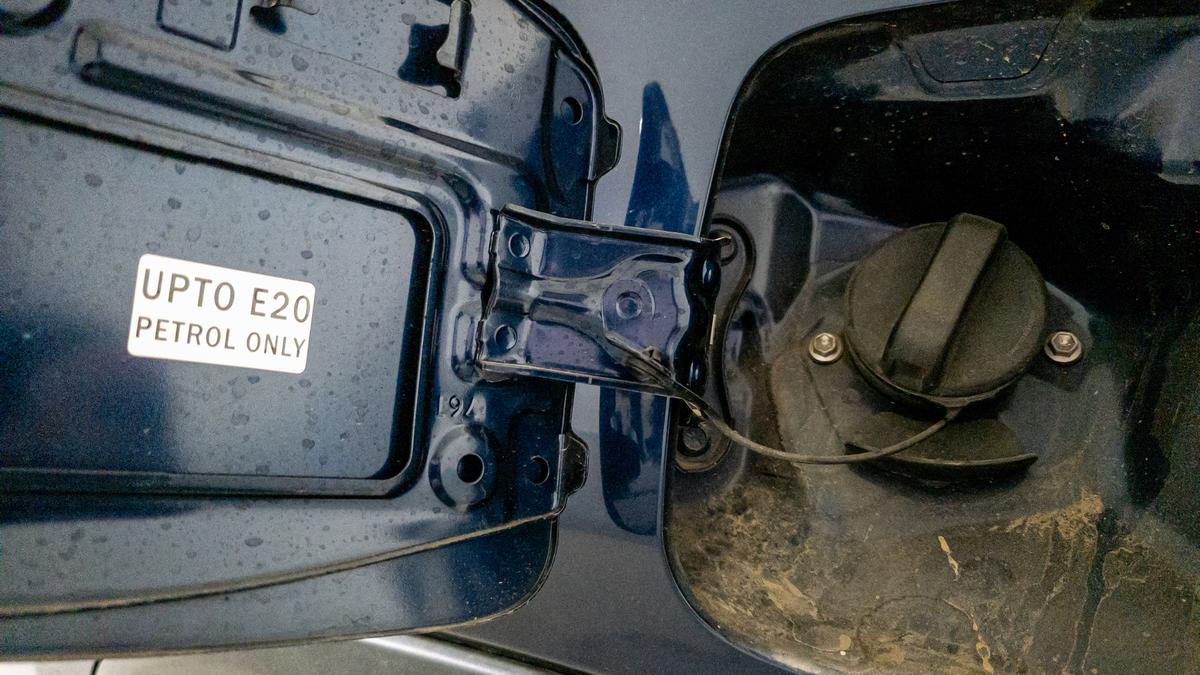
At the moment, the petrol sold in India is called E20, which means that for every litre of petrol, 20% of that is ethanol. The government has set its sights on taking this to E30 and has already notified quality parameters for E22, E25, E27, and E30 fuels and has announced central excise duty exemptions for these higher blends.
What are the concerns?
The last few years, and especially the last few months, have seen a wide range of criticism emerging about the use of ethanol. One segment of consumers says that the blended fuel has hit their cars’ mileage significantly, especially since most cars on the road today are tuned towards E10 fuel and not E20.
Another criticism is that the ethanol component has led to faster-than-usual corrosion of engine parts, leading to more frequent repair and replacement. Some users have even mentioned that the ethanol in the fuel has attracted insects that have swarmed around the opening of their petrol tanks.
Is it true that mileage will get hit?
It is, of course, difficult to verify the individual experiences of the vast number of motorists in India. But we can examine each of the claims one by one and see what the government and the auto companies have to say. The most important of these concerns is to do with mileage.
The government itself has admitted that mileage could be hit due to the use of ethanol-blended fuel. “It is true that in some vehicles there may be a 3-5% reduction in fuel economy,” the Ministry of Petroleum and Natural Gas said in a detailed frequently asked questions (FAQ) document issued on July 10.

The government does not specify if this 3-5% drop in mileage is compared to the previous E10 or to pure petrol. It also does not address whether this drop will become worse with higher blending percentages.
However, the maths shows the cost implications of this are not insignificant. Assume the average commuter drives a car that provides a mileage of 20 km per litre, and they have to commute 10 km for work one way. At the current price of petrol in Delhi of ₹102.12 per litre, this would cost them ₹51.06 per trip.
Assuming they have to go to the office and come back 20 days in a month, this works out to ₹2,042.4 per month. A 3-5% drop in mileage would mean this monthly bill would increase by ₹61-102 per month. This cost implication is, of course, only to do with the office commute — families use their vehicles for a wide range of other personal uses, including longer road trips.
In other words, the government is saying families should be prepared for a 3-5% increase in their fuel bill, which might or might not increase as the blending percentage increases.

Why is E20 not cheaper than pure petrol?
This is another criticism the government has sought to address over why E20 fuel is not cheaper than pure petrol, since it uses less crude oil in its production. The government in its FAQ said that it purchases ethanol at remunerative prices so that Indian farmers are fairly compensated. For maize-based ethanol, for example, it said that the procurement price was currently ₹71.86 per litre, not counting GST, transportation, storage and depot handling costs.
So, it explained, when international crude oil prices are at around $70 per barrel, E20 is actually costlier to produce than pure petrol. However, when the price of crude rises above $100 a barrel, as it did recently due to the war in West Asia, the situation reverses, and ethanol becomes cheaper.
In other words, higher levels of ethanol blending might result in a situation where fuel prices cannot be reduced for consumers even if the price of oil falls.
Will engine parts get corroded?
This complaint has been more vehemently opposed by the government and auto manufacturers. During a recent joint press briefing by auto manufacturers, Maruti Suzuki stated that vehicles designed for E10 have been tested with E20 fuel across all parameters, with no areas of concern. Other manufacturers, too, said that they had not seen any signs of E20-related corrosion in their cars.
What are the advantages of ethanol blending?
One key advantage of ethanol blending is a reduction in India’s oil imports, which are a source of significant expenditure and foreign exchange outflows. The government and auto manufacturers also say that E20 is a cleaner, higher-quality and more efficient fuel than either E10 or pure petrol.
They added that the loss in mileage is “more than compensated” by better acceleration, better anti-knocking and far less pollution in the case of ethanol against pure petrol.
Published – July 14, 2026 12:42 pm IST