



In January 2017, when FIFA expanded the World Cup to 48 teams, starting with the 2026 edition, there were mixed feelings. Many welcomed the move, arguing that the flagship event of the planet’s most popular sport should have more than just 32 outfits. But there was criticism too, for many felt that the increase would dilute the quality of football. What does evidence from the ongoing World Cup in North America say? Pradhyum Reddy and Lallianzuala Chhangte discuss this in a conversation moderated by N. Sudarshan.
How has the World Cup watching experience been so far?
 Pradhyum Reddy: Apart from the time difference, it has been really enjoyable. Before the World Cup, there was talk about a lot of the negatives, but it is good to see the crowds. This is what makes the World Cup so interesting, like the stories about the Scottish fans in Boston and the colour that the African sides bring. Teams have caught us by surprise and that gulf with European and South American sides keeps getting smaller. Teams like Cape Verde and the Democratic Republic of Congo have made it really interesting.
Lallianzuala Chhangte: The biggest thing I have noticed is how competitive football has become. Every team is better prepared and there are very few easy games. From a player’s point of view, it is really inspiring to see how much nations have progressed. The intensity of the game and overall atmosphere have been fantastic. It is really exciting to see more countries get the opportunity to compete on a bigger stage.

Many feared an abundance of one-sided contests. How do you rate the quality?
Pradhyum Reddy: There have not been many blowout games. It is good to see the so-called smaller countries coming through. There has been a lot of gate-keeping by European countries over the years. If it is called a World Cup, it should be representative of the world and not just five or six countries from South America and the European elite. Nine of the [10] African countries qualified for the second phase. The Asian countries started well, and then the gulf in quality became visible.
But [overall], it has been good, and this is what inspires nations. Even from an Indian perspective, you will get fans who do not normally follow Indian football suddenly getting involved. It is a good gauge of where we are, and the direction in which world football is growing in terms of player quality and styles. That is one of the successes.
Lallianzuala Chhangte: The tournament has answered many doubts. Expanding the World Cup has given more nations a chance to dream bigger. I do not think the quality has suffered. In fact, it has been shown that the gap between many countries is getting smaller because football is developing everywhere.
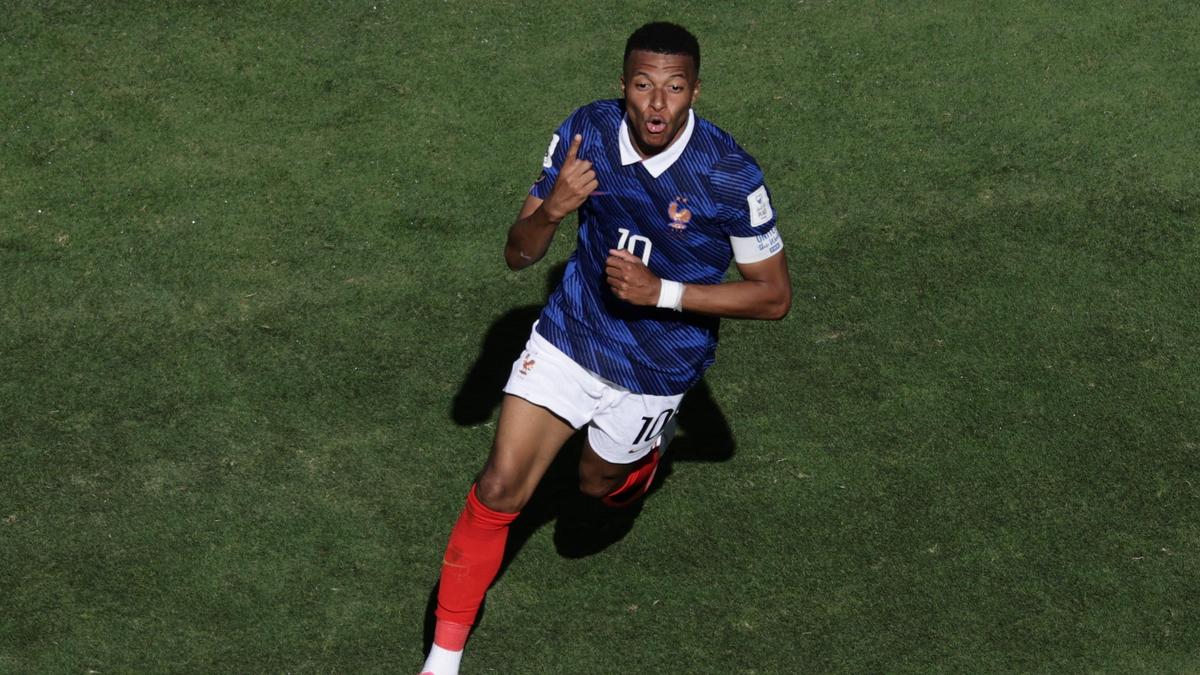
Cape Verde, the third-smallest country to qualify, reached the knockout rounds. Only Mexico, Argentina and France won all three of their group-stage matches. Is this proof of the quality improving?
Lallianzuala Chhangte: Absolutely. It proves that football is not just about population or history anymore. With the right planning, right investment and belief, even smaller nations can compete with the best. That is a great message for countries like us.
Pradhyum Reddy: One of the disadvantages of the 48-team World Cup is the way eight third-placed sides [from the group stage] go through. It leads to the situation where you are probably not going to have three wins like Argentina, Mexico and France because you can pretty much qualify after two wins.
That said, you cannot just play to get three draws because you have seen teams even with one win not go through. So there is an incentive to [get a win] and that is why you have seen some really good counter-attacking football. Players all over the world are very well prepared physically. So, if they can be defensively organised, the gulf narrows. That is the great leveler we have seen this time.
Chhangte comes from Mizoram, whose population, compared to many states in India, is small. It just shows that if you do what Mizoram is doing with its baby leagues and youth development, you can find success. Asking that ‘Cape Verde with that population can do it but can’t we with 1.5 billion’ is not an accurate way of looking. Instead, focus on the hotspots in India and concentrate resources on these regions.
Asia doubled its slots for the 2026 World Cup, helping Uzbekistan and Jordan make the grade. They lost all their matches, but what effect can World Cup qualification have on a country?
Pradhyum Reddy: We should not look at the results of Uzbekistan and Jordan in a negative light. It is a massive achievement to qualify. Jordan was runner-up at the AFC Asian Cup (2023). Uzbekistan has done well at the U-17, U-20, and U-23 levels in Asia. So, if you can consistently challenge for your continental competitions, the pathway is there for success. Of course, countries that come in for the first time are not going to see success. You need one team to go far, like Morocco last time (semifinalist in 2022). That will inspire other teams to bridge the gap between themselves and the leaders in the region.
Lallianzuala Chhangte: When I look back at those matches we played [against Uzbekistan and others], I still feel jealous. But seeing Uzbekistan and Jordan feature in the World Cup also gives us hope. Qualification for the World Cup can transform football. It will inspire young players, attract more sponsors and big brands of the world, and it will improve infrastructure and encourage better youth development. The results did not go Uzbekistan’s and Jordan’s way, but experience at the highest level is invaluable. Playing against the best teaches lessons that can be [otherwise] learnt.
Only two out of nine from the Asian zone made it to the round of 32. But nine of the 10 African nations progressed. What does it say about Asian football? Overall, do you think the sport is improving?
Pradhyum Reddy: A lot of the African players are playing in the top-five leagues of the world. That is the next stage of development for Asian football. African club football has not really grown as much as player development. But you look at Asia, there is a lot of focus on how the clubs have grown, whether they are successful in the AFC Champions League, etc.
Even among the elite in Asia, like Japan and South Korea, many players are playing in Europe. They have got a striker [Ayase Ueda, Japan] who was the top scorer in the Eredivisie [Netherlands]. Once the rest of Asia can catch up in producing players who go on to play at that level, the gulf will reduce.
Lallianzuala Chhangte: Every continent is improving. Africa’s performance shows what consistent investment and player development can achieve. Most of the players from Africa are playing abroad. Asia has made progress too, but we still need greater consistency. Countries like Japan and Australia have shown what is possible with long-term planning. I think the gap with Europe and South America is getting smaller and smaller each year.
India is ranked 26th in Asia. When can we realistically expect to be at a World Cup?
Pradhyum Reddy: The simplest explanation is: you look at all the teams that have qualified, and they have gotten there by doing well consistently in their confederations. We have not qualified for the 2027 AFC Asian Cup. Qualification for the AFC competitions should become the norm. We have to be there at every single AFC U-23 and U-20 event. The [Indian] women just showed that they can do it. They were at the AFC U-17, U-20 and seniors. When our men’s teams consistently compete at all age-group tournaments for at least 10 years, you are starting to build a group that could compete in a World Cup.
Lallianzuala Chhangte: We have not built an ecosystem consistently over a long period. There have been changes in directions, uncertainties with the league, challenges in youth development, infrastructure and grassroots football. These things do not improve overnight, but at the same time, it is not a reason to lose hope. We have talented players, passionate fans and a growing interest in sports. We should not put a fixed timeline on qualifying because that creates unnecessary pressure. We should focus on improving year after year, and become consistently competitive in Asia first. Then, qualifying for the World Cup will become a realistic goal rather than just a dream.
As a player, how do you cope with the feeling of missing out?
Lallianzuala Chhangte: We were once close [to Uzbekistan], in terms of physicality and experience. One reason we are not catching up is that we don’t have Indian-origin players playing here, and our players aren’t taking the risk to play outside India. As coach Pradhyum mentioned, we need more players who play outside. For me, it might be too late. But the younger generation should go abroad and gain experience for at least four or five years. We need players who go out of their comfort zone, and that will put India in a better place.
Pradhyum Reddy is a coach and commentator; Lallianzuala Chhangte is an Indian National team footballer