


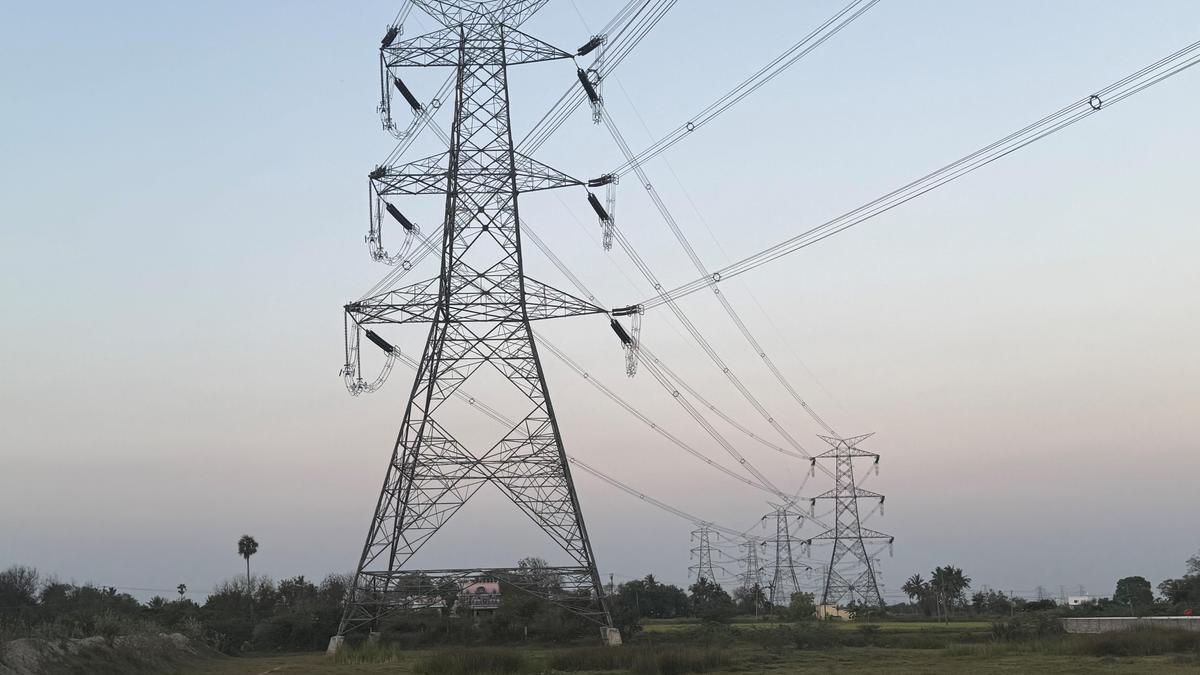
The high-capacity conductors have capability to carry about four times the load taken by conventional likes without replacing the transmission towers. File photo for representational purposes only.
| Photo Credit: The Hindu
With large-scale thermal and renewable energy being generated in India, the demand for high-capacity conductors, and specialised cabling to evacuate power from solar and wind hubs has increased. These conductors have capability to carry about four times the load taken by conventional likes without replacing the transmission towers.
According to industry estimates, India’s electricity consumption has increased by 34% from FY19 to FY25 but streamlining distribution and minimising losses is the key.
In FY25, production volume of conductors (that allow flow of current) stood at 587,948 MT up ~2%. The industry players are seeing a growing shift towards high temperature low sag (HTLS) conductors.
The importance of high-voltage (HV) lines of 400 kV and 765 kV in the intra-State transmission network is also increasing, as higher voltage level enhances power density, reduces losses and efficiently delivers bulk power.
The market size of conductors is expected to reach ₹23000 to ₹25000 crore by FY30 as per estimates by CRISIL.
Indian companies are gearing up for growth through technological tie-ups with international companies.
For instance, Laser Power & Infra Ltd has entered into a technology collaboration with U.S.-based TS Conductor Corp. which allows the Kolkata-based company to locally produce a broad range of advanced and specialised conductors for State Utilities including ACSS (Aluminium Conductor Steel Support) conductors, AECC (Aluminium Encapsulated Carbon Core Conductor), MVCC (MV Overhead Covered Conductors) and AL-59 AAAC (All Aluminium Alloy Conductors).
Deepak Goel, CMD, Laser Power & Infra, said: “We believe our combination of product innovation, strategic global partnerships, and backward-integrated manufacturing will enable us to meet the evolving needs of India’s power sector, enhance margins, and drive long-term growth.”
“We see significant growth potential in replacing conventional conductors with high-performance variants,” he added.
In Eastern States
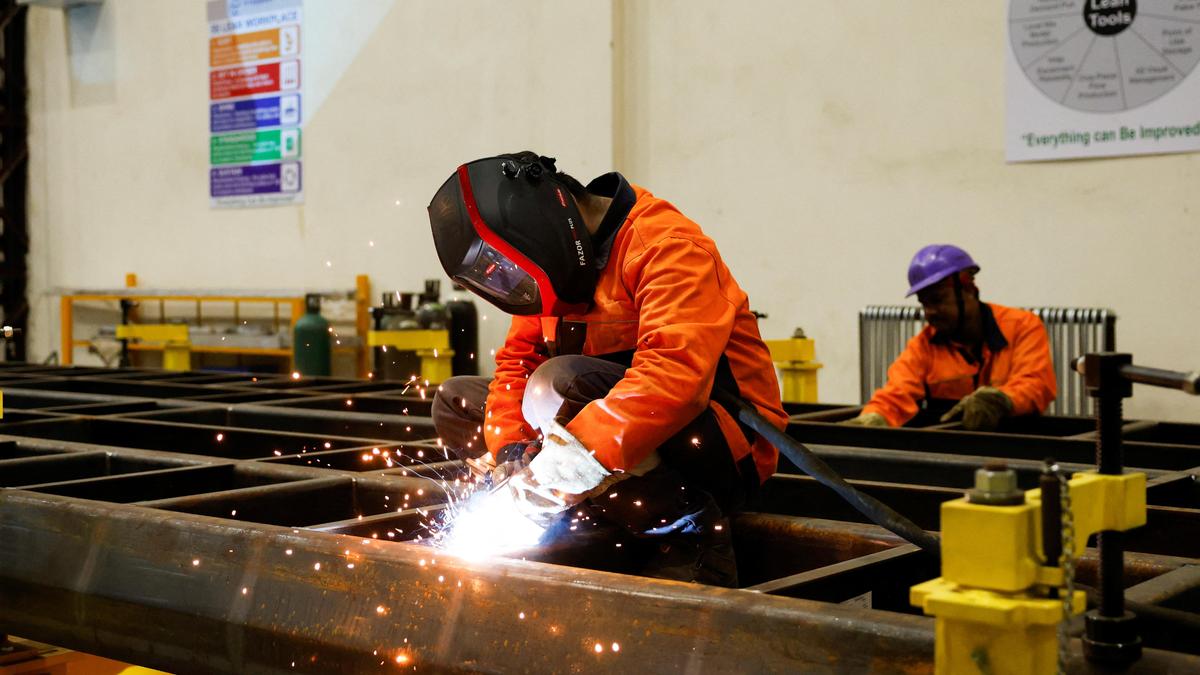
Eastern States such as Bihar, West Bengal, Odisha, Chhattisgarh and Jharkhand are witnessing industrial growth, with large projects in manufacturing, steel, power, and petrochemicals that would consume high volumes of power and control cables during construction and operation.
This surge in infrastructure development is creating robust demand for new sub-stations, transmission lines, high-quality cables and conductors, analysts said.
The industrial sector remains the largest consumer of electricity, accounting for approximately 40% of the total consumption in FY25. The new industrial clusters emerges in the eastern India, modernising the ageing transmission infrastructure with network expansion is the need of an hour to support the future demand.
Laser Power has seen its order book increasing to ₹3,243 crore (FY26) which consists of ₹1669 crore from manufacturing business and ₹1575 crore from EPC business.
So have peers such as Apar, Polycab, Universal, Lumino, KEI and Dynamic.
Laser Power serves a number of government authorities including Indian Railways, various distribution companies. It supplies conductors, power cables to some of the private EPC players such as Montecarlo, KRYFS Power Components and government owned and controlled electricity companies, public enterprises and utilities, in Africa, Bangladesh, Bhutan and Nepal.
Published – July 02, 2026 06:07 am IST