


Image used for representation purpose only.
| Photo Credit: Getty Images/iStockphoto
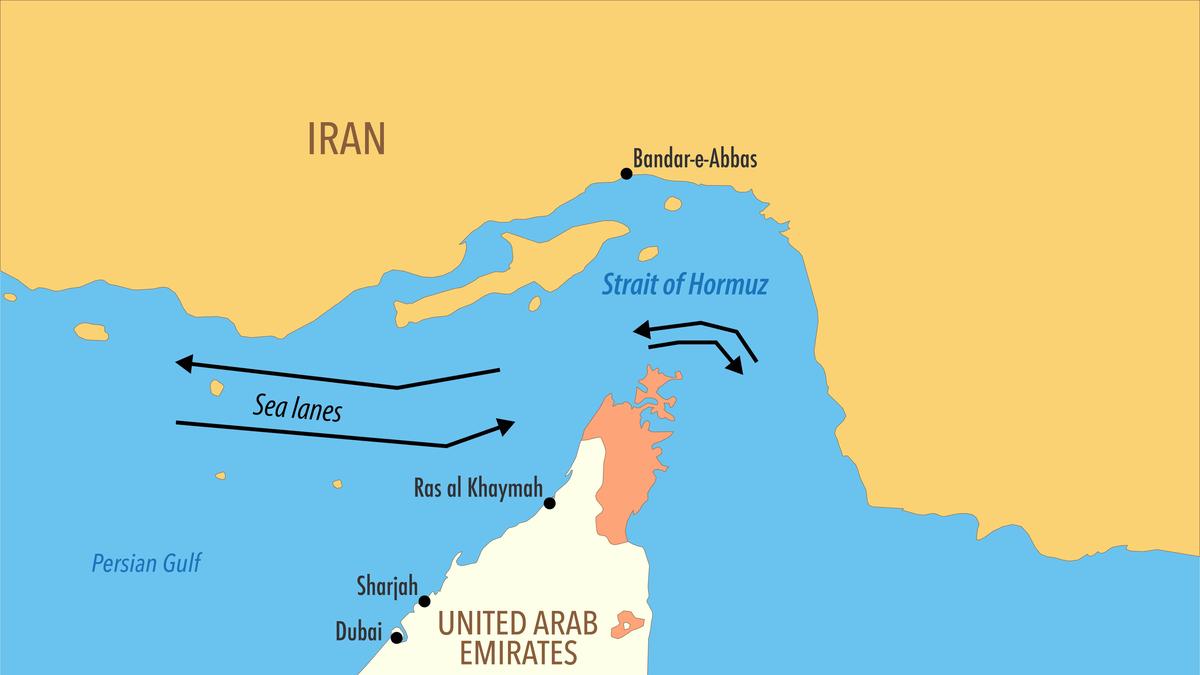
The 14-point Memorandum of Understanding that Iran and the U.S. have agreed upon put out by Al Arabiya English gives several commitments by the U.S. and Iran for shipping and transits through the Strait of Hormuz.
The U.S. has lifted the Naval blockade and commits to restore to traffic within 30 days. Iran has committed to restoring that will be “proportional to the pre-war volume traffic on the part of Iran.”
West Asia LIVE updates
Iran will take steps to ensure movement of merchant ships to and from Persian Gulf within 30 days, “taking into account the need for the removal of technical obstacles and the neutralization of mines by Iran.”
Further, the U.S. has agreed to ending, on a schedule to be agreed upon, all unilateral sanctions against Iran, primary and secondary.
The U.S. has committed to immediately lifting Treasury Department sanctions on exports of Iranian crude oil, products and derivates and all related services including banking, insurance, transportation and the like.
The above effectively means all the sanctions on various tankers flagged in various places have been removed. It also means they can freely access the global banking system, get lines of credit freely, and so on.
Just a few days before the signing of the MoU, the U.S. had launched punitive strikes against vessels allegedly carrying Iranian oil, two to India, and run by Indian seafarers, killing three of them. Later, Secretary of State Marc Rubio insisted transporting “illicit” Iranian oil will not be permitted.
All those U.S. sanctions and laws stand nullified now. The MoU and the terms of agreement, which agree to lift sanctions, had been on the verge of signing for several days with President Trump announcing their imminence on Truth Social several times.
The general practice for international shipping prior to the war that there were no tolls, service fees, or even reporting to any national authorities while transiting the Strait of Hormuz unlike say even the Malacca Straits where ships have report to Singapore and Malaysia at various points in the strait.
Iran has not committed to restoring the traffic under those conditions in the MOU. It has only committed to “proportional” to pre-war levels, leaving room for interpretation and speculation.
After the signing of the MoU, Iran has been signalling that Iran will charge services fee if not a toll. In the run up to the signing, Iran had indicated that their sword will always hang over the strait. And a future arrangement may require reporting to Iran and or to Oman, the two littoral states in the Strait of Hormuz.
After signing the agreement, U.S. Vice-President told CNBC that though Iran’s nuclear programme would need substantial negotiating, there was an understanding between the two countries that the strait would reopen ‘in a toll-free way for the long term, and that’s the sort of thing that we’re going to figure out in these technical negotiations.
Published – June 17, 2026 02:44 pm IST