

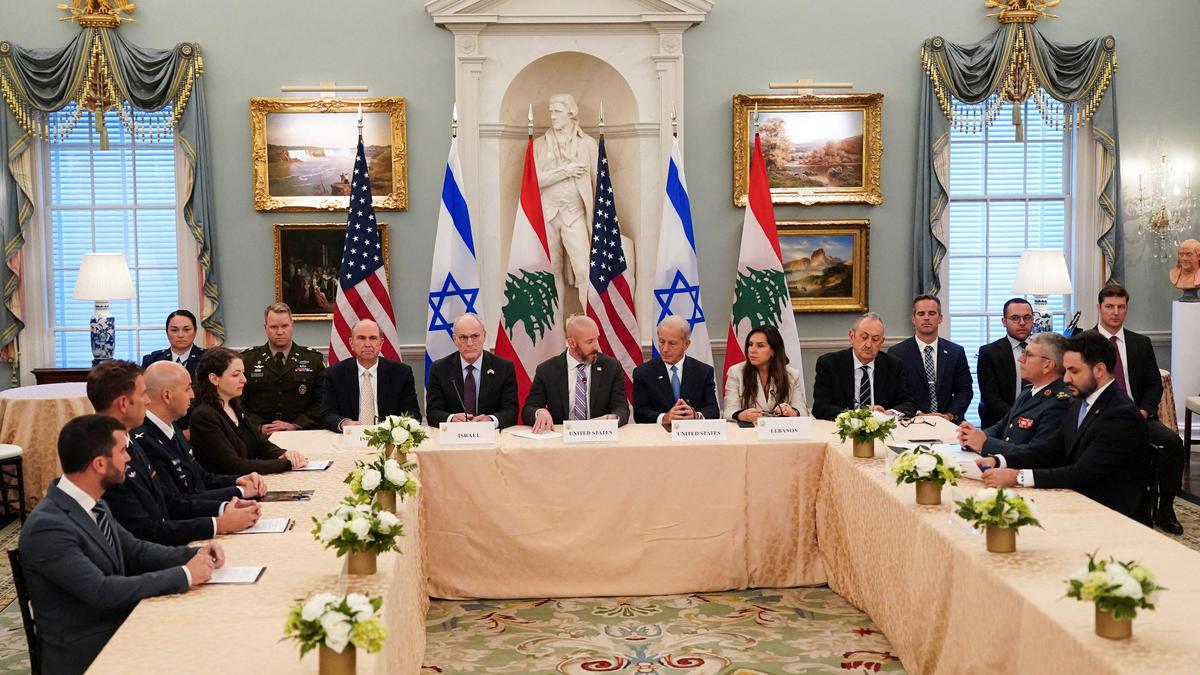
Israeli Ambassador to the U.S. Yechiel Leiter and Lebanese Ambassador to the U.S. Nada Hamadeh, accompanied by State Department Chief of Staff Daniel Holler and U.S. Ambassador to Lebanon Michel Issa, attend a meeting between Israeli and Lebanese delegations hosted by the United States, after the Trump administration said Israel and Lebanon agreed to implement a ceasefire to end hostilities, at the State Department in Washington, D.C., U.S., June 3, 2026.
| Photo Credit: Reuters
(This article is part of the View From India newsletter curated by The Hindu’s foreign affairs experts. To get the newsletter in your inbox every Monday, subscribe here.)
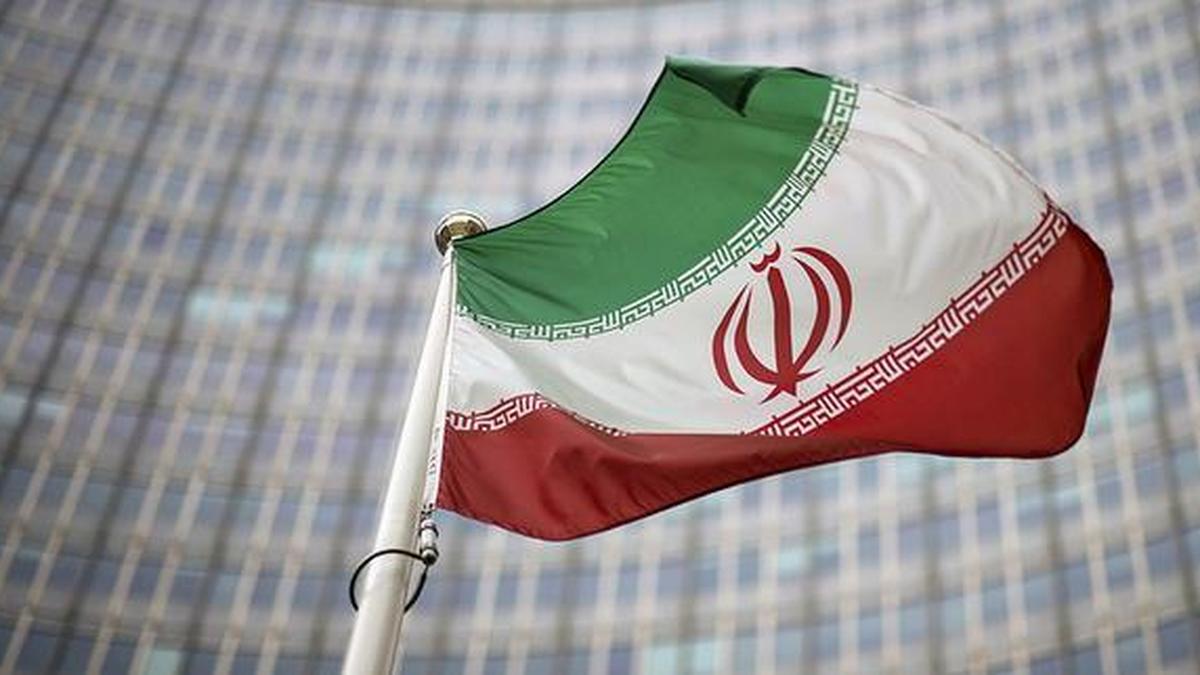
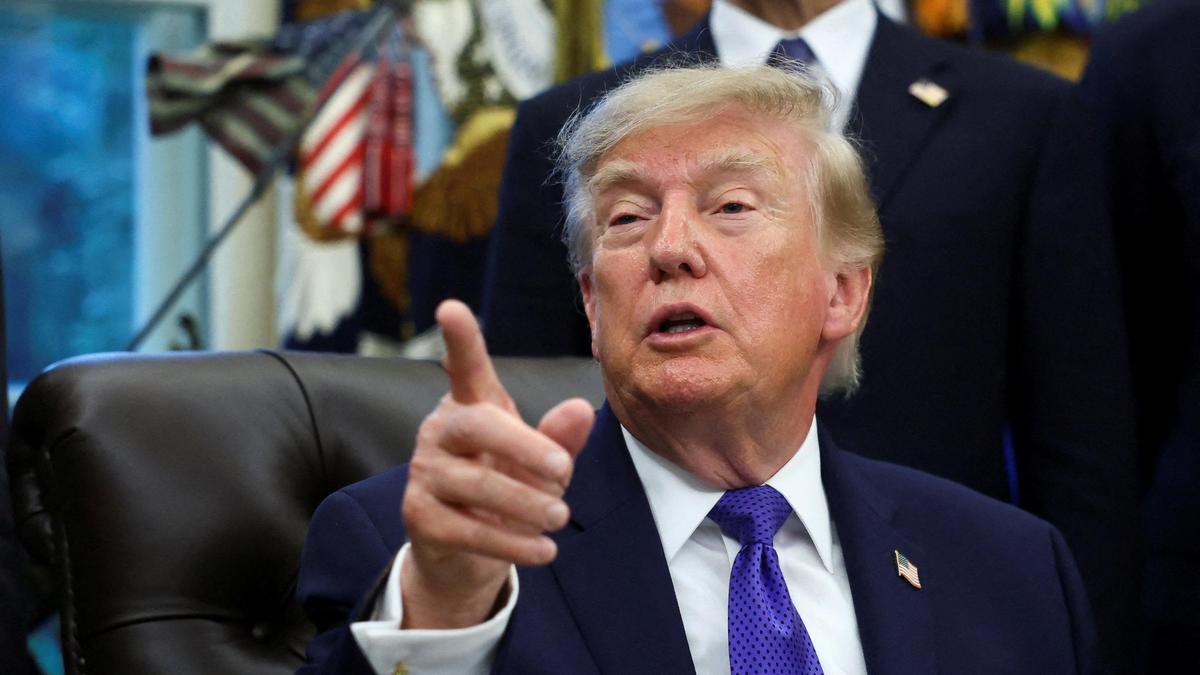
Ending weeks of uncertainty, the U.S. and Iran reached a memorandum of understanding on Monday, agreeing to extend the ceasefire by 60 days and start substantive negotiations on Iran’s nuclear programme and the U.S. sanctions on the country. While the text of the agreement has not been immediately released, U.S. President Donald Trump said the Strait of Hormuz, which was blockaded by Iran after the U.S. and Israel launched the war on February 28, would be immediately opened and that he has asked the U.S. military to lift the American blockade on Iranian ports.
Since the U.S. and Iran announced a ceasefire on April 8, after 40 days of fighting, Mr. Trump has mentioned dozens of times that a deal was within reach. Yet, negotiations turned out to be extremely hard for both sides. When the ceasefire was announced, Pakistan, which mediated between the two sides, said the truce would come into force on all fronts, “including Lebanon”. Iran was required to reopen the Strait of Hormuz. But immediately after the ceasefire was announced, Israeli Prime Minister Benjamin Netanyahu stepped up attacks on Lebanon after which Iran walked back on its commitment to reopen the Strait.

Mr. Trump negotiated a ceasefire between Israel and the Lebanese government (which is not a party to the conflict). The war in Lebanon is between Hezbollah, a Shia militant group-turned-political party, and Israel, which now militarily occupies parts of Southern Lebanon. The U.S. and Iran held direct talks in Islamabad on April 12, but failed to reach any breakthrough. After Vice President J.D. Vance, who participated in the talks, left Islamabad, saying the U.S. deal was on the table and it was up to the Iranians to decide, Washington announced a blockade of Iranian ports. The plan was to mount economic pressure on Iran to exact concessions from them. “No Iranian ship will go through the U.S. blockade”, said Mr. Trump.
In response, Iran called off direct talks with the U.S., in a direct blow to Mr. Trump’s efforts to secure a deal to end the war. Indirect negotiations continued via Pakistan, but Iran insisted that talks should first focus on ending the war and lifting the blockade and that the nuclear file would be discussed in the second phase. The U.S. accepted this phased negotiation proposal and then both sides exchanged texts on their respective proposals on the preliminary agreement.
This was a tumultuous period. Iran’s control of the Strait of Hormuz and the American blockade of Iranian ports led to controlled skirmishes between the two sides over the Hormuz region. Last week, these skirmishes led open tit-for-tat strikes after Iran downed an American military Apache helicopter. Israel’s continued bombing of Lebanon also threatened to unravel the U.S.-Iran talks. But despite the impediments, both sides finally clinched a framework agreement on June 15. But this deal is only the beginning point of a long road of diplomacy. Once the MoU is signed on June 19 in Geneva, both sides will start direct negotiations on Iran’s nuclear programme.
The U.S. has insisted that Iran end nuclear enrichment and downblend its highly enriched uranium. Iran has rejected both demands. Israel, on the other side, has said it would not withdraw from southern Lebanon or other occupied territories in the region. Mr. Trump could also come under a lot of heat at home from the Israeli lobby, Iran hawks and neoconservatives, who were not happy with his deal. For them, he started the war to bring about regime change and he is now negotiating with the same Iranian state to make a deal. So it is to be seen whether the MoU would lead to a final settlement or whether it would only freeze the conflict for now, waiting for the next round of battle.
The Top Five
1. Can India protect its seafarers in the Gulf? | Explained
How many Indian seafarers are working in the Gulf region? What happened to the three vessels attacked by the U.S. Navy? What sanctions were imposed on some ships? Does the foreign-flag status of the vessels limit India’s options? Do international maritime laws protect civilian crews? writes M. Kalyanaraman.
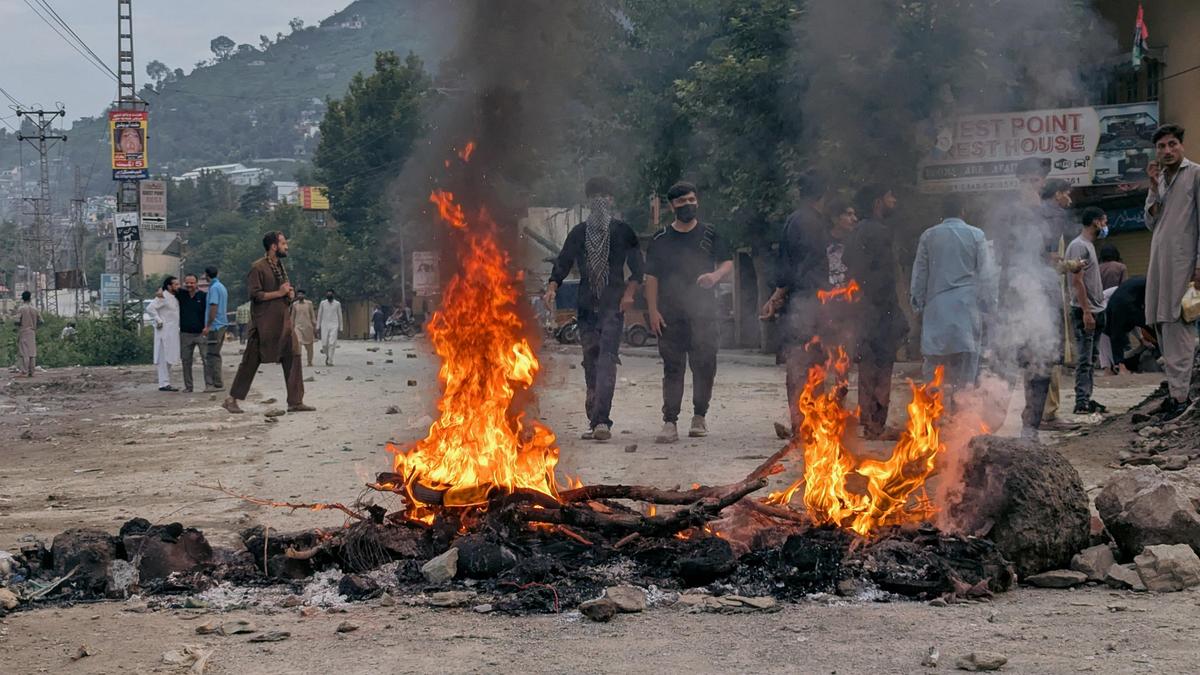
2. Why are there protests in PoK? | Explained
Why was the Joint Awami Action Committee formed in 2023 and what are their demands? What are the economic concerns in the region? Why is the demand for the abolishment of reservation for 12 refugee seats in the PoK Assembly at the heart of the protests? How has India reacted? writes Joan Sony Cherian.
3. Jay Clayton | Golfer, lawyer, spymaster
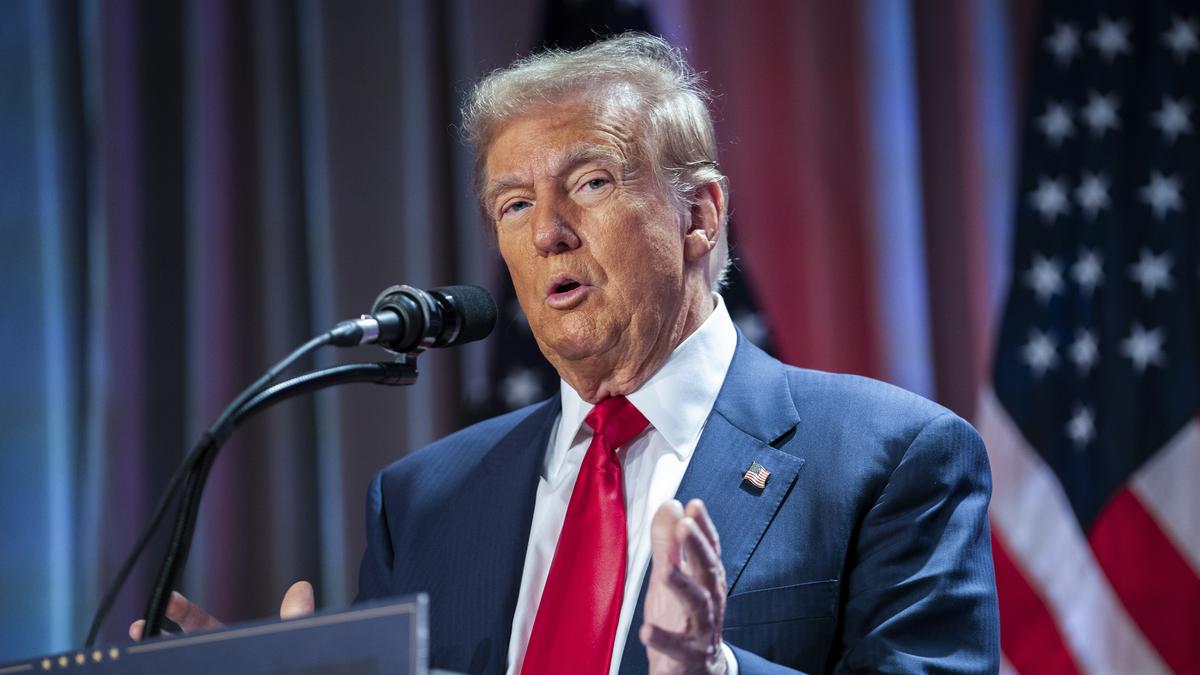
U.S. President Donald Trump has nominated the New York attorney and former SEC chief as the new Director of National Intelligence, writes Smriti Sudesh.
4. The hidden history of the Thai-Bharat connection
An enduring Thailand-India bond that played a pivotal role in India’s independence movement, writes Shashi Tharoor.
5. The trust deficit in India-Bangladesh ties
Bangladeshi diplomats have pointed out that Dhaka expected less rhetoric on illegal immigration, and more focus on issues such as the renewal of the 1996 Ganga Water Treaty, writes Kallol Bhattacherjee.
Published – June 15, 2026 05:59 pm IST