

A pool devoid of big teams is set to be highly competitive, while Germany and The Netherlands are overwhelming favourites to top their groups.
Group D (USA, Turkiye, Australia, Paraguay)
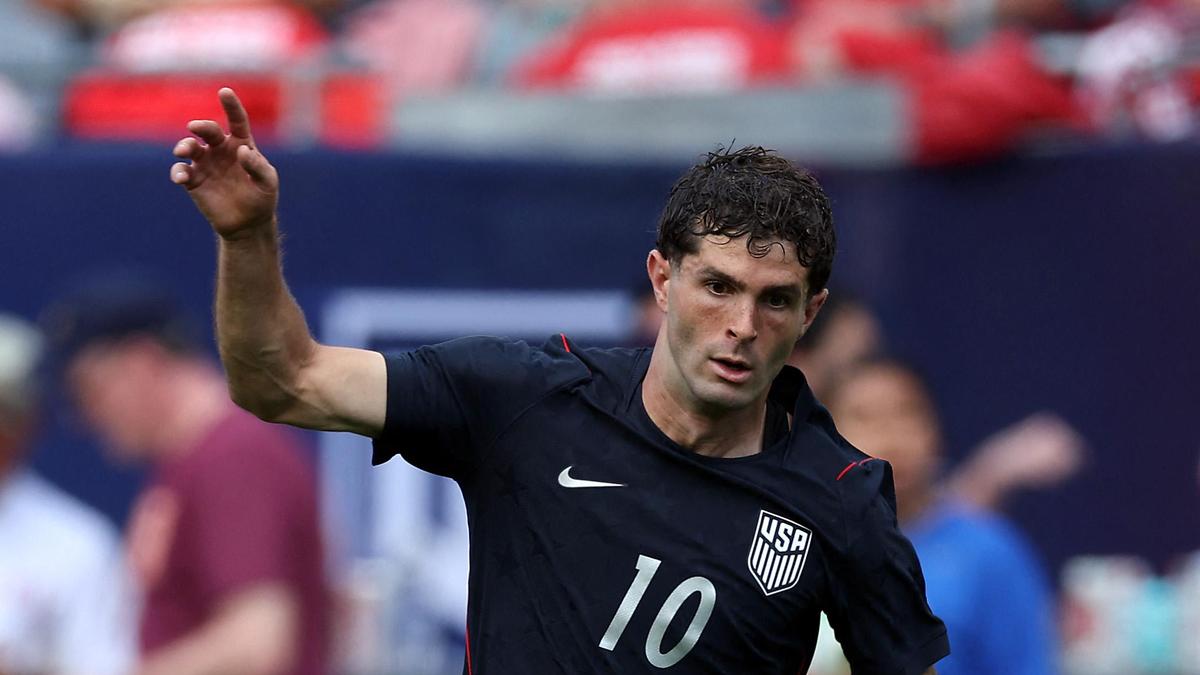
The USA team is chasing the American dream. Competing on home soil in the global competition for the first time since 1994, the national side, now led by Mauricio Pochettino, is locked in to Make America Great Again in ‘soccer’.
The World No. 16’s first task will be to get out of a tricky pool that consists of two other top-30 teams but none of the perennial powerhouses — Turkiye at 22 and Australia at 27.
The close win over Senegal and narrow defeat to Germany in World Cup warm-up games should have given Pochettino a fair idea of where the finishing touches to the preparation have to be applied.
Playing in front of jam-packed galleries could be both a boon and a bane. While stars like Christian Pulisic, who is no stranger to elite football, can live up to the heightened expectations, some may wilt under the enormity of the situation. How they tackle battles not only on the field but also off it will be crucial to USA’s chances.
For Turkiye and Australia, the focus will be much beyond spoiling the co-host’s carnival.
Having earned the right to perform on the global stage after 24 years, the European outfit cannot afford to pass up the golden opportunity.
The wait has been so long that Arda Guler and Kenan Yildiz, two of the most exciting prospects in the current squad, were not even born when Turkiye last caught the World Cup fever. Something close to the fairytale run of 2002 — which ended in a third-place finish — will be required if Vincenzo Montella’s contingent is to make inroads.
Australia, a regular at the finals since 2006, is no pushover but is yet to win a knockout fixture. Meanwhile, Paraguay, the lowest-placed team in the group at World No. 40, will be itching to prove that rankings do not directly translate to results.
Best finish: USA: Semifinals (1930); Turkiye: Third place (2002); Australia: Round of 16 (2006, 2022); Paraguay: Quarterfinals (2010).
Group E (Germany, Curacao, Ivory Coast, Ecuador)
Germany was forced to board the first available flight back home after being knocked out in the opening round of the last two editions. Ghosts from the past may resurface, especially for those who had endured the pain first-hand in Russia and/or Qatar, but the 2014 title-winner must avoid the ignominy of three early exits in a row without fuss.
Havertz will look to efficiently lead Germany’s forward line.
| Photo Credit:
Getty Images
The top-level experience in Julian Nagelsmann’s squad, recent form of four victories in as many matches since March and superior ranking (10) — the other teams in the pool are placed well below the European side — provide the Germans the head start in the race to top the group.
The four-time World champion should, however, be eyeing bigger things. That Germany has flown under the radar in discussions pertaining to title contenders may free up the additional baggage it has usually carried. But it has catching up to do in the overall scheme of things.
First up for Germany is Curacao, the smallest nation (both in terms of population and land area) ever to qualify for football’s biggest spectacle. Adding intrigue, only one player in the 26-member squad — Tahith Chong — was born in the Caribbean island, yet the place of birth hardly matters within the group because “you are accepted into the family once you come here.”
Curacao is home to Dick Advocaat, the 78-year-old who is poised to become the oldest coach at the quadrennial event. The 82nd-ranked outfit will have to punch well above its weight in the Americas to inscribe its name in the history books once again.
As for Ivory Coast, which is back in the World Cup fold after 12 years, it has not got to this point “to make up the numbers or go sightseeing.” The African country is likely to be involved in a tussle with Ecuador for the second automatic qualification spot.
Best finish: Germany: Champion (1954, 1974, 1990, 2014); Curacao: Debut; Ivory Coast: Group stage (2006-2014); Ecuador: Round of 16 (2006).
Group F (Netherlands, Japan, Sweden, Tunisia)
Come hell or high water, The Netherlands has guaranteed itself knockout football in every edition it has competed in since 1974. And it looks well placed to extend that streak under Ronald Koeman, who had donned the Oranje as a player in 1990 and 1994.

Depay will be a vital cog in the Dutch wheel.
| Photo Credit:
Reuters
The Netherlands, the highest-ranked team in the pool at World No. 7, was sounded a warning in the recent 0-1 defeat to Algeria in a pre-tournament friendly. But the Dutch side is too good to not pass the preliminary test, with Japan being the closest challenger for the top spot.
It has the resources to even be fourth time lucky — it had finished runner-up in 1974, 1978 and 2010 — but consistently rising to the occasion against the ‘favourites’ will be vital.
Although not among the ‘big boys’, Japan cannot be ignored.
The Asian nation came agonisingly close to qualifying for the quarterfinals in 2018 and took centre stage four years later when it topped the group that included Spain and Germany.
So, not many eyebrows were raised after England great David Beckham termed Japan as a potential “surprise” package to upset the apple cart. “It has a really strong team… it could be kind of a secret,” Beckham told ABC News recently.
While Japan will miss the injured Kaoru Mitoma’s box of tricks in the final third, it has the experience and variety to crack complex codes. Hajime Moriyasu’s men may first have to overcome the Swedish challenge to secure a direct ticket to the eliminators.
Despite having a bumpy ride in the lead-up to the World Cup, Sweden possesses the dash of enviable quality that is required to get through to the next phase. With regards to Tunisia, it should play out of its skin to even stand a chance of making the cut for the first time.
Best finish: Netherlands: Runner-up (1974, 1978, 2010); Japan: Round of 16 (2002, 2010, 2018, 2022); Sweden: Runner-up (1958); Tunisia: Group stage (1978, 1998-2006, 2018, 2022).