

Marginalised communities often have a more symbiotic relationship with the earth and environment, believes Mercy Kappen, Co-founder and Strategic Advisor at Visthar, a Bengaluru-based civil society organisation that works in areas of education, training and environmental issues. “They know how to make a living without ruining things. I think there is a lot we can learn from them.”
In keeping with this idea, the 18th edition of Bhoomi Habba, Visthar’s annual environment and sustainability festival, will have Restore, Reclaim – Community Paths to Climate Action as its theme, which the event’s release describes as “a vital movement toward tangible stewardship across generations, asserting the agency of community-led initiatives in healing our shared ecosystems.”
Organised in collaboration with GreenKraft, Elements Organics, the Fair Trade Alliance of Kerala (FTAK), and Abheek Academy, the festival will comprise an array of events and stalls that closely align with its core themes of sustainability and community-based climate action.
Also read:Bengaluru-based natural history platform, Nature in Focus, introduces new category to its annual photography contest
“We ground environmental care in practical earth wisdom — whether through reconstructing vanishing recipes or embracing zero-waste living,” Mercy says. “Bhoomi Habba uses the power of theatre, poetry, storytelling, games and movement to transform personal stories into collective calls for climate action.”
Bhoomi Habba uses the power of theatre, poetry, storytelling, games and movement to transform personal stories into collective calls for climate action
| Photo Credit:
Special Arrangement
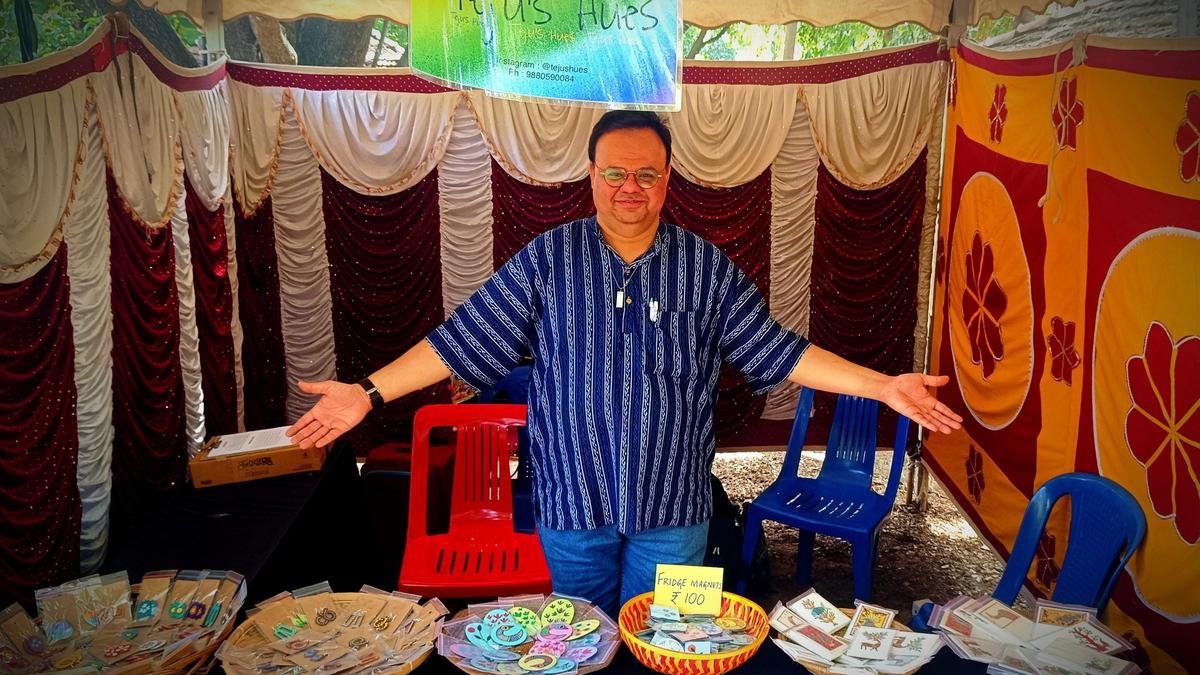
According to Mercy, Bhoomi Habba, which began in 2008, was called the Festival of Just Peace as part of the School of Peace, an international leadership development programme offered at the Visthar campus.
“It was in collaboration with the Interfaith Forum. The School of Peace brought young people from conflict zones in South and Southeast Asia for a semester-long program,” she recalls.
As part of the programme, they thought it would be good for the participants to be involved in some sort of campaign and organise things, she says. “That is when we thought of this Festival of Just Peace, the idea being that there cannot be peace without justice.”
What started as a small event with participants from 10-12 countries, as well as some of Visthar’s friends setting up stalls with crafts and food, evolved into the Bhoomi Habba. “After three or four years of this programme, it shifted to another country, but we did not want to stop the event because we felt that there was strength and creativity in bringing so many people together,” explains Mercy.
Since the organising team felt the need to bring ecological issues into the festival, it was renamed Bhoomi Habba. “We wanted to bring eco-justice into the whole thing, because there is no life without relating to earth,” says Mercy.
Also read:A new fellowship that reimagines conservation in Northeast India
“Shanthi Habba focused on human rights violations, and when it shifted to Bhoomi Habba, just peace came into it automatically: most of the human rights violations today are based on destructive development or the ecological crisis,” elaborates Nazar P.S., Executive Director of Visthar.
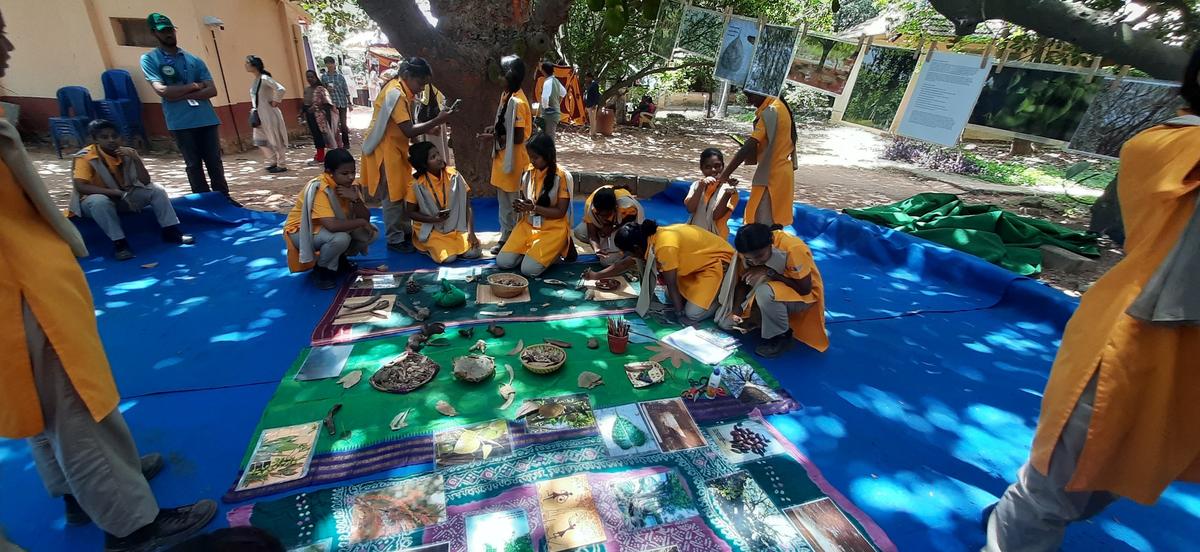
Many of the activities are aimed at children from government schools, making it truly a community celebration
| Photo Credit:
Special Arrangement
Over the years, Bhoomi Habba has focused on numerous environmental themes, including “the water crisis, pollution, the Bhopal gas tragedy and different people’s movements,” says Mercy, adding that the festival has grown exponentially, with the number of stalls and organisations participating only increasing. “There are a lot of people who ask us when this festival is coming next,” she says, with a laugh.
At this year’s Bhoomi Habba, the Visthar campus will host numerous curated stalls from organisations promoting a sustainable and mindful lifestyle, including Timbaktu Collective, Desi Trust, Sahaj Living, GreenKraft, Nature Conservation Foundation, Education for Change, Bee Story, and Spudnik Farms.
Other highlights include immersive workshops on indigenous food traditions and on reclaiming vanishing recipes; performative storytelling and theatre workshops focused on climate change and sustainability; a one-day film festival curated by Amudhan; and a live performance by Dominic D’cruz and team.
“Many of the artists, performers, workshop facilitators and theatre people are doing this out of passion and commitment. There is no payment or travel reimbursement, but they are just coming in for this,” says Mercy, pointing out that many of the activities are aimed at children from government schools. “It is truly a community celebration.”
One of the biggest takeaways for anyone who attends the festival, says Mercy, is “the role that each of us has to play when it comes to things like sustainability and climate change…in our everyday life, consumption patterns and use of resources.”
Also read:A new exhibition asks whether design, like corals, can give back to the planet
She hopes that people will ask themselves how they can be more proactive with these things, going beyond being a passive witness to actually making a difference. “Art and culture can play a transformative role in making people think and rethink how they live,” she says, pointing out that the festival also seeks to create a sense of community, essential in a world divided by so many barriers.“It is important to protect the Earth and celebrate life,” she says.
Bhoomi Habba will be held on June 6 at the Visthar Campus from 10am to 7pm.
Published – June 03, 2026 05:41 am IST