


Skip to content
  • Facebook
  • X
  • Linkedin
  • WhatsApp
  • YouTube
  • Associate Journalism
  • About Us
  • Privacy Policy
  • 033-46046046
  • editor@artifex.news
Artifex.News

Artifex.News

Stay Connected. Stay Informed.

  • Breaking News
  • World
  • Nation
  • Sports
  • Business
  • Science
  • Entertainment
  • Lifestyle
  • Toggle search form
  • Thiru Onam eve shopping fervour, Uthrada Pachil, peaks in Kerala on Thursday
    Thiru Onam eve shopping fervour, Uthrada Pachil, peaks in Kerala on Thursday Nation
  • What does the new U.K.-India trade deal entail? | Explained
    What does the new U.K.-India trade deal entail? | Explained Business
  • Access Denied
    Access Denied Nation
  • Access Denied Sports
  • India vs Nepal Live Score Ball by Ball, Asia Cup 2023 Live Cricket Score Of Today's Match on NDTV Sports
    India vs Nepal Live Score Ball by Ball, Asia Cup 2023 Live Cricket Score Of Today's Match on NDTV Sports Sports
  • Rishabh Pant Overtakes Virat Kohli In Test Batting Rankings
    Rishabh Pant Overtakes Virat Kohli In Test Batting Rankings Sports
  • After 3 Independents Quit, Haryana Chief Minister Nayab Singh Saini Guarded Response
    After 3 Independents Quit, Haryana Chief Minister Nayab Singh Saini Guarded Response Nation
  • How will Australia’s social media ban work? | Explained
    How will Australia’s social media ban work? | Explained World
Hormuz | The strait where America stalled

Hormuz | The strait where America stalled

Posted on May 30, 2026 By admin


Tehran’s Milad Tower, the tallest structure in Iran, stands as a symbol of the revolutionary state’s engineering ambitions. Rising 435 metres, including its 120-metre antenna, the tower’s octagonal concrete shaft joins a pod with 12 floors housing observation decks, a cafe, and a museum. Above it, the antenna pierces Tehran’s smoggy skyline. From the deck of the 12th floor, the highest point accessible to visitors, one can take in the vast sprawl of the city, made the capital of the Persian Empire in the late 18th century by Agha Muhammad Khan, founder of the Qajar dynasty. To the north rise the Alborz mountains, the natural barrier separating the Iranian plateau from the Caspian Sea.

Inside the museum, a large 18th-century map of the Gulf drawn by a French cartographer is on display. “You may have heard some countries call the Persian Gulf the Arabian Gulf today,” a local travel assistant told this writer during a visit in February 2022. “Look at this map and reach your own conclusions.” A young woman, who described herself as “a huge fan” of Amitabh Bachchan and Aishwarya Rai, the assistant pointed to the mouth of the Gulf on the map. “This is the Strait of Hormuz,” she said. “This is the gate of the Persian Gulf. And the Iranians hold its key.” It is this geographical key that Iran used to effectively shut the strait after coming under attack by the U.S. and Israel on February 28.

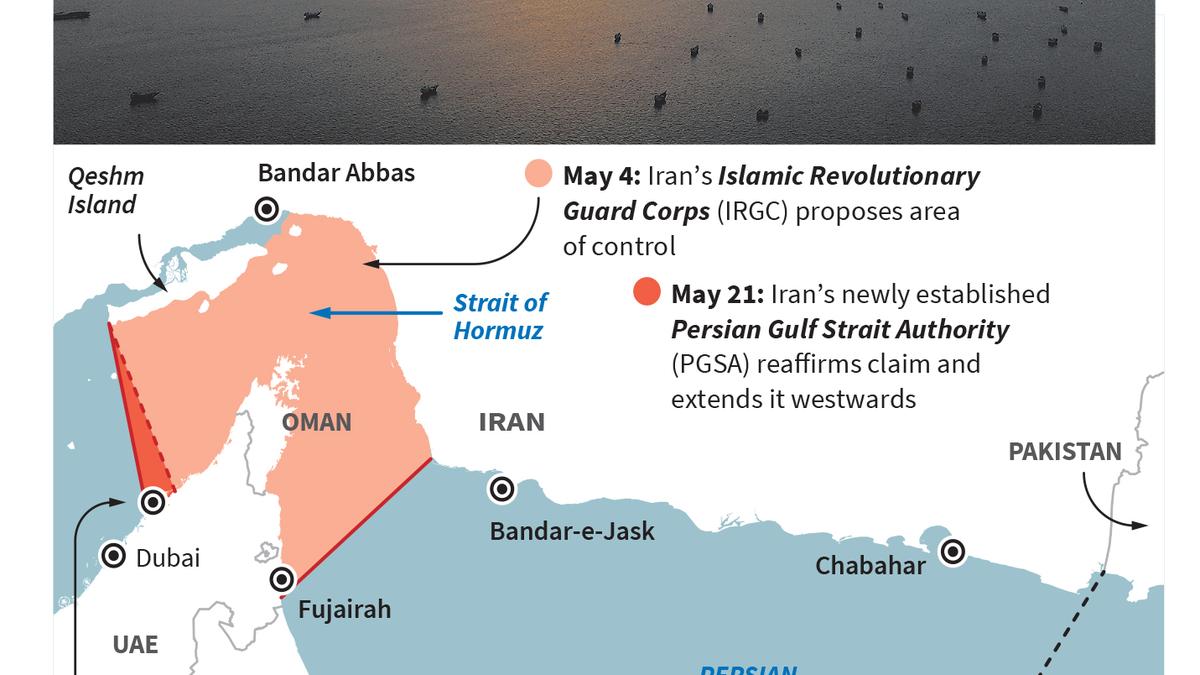
The strait is a narrow corridor, 50 km wide at its entrance and exit, connecting the Persian Gulf waters to the Gulf of Oman, which joins the Arabian Sea. At its narrowest point, between Iran in the north and Oman’s Musandam Peninsula in the south — an exclave separated from mainland Oman by UAE territory — the waterway is just 33 km wide, which means it falls within the overlapping territorial waters of Iran and Oman (up to 12 nautical miles, or 22 km, from their coasts).

As the only gateway to the high seas from the Persian Gulf, the Hormuz Strait has remained one of the world’s most important waterways for centuries. In modern times, separate shipping lanes, as wide as 2 nautical miles, have been marked for inbound and outbound vessels. There is a buffer zone of around 2 nautical miles between the shipping lanes. So the tankers carrying fuel and gas typically navigated highly constrained waters even before the war.

In the 1980s, during the eight-year Iran-Iraq war, both sides targeted fuel tankers in the Persian Gulf, effectively weaponising the waters. In recent years, Iran has repeatedly warned that it would close the waterway if it came under attack. There are eight major islands in the strait, seven of which are controlled by Iran. Islands such as Qeshm, Hormuz, Larak, and Abu Musa sit closer to the shipping lanes, giving Iran a commanding physical advantage over the route. The ownership of Abu Musa, Greater Tunb, and Lesser Tunb islands is contested between Iran and the UAE, but they are de facto controlled and administered by Tehran. Since the 1970s, Iran has maintained a military presence on the islands.

Strategic significance

The strait’s strategic significance grew after the oil discoveries in the Persian Gulf region in the early 20th century. The post-War oil boom transformed the entire region. All Persian Gulf countries — Iran, Iraq, Saudi Arabia, Oman, Qatar, the UAE, Bahrain and Kuwait — have been more or less dependent on the strait to get access to the Arabian Sea. While Iran, Saudi Arabia, the UAE and Oman have ports outside the Gulf waters, others are fully dependent on Hormuz.

During 2023-25, 20% of the world’s liquefied natural gas (LNG) and 25% of seaborne oil passed through the strait. In 2025 alone, 20 million barrels of oil and oil products passed through this route every day, according to the U.S. Energy Information Administration. About 3,000 ships sailed through the strait each month before the war. Hormuz is also a key route for exports of fertilizer from the region, and Gulf countries import food, medicines and tech products through this route.

In June 2025, when Israel bombed Iran, Tehran’s response was largely limited to striking back at Israel. After the U.S. joined the war and attacked Iran’s nuclear facilities, Tehran carried out a token attack on the American base in Qatar and agreed to a ceasefire. The 12-Day War, as it’s known, did not pose any direct threat to traffic through the Strait of Hormuz. But in early 2026, when the U.S. was mobilising forces in the region amid threats of another war, Iran had warned that it would retaliate by striking American bases and shutting down the strait. The U.S. and Israel started the war on February 28 by assassinating Iran’s Supreme Leader Ayatollah Ali Khamenei, and Iran responded by doing what it had vowed to do. It retaliated by attacking Israel and Arab countries in the Gulf. And it took control of the strait. The number of ships passing through the strait daily, which was more than 100 before the war, fell by over 90%.

During the 40 days of bombing, the U.S. and Israel caused immense material damage to Iran. Its aerial and naval infrastructure has been repeatedly hit. But such attacks weren’t enough to force Iran, which used asymmetric warfare to weaponise the waters, to reopen the strait. Iran used cheap, disruptive weapons to impose disproportionate costs on the vessels that ignored its restrictions. Several ships that sought to pass the strait without the IRGC’s permission came under attack. Fuel prices started rising. Insurance and shipping costs soared. Energy-import-dependent economies, particularly India, were hit hard.

Contested terms

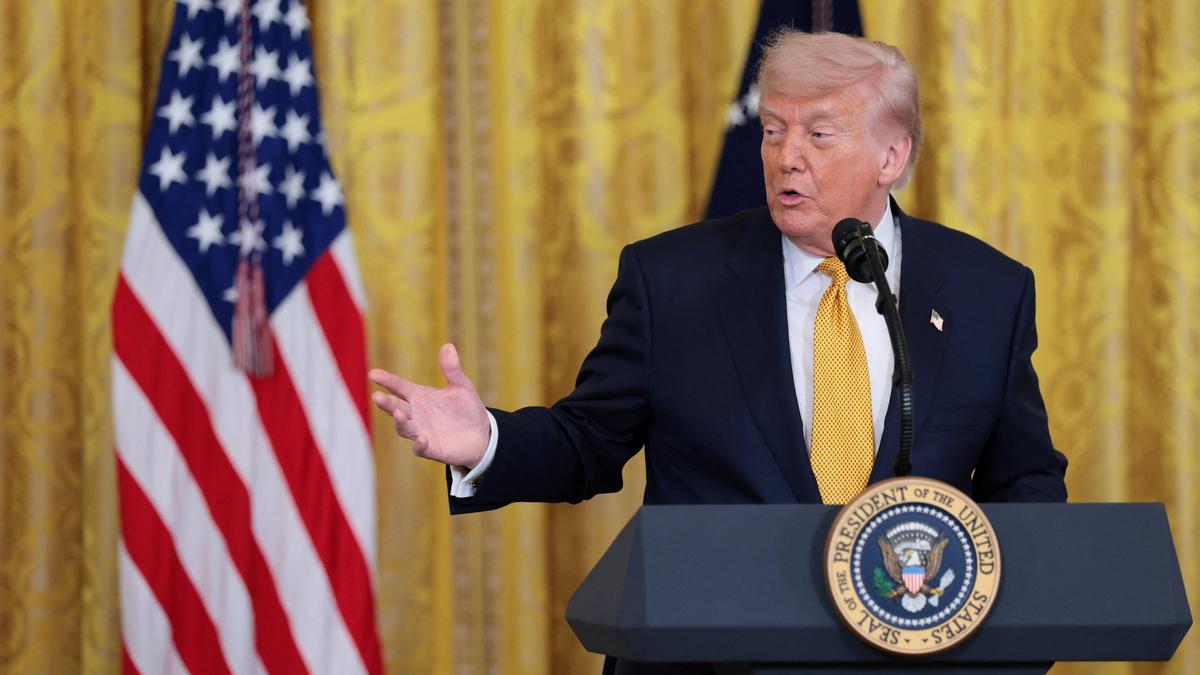
When U.S. President Donald Trump announced a ceasefire with Iran on April 8, he said Iran would reopen the Strait of Hormuz. The truce came into effect, but both sides differed on its terms. Iran demanded a ceasefire in Lebanon as well, but Israel actually stepped up the bombing of Lebanon. Mr. Trump later announced a ceasefire in Lebanon and “prevented” Israel from bombing the country — but the bombing campaign continued. When Iran refused to reopen the strait, Mr. Trump, on April 12, announced a blockade of Iranian ports. He said no Iranian ships would be allowed to pass through the American blockade in the Gulf of Oman. In response, Iran cancelled direct negotiations with the U.S., and pushed the nuclear file down its priority list.

Mr. Trump has repeatedly said that he was close to reaching a deal with Iran. He wants Iran to reopen the Strait in return for the lifting of the U.S. blockade. And Iran should abandon its nuclear programme. Iran, on its side, has established a new body, the Persian Gulf Strait Authority, to manage traffic through and maintain the Hormuz Strait, defying Mr. Trump’s demands. The PGSA has introduced a new email-based permit system for vessels and says all ships passing through the Strait should coordinate with the agency. Result: a diplomatic logjam.

One of Mr. Trump’s key demands for a deal today is that Iran should reopen the Strait of Hormuz, which was fully open before Mr. Trump and his ally Benjamin Netanyahu launched this war on February 28.

Published – May 31, 2026 01:30 am IST



Source link

World Tags:iran, Strait of Hormuz, U.S.-Israeli tensions

Post navigation

Previous Post: Ukraine keeps up assault on Russian oil sites as Kyiv expects more strikes
Next Post: Pep Guardiola | The manager who stood tall

Related Posts

  • Fear, disease and debt afflict Venezuelans released from prison after post-election arrests
    Fear, disease and debt afflict Venezuelans released from prison after post-election arrests World
  • Russia concert attack | 11 arrested in attack claimed by IS
    Russia concert attack | 11 arrested in attack claimed by IS World
  • Trade with Bangladesh remains suspended; BSF reviews operational preparedness along border
    Trade with Bangladesh remains suspended; BSF reviews operational preparedness along border World
  • Hillary Clinton Mocks Donald Trump At Democratic Convention
    Hillary Clinton Mocks Donald Trump At Democratic Convention World
  • Azerbaijan arrests the former head of separatist government after recapturing Nagorno-Karabakh
    Azerbaijan arrests the former head of separatist government after recapturing Nagorno-Karabakh World
  • Palestinians will choose death over becoming refugees once again: Ambassador of Palestine Adnan Abu Al-Haija
    Palestinians will choose death over becoming refugees once again: Ambassador of Palestine Adnan Abu Al-Haija World

More Related Articles

Iran’s FM Araghchi strikes hard line on U.S. talks, saying Tehran’s power comes from saying ‘no’ Iran’s FM Araghchi strikes hard line on U.S. talks, saying Tehran’s power comes from saying ‘no’ World
Access Denied World
U.S. Ambassador Gor arrives in India, says ‘incredible opportunities ahead for two nations’ U.S. Ambassador Gor arrives in India, says ‘incredible opportunities ahead for two nations’ World
Access Denied World
Access Denied World
Canada To Start Evacuating Citizens From Israel And Palestine Canada To Start Evacuating Citizens From Israel And Palestine World
SiteLock

Archives

  • June 2026
  • May 2026
  • April 2026
  • March 2026
  • February 2026
  • January 2026
  • December 2025
  • November 2025
  • October 2025
  • September 2025
  • August 2025
  • July 2025
  • June 2025
  • May 2025
  • April 2025
  • March 2025
  • February 2025
  • January 2025
  • December 2024
  • November 2024
  • October 2024
  • September 2024
  • August 2024
  • July 2024
  • June 2024
  • May 2024
  • April 2024
  • March 2024
  • February 2024
  • January 2024
  • December 2023
  • November 2023
  • October 2023
  • September 2023
  • August 2023
  • July 2023
  • June 2023
  • May 2023
  • April 2023
  • March 2023
  • February 2023
  • January 2023
  • December 2022
  • November 2022
  • October 2022
  • September 2022
  • August 2022
  • July 2022
  • June 2022
  • May 2022

Categories

  • Business
  • Nation
  • Science
  • Sports
  • World

Recent Posts

  • LUCC scam: CBI arrests two masterminds
  • Canada is failing Jewish community and Jews are being targeted: PM Carney
  • Trump administration proposes 25% tariff to punish Brazil over trade practices
  • Fire breaks out at steel plant in Chhattisgarh, no casualties
  • Heavy smoke emanate from Chennai Port as sulphur particles react to heat

Recent Comments

  1. BrandonGoori on UP Teacher Who Asked Students To Slap Muslim Classmate
  2. JamesGog on UP Teacher Who Asked Students To Slap Muslim Classmate
  3. Arthurswoks on UP Teacher Who Asked Students To Slap Muslim Classmate
  4. Charlesled on UP Teacher Who Asked Students To Slap Muslim Classmate
  5. WaltonSkedy on UP Teacher Who Asked Students To Slap Muslim Classmate
  • Thousands evacuated in Hong Kong after discovery of large World War II-era bomb
    Thousands evacuated in Hong Kong after discovery of large World War II-era bomb World
  • After Over 4-Month Ban, Centre Allows Onion Exports To 6 Neighbouring Countries
    After Over 4-Month Ban, Centre Allows Onion Exports To 6 Neighbouring Countries Nation
  • Who Is Venkata Datta Sai: PV Sindhu’s Would-Be-Husband Who Has Worked With IPL Team
    Who Is Venkata Datta Sai: PV Sindhu’s Would-Be-Husband Who Has Worked With IPL Team Sports
  • Indian businesses have ample opportunity in Russia if only they take a ‘leap of faith’: Goyal
    Indian businesses have ample opportunity in Russia if only they take a ‘leap of faith’: Goyal Business
  • Access Denied World
  • Deputy Chief Minister D.K. Shivakumar directs BBMP to survey under-construction buildings in Bengaluru
    Deputy Chief Minister D.K. Shivakumar directs BBMP to survey under-construction buildings in Bengaluru Nation
  • Access Denied Sports
  • Indian Man Working With Russian Military Amid War With Ukraine Returns Home
    Indian Man Working With Russian Military Amid War With Ukraine Returns Home World

Editor-in-Chief:
Mohammad Ariff,
MSW, MAJMC, BSW, DTL, CTS, CNM, CCR, CAL, RSL, ASOC.
editor@artifex.news

Associate Editors:
1. Zenellis R. Tuba,
zenelis@artifex.news
2. Haris Daniyel
daniyel@artifex.news

Photograher:
Rohan Das
rohan@artifex.news

Artifex.News offers Online Paid Internships to college students from India and Abroad. Interns will get a PRESS CARD and other online offers.
Send your CV (Subjectline: Paid Internship) to internship@artifex.news

Links:
Associate Journalism
About Us
Privacy Policy

News Links:
Breaking News
World
Nation
Sports
Business
Entertainment
Lifestyle

Registered Office:
72/A, Elliot Road, Kolkata - 700016
Tel: 033-22277777, 033-22172217
Email: office@artifex.news

Editorial Office / News Desk:
No. 13, Mezzanine Floor, Esplanade Metro Rail Station,
12 J. L. Nehru Road, Kolkata - 700069.
(Entry from Gate No. 5)
Tel: 033-46011099, 033-46046046
Email: editor@artifex.news

Copyright © 2023 Artifex.News Newsportal designed by Artifex Infotech.