



For the scribes who spend any length of time covering domestic cricket in India, there may be jaded familiarity with a line trotted out by players aspiring for higher honours when probed on matters of selection. “Our job is to just score runs or take wickets, selection will take care of itself,” is the common refrain.
A little over a week ago, with the announcement of India’s squad for the one-off Test against Afghanistan in New Chandigarh, a fresh reminder arrived that mere runs or wickets don’t always suffice. The nub of the subsequent critique directed at the selection panel from fans and former cricketers was this: do performances in the Ranji Trophy, the country’s premier First Class tournament, really matter while picking India’s Test team?
Recurring question
It is a question that crops up usually when a Test squad is chosen close on the heels of a Ranji season, and overlooks the standout run-getter or wicket-taker.
You don’t have to rewind to the distant past to consider the predicament of Sarfaraz Khan. For a span of three seasons from 2019-20 to 2022-23 — the red-ball tournament was cancelled in 2020-21 due to Covid — the middle-order batter from Mumbai churned out runs like clockwork. In the 2021-22 season, Sarfaraz rose to the top of the leaderboard with 982 runs in nine innings at a Bradmanesque average of 122.75. It came on the back of 928 runs at 154.66 in 2019-20.
Yet, a call-up eluded Sarfaraz until the beginning of 2024 when he was drafted into the squad for the second Test of a five-match series against England. A handful of opportunities with mixed results later, the 28-year-old, a few kilos lighter but with his insatiable appetite for run-scoring undiminished, finds himself back on the periphery of the Test set-up.
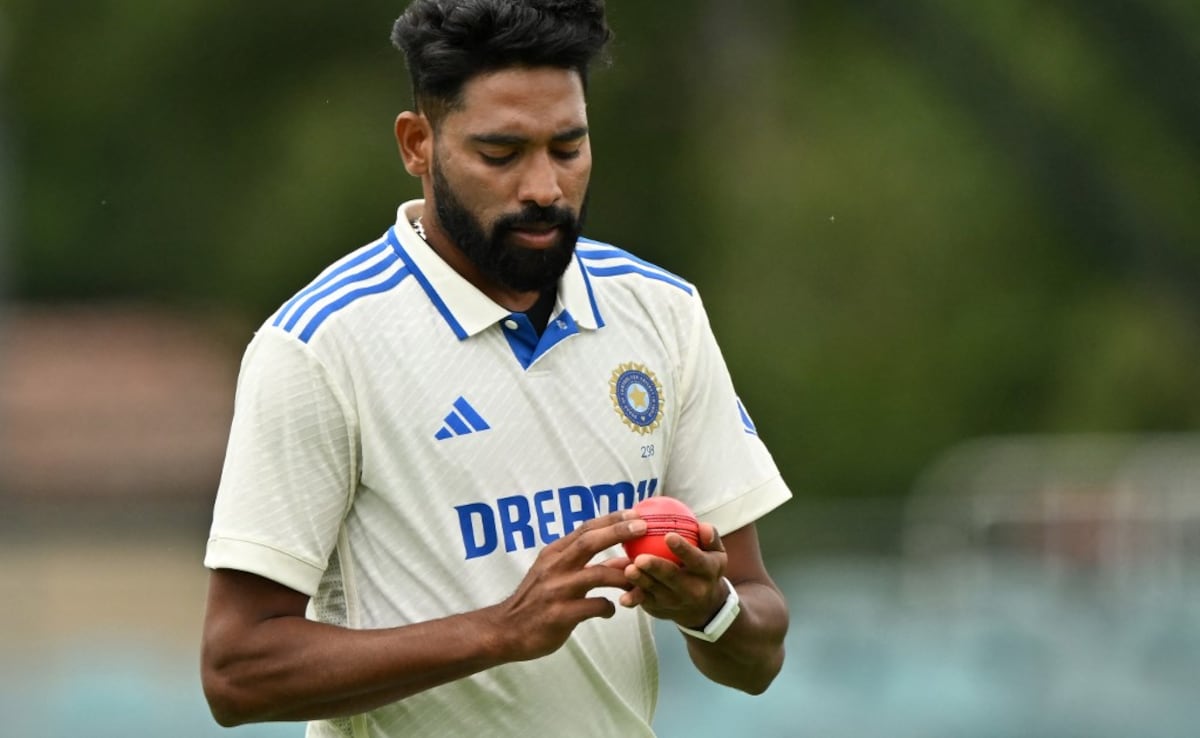
The trigger for the renewal of this debate is the decision to name Gurnoor Brar in India’s pace attack for the assignment against Hashmatullah Shahidi & Co. With Jasprit Bumrah resting after the exertions of the T20 World Cup and the IPL, Mohammed Siraj and Prasidh Krishna are the other pacers in the 15-member contingent.
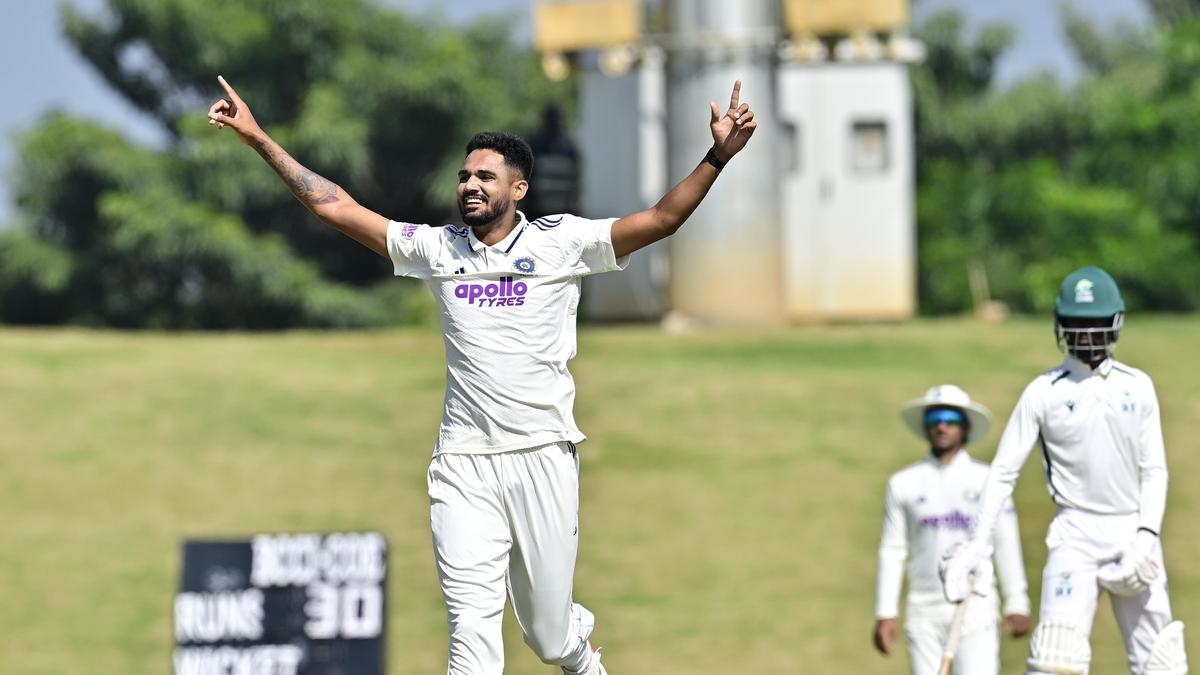
Gurnoor’s maiden call-up has seemingly come at the expense of Jammu & Kashmir’s Auqib Nabi, who has produced jaw-dropping returns over the past two seasons. After claiming 44 scalps in 2024-25, the medium-pacer propelled himself to the front and centre of his team’s epochal title-winning feat in 2025-26 with 60 wickets. Nabi’s overall career figures read 156 wickets in 41 First Class appearances at an average of 18.37 and a strike-rate of 38.1.
Nabi’s superb First Class record — 156 wickets at an average of 18.37 — has not yet been rewarded with a call-up, but he remains in contention.
| Photo Credit:
K. Murali Kumar
In comparison, Gurnoor has picked up 52 wickets in 18 matches (average 27.30, strike-rate 45.3) over the course of three years. Last season, the 26-year-old from Punjab played just two Ranji matches and snared a total of four victims.
Now, it isn’t exactly good optics that a fast bowler who has honed his craft to a fine degree on the Ranji circuit is ignored in favour of another whose numbers don’t quite scream for attention. To infer on the basis of these examples, however, that Ranji performances have entirely ceased to matter wouldn’t be accurate either. In this very squad, for instance, the emergence of left-arm spinner Harsh Dubey, whose 69 scalps were the most in the 2024-25 Ranji season, points to his exertions in domestic cricket getting due reward.
As chief selector Ajit Agarkar explained during a media interaction, Nabi, whose rise from the spartan surroundings of Baramulla is an endearing triumph of human spirit, hasn’t gone unnoticed. “You don’t necessarily pick a lot of seamers for a Test team in India. Nabi was close. There was a chat about him. He has had some incredible performances for Jammu & Kashmir,” Agarkar said.
What selectors mull over
Reassuring as that is for the 29-year-old from J&K, Gurnoor’s induction underlines that there is more to selection than plain numbers. Whilst evaluating fast bowlers in particular, the presence of certain qualitative attributes to supplement the prevailing dynamics of the pace attack is an important consideration for the selectors.
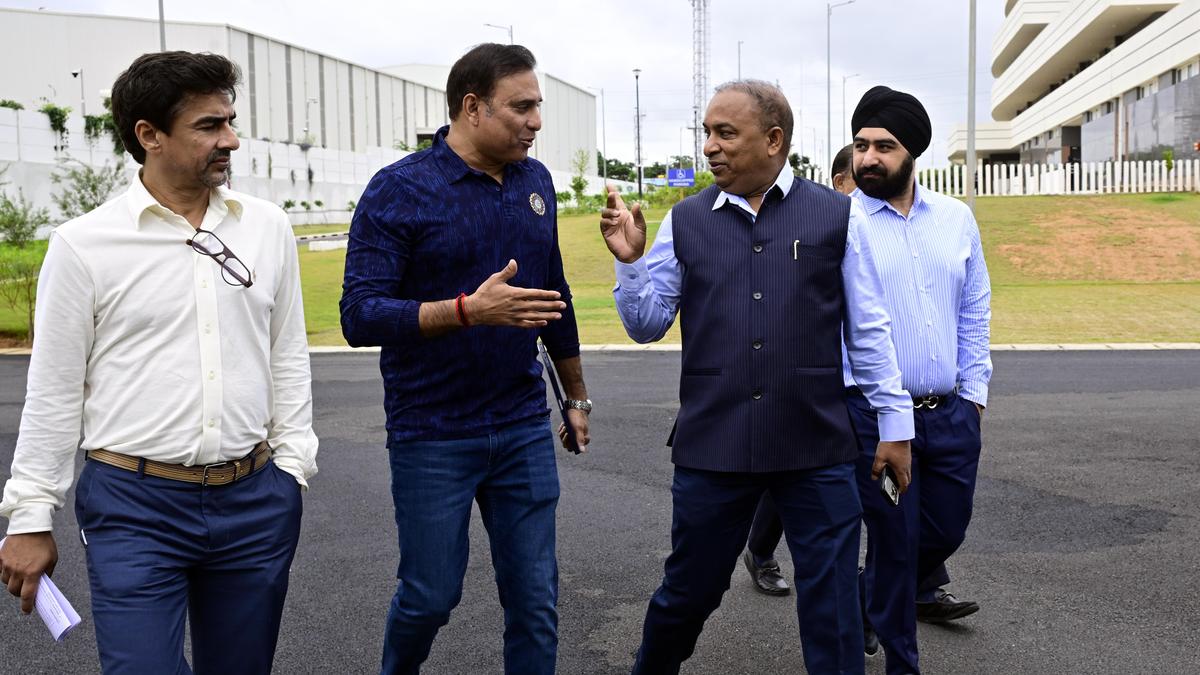
“It is not only about someone taking wickets. It is also about the balance of the squad and how players fit into that. It is not always about picking the best players. It is about picking players that play best with each other,” former national selector Jatin Paranjpe, who is head coach of North Mumbai Panthers in the Mumbai Premier League, told The Hindu.
By most accounts, Gurnoor’s ability to generate disconcerting bounce — he stands at 6’5” — at brisk pace ticks the right boxes. The first whiff of the Agarkar-led panel’s interest in the man from Muktsar came when he was drafted into the India-A set-up last year. “With Gurnoor, we have seen a lot of promise over the last season-and-a-half. He’s a tall guy with a bit of pace,” the chief selector noted.
If India is to return to the summit of Test cricket, it is imperative for Shubman Gill to have at his disposal a well-rounded pace attack, of the kind that Virat Kohli marshalled during his tenure.
In this context, the urge to give Gurnoor a run-out is understandable, for he could be an ideal foil to Bumrah and Siraj. Bumrah, of course, is a cunning exponent of late swing with a bag of other tricks up his sleeve. Siraj can shape the new ball away from the right-hander, but relies primarily on the wobble-seam delivery to home in on the stumps. But both are at their most lethal when targeting the fuller end of the good-length zone. The likes of Akash Deep and Harshit Rana, who tend to move the ball off the seam, also operate at comparable speeds from similar release points.
Since the exit of Ishant Sharma in 2021, what India hasn’t had is a genuinely tall quick who can consistently unsettle batters with variable bounce. Sure, there is Prasidh, six Tests old, with the tools at 6’3” to hit the deck and cause discomfort. But the 30-year-old has been impeded by an erratic radar.
It is worth remembering that the absence of a lanky, menacing operator was keenly felt on South African shores in 2021-22. At Johannesburg and Cape Town, where India lost to fritter away a 1-0 advantage, South Africa’s speedsters leveraged their towering frames to draw more uneven bounce.
A different profile
Nabi’s strengths lie elsewhere. He is not very quick through the air, nor has he the physical gifts to extract considerable lift. His main ally is the capacity to find lateral movement without erring in line or length — think of his dismissals of K.L. Rahul and Karun Nair in February’s Ranji final in Hubballi. The J&K spearhead can also get the old ball to reverse, as he did to great effect in an encounter against Delhi at the Arun Jaitley Stadium.
For the moment, Nabi will have to stay patient. And perhaps believe in the cliche that his job is to keep taking wickets; selection will take care of itself.
Published – May 30, 2026 02:28 am IST