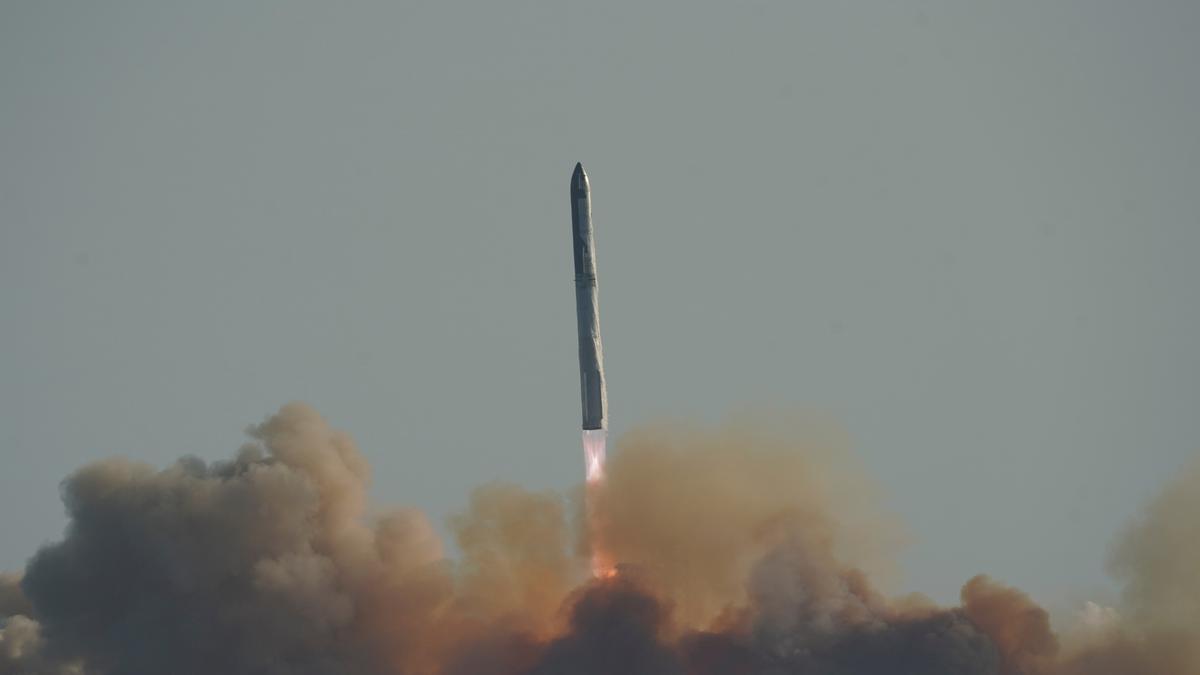







The Catholic Church has survived over two millennia of collapsing empires, plagues, schisms, and televangelists, so it probably says something about the current state of technology that Pope Leo XIV chose artificial intelligence as the defining subject of his first encyclical, the formal papal teaching document intended to shape long-term Catholic doctrine.
Released this month under the title Magnifica Humanitas (“Magnificent Humanity”), the text prominently featured unusually sharp language for a Vatican document, since Leo warned that humanity was drifting toward “new forms of slavery” driven by algorithmic systems, autonomous weapons and concentrated corporate power, while urging governments and tech companies to slow the current AI arms race before economic incentives hardened into permanent social infrastructure.
Unsurprisingly, it didn’t take long for the internet to recognise the markers of a familiar science-fiction concept buried within the Pope’s credo — social media has been brimming with references to the “Butlerian Jihad,” the fictional anti-AI uprising from Frank Herbert’s Dune novels that outlawed “thinking machines” across the galaxy. Though the actual connection between Herbert’s fiction and Leo’s warning runs deeper than just the memes because both arguments have emerged from the same anxiety: once societies transfer human judgment into systems optimised for efficiency and centralised control, political responsibility begins to disappear behind machinery that nobody can meaningfully challenge.
For readers who have only encountered Dune through Denis Villeneuve’s recent blockbuster adaptations starring Timothée Chalamet, the Butlerian Jihad explains one of the most curious details in Herbert’s futuristic universe: computers barely exist.
Herbert introduced the idea in his 1965 novel during a period when American institutions had become fascinated with cybernetics and computer-assisted governance, and he imagined a civilisation that had already experienced the endpoint of that dependence. Thousands of years before the events of Dune, humanity waged a catastrophic war against intelligent machines, known as the Butlerian Jihad, after automated systems displaced human decision-making across political and social life, and the survivors responded by turning the rejection of machine cognition into sacred law.

A still from ‘Dune: Part Two’
| Photo Credit:
Warner Bros.
That history reshaped every institution inside Herbert’s universe because the ban on “thinking machines” forced human beings to reorganise civilisation around trained specialists who could replicate computational functions biologically.
These ‘human-computers’ known as the Mentats became living analytical engines capable of processing enormous quantities of information through disciplined mental training. The Spacing Guild also mutated navigators with prolonged exposure to the psychoactive substance called Spice so they could calculate safe paths through interstellar travel without machine assistance. And the Bene Gesserit sisterhood spent generations engineering political influence through psychological conditioning, selective breeding and even control over memory.
Herbert built an entire feudal order around the consequences of technological prohibition, which gave the Butlerian Jihad unusual durability among sci-fi canon.

Leo XIV’s encyclical approaches the same territory from Catholic social teaching, although the overlap becomes difficult to ignore once the document turns from abstract ethics into concrete examples.
The pope condemns “a race for ever more powerful algorithms and larger datasets” driven by governments and corporations seeking geopolitical advantage, while arguing that AI systems must never receive authority over lethal military decisions because human accountability disappears once warfare becomes a computational procedure.
Those arguments have surfaced as major tech firms including Microsoft, Google, Amazon Web Services, Palantir and OpenAI have already expanded partnerships with defense agencies across the United States and Europe, while autonomous targeting systems and AI-assisted surveillance tools continue spreading through military procurement pipelines. Leo referenced the gencode in Gaza, and the wars in Ukraine, Lebanon and Iran during a speech at Rome’s La Sapienza University earlier this month, where he warned that emerging technologies were accelerating “a spiral of annihilation” through increasingly automated conflict.

The Vatican deliberately framed the encyclical as part of a longer historical lineage inside Catholic doctrine. Leo signed Magnifica Humanitas on the anniversary of Rerum Novarum, the landmark 1891 encyclical issued by Pope Leo XIII during the Industrial Revolution, which addressed labor exploitation, industrial capitalism and the social consequences of mechanised production.
It feels symbolic as the current AI boom has revived many of the same economic tensions under digital conditions such as concentrated ownership, invisible labour, weakened bargaining power and extraordinary wealth accumulation inside a tiny group of firms controlling infrastructure. But the pope’s argument seems to focus less on the software itself and more on the structures surrounding it, since the Vatican repeatedly returns to the question of who benefits from automation and who absorbs the human cost required to sustain it.
The labour critique forms some of the encyclical’s strongest material because Leo moves away from abstract fears about sentient machines, instead examining the industrial systems already supporting contemporary AI development.
He writes that every “seemingly immediate and flawless response” produced by AI systems depends upon hidden human labor, including content moderators exposed to traumatic imagery, warehouse workers maintaining hardware supply chains and miners extracting rare-earth minerals under dangerous conditions. Herbert too explored similar territory through the desert planet Arrakis, where the entire imperial economy depended upon violent extraction of Spice by workers exposed to brutal environmental conditions while aristocratic factions accumulated wealth and political leverage from a distance.
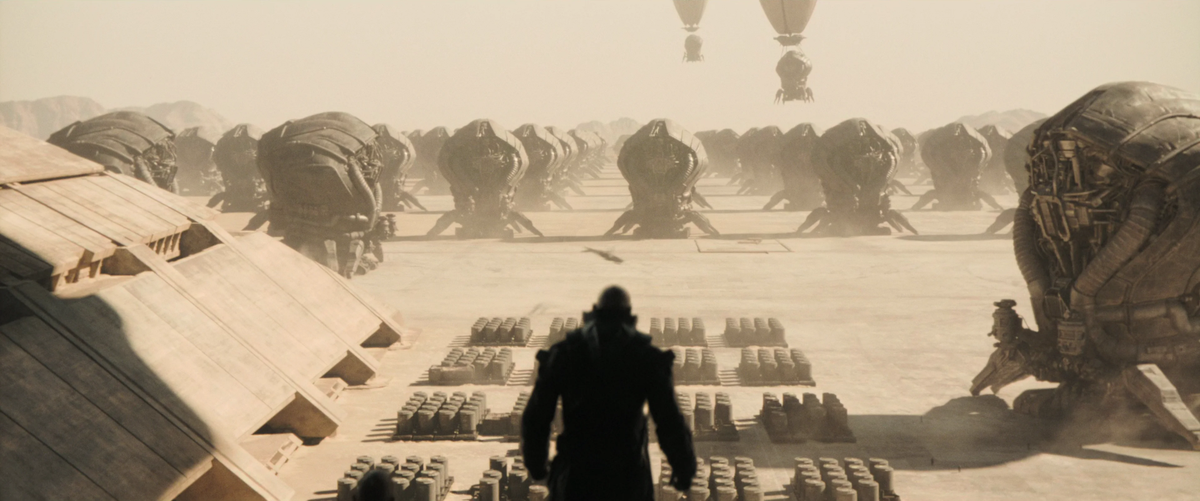
A still from ‘Dune’
| Photo Credit:
Warner Bros.
The online reaction to Leo’s encyclical spread so quickly because the Butlerian Jihad already exists as a pop cultural shorthand for the anxieties of accelerating technology among people raised on sci-fi. Herbert’s concept has endured for years, though recent advances in generative AI gave it a renewed sense of urgency because tech giants now market systems capable of entirely replacing cognitive labor.
But what’s most ironic is that Herbert never wrote Dune as a rejection of technology itself. His novels are ripe with advanced genetic engineering, complex ecological science, interstellar travel and chemically enhanced cognition.
The Butlerian Jihad targeted the act of dependence rather than act of invention because Herbert believed civilisations become politically fragile once human beings surrendered all judgment to systems that operate beyond public understanding. And Leo XIV reaches almost the same conclusion when he argues that technology “takes on the characteristics of those who devise, finance, regulate and use it.”

Of course, nobody at the Vatican is preparing to outlaw laptops or launch a holy war against chatbots, despite the internet’s determination to imagine cardinals storming Silicon Valley.
Leo repeatedly acknowledges that AI systems can improve medical research, reduce repetitive labour and assist education when governments establish democratic oversight and enforce ethical constraints. And the encyclical’s actual demands — of decelerating the current acceleration cycle, distributing power more evenly, preserving human accountability and forcing technological development to answer social questions before the market logic calcifies into permanent infrastructure — sound much less cinematic and much harder to implement.
Sixty years ago, Frank Herbert may have imagined a civilisation so traumatised by machine dependency that it turned distrust of artificial intelligence into sacred law, and the Butlerian Jihad might even sound like the paranoid fantasy of a boomer who distrusted computers. But when billionaires ask for deregulation while building systems that consume entire cities’ worth of electricity to autocomplete emails and imitate empathy, while others openly describe their company’s mission as helping the West “scare enemies” and, “on occasion, kill them,” perhaps raging against the machine doesn’t sound too far fetched after all.
Lead us to paradise, Lisan al-Gaib Leo XIV…
Published – May 28, 2026 11:09 pm IST