Skip to content
  • Facebook
  • X
  • Linkedin
  • WhatsApp
  • YouTube
  • Associate Journalism
  • About Us
  • Privacy Policy
  • 033-46046046
  • editor@artifex.news
Artifex.News

Artifex.News

Stay Connected. Stay Informed.

  • Breaking News
  • World
  • Nation
  • Sports
  • Business
  • Science
  • Entertainment
  • Lifestyle
  • Toggle search form
  • Karnataka JDS MLA HD Revanna Gets Bail In Sexual Assault Case
    Karnataka JDS MLA HD Revanna Gets Bail In Sexual Assault Case Nation
  • India, China Troops To Disengage At Depsang, Demchok By Month-End: Sources
    India, China Troops To Disengage At Depsang, Demchok By Month-End: Sources World
  • Access Denied Sports
  • Two Minor Girls Drown In River In Jharkhand While Taking Bath: Police
    Two Minor Girls Drown In River In Jharkhand While Taking Bath: Police Nation
  • Watch: World’s highest bridge opens in China
    Watch: World’s highest bridge opens in China World
  • Access Denied Business
  • Hamas Says Ready For “Complete Agreement” If Israel “Stops War In Gaza”
    Hamas Says Ready For “Complete Agreement” If Israel “Stops War In Gaza” World
  • Akhilesh Yadav Amid BJP Infighting Buzz
    Akhilesh Yadav Amid BJP Infighting Buzz Nation
Why is the Indian Rupee falling?

Why is the Indian Rupee falling?

Posted on May 25, 2026 By admin


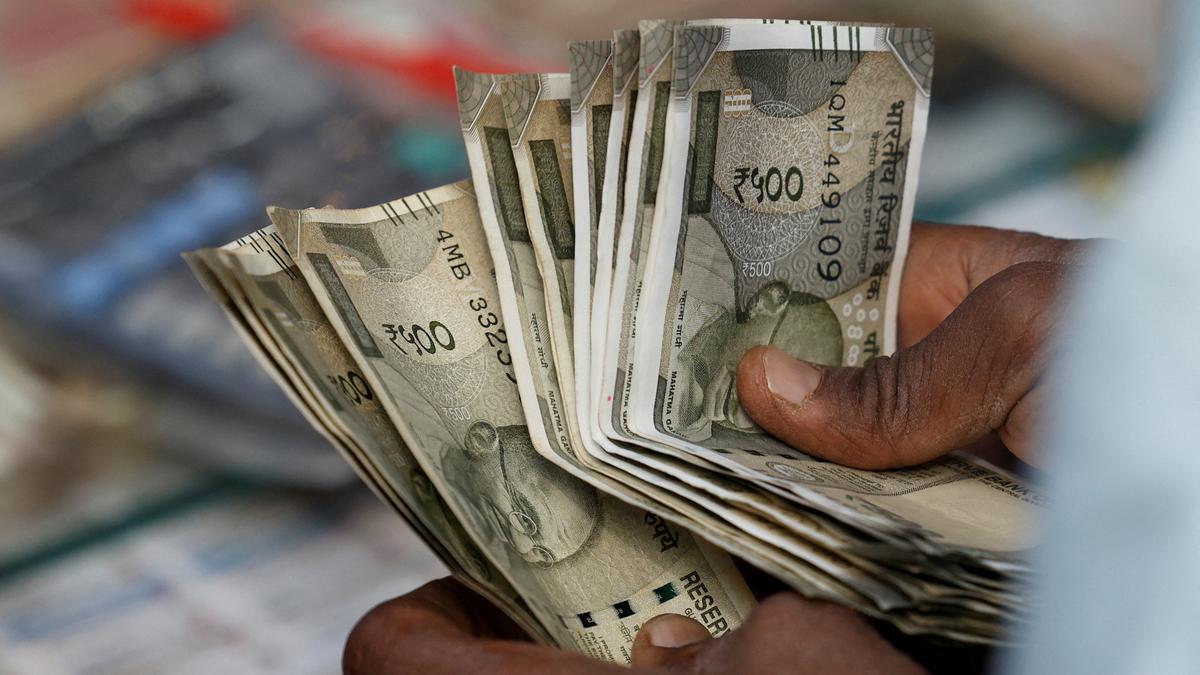
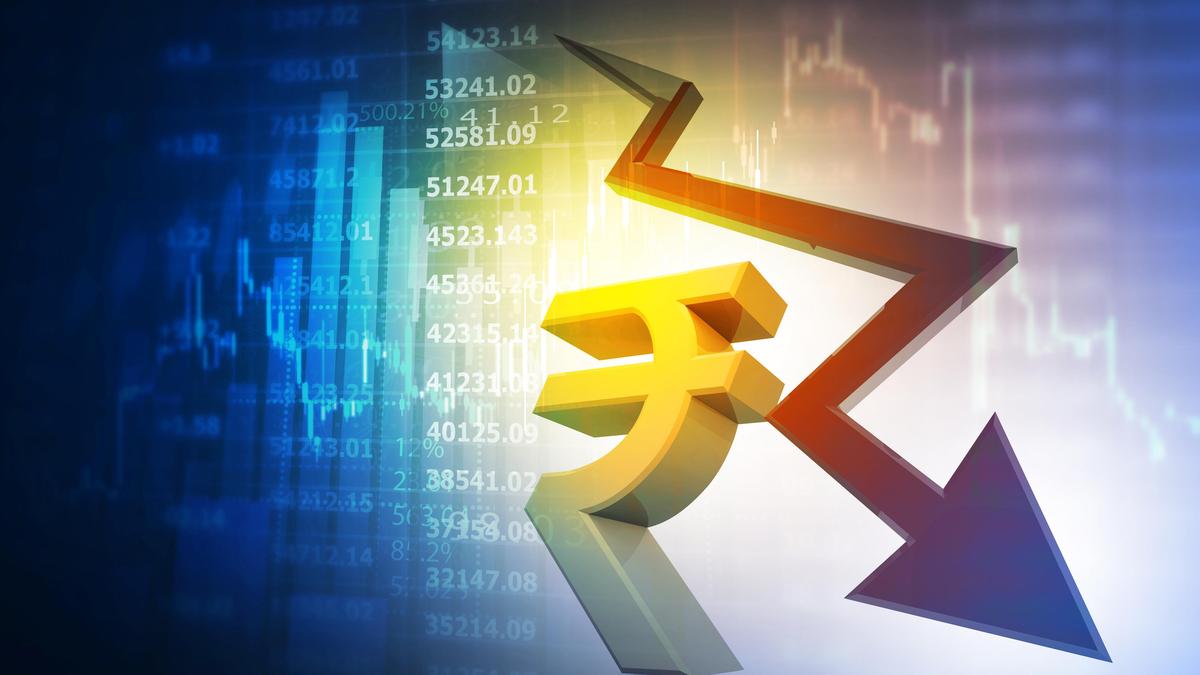
The graph of the Indian rupee has been snaking sharply downward. The rupee-to-dollar exchange rate, or the rupees needed to purchase a U.S. dollar, crossed 96 in May this year. That rate was around 85 a year ago, indicating the rupee’s decline in value since then.

Exchange rate is the price that a currency, such as the rupee, commands in the market, relative to the dollar or other currencies. Just as the market price of onions is determined by demand and supply, so is the price of a currency.

What is the impact of trade deficits on the rupee’s value?

The demand for the rupee rises with India’s exports and falls with imports. When firms in Ludhiana export garments, the dollars or euros they receive from foreign buyers are exchanged for rupees to pay workers and suppliers, thereby increasing demand for the rupee. On the other hand, Indian companies import oil by exchanging rupees for dollars, thereby reducing the demand for the rupee. Rupee demand also declines when we travel abroad and exchange rupees at the airport for the currency of our destination country.

Overall, if India’s imports exceed exports, the foreign currency payments it must make to the rest of the world exceed the foreign currency payments it receives. That implies more rupees are exchanged for dollars than dollars are exchanged for rupees, leading to declines in the demand for, and the value of the rupee (requiring more rupees to purchase one dollar).

Thus, a currency’s exchange rate is closely tied to the country’s balance of (foreign currency) payments (to and from the rest of the world). India has consistently run a merchandise trade deficit, with imports of goods (especially oil) exceeding exports. The deficit in its merchandise trade account is partially offset by a surplus in India’s invisibles. That is mainly thanks to foreign currency inflows from the export of services, particularly software, and to the large remittance inflows from migrant workers, especially in West Asian countries. Overall, India’s current account, which is the sum of merchandise trade and the invisibles accounts, has been in deficit (Table 1).

A currency’s exchange rate is closely tied to the country’s balance of payments.

The gap in the current account, between the foreign currency payments India owes to the rest of the world and the foreign currency payments it receives, has been bridged by inflows through the capital account, mainly foreign investment and loans. If the current account deficit is more than offset by a surplus in the capital account, the excess foreign currency received is added to the country’s foreign exchange (or forex) reserves (Table 1).

How do capital outflows weaken the rupee?

A country’s forex reserves are as valuable as a family’s treasure trove. The reserves are tapped to pay for critical imports during periods of insufficient foreign currency inflows, and to defend the currency’s value when capital outflows are too large (discussed below).

Foreign direct investment (FDI) is mostly in new or existing factories and businesses and, as a result, has some ties binding it to the host country. In comparison, foreign portfolio investment (FPI), which involves purchases of stocks or bonds, is highly volatile and driven by speculation. Portfolio investors enter a country seeking quick financial returns and exit at the first sign of risk or when higher returns are offered elsewhere. When FPI surges in, the stock markets are on a roll; when it flows out, it leaves a trail of destruction. Capital outflows imply that investors withdraw their investments in rupee assets and exchange them for dollar assets, leading to a tumble in demand for the rupee and in its exchange rate.

The periods of rapid depreciation of the Indian rupee have each been characterised by worsening of the trade account, FPI outflows, or both. These include April to September 2013 (when the rupee-to-dollar rate fell from 54.4 to 63.8); January to October 2018 (from 63.6 to 73.6); February to April 2020 (from 71.5 to 76.2); January to October 2022 (from 74.4 to 82.3); September 2024 to February 2025 (from 83.3 to 87.1); and the latest phase that began in May 2025 (from 85.2 to 96) (Chart 1). The recent losses in the rupee have mainly been due to foreign investors withdrawing from India as they retreat to the safety of their home bases amid growing geopolitical tensions and higher U.S. interest rates.

The depreciation of the rupee imposes a high cost on the Indian economy. To purchase a barrel of oil at $100, Indian companies now must pay ₹9,600, compared to ₹8,500 had the exchange rate remained at ₹85 per dollar. However, a depressed rupee can help boost exports: a shirt costing ₹1,200 can be sold in the U.S. market at $12.5 now; if the exchange rate were ₹80 per dollar, the price would have been $15. But rupee depreciation alone may not help much, given the range of supply and demand constraints weighing on Indian manufacturing.

What is the role of the RBI?

The Reserve Bank of India (RBI) intervenes to prevent the exchange rate from falling to very low levels. When foreign investors rush out by selling their rupee assets for dollars, the RBI props up the rupee by selling some of the dollars (or treasury bonds) from its reserves. This raises the demand for rupee and slows its decline (as it did during October 2024-January 2025 and August-December 2025) (Chart 2). India’s forex reserves remain sufficiently large: they stood at around USD 691.11 billion at the end of March 2026, enough to cover 10.8 months’ worth of the country’s imports (as of the end of December 2025). That is a mighty armoury the RBI can deploy to shield the rupee against impending speculative tides.

The ongoing geopolitical tensions and the threat of further oil price increases pose severe challenges. India could be at risk of paying more dollars per barrel of oil and more rupees per dollar. The country must take steps to regulate speculative capital outflows and reduce its dependence on oil imports.

(Jayan Jose Thomas is a Professor of Economics at the Indian Institute of Technology Delhi, and a visiting researcher at the South Asia Institute of the University of Heidelberg.)

Published – May 26, 2026 07:30 am IST


Source link

Business Tags:Depreciation, Forex reserves, Reserve Bank of India, rupee

Post navigation

Previous Post: Magnus Carlsen — understanding the aura of a Norwegian sporting superstar
Next Post: The physics of thermometers, temperatures and cold atoms

Related Posts

  • Union Budget gives a leg-up to MSMEs, manufacturing sector
    Union Budget gives a leg-up to MSMEs, manufacturing sector Business
  • Rupee rises 10 paise to 83.53 against U.S. dollar in early trade
    Rupee rises 10 paise to 83.53 against U.S. dollar in early trade Business
  • Markets end marginally lower after a day’s breather amid foreign fund outflows
    Markets end marginally lower after a day’s breather amid foreign fund outflows Business
  • Access Denied Business
  • Access Denied Business
  • NCLAT rejects Reliance Realty plea; says liquidation to be completed in shortest possible time
    NCLAT rejects Reliance Realty plea; says liquidation to be completed in shortest possible time Business

More Related Articles

U.S. case against India’s Gautam Adani appears strong but extradition unlikely, experts say U.S. case against India’s Gautam Adani appears strong but extradition unlikely, experts say Business
Access Denied Business
Mangoes 2025: Tamil Nadu farmers on the season’s specialities Mangoes 2025: Tamil Nadu farmers on the season’s specialities Business
Access Denied Business
IndiGo’s On-Time Performance slumps to 8.5% IndiGo’s On-Time Performance slumps to 8.5% Business
SiteLock

Archives

  • May 2026
  • April 2026
  • March 2026
  • February 2026
  • January 2026
  • December 2025
  • November 2025
  • October 2025
  • September 2025
  • August 2025
  • July 2025
  • June 2025
  • May 2025
  • April 2025
  • March 2025
  • February 2025
  • January 2025
  • December 2024
  • November 2024
  • October 2024
  • September 2024
  • August 2024
  • July 2024
  • June 2024
  • May 2024
  • April 2024
  • March 2024
  • February 2024
  • January 2024
  • December 2023
  • November 2023
  • October 2023
  • September 2023
  • August 2023
  • July 2023
  • June 2023
  • May 2023
  • April 2023
  • March 2023
  • February 2023
  • January 2023
  • December 2022
  • November 2022
  • October 2022
  • September 2022
  • August 2022
  • July 2022
  • June 2022
  • May 2022

Categories

  • Business
  • Nation
  • Science
  • Sports
  • World

Recent Posts

  • Murder of siblings and a police encounter that rocked Coimbatore 16 years ago
  • Canada imposes Ebola-related travel ban, Bahamas to increase screening
  • Eighth Indian Open Para Athletics Championships
  • Himachal panchayat polls: 78.53% polling in first phase, women voters outnumber men
  • Mundamveli residents lay day-long siege to GCDA headquarters

Recent Comments

  1. Michaelmub on UP Teacher Who Asked Students To Slap Muslim Classmate
  2. Josephcug on UP Teacher Who Asked Students To Slap Muslim Classmate
  3. MichaelDat on UP Teacher Who Asked Students To Slap Muslim Classmate
  4. RobertBRINA on UP Teacher Who Asked Students To Slap Muslim Classmate
  5. GeorgeKek on UP Teacher Who Asked Students To Slap Muslim Classmate
  • India Aims To Train 175 Civil Servants From Maldives This Year
    India Aims To Train 175 Civil Servants From Maldives This Year World
  • Demonstrations roil U.S. campuses ahead of graduations as protesters spar over the war in Gaza
    Demonstrations roil U.S. campuses ahead of graduations as protesters spar over the war in Gaza World
  • Access Denied
    Access Denied Nation
  • Lionel Messi’s Promised Barca Contract, On a Napkin, Up For Auction
    Lionel Messi’s Promised Barca Contract, On a Napkin, Up For Auction Sports
  • Access Denied
    Access Denied Nation
  • PM Modi Holds Bilateral Talks With French President Macron
    PM Modi Holds Bilateral Talks With French President Macron Nation
  • Pirate Ship Intercepted By Indian Navy, Bullets Fired At Chopper
    Pirate Ship Intercepted By Indian Navy, Bullets Fired At Chopper Nation
  • Govt. approves four semiconductor plants in Odisha, Punjab, Andhra Pradesh
    Govt. approves four semiconductor plants in Odisha, Punjab, Andhra Pradesh Science

Editor-in-Chief:
Mohammad Ariff,
MSW, MAJMC, BSW, DTL, CTS, CNM, CCR, CAL, RSL, ASOC.
editor@artifex.news

Associate Editors:
1. Zenellis R. Tuba,
zenelis@artifex.news
2. Haris Daniyel
daniyel@artifex.news

Photograher:
Rohan Das
rohan@artifex.news

Artifex.News offers Online Paid Internships to college students from India and Abroad. Interns will get a PRESS CARD and other online offers.
Send your CV (Subjectline: Paid Internship) to internship@artifex.news

Links:
Associate Journalism
About Us
Privacy Policy

News Links:
Breaking News
World
Nation
Sports
Business
Entertainment
Lifestyle

Registered Office:
72/A, Elliot Road, Kolkata - 700016
Tel: 033-22277777, 033-22172217
Email: office@artifex.news

Editorial Office / News Desk:
No. 13, Mezzanine Floor, Esplanade Metro Rail Station,
12 J. L. Nehru Road, Kolkata - 700069.
(Entry from Gate No. 5)
Tel: 033-46011099, 033-46046046
Email: editor@artifex.news

Copyright © 2023 Artifex.News Newsportal designed by Artifex Infotech.