



The Nights Are Quiet in Tehran is a triptych of a family caught between the burning sun of Tehran and the damp earth of Germany. It begins in 1979, when Behzad and Nahid, young and drunk on the prose of Marx and Gorky, believe they are the world’s architects. Their Leftist movement has helped topple the Shah of Iran, but now they find themselves hunted by the new Islamic regime and its Ayatollah.
The novel follows their life in exile. Written by Shida Bazyar and translated from the German by Ruth Martin, The Nights is on the shortlist for this year’s International Booker Prize, the winner of which will be announced on May 19.
A decade after they leave Iran, Behzad and Nahid are in a refugees’ hostel in Germany, where Nahid burns her “counter-revolutionary” books of poetry. Ten more years on, Nahid and her eldest daughter Laleh come to a different Iran, hiding themselves behind a hijab and tinted glasses. Another decade later, in 2009, Laleh’s brother Morad, or Mo, watches videos of the Green Movement protests on YouTube, embarrassed by the crustiness of his student life in Germany as his cousins are beaten on the streets of Tehran. The parents whisper about the dead in the kitchen. The ghost of revolution haunts the dining table. The siblings struggle to find themselves in the lyrics of Ricky Martin and Nirvana.

Even before they flee Iran, Behzad and Nahid are forced to shed their identities and use aliases to survive. They go to Istanbul, and from there to East Berlin and finally to West Germany, where they keep the radio on for news from their homeland. But it is also more than that. There is incessant worry and guilt, and memories of death. The chagrin of a loss their intellects did not anticipate hangs in the air. Shame lurks even in little things: Laleh, Mo, and the youngest, Tara, grow up speaking German, a language Nahid can never master, and worries she “can’t even help Laleh with her homework without being afraid that I’m teaching her errors”. A reminder of failure waits around every corner, but then so does dearness and the urge to say “it’s okay”.
When you have everything to lose
The family escaped the torture chambers but is held captive by memories of a city that no longer exists. While the Revolutionary Guard fills Tehran’s prisons with dissidents, Mo is “continually stopped and searched” at Germany’s train stations, Laleh’s handbag is always emptied out at clubs, and the family’s neighbour is filmed as a “potential terrorist” after 9/11. Laleh’s name is “Musli” in the school register because a secretary couldn’t bother finishing the word “Muslim”. Even when Mo joins student protests, he finds the “rich people’s kids getting angry about tuition fees and dancing to drum music” missing the prospect of having everything to lose.

The novel’s voice is often like a river flowing through a varied land. The parents’ chapters hum with a low dread while the children’s are staccato, frothing. There is the dust-choked fervour of Revolution and the clinical silence of German suburbs. To the credit of the translator, there is hardly an eddy or rock in the waters’ way. The Nights, like Marjane Satrapi’s Persepolis, explores Iran’s 1979 through a single family — but while Satrapi focuses on the life of a girl growing up inside Iran, Bazyar trains on the diaspora, similar to the essays of Dina Nayeri. The Nights attempts to archive the elders’ silence and their children’s confusion, and offers a sanctuary for their shared trauma.
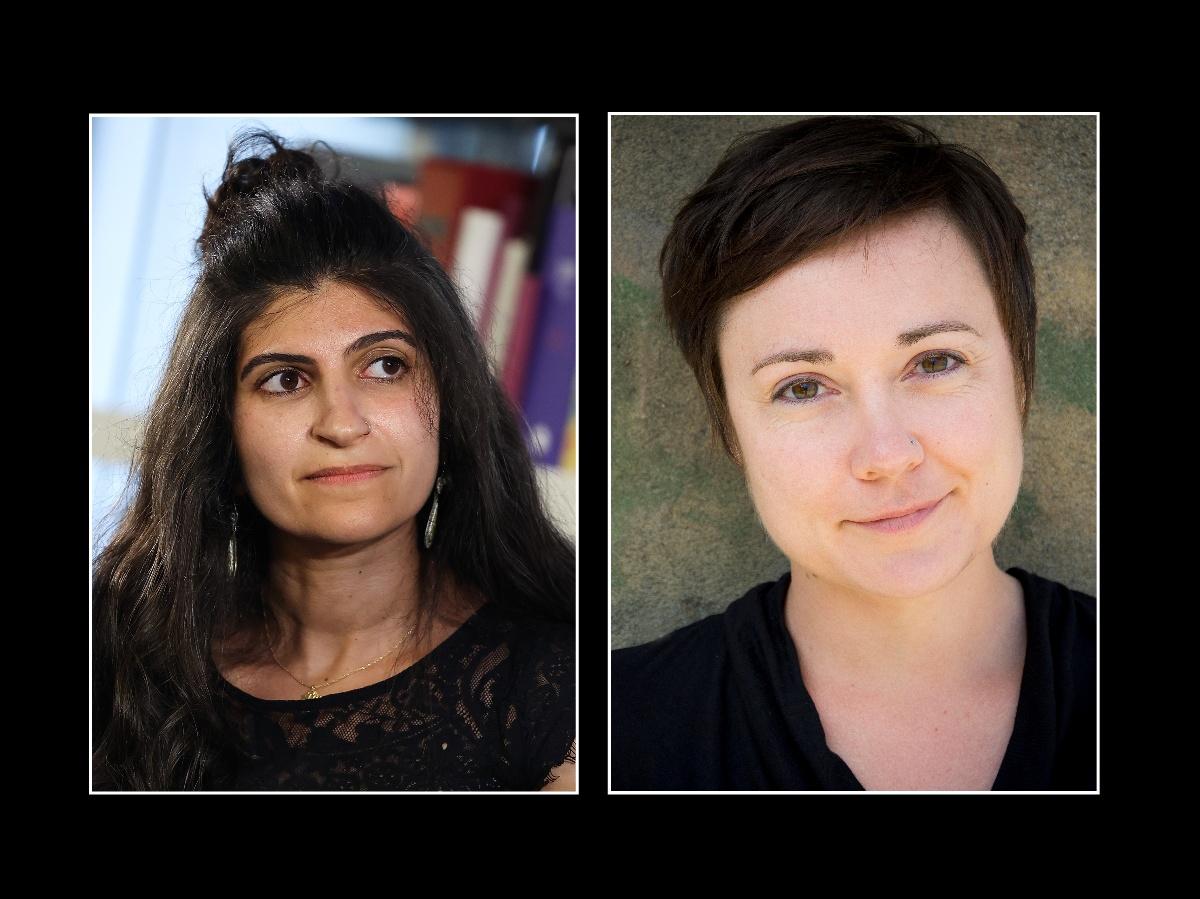
Author Shida Bazyar and translator Ruth Martin

A new generation’s rage
Bazyar’s decision to write from within the domestic space is meaningful as well — an inside-out view that challenges the world’s, but especially the West’s, outside-in regard and the pastiche of chanting crowds and burning cars. To her, the revolution happened as much in the streets as in the “alibi flats”. The Green Movement, in the novel a precursor to the Arab Spring, reassures Mo that his restlessness is part of a greater fire, but it also turns Iranians more cynical as they watch the media turn away while their own movement is crushed by water cannons and police beatings.
In Bazyar’s telling, the Revolution was “a step in the wrong direction”, and one Behzad and Nahid took with the wrong allies. They had convinced themselves that “at least a government of clerics is an anti-imperialist government”. They lost the Revolution because they were fixated on toppling the Shah; they weren’t paying enough attention to the “parallel hell” the clerics were creating instead.
Today, a civilisation that has survived millennia of kings and conquerors waits for its “quiet nights” to turn into a vibrant morning, the words of Hafez and Rumi — cultural bedrocks of the family in exile — thawed by the heat of a new generation’s rage. The Nights is in the end also a warning about unholy alliances. The ‘Woman, Life, Freedom’ movement in Iran since 2022, which the epilogue augurs, is led by the Lalehs and Taras no longer interested in sympathisers in theocracy. Instead, they discard their own aliases, become the news on the radio themselves, and seek to return home.
mukunth.v@thehindu.co.in
The Nights Are Quiet in Tehran
Shida Bazyar, trs Ruth Martin
Scribe Publications
₹699
Published – May 16, 2026 06:05 am IST