

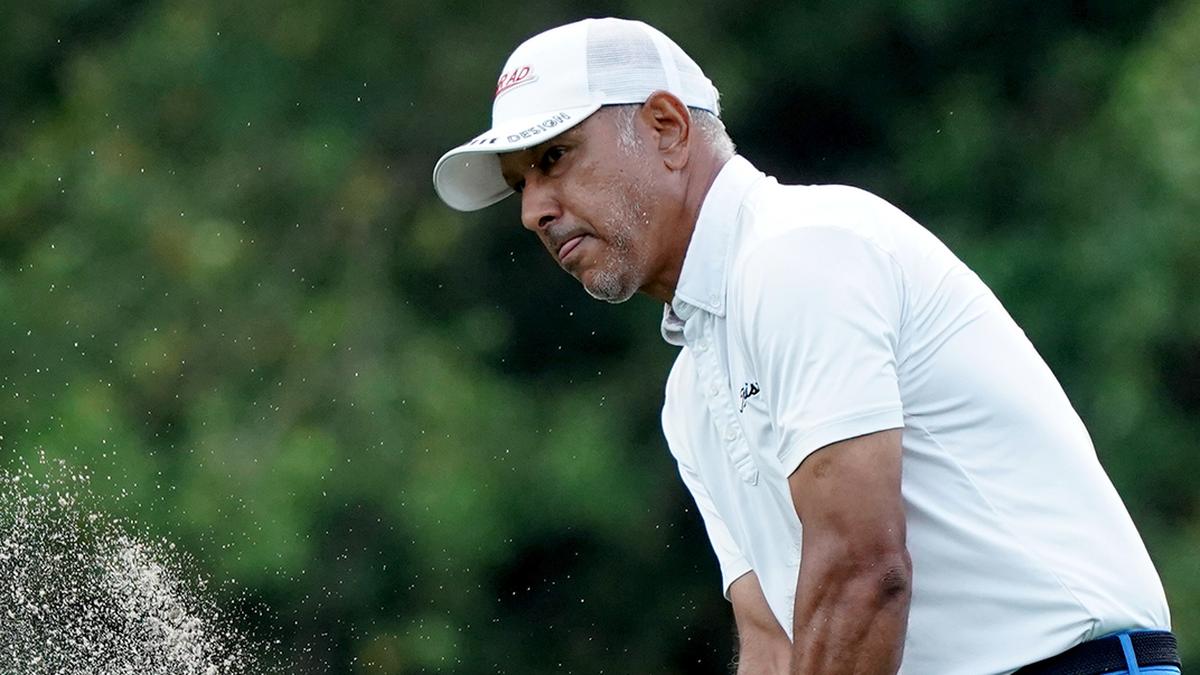
On a sultry day at the Sentosa Golf Club Serapong course, Jeev Milkha Singh kept going although the odds were stacked against the veteran Indian golfer during a challenging first-round outing in the recent Singapore Open.
The 54-year-old, who is in the twilight of his storied career, was pitting his wits against players who were much younger – many even less than half his age – and stronger. In demanding conditions that his ‘junior’ Karandeep Kochhar likened to an “oven”, Jeev’s body was simply not coping so much so that he even struggled to swing properly.
“At this age, the body does not stay with you. That is the sad part. I still have that winning habit (he clinched an Indian Golf Premier League (IGPL) title in Colombo late last year), but the body has to stay with me. I hope it stays,” Jeev expressed optimism.
He failed to make the weekend cut in the International Series-Asian Tour tournament, but it was not because of lack of hunger. Jeev, well aware that there is not much gas remaining in his tank, is determined to add a trophy to his cabinet before bowing out.
“That is my goal. Before I stop playing on the Asian Tour, I want to win one tournament. I want to win to prove that age is just a number,” he said.
Where is the hunger?
That appetite to dazzle, especially on the biggest stages, is missing among several players, and it is no surprise that Indian men’s golf is going through a tumultuous phase.
The negative trends are worrying to say the least.
Shubhankar Sharma has been the lone consistent Indian on the European Tour in recent years.
| Photo Credit:
Getty Images
It has been nearly two and a half years since an Indian secured an Asian Tour crown – Gaganjeet Bhullar went the distance in the Indonesia Masters in 2023. Only six Indians – Bhullar, Karandeep, Shubham Jaglan, Rashid Khan, Shaurya Bhattacharya and Ajeetesh Sandhu – currently hold Asian Tour cards. On the European Tour, Shubhankar Sharma has been the lone consistent figure from the nation in recent years.
The Indians’ numbers on the Official World Golf Rankings make for poor reading – the top-placed player from the country, Yuvraj Sandhu, stands at a lowly 450th. Not that Indian golfers have been setting international events alight, but it is to be noted that the players who have sided with LIV Golf-backed tournaments have been affected by the ranking system.
Jeev and Bhullar felt that the members of the current crop were not aiming big.
“At the end of the day, what matters the most for a professional athlete is the belief system – what you have and what you want. You have to set high standards for yourself. You have to believe that you can be the best in the world. If you do not aspire to become the best… if you do not have that discipline and routine which are linked to each other, you are just going to be a mediocre player,” Jeev, one of India’s best, provided a recipe for success.

Gaganjeet Bhullar is the last Indian to win an Asian Tour crown.
| Photo Credit:
Getty Images
Concurring with his ‘senior’, 11-time Asian Tour winner Bhullar said: “It is true (on Indians being unable to translate their promise to success at the international level) and that is sad. Honestly, I do not know what happened. It is very hard to pinpoint one, two or three reasons. Maybe the level of hunger is not as high as what we had.”
Staying in the comfort zone
The desire is hard to spot as several golfers are settling for what they have and are reluctant to get out of their comfort zones. The handsome prize money on the Professional Golf Tour of India (PGTI) – a total purse of minimum of ₹one crore for every tournament – is offering comfortability to those who are unwilling to explore new avenues.
“The PGTI and IGPL tournaments are a great benchmark to see where a player is at. It is a good stepping stone to uplift your game, but it is definitely not the destination. They have to work towards bigger goals. This is what I have been telling a lot of players,” Bhullar said.
S.S.P. Chawrasia and Shiv Kapur, both experienced campaigners, sang the same tune.
“The new boys are more comfortable in India. They should step out and try harder because nothing comes easy. With the PGTI getting bigger and the IGPL also being there, they are making good money. They feel that it is good enough. If they keep playing only in India, they will never reach their full potential,” said Chawrasia.
“This is what happened with the Japanese players back in the day. The Japanese players were content with playing there and making a good living. They did not want to travel overseas. If you compare the prize money (in domestic and international events), the difference is huge, but a bit of complacency sets in,” said Shiv, who delivered a hole in one in Singapore.
International exposure
Besides hosting competitions in India, the IGPL, in its 2026 schedule, has stops in Mauritius, South Africa, Congo and Morocco. Courtesy the ties between the IGPL and Asian Tour, the Bharath Classic will be held in Casablanca, Morocco, from June 4 to 7.
“We are playing internationally (in Africa) during the IGPL season to ensure the players get better. Playing on home ground and playing on courses that you are familiar with does not necessarily make you a better international golfer. The more you play on international golf courses, the better you will become,” opined Shiv.
What is concerning is that the Indians are not even up to par on courses they have been playing all their lives on – performances have been such that merely making it to the weekend in the DP World India Championship (Delhi Golf Club) and Indian Open (DLF Golf and Country Club in Gurugram) gets treated as an achievement in this part of the world.
Eight-year drought
The last victory by an Indian in a top-level international tournament hosted in the country came in 2018, when Khalin Joshi bagged the Panasonic Open crown.
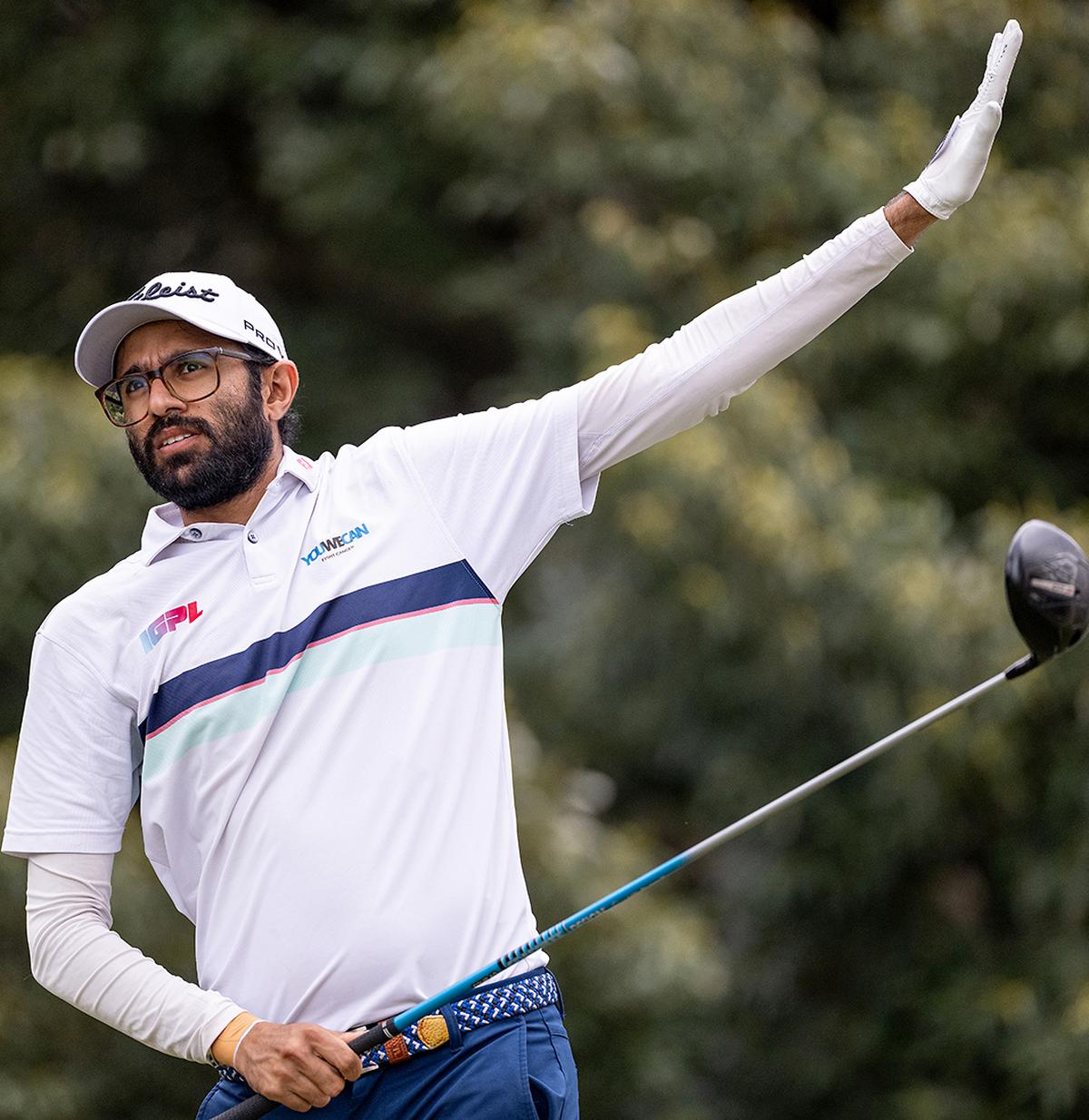
Karandeep Kochhar is one of the six Indians to currently hold the Asian Tour card.
| Photo Credit:
Getty Images
So, are there issues pertaining to skills? Karandeep replied in the negative.
“I completely agree that we have not been performing the way we should be. We have the skills. The infrastructure at home needs to get better; the practice facilities are not as good as the ones we have in other parts of Asia, areas where we have the Asian Tour,” said Karandeep.
“The fire to travel outside [India] has gone down but not in my case. When I lost my card in Asia, I could not come to terms with it.
“When we have more players competing, it will get better for us. Our players are working hard. The good times are coming,” he added.
The barren run has lasted years now, but Bhullar and Shiv, like Karandeep, believe that there is light at the end of the tunnel for Indian men’s golf.
Positive outlook
“These things happen. In four to five years, the next generation should be ready to take over. It is just a matter of time before these kids start believing in themselves, go outside India and play the Q-School. When they do that, they will be ready. I have a feeling that one of them is going to go out there and win a big one,” Bhullar said.
On his part, Shiv said: “Every sport goes through such phases. You look at cricket, golf, or any other sport; you will have peaks and troughs. There will be a period where you will have a lot of Indians playing well. It is just about breaking through.”
When they eventually manage to do it is the lingering question.
(The writer was in Singapore at the invitation of The International Series).