





One of the fascinating aspects of following elite athletes is seeing how they reinvent themselves throughout their careers. In sport, standing still is akin to going backwards.
The way a sport is played keeps changing, too. What worked once could quickly feel outdated. In cricket, the advent of the shorter formats began to reward risk-taking among batters and bowlers had to develop counters. Tennis evolved from the elegant, quick serve-and-volley style to long, power-packed baseline rallies, thanks to changes in racquet and string technology, slowing of surfaces and advances in athletic development.
Forced reskilling
Formula One is no exception. The new hybrid Power Unit regulations introduced this year, mandating that 50% of the energy come from the electric component, have forced drivers to drastically alter their well-honed styles, first shaped in their karting days.
F1 and motorsport involve more frequent changes to regulations than most other sports. Drivers are constantly compelled to tweak their technique to get on top of their car’s new behaviour. This time, though, the changes forced through are so severe that they raise a philosophical question. It’s a question some have asked of cricket and tennis, too, but it’s especially germane to F1 this season: can a sport remain itself if its core element transforms substantially?
The prerequisite for becoming one of the 22 elite drivers who get to drive the fastest machines in the world is bravery. It is about keeping your right foot planted on the throttle for that extra second longer around a corner than you believe the physics of the car can handle or braking a metre later than where you need to.
Most modern-day F1 drivers start training at the ages of seven or eight in karts, practising this driving style as they climb the rungs. However, the new regulations have completely flipped that on its head. The ambitious move towards electrification has left cars energy-starved. This has had a huge impact on how drivers drive, especially when cornering.
New reality: Charles Leclerc, one of the best over a lap, feels that a brave approach in qualifying no longer works. ‘I honestly cannot stand these rules,’ he says.
| Photo Credit:
Getty Images
In F1’s new era, going quickly through a fast corner seems to hurt lap-time! The logic behind it is that the energy spent taking a corner flat out punishes you later in the lap, down the straight, where you need maximum power at all times.
This has meant the driver now goes off-throttle around fast corners, lifting and coasting to save battery energy that can be deployed elsewhere. It, in a way, diminishes the wow factor of driving, and even hurts drivers who are quick around fast corners, taking away a key weapon. Many drivers, from Max Verstappen to Sergio Perez, have spoken out vehemently against the rules, saying the cars are not fun to drive.
This is often more pronounced during qualifying, when drivers are hardwired to give it full beans for a lap, leaving no inches on the table.
Charles Leclerc is widely considered one of the absolute best on the grid alongside Verstappen. He could even claim to be slightly faster in qualifying trim. His ability to take risks and still balance the car has resulted in 27 pole positions, as against eight wins. It indicates how he often outperforms the car over one lap, extracting more from it than what it is capable of on race day.
But at the Japanese GP, the Ferrari driver was not too pleased when he lost time on the straights because of a lack of deployment. “I honestly cannot stand these rules in qualifying. I go faster in corners, I go on throttle earlier, I lose everything in the straight,” said Leclerc.
The bigger issue is that the electric power deployment is largely out of the driver’s hands. It means that every time there is a mistake, the system goes for a toss, as a single snap can consume more energy and cost drivers further down the line. But at the same time, it is not consistent, as it can be both rewarding and punishing, depending on where it happens.
Leclerc explained that his high-risk approach, which paid off in the past, is hurting him.
Paying the price
“Q3 [is] where you want to try things you’ve never tried before, taking risks that you’ve never taken before, and that’s been rewarding. Now this is not possible anymore.
“Every time you go a little bit over the limit, you have a bit of a snap, this is costing energy, and then you pay the price more. I feel at the moment consistency is paying off more than being brave, which makes qualifying a little bit less challenging,” he said.
At the same time, it can also reward drivers for making mistakes, as McLaren team principal Andrea Stella explained recently.
“Occasionally, there are comments from our drivers that once they make a mistake, it actually saves some energy; therefore, you go faster overall in a sector because the energy you saved with the delay in the throttle because you had a problem is going to reward you at the end of the straight.”
Stella then went on to explain the crux of the debate: whether such mistakes should even be rewarded in the first place, as it goes against the ethos of racing.
“Obviously, this goes much more as to…do we want to be faithful to the DNA of racing in a traditional sense? Do we accept that this counterintuitive situation is part of the business or not? I think this is more of a high-level philosophical question. I think fans are a part of this in finding the answer, but, above all, the drivers are a part of this in finding the answer,” he remarked.
So, do these new, excessive demands on drivers fundamentally alter what the sport actually is? F1 has always been about the fastest single-seater cars driven by the best drivers on the planet, trying to be on the money all the time.
![Crux of the debate: McLaren team principal Andrea Stella raises an important question on the new rules: ‘Do we accept that this counterintuitive situation [where mistakes are rewarded] is part of the business?’](https://th-i.thgim.com/public/incoming/v79xgf/article70903237.ece/alternates/FREE_1200/GettyImages-2264269195.jpg "Crux of the debate: McLaren team principal Andrea Stella raises an important question on the new rules: ‘Do we accept that this counterintuitive situation [where mistakes are rewarded] is part of the business?’")
Crux of the debate: McLaren team principal Andrea Stella raises an important question on the new rules: ‘Do we accept that this counterintuitive situation [where mistakes are rewarded] is part of the business?’
| Photo Credit:
Getty Images
Granted, in the past, drivers have had to adapt to limitations, be they tyre-related or fuel-related. However, those were still in the explicit control of the drivers themselves; there was an element of skill involved. Jenson Button or Perez might not have been the quickest outright, but could produce results in races with high tyre degradation through their smooth, economical driving styles.
F1’s latest iteration, though, is stretching the limits of adding new skills to one’s repertoire.
The level of the problem
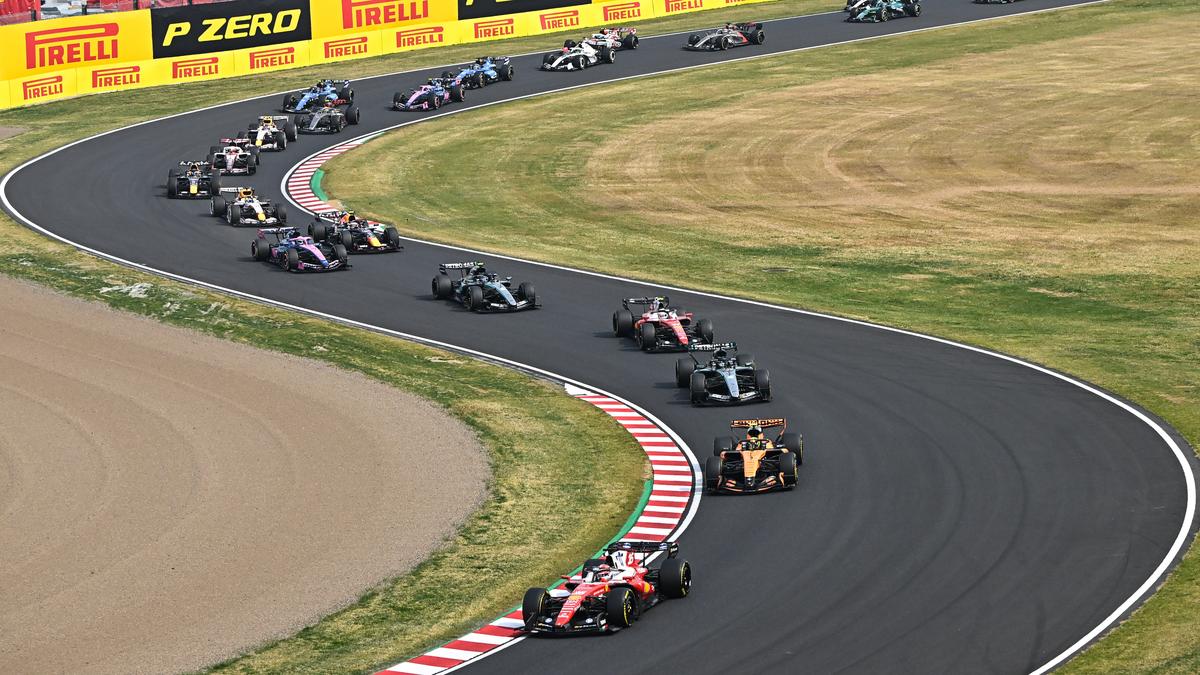
When Lando Norris says that he didn’t want to overtake Lewis Hamilton during the Japanese GP, but did so because his battery deployed power when he didn’t want it — and left him a sitting duck a few corners later — it shows the level of the problem.
It will be interesting to see how the powers that be react to the unintended consequences of the new rules. There have already been some changes announced ahead of the Miami GP to improve things, especially in qualifying. Moving with the times is important, but it must be tempered so that the sport’s soul remains sacrosanct.