


The story so far:
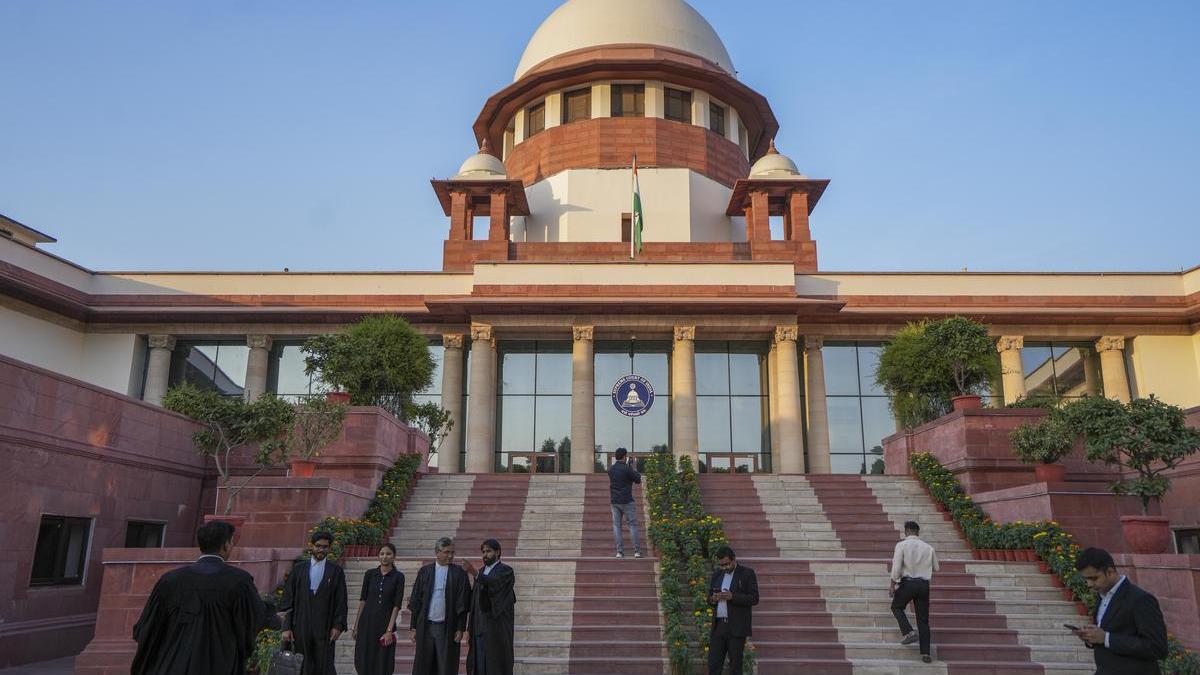
The Supreme Court ruled on March 24 in Chinthada Anand vs State of Andhra Pradesh that a pastor from the Madiga community in Andhra Pradesh could not claim to be a member of a Scheduled Caste (SC) as he had converted to Christianity. The Court upheld the decision of the Andhra Pradesh High Court, which had reached the same conclusion in an alleged atrocity matter.
Can a person of Christian faith be SC?
A Bench of Justices Prashant Kumar Mishra and Manmohan laid down that the Constitution (Scheduled Castes) Order, 1950, clearly defines the parameters under which SCs are to be identified. A clause in it says, “No person who professes a religion different from the Hindu, the Sikh or the Buddhist religion shall be deemed to be a member of a Scheduled Caste.”
The judgement holds that this bar on religion imposed by the Constitution (SC) Order was “absolute” without exceptions. The Court has said that the term “profess” in the clause in the Order “connotes to publicly declare or practice a religion.” In its March 24 ruling, the Court said that the appellant “professes Christianity” — a religion not mentioned in the Order.
“Conversion to any religion not specified in Clause 3 results in immediate and complete loss of Scheduled Caste status from the moment of conversion, regardless of birth,” the Court said. It added, “Christianity, by its very theological foundation, does not recognise or incorporate the institution of caste.”
The Court held that the moment one ceases to be a member of a SC by virtue of converting faith, “the loss of such status carries with it the automatic termination of all eligibility for statutory benefits, protections, reservations, preferences and entitlements that are predicated upon or flow from such membership”, including those under the Scheduled Castes and Scheduled Tribes (Prevention of Atrocities) Act, 1989.
Even though Chinthada Anand argued that he had a caste certificate showing that he belonged to the Madiga community, designated an SC community, the Court said, “Mere production of a certificate cannot override the admitted fact that the appellant is a practising Christian”. It also said that there was no evidence to suggest that Mr. Anand had reconverted to Hinduism or that the community had accepted him back.
Is this question new? What is the Centre’s position on this?
The Court has addressed the question of SC status for people from Dalit communities who have converted to Islam or Christianity. A petition to accord SC status for Dalit Christians and Muslims was filed in 2004 and continues to be heard today.
Over the years, petitioners have argued that several communities had historically belonged to SC groups but had, over time, converted to faiths such as Christianity and Islam. Even though their choice of faith may have been led by the wish to be freed of their caste, caste had entered their chosen faiths as well. They have cited reports commissioned by the government from the first decade of the 21st Century supporting their position that Dalit Muslims and Christians should be accorded SC status.
The Union Government has relied on the Constitution (SC) Order, 1950, and argued that Dalit Muslims and Christians should continue to be excluded because of the “foreign origin” of these faiths as opposed to Hinduism, Sikhism, and Buddhism.
The petitioners argued that the Constitution (SC) Order, 1950, had been amended first to include Sikhism in the 1950s and then Buddhism in 1990, in response to a large number of people in parts of the country turning to Buddhism, heeding Dr. B.R. Ambedkar’s call.
In October 2022, the Centre constituted a Commission of Inquiry headed by former Chief Justice of India K.G. Balakrishnan to examine the issue of whether SC status can be accorded to SC converts to Islam and Christianity. The Commission’s deadline is set for April this year.
What about people who have “reconverted” to Hinduism, Sikhism, or Buddhism?
Even as the the Centre’s Commission of Inquiry is yet to submit its report, pending which the Supreme Court Bench hearing these matters will proceed, the Bench of Justices Mishra and Manmohan, on March 24, laid down the threshold for what counts as “reconversion”, what is the burden of proof for this, and who this burden must fall upon.
The Court noted that if a person of SC origin claimed that they had “reconverted” to any of the faiths mentioned in the Constitution (SC) Order, 1950, three specific conditions must be met “cumulatively and conclusively”. First, the person must be able to prove that they “originally belonged” to an SC group. Second, there must be “credible and unimpeachable evidence of bona fide reconversion to the original religion”. Third, there must be evidence of “acceptance and assimilation by members of the original caste and concerned community.” The Court said that the “burden of proving reconversion lies entirely on the claimant, to be proven through unimpeachable evidence.”
In elaborating on the proof of “reconversion”, the Supreme Court said that this should be accompanied by “complete and unequivocal renunciation of the religion to which conversion had taken place, total dissociation therefrom, and actual adoption and observance of the customs, usages, practices, rituals, and religious obligations of the original caste.”
What about Scheduled Tribes (STs)?
The Court said that for STs, there was no such religion-based exclusion prescribed in the Constitution (Scheduled Tribes) Order, 1950. “The determination of Scheduled Tribe status, therefore, cannot rest on conversion alone, but must turn on whether the claimant continues to possess and is recognised for the essential attributes of tribal identity, including customary practices, social organisation, community life, and acceptance by the concerned tribal community,” the Court held.
The Court said that if a person’s conversion or later actions completely break their connection with the tribal way of life and they lose recognition within the community, their ST status is weakened. Conversely, if the tribal attributes remain or are re-established and accepted by the community, the claim cannot be automatically rejected. Such cases must be evaluated on a fact-specific basis by the competent authority in accordance with constitutional principles.
Hundreds of ST communities profess Christianity, Islam, and indigenous faiths, such as Sarnaism. And while there are States such as Nagaland, where entire ST communities may have, over time, converted to Islam or Christianity, there are also States such as Chhattisgarh and Jharkhand, where there has been a rise in Adivasi movements insisting that ST communities that had converted to faiths other than indigenous ones be disentitled from getting statutory benefits meant for STs.
Published – March 29, 2026 01:30 am IST