




Skip to content
  • Facebook
  • X
  • Linkedin
  • WhatsApp
  • Associate Journalism
  • About Us
  • Privacy Policy
  • 033-46046046
  • editor@artifex.news
Artifex.News

Artifex.News

Stay Connected. Stay Informed.

  • Breaking News
  • World
  • Nation
  • Sports
  • Business
  • Science
  • Entertainment
  • Lifestyle
  • Toggle search form
  • Road Accidents Increased By 12% In 2022, 19 Deaths Reported Every Hour
    Road Accidents Increased By 12% In 2022, 19 Deaths Reported Every Hour Nation
  • Video Shows Water Leaking From Roof Of Vande Bharat Train, Railways Responds
    Video Shows Water Leaking From Roof Of Vande Bharat Train, Railways Responds Nation
  • Suspected Militant Killed In Gunfight With Security Forces In Manipur Thoubal, Say Police
    Suspected Militant Killed In Gunfight With Security Forces In Manipur Thoubal, Say Police Nation
  • List of basic amenities in mining-affected areas of Kerala’s Kollam to be prepared
    List of basic amenities in mining-affected areas of Kerala’s Kollam to be prepared Nation
  • Access Denied Business
  • Do some spiders exploit firefly’s flashing signals to lure more prey?
    Do some spiders exploit firefly’s flashing signals to lure more prey? Science
  • Three Indian-origin men jailed for violent disorder at U.K. kabaddi tournament
    Three Indian-origin men jailed for violent disorder at U.K. kabaddi tournament World
  • Chinese firm bags contract to print Nepal’s Rs 1,000 bank notes
    Chinese firm bags contract to print Nepal’s Rs 1,000 bank notes World
Nifty Fifty: When the safest U.S. stocks became the most dangerous bet

Nifty Fifty: When the safest U.S. stocks became the most dangerous bet

Posted on March 27, 2026 By admin


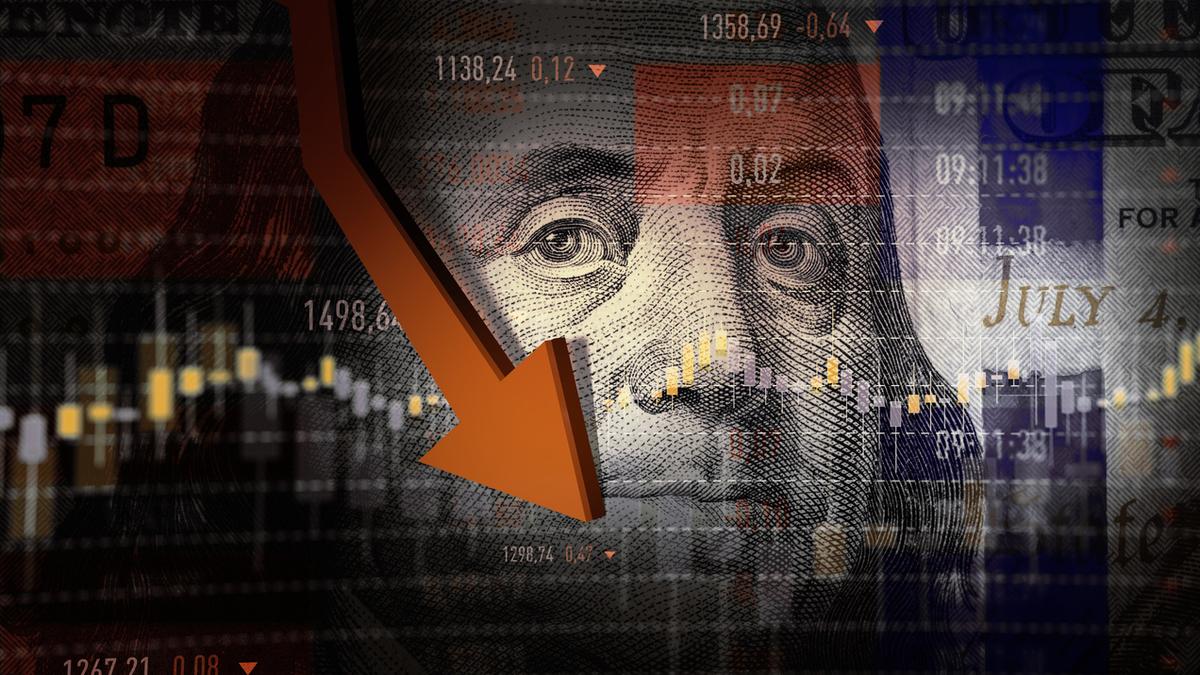
Buying and selling are widely considered the Siamese twins in the world of the stock market. People often buy stocks only to sell them for making profit. But then, there was a different set of stocks which were fondly known by investors and financial experts of the time as ‘one-decision’ stocks, that is, buy and never sell at all. Finperts considered these stocks as extremely stable, even for decades.

Before the story unfolds, let’s separate two lookalikes, or perhaps namesakes, so that we are not chasing the wrong shadow. Nifty Fifty is not to be confused with Nifty 50, the Indian benchmark index of the National Stock Exchange (NSE), which represents 50 large-cap stocks of Indian companies. The similarity in names is purely coincidental, and the U.S. Nifty Fifty has nothing to do with India’s Nifty 50. In Wall Street slang, “nifty” meant something attractive, pleasant, and appealing. In fact, long before the launch of NSE’s Nifty 50 on April 22, 1996, the U.S.’ Nifty Fifty had already been born, bloomed and bitten the dust too.

What is Nifty Fifty?

Nifty Fifty was a set of 50 large-cap stocks listed on the New York Stock Exchange (NYSE). It included premier stocks such as American Express, Xerox, IBM, Gillette, Johnson and Johnson, Black and Decker, Procter & Gamble, PepsiCo, Pfizer, McDonald’s, Walt Disney, Eastman Kodak, Eli Lilly, Polaroid, Coca-Cola, Philip Morris, General Electric, Merck and other blue-chip stocks. In the 1960s and 1970s, the Nifty Fifty stocks were so popular that they found a place in the portfolios of most institutional investors. Investors loved them for their consistent earnings, long-term growth potential, perceived stability, and continual increases in dividends. It is widely believed that none of these companies cut dividends since World War II.

High P/E Ratio

Interestingly, these stocks were also liked for their high price-to-earnings ratio (P/E ratio). The logic of the era was simple but dangerous: quality at any price. Since these companies dominated the industries with consistent double-digit growth, investors ignored high P/E ratios, in the hope that future earnings would inevitably “catch up” to even the most inflated valuations. Yet, this wasn’t seen as speculation, but as a premium for certainty or prosperity. Investors weren’t just buying shares, but were buying a perceived guarantee of future dominance. It was an ultimate psychological trap: if you believe the future is guaranteed, then it’s not a bubble.

‘One-decision’ stocks

Since the stocks appeared so promising, institutional investors, fund managers and financial analysts of that era termed them as ‘one-decision’ stocks, a popular Wall Street phrase at that time. In his book titled Stocks For The Long Run, Jeremy J. Siegel, finance professor of the University of Pennsylvania, said that since the prospects of these stocks were so bright, many analysts claimed that the only direction the stocks could go was upwards.

The oil catalyst and the collapse of Nifty Fifty

The spark that lit the fire came from outside the markets. In 1973, the Organization of Arab Petroleum Exporting Countries (OAPEC), a subgroup of the larger OPEC cartel, used oil as leverage during the Yom Kippur War, fought between Egypt and Syria on one side and Israel on the other. Oil supplies were cut, prices surged and the shock quickly rippled across the global economy.

The Arab oil embargo imposed by OAPEC triggered an inflationary spike that fundamentally broke the math behind the era’s favourite stocks. The Nifty Fifty “giants” were trading at a massive price, often more than 40 times their earnings. The reason was simple: investors assumed cheap energy and low inflation were permanent. As OAPEC-driven inflation hit the roof, the logic flipped: high interest rates eroded the value of future growth, and soaring fuel costs began to eat into corporate margins. The result was brutal, a prolonged and painful correction. A few iconic stocks, such as Polaroid, plummeted by as much as 90%.

The story of the Nifty Fifty is not just about a market crash, but about how a belief can collapse, and how brutally expensive that collapse can be. In fact, many companies in the Nifty Fifty did not fail at all and continue to perform well today, but what failed was the price investors were willing to pay for them. The lesson was painful, but enduring: even the best companies cannot justify an inflated price; no matter how promising the future growth appears.

And as American philanthropist and investor Warren Buffett would later remind investors, “Price is what you pay. Value is what you get.” Perhaps it is time we learn the simple truth that stock markets, time and again, continue to teach.

(The writer is an NISM & CRISIL-certified Wealth Manager and certified in NISM’s Research Analyst module)

Published – March 27, 2026 01:04 pm IST


Source link

Business Tags:collapse of US Nifty Fifty, nifty fifty, Nifty Fifty in US, US Nifty Fifty collapsed, what happened to US Nifty Fifty

Post navigation

Previous Post: Explained: What is Shigella infection?
Next Post: Access Denied

Related Posts

  • Rupee appreciated 40 paise to close at 86.99 against U.S. dollar
    Rupee appreciated 40 paise to close at 86.99 against U.S. dollar Business
  • Government’s Top Priority Is To Tame Inflation: Finance Minister Nirmala Sitharaman
    Government’s Top Priority Is To Tame Inflation: Finance Minister Nirmala Sitharaman Business
  • Flexible inflation targeting, a good balance
    Flexible inflation targeting, a good balance Business
  • Access Denied Business
  • Vegetable prices likely to cool down next month, says Finance Ministry
    Vegetable prices likely to cool down next month, says Finance Ministry Business
  • Stock markets end lower in volatile trade
    Stock markets end lower in volatile trade Business

More Related Articles

Fitch Retains India’s Growth Forecast For Current Fiscal At 6.3 Per Cent Fitch Retains India’s Growth Forecast For Current Fiscal At 6.3 Per Cent Business
Cabinet approves plan to set up 2 lakh farm, dairy-fishery cooperatives Cabinet approves plan to set up 2 lakh farm, dairy-fishery cooperatives Business
Rupee trades in narrow range against U.S. dollar in early trade Rupee trades in narrow range against U.S. dollar in early trade Business
Access Denied Business
Domestic coal production up 2.06% in November Domestic coal production up 2.06% in November Business
Rupee rises 4 paise to 82.87 against U.S. dollar in early trade Rupee rises 4 paise to 82.87 against U.S. dollar in early trade Business
SiteLock

Archives

  • March 2026
  • February 2026
  • January 2026
  • December 2025
  • November 2025
  • October 2025
  • September 2025
  • August 2025
  • July 2025
  • June 2025
  • May 2025
  • April 2025
  • March 2025
  • February 2025
  • January 2025
  • December 2024
  • November 2024
  • October 2024
  • September 2024
  • August 2024
  • July 2024
  • June 2024
  • May 2024
  • April 2024
  • March 2024
  • February 2024
  • January 2024
  • December 2023
  • November 2023
  • October 2023
  • September 2023
  • August 2023
  • July 2023
  • June 2023
  • May 2023
  • April 2023
  • March 2023
  • February 2023
  • January 2023
  • December 2022
  • November 2022
  • October 2022
  • September 2022
  • August 2022
  • July 2022
  • June 2022
  • May 2022

Categories

  • Business
  • Nation
  • Science
  • Sports
  • World

Recent Posts

  • Unknown gunmen kill more than 70 in South Sudan after dispute at gold mine
  • Access Denied
  • Access Denied
  • Access Denied
  • Leaders killed, U.S. strikes and Iranian response: a month of Iran-U.S. war

Recent Comments

  1. Robertvog on UP Teacher Who Asked Students To Slap Muslim Classmate
  2. RonaldPlove on UP Teacher Who Asked Students To Slap Muslim Classmate
  3. Michaelensum on UP Teacher Who Asked Students To Slap Muslim Classmate
  4. KeithCaf on UP Teacher Who Asked Students To Slap Muslim Classmate
  5. KeithCaf on UP Teacher Who Asked Students To Slap Muslim Classmate
  • Iran missile fire sparks explosions over Tel Aviv, no reported injuries
    Iran missile fire sparks explosions over Tel Aviv, no reported injuries World
  • Cody Gakpo Double Helps Liverpool Thrash Struggling Ipswich In Premier League
    Cody Gakpo Double Helps Liverpool Thrash Struggling Ipswich In Premier League Sports
  • Chinese tech giant Huawei says profits more than doubled in 2023
    Chinese tech giant Huawei says profits more than doubled in 2023 World
  • PM Modi Dusshera In India, Weapons Worshipped Not To Dominate Land But To Protect It
    PM Modi Dusshera In India, Weapons Worshipped Not To Dominate Land But To Protect It Nation
  • Existence Of “Asiatic Golden Cat” Reconfirmed In Manas National Park
    Existence Of “Asiatic Golden Cat” Reconfirmed In Manas National Park Nation
  • Lok Sabha Adjourned Indefinitely Ahead Of Last Monsoon Session Sitting
    Lok Sabha Adjourned Indefinitely Ahead Of Last Monsoon Session Sitting Nation
  • In This UP Wedding, Uninvited Guest Was A Leopard. What Happened Next
    In This UP Wedding, Uninvited Guest Was A Leopard. What Happened Next Nation
  • Israel To Build New Jewish Settlement Between Jerusalem, West Bank: Report
    Israel To Build New Jewish Settlement Between Jerusalem, West Bank: Report World

Editor-in-Chief:
Mohammad Ariff,
MSW, MAJMC, BSW, DTL, CTS, CNM, CCR, CAL, RSL, ASOC.
editor@artifex.news

Associate Editors:
1. Zenellis R. Tuba,
zenelis@artifex.news
2. Haris Daniyel
daniyel@artifex.news

Photograher:
Rohan Das
rohan@artifex.news

Artifex.News offers Online Paid Internships to college students from India and Abroad. Interns will get a PRESS CARD and other online offers.
Send your CV (Subjectline: Paid Internship) to internship@artifex.news

Links:
Associate Journalism
About Us
Privacy Policy

News Links:
Breaking News
World
Nation
Sports
Business
Entertainment
Lifestyle

Registered Office:
72/A, Elliot Road, Kolkata - 700016
Tel: 033-22277777, 033-22172217
Email: office@artifex.news

Editorial Office / News Desk:
No. 13, Mezzanine Floor, Esplanade Metro Rail Station,
12 J. L. Nehru Road, Kolkata - 700069.
(Entry from Gate No. 5)
Tel: 033-46011099, 033-46046046
Email: editor@artifex.news

Copyright © 2023 Artifex.News Newsportal designed by Artifex Infotech.