Skip to content
  • Facebook
  • X
  • Linkedin
  • WhatsApp
  • YouTube
  • Associate Journalism
  • About Us
  • Privacy Policy
  • 033-46046046
  • editor@artifex.news
Artifex.News

Artifex.News

Stay Connected. Stay Informed.

  • Breaking News
  • World
  • Nation
  • Sports
  • Business
  • Science
  • Entertainment
  • Lifestyle
  • Toggle search form
  • Access Denied Business
  • ‘Great Victory’ Against Israel: Hezbollah Chief
    ‘Great Victory’ Against Israel: Hezbollah Chief World
  • Asian Games: Indian Men’s Kabaddi Team Beats Chinese Taipei, Secure Semi-Final Berth
    Asian Games: Indian Men’s Kabaddi Team Beats Chinese Taipei, Secure Semi-Final Berth Sports
  • Prosecutor Labelled Jeffrey Epstein’s Victims As Drug Addicts, Transcript Reveals
    Prosecutor Labelled Jeffrey Epstein’s Victims As Drug Addicts, Transcript Reveals World
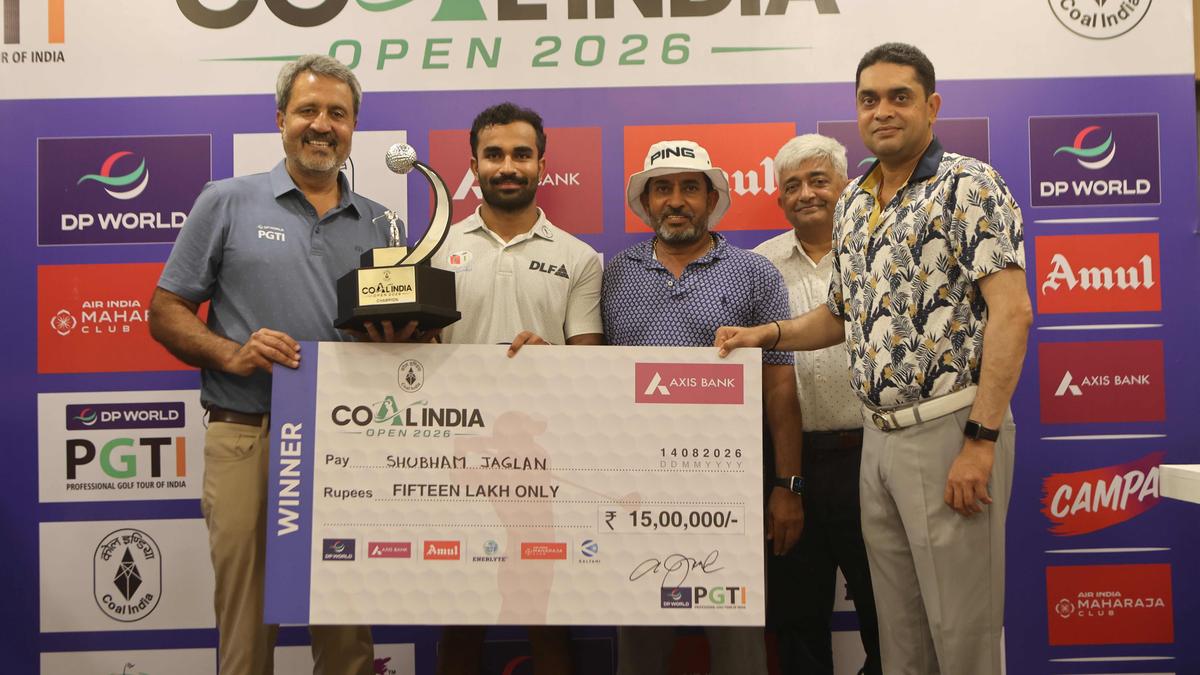
  • Jaglan’s final-round six-under 64 secures him his maiden professional title
    Jaglan’s final-round six-under 64 secures him his maiden professional title Sports
  • MIT student Prahlad Iyengar: Student coalition campaigns against MIT’s suspension of Indian-origin student
    MIT student Prahlad Iyengar: Student coalition campaigns against MIT’s suspension of Indian-origin student World
  • The Taliban suspend two TV stations in Afghanistan for neglecting Islamic and national values
    The Taliban suspend two TV stations in Afghanistan for neglecting Islamic and national values World
  • Access Denied World
Path ahead for Nepal’s new leadership

Path ahead for Nepal’s new leadership

Posted on March 24, 2026 By admin


In the noisy, crowded landscape of Nepali politics, the meteoric rise of Prime Minister-designate Balendra Shah and his party, the Rastriya Swatantra Party (RSP), represents a rare political anomaly. While veterans of the 2008 republic traded barbs, the rapper-engineer-turned-mayor bypassed traditional campaigning for a “monastic” silence. His victory in Nepal’s post-Gen Z parliamentary election on March 5 secured a historic mandate for an alternative force he joined a mere six weeks before the polls. Throughout the campaign, Shah spoke for barely thirty minutes, avoided media interviews and notably never once asked for a vote.

His unapologetic critiques of the political establishment during his tenure as Kathmandu’s mayor, mirrored a generation exhausted by stale ideological party politics. In a nation with a median age of twenty-five, Shah’s reputation as a disciplined, clean reformist promising better governance became a viral mandate. His calculated silence mirrored these frustrations, positioning him as the ultimate outsider for an electorate eager for results.

Beyond domestic politics

While capitalising on domestic old-guard fatigue served Shah as a winning electoral strategy, Nepal’s hard geopolitical reality remains stubbornly unchanged. In Nepal, political shifts rarely remain purely domestic, often prompting debates about foreign influence given its geography wedged between the rivalries of India and China.

Yet, Shah, however has sought to counter this by projecting an image of a staunch nationalist. As mayor, his symbolism was deliberate: hanging a “Greater Nepal” map in his office as a direct retort to the “Akhand Bharat” mural in India’s new Parliament House, and briefly banning Indian films. Simultaneously, he signaled caution toward Beijing by dropping a China-backed industrial park from his election manifesto. By distancing himself from large-scale geopolitical projects, Shah reframed the narrative, asserting a sovereignty that felt local, visible, and unapologetically independent.

Balancing ties with India and China

Historically, Nepal’s politics followed rigid ideological scripts. The Nepali Congress, the country’s oldest liberal force, leaned toward Delhi, while communist factions like CPN- UML maintained proactive affinities with Beijing. And at times, the ideological rhetoric from Kathmandu stretched far beyond the Himalayas, from debates over Venezuela’s regime change to contentious political statements on the Ukraine war, issues largely peripheral to Nepal’s own priorities. Under Shah, this era of predictable ideological signaling may finally be fading. His minimalist approach and by speaking less about the world’s ideological battles, Shah’s personality itself can be potent strategic asset to Nepal, but it is immediately replaced by a different kind of geopolitical pressure that needs sustained diplomatic communique.

India remains Nepal’s most consequential partner, linked by an open border, “Roti-Beti” social bonds, and accounting for a significant share of its trade, supplying virtually all of its petroleum, and emerging as the primary market for Nepal’s burgeoning hydropower exports. Meanwhile, China has deepened its footprint through major infrastructure financing, such as $216 million Pokhara International Airport. Intended as a regional gateway, its underutilisation is viewed in Kathmandu as a casualty of the broader India-China friction, particularly New Delhi’s hesitancy to facilitate air routes for Chinese-financed infrastructure.

This is perhaps inaugural diplomatic crucible for Balendra Shah. Having invested heavily, Nepal cannot afford for such massive infrastructure to remain a “white elephant.” The “monastic” outsider must now navigate a landscape where India is indispensable and China is influential. Meanwhile, Washington, a development cornerstone for seven decades, has pivoted from an aid partner to a high-stakes strategic interest partner, with recent post-election congratulations explicitly hinting at “shared security goals.”

But the first “baptism by fire” for the Shah administration may well lie in the volatile West Asia. With millions of Nepalese migrants’ lives and critical energy lifelines tied to the Persian Gulf caught in an escalating US-Israel-Iran War, India’s logistical depth as a regional first responder offers an indispensable synergy for contingency planning to Kathmandu. This is where Balen’s nationalist doctrine must meet the hard reality of strategic pragmatism. The new leadership remains untested in conventional diplomacy.

An opportunity for India

This moment offers a rare opening for New Delhi to recalibrate. India must move past the coercive shadow of the 2015 blockade and what is widely perceived in Kathmandu as outdated impulse for political micromanagement. New Delhi must recognise this transition not as a tilt away from divergence from India preferences but as a new opening for modern partnership that respects the domestic rise of ‘Nepal First’ politics. Shah’s mandate mirrors India’s own tectonic shift in 2014; in Shah, Nepal has found its “strongman” archetype, a leader whose personal charisma and promise of technocratic reform have dismantled a decades-old establishment. Whether this energy can be institutionalised remains to be seen, but for now, the “choreography” of diplomacy must account for a significantly more complex script.

In the end, Nepal’s geopolitical reality remains unchanged even as its politics transform at home. India’s proximity will always matter most, China’s influence will remain structural reality, and world powers like the U.S. will continue to pursue its strategic interests with renewed rigor. Ultimately, Nepal’s voters were not adjudicating between global strategies, but seeking domestic renewal. For Balendra Shah and the RSP, bashing the “old guard” is a potent domestic strategy, but it carries zero currency in the cold-eyed theater of international relations.

While the streets celebrate a new era, the ‘multipolar crosshairs’ of the Himalayas remain unforgiving. Balendra Shah represents a rare, raw moment of new possibility. To ensure that this is not just a brief pause before the old guard returns, Nepal’s new leaders must trade populist fumes for ‘strategically sober’ diplomacy. Because in a crowded neighbourhood, the unstrategic nationalist can quickly become someone else’s strategy.

(Bibek Raj Kandel is an analyst and AsiaGlobal Fellow at the University of Hong Kong and a graduate of Harvard Kennedy School.)

Published – March 23, 2026 10:50 pm IST


Source link

World Tags:bilateral ties, elections, Gen Z, geopolitics, nepal

Post navigation

Previous Post: Airlines cancel more flights as West Asia conflict escalates
Next Post: Access Denied

Related Posts

  • Access Denied World
  • Israel Envoy On India’s Support
    Israel Envoy On India’s Support World
  • Pentagon chief says U.S. intensifying strikes on Iran
    Pentagon chief says U.S. intensifying strikes on Iran World
  • Rocket Fire From Lebanon Kills 4 Thai Nationals In Israel
    Rocket Fire From Lebanon Kills 4 Thai Nationals In Israel World
  • Seven killed, three injured in twin blasts in northwest Pakistan
    Seven killed, three injured in twin blasts in northwest Pakistan World
  • Watch | 7 ways India is impacted by Iran-Israel strikes
    Watch | 7 ways India is impacted by Iran-Israel strikes World

More Related Articles

Watch: English police deploy shields to capture runaway goat Watch: English police deploy shields to capture runaway goat World
Israeli Strike Hits Beirut’s Southern Suburbs: Security Source Israeli Strike Hits Beirut’s Southern Suburbs: Security Source World
Macron On Telegram Founder’s Arrest In France Macron On Telegram Founder’s Arrest In France World
Air France-KLM To Place “Massive Order” Of Airbus A350s Air France-KLM To Place “Massive Order” Of Airbus A350s World
Iran communicated conditions for revival of diplomacy to U.S.: Esmail Baqaei Iran communicated conditions for revival of diplomacy to U.S.: Esmail Baqaei World
U.S. Senate overwhelmingly passes aid for Ukraine, Israel and Taiwan with big bipartisan vote U.S. Senate overwhelmingly passes aid for Ukraine, Israel and Taiwan with big bipartisan vote World
SiteLock

Archives

  • October 2026
  • September 2026
  • August 2026
  • July 2026
  • June 2026
  • May 2026
  • April 2026
  • March 2026
  • February 2026
  • January 2026
  • December 2025
  • November 2025
  • October 2025
  • September 2025
  • August 2025
  • July 2025
  • June 2025
  • May 2025
  • April 2025
  • March 2025
  • February 2025
  • January 2025
  • December 2024
  • November 2024
  • October 2024
  • September 2024
  • August 2024
  • July 2024
  • June 2024
  • May 2024
  • April 2024
  • March 2024
  • February 2024
  • January 2024
  • December 2023
  • November 2023
  • October 2023
  • September 2023
  • August 2023
  • July 2023
  • June 2023
  • May 2023
  • April 2023
  • March 2023
  • February 2023
  • January 2023
  • December 2022
  • November 2022
  • October 2022
  • September 2022
  • August 2022
  • July 2022
  • June 2022
  • May 2022

Categories

  • Business
  • Nation
  • Science
  • Sports
  • World

Recent Posts

  • 19-year-old arrested in Illinois for planning attack on Hindu place of worship
  • India’s largest red light area in Kolkata’s Sonagachi inaugurates Durga Puja
  • Why is Spain facing a housing crisis? | Explained
  • North Korea says it tested cruise missiles designed to be fired from submarines
  • Ankita Bhandari murder: Parents released after detention, issue ultimatum to government

Recent Comments

  1. Bryanloono on UP Teacher Who Asked Students To Slap Muslim Classmate
  2. WalterBoumn on UP Teacher Who Asked Students To Slap Muslim Classmate
  3. ShawnFeach on UP Teacher Who Asked Students To Slap Muslim Classmate
  4. RobertTes on UP Teacher Who Asked Students To Slap Muslim Classmate
  5. WilliamNek on UP Teacher Who Asked Students To Slap Muslim Classmate
  • Ex-Pakistan Selector Breaks Silence On ‘Favouritism’ Allegations After Removal
    Ex-Pakistan Selector Breaks Silence On ‘Favouritism’ Allegations After Removal Sports
  • Prime Minister Narendra Modi, Raj Kapoor, Kapoor Family
    Prime Minister Narendra Modi, Raj Kapoor, Kapoor Family Nation
  • China’s Xi hails nation’s technological progress and renews pledge to take back Taiwan
    China’s Xi hails nation’s technological progress and renews pledge to take back Taiwan World
  • Union Budget 2026: VB-G RAM G gets ₹95,692.31 crore; experts warn it falls far short of allocation needed to guarantee 125 workdays
    Union Budget 2026: VB-G RAM G gets ₹95,692.31 crore; experts warn it falls far short of allocation needed to guarantee 125 workdays Business
  • Punjab To Conduct Study To Find Cause Of Rising Infertility Among Couples
    Punjab To Conduct Study To Find Cause Of Rising Infertility Among Couples Nation
  • Inspections at multiplexes in Kochi set to continue in October
    Inspections at multiplexes in Kochi set to continue in October Nation
  • Global TB funding lags, reaching only a quarter of WHO targets
    Global TB funding lags, reaching only a quarter of WHO targets World
  • Sunil Gavaskar Blasts Sam Konstas Over Boxing Day Test Incident, Has Clear Message For Umpires
    Sunil Gavaskar Blasts Sam Konstas Over Boxing Day Test Incident, Has Clear Message For Umpires Sports

Editor-in-Chief:
Mohammad Ariff,
MSW, MAJMC, BSW, DTL, CTS, CNM, CCR, CAL, RSL, ASOC.
editor@artifex.news

Associate Editors:
1. Zenellis R. Tuba,
zenelis@artifex.news
2. Haris Daniyel
daniyel@artifex.news

Photograher:
Rohan Das
rohan@artifex.news

Associate Journalists
1. Subrata Paul - AN/2020/01
2. Quamruz Zaman - AN/2021/22
3. Ahmed Sha - AN/2021/035
4. Ajay Kumar Shaw - AN/2021/39
5. Tahqiqul Hoda - AN/2021/21

Artifex.News offers Online Paid Internships to college students from India and Abroad. Interns will get a PRESS CARD and other online offers.
Send your CV (Subjectline: Paid Internship) to internship@artifex.news

Links:
Associate Journalism
About Us
Privacy Policy

News Links:
Breaking News
World
Nation
Sports
Business
Entertainment
Lifestyle

Registered Office:
72/A, Elliot Road, Kolkata - 700016
Tel: 033-22277777, 033-22172217
Email: office@artifex.news

Editorial Office / News Desk:
No. 13, Mezzanine Floor, Esplanade Metro Rail Station,
12 J. L. Nehru Road, Kolkata - 700069.
(Entry from Gate No. 5)
Tel: 033-46011099, 033-46046046
Email: editor@artifex.news

Copyright © 2023 Artifex.News Newsportal designed by Artifex Infotech.