

Iran’s unique political system — which has been designed in such a way that the Shia clergy has ultimate authority in all critical matters related to the state, even as elections are held in regular intervals — is a child of the 1979 revolution.
While it’s popularly called the “Islamic revolution”, the anti-Shah movement was not just Islamic. True, Ayatollah Ruholla Khomeini, who, while in exile in Iraq’s Najaf, had called for the Shah’s ouster, and became the embodiment of the mass agitations in the 1970s. But Iranians from different political sections, including nationalists, liberals, leftists and trade unionists, had actively joined the movement, seeking freedom from the Shah’s dictatorship.
Iran-Israel war LIVE
The Shah, Mohammed Reza Pahlavi, who had to briefly flee the country in the early 1950s and was restored after the CIA helped the monarchists orchestrate a coup against the democratically elected Prime Minister Mohammad Mossadegh, was more or less detached from the political reality on ground. He orchestrated grand ceremonies celebrating the monarchy (such as the extravagant 1971 celebration of “the 2,500th year of the Iranian monarchy” spending some $100 million), banned all political parties except the monarchist Resurgence Party (Hezb-e-Rastakhiz) and assumed himself the title of Aryan Sun (Aryamehr) — apolitical and spiritual guide of Iran. When an increasingly isolated Shah tried to consolidate more and more powers in his hands, SAVAK, his secret police, ran amok in the country, rounding up political dissidents.
Iranians are no strangers to political rebellion and defiance. In 1896, Naser al-Din Shah, the fourth Shah of Qajar Iran, was assassinated inside a mosque in Tehran. The assassination and its aftermath would eventually lead to the Constitutional Revolution of 1905-1911, which led to the establishment of a Parliament in Persia.
Iran vs Israel | Chronicles of a war foretold
Reza Shah Pahlavi ignored this history of rebellion when he unleashed his forces on increasingly disgruntled protesters, which eventually led to his own downfall. When the Shah fled the country in January 1979, Khomeini was in Paris. He landed in Tehran’s Mehrabad airport, which was controlled by the revolutionaries, on February 1, 1979.
They turned a disused girls’ school in central Tehran into a make-shift headquarters of the Revolutionary Council. And one of the first things Khomeini did was to form a paramilitary force — the Islamic Revolutionary Guard Corps (IRGC). But the Islamists could not ignore other sections of the revolution completely.
So, Khomeini ushered in a new system that would have an elected President and Parliament, while the clerics would remain firmly in control. He promised an Islamic revolutionary government based on Sharia, a model which he called Vilayat-e Faqih (Guardianship of the Faqih, or the Islamic Jurist).

Clerical control
Iran’s state has both elected and unelected branches and the unelected branch is more powerful than the former. The President, Parliament (Majles) and the Assembly of Experts are directly elected, while the Supreme Leader, the Guardian Council and the Expediency Council are appointed by the clergy. The President is the head of the government, which is in charge of running the day-to-day affairs of the country, but is not the head of the state. The Supreme Leader is the most powerful person in the country and is both the political leader and spiritual guide of the Islamic Republic.
The presidential term is four years and Presidents cannot have more than two consecutive terms. The election process itself is largely considered fair (though there were disputes, such as the 2009 elections), but all the candidates are vetted by the Guardian Council, which usually disqualifies an overwhelming majority of the candidates. The 290-member Islamic Consultative Assembly (Majles) has the authority to legislate. But all the Bills the Majles passes should go to the unelected Guardian Council, which would vet whether the Bill is in compliance with the Islamic Constitution and values.

The powerful Guardian Council has 12 members, a combination of six religious experts, who will directly be appointed by the Supreme Leader, and six Islamic legal jurists, nominated by the Chief Justice (who in turn is appointed by the Supreme Leader). So the Supreme Leader’s office has direct or indirect control over the Guardian Council, which oversees the elections, vets the candidates and has a veto over Parliament.
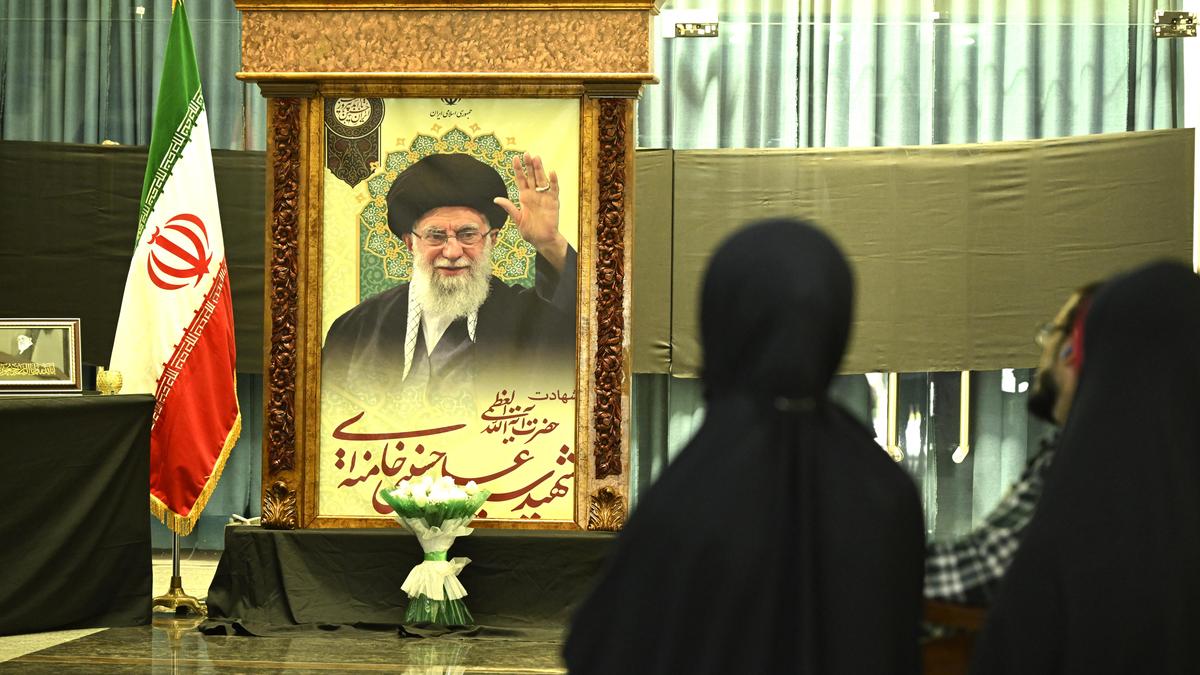
Unlike the President, the Supreme Leader doesn’t have any fixed term. Since the 1979 revolution, Iran has had only two Supreme Leaders — Khomeini (who died in 1989) and Ayatollah Ali Khamenei, who was assassinated by a joint American-Israeli strike on February 28, 2026. Iran, now at war with the U.S. and Israel, is currently in the process of choosing its third Supreme Leader.
The Constitution mandates the 88-member Assembly of Experts to elect the Supreme Leader. The Assembly, which also has the authority to oversee and dismiss the Supreme Leader, is directly elected, but the candidates are strictly vetted by the Guardian Council, whose members are directly or indirectly picked by the Supreme Leader. If there are legal disputes between the elected Majles and the unelected Guardian Council, the 45-member Expediency Council, which advises the Supreme Leader, will have ultimate adjudicating powers. And all 45 members of the Council are appointed by the Supreme Leader, who is also the Commander-in-Chief of the armed forces.
In essence, the Islamic Constitution ensures that the Supreme Leader and the clerical establishment stay firmly in charge of all branches of the state.
Principalists and reformists
Iran’s political class is broadly divided into two categories — principalists (better known as hardliners) and reformists. The principalists make up the conservative bloc that enjoys the support of the clergy, whereas reformists advocate political and social reforms from within. The election of Mohammad Khatami as President in 1997 was a critical moment for reformist politics. But Mr. Khatami, an influential and popular reformist, failed to usher in any major changes in the system. Hassan Rouhani, the former President, was also a reformist, while his successor, Ebrahim Raisi, was a principalist. The current President, Masoud Pezeshkian, belongs to the reformist camp.
When Khomeini established his clerical rule after the revolution, many expected the new order to collapse quickly. Instead, Khomeini purged internal dissent and consolidated the clergy’s grip even when the country fought an eight-year war with Iraq. Over four decades later, the system the Ayatollah built faces its gravest challenges yet.

Iran was bombed by Israel and the U.S. in June 2025, while the alliance network it had built in West Asia has been weakened by Israeli attacks.
In January 2026, Iran witnessed massive protests and riots amid deteriorating economic situation. And now, with Israel and the U.S. bombarding Iran and openly calling for regime change, the Islamic Republic is fighting a do-or-die battle on multiple fronts.
Published – March 05, 2026 07:00 pm IST