
Skip to content
  • Facebook
  • X
  • Linkedin
  • WhatsApp
  • YouTube
  • Associate Journalism
  • About Us
  • Privacy Policy
  • 033-46046046
  • editor@artifex.news
Artifex.News

Artifex.News

Stay Connected. Stay Informed.

  • Breaking News
  • World
  • Nation
  • Sports
  • Business
  • Science
  • Entertainment
  • Lifestyle
  • Toggle search form
  • India’s Shivam Dube Feels “Great” To Contribute As All-Rounder Against England In 5th T20I
    India’s Shivam Dube Feels “Great” To Contribute As All-Rounder Against England In 5th T20I Sports
  • China Woman Stays Calm Without Phone For 8 Hours In Unique Contest, Wins ,400
    China Woman Stays Calm Without Phone For 8 Hours In Unique Contest, Wins $1,400 World
  • Access Denied Sports
  • Trump refiles  billion defamation lawsuit against New York Times
    Trump refiles $15 billion defamation lawsuit against New York Times World
  • Access Denied Sports
  • Nepal Deputy Prime Minister Shrestha visits Tibet; calls for opening 14 traditional border points with China
    Nepal Deputy Prime Minister Shrestha visits Tibet; calls for opening 14 traditional border points with China World
  • Trump Shuts Down Biden Era App Which Helped Illegal Migrants Become Legal
    Trump Shuts Down Biden Era App Which Helped Illegal Migrants Become Legal World
  • Noida Scrap Mafia Ravi Kana, Who Had Amassed Rs 120 Crore, Arrested With Girlfriend Kajal Jha
    Noida Scrap Mafia Ravi Kana, Who Had Amassed Rs 120 Crore, Arrested With Girlfriend Kajal Jha Nation
India-Canada uranium deal and India’s nuclear programme | Explained

India-Canada uranium deal and India’s nuclear programme | Explained

Posted on March 5, 2026 By admin


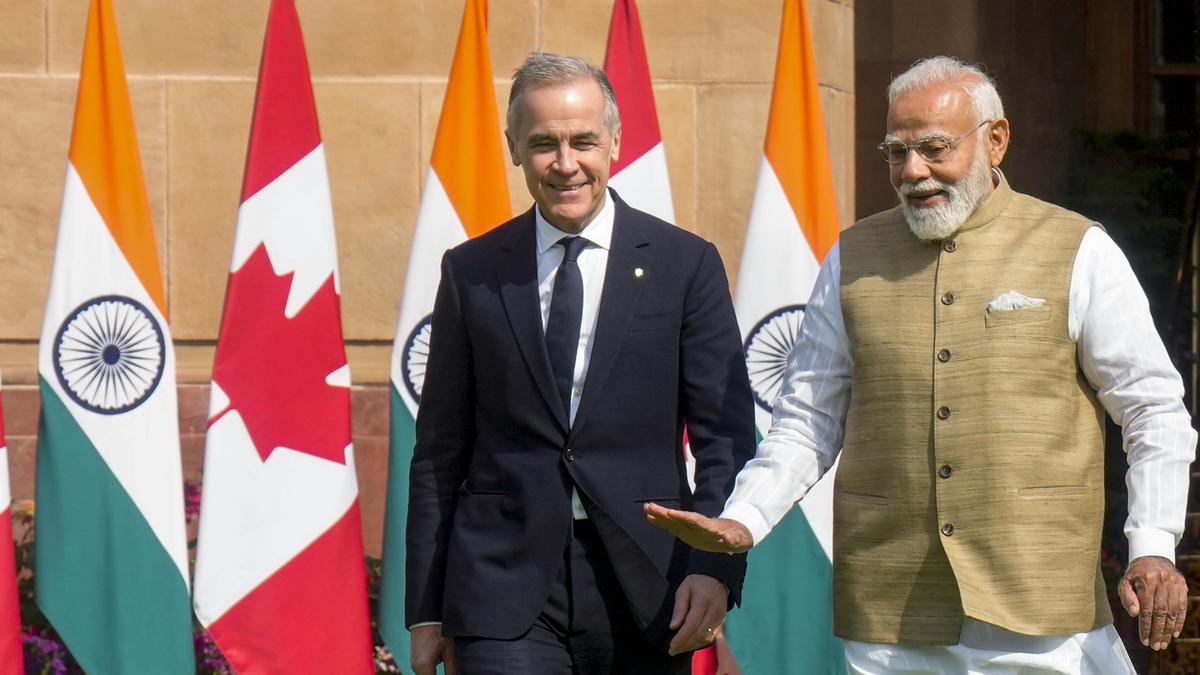
The story so far: In its quest for energy security, on March 2, India signed a CAD 2.6 billion deal with Canada’s Cameco. The deal ensures a supply of around 10,000 tonnes of uranium between 2027 and 2035 to India.

What uranium ‘stocks’ does India have?

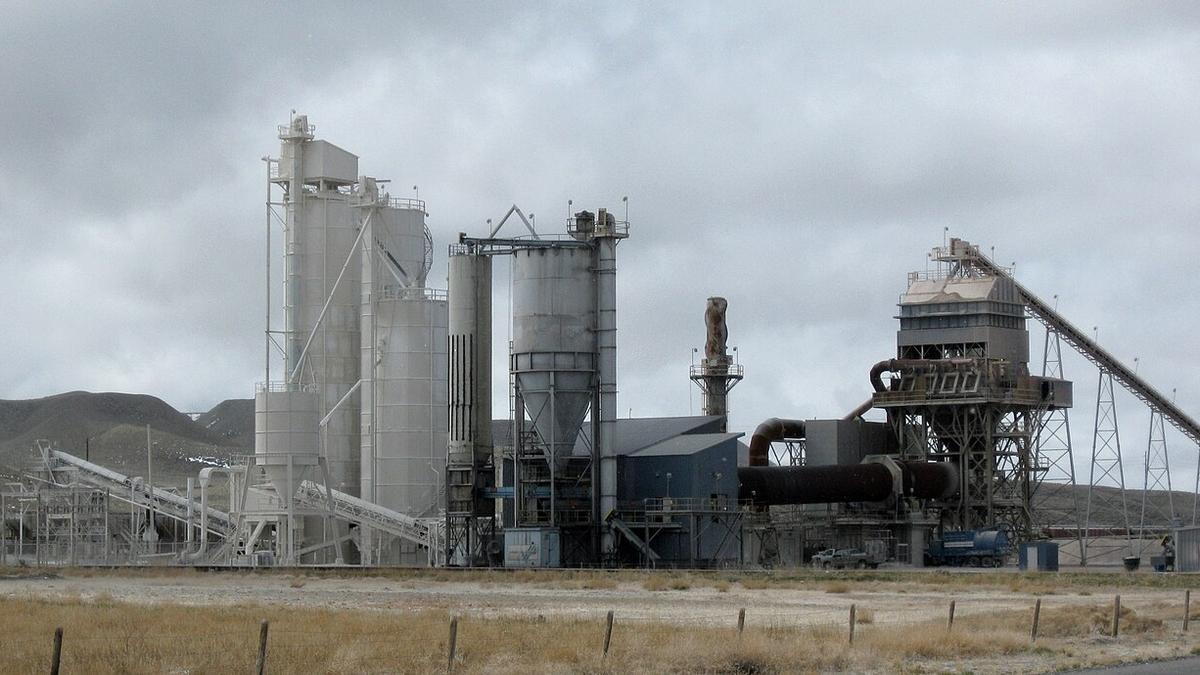
India has both domestic reserves and imported stockpiles of uranium. The domestic reserves amount to 4.2-4.3 lakh tonnes of ore, spread across the major mines of Jaduguda and Turamdih in Jharkhand and Tummalapalle in Andhra Pradesh. The quantum of extractable uranium metal from the ore is estimated to be 76,000-92,000 tonnes.

The order of magnitude difference between the ore and the metal is because Indian ore is ‘low grade’ (0.02-0.45% concentration). Canada however has high-grade ore (10-100x richer than Indian ore). Cameco is also among the world’s top three largest uranium producers by volume.

India has increasingly relied on imports, which currently meet nearly three-fourths of the civilian requirement. Aside from the Cameco deal, India also finalised a supply agreement with Kazatomprom of Kazakhstan, and has ongoing contracts with Uzbekistan and Russia (both with low- to medium-grade ore). The government is also building a reserve intended to hold five years’ supply of fuel to protect against supply chain shocks.

While importing uranium ore is cheaper than extracting it, it can’t legally be used in nuclear weapons. This is why India also mines ore domestically.

Does the deal involve the 2010 agreement?

The deal with Cameco comes under the India-Canada Civil Nuclear Cooperation Agreement (NCA). It was signed in 2010, two years after the Nuclear Suppliers Group issued its ‘clean’ waiver for India, in turn made possible by the 123 nuclear agreement between India and U.S.

Unlike the deal with Kazakhstan (which is less intrusive), the NCA requires India to provide “fissionable material accounts” to Canada, which critics have often called a slight against Indian sovereignty.

On the flip side, the NCA has also been criticised for tacitly supporting India’s nuclear weapons programme: the more uranium India imports for civilian use, the more domestic uranium it can vouchsafe for military use.

How does India use its uranium?

India currently operates 24 nuclear reactors with a generation capacity of around 9 GW. The 700-MW pressurised heavy water reactors (PHWRs) that currently provide 6-7 GW, or roughly 3%, of India’s total electricity use uranium as fuel. The government is committed to increase nuclear power capacity to 100 GW by 2047. Previous attempts to up this contribution have been set back by issues with land acquisition and local protests, however.

Significant amounts of uranium are also used in research reactors, like ‘Dhruva’ in Trombay, to produce medical isotopes such as technetium-99m and iodine-131 and for advanced materials science research.

In the 2025-26 Union budget, Finance Minister Nirmala Sitharaman also allocated Rs 20,000 crore to develop a new generation of small modular reactors, which typically use 3-5% enriched uranium.

Domestic uranium is also used for nuclear warheads (currently estimated to number around 170) and the nuclear-powered INS Arihant class submarines.

How is India’s nuclear power programme faring?

India is currently transitioning from stage I to stage II of the three-stage programme.

In stage I, PHWRs will use natural uranium-235 to produce electricity and plutonium-239 as a byproduct. In stage II, fast breeder reactors will use a mixed oxide fuel of uranium-238 and plutonium-239 to produce electricity, uranium-233, and more plutonium-239. (The reactors are called so because they will produce more fuel than they consume.) The prototype fast breeder reactor (PFBR) in Kalpakkam is currently in an advanced stage of commissioning.

Finally, advanced heavy water reactors will use plutonium-239 and thorium-232 as fuel, producing electricity and uranium-233.

Homi J. Bhabha envisioned this three-stage programme to take advantage of the fact that India hosts 20-25% of the world’s thorium deposits.

However, the programme has been beset by numerous delays and cost overruns. The fast breeder test reactor was built at Kalpakkam in 1977 but the government didn’t sign off on the PFBR until the early 2000s, thanks in part to sanctions against India over its nuclear tests. The PFBR’s cost also nearly doubled from Rs 3,492 crore at the time it was designed to more than Rs 6,800 crore in 2019.

In March 2013, the Department of Atomic Energy (DAE) had said in a reply in Lok Sabha, “The time of large scale thorium deployment is expected to be 3-4 decades after the commercial operation of fast breeder reactors with short doubling time.” Given the PFBR’s own timeline, this period could be in the 2060s, if not later.

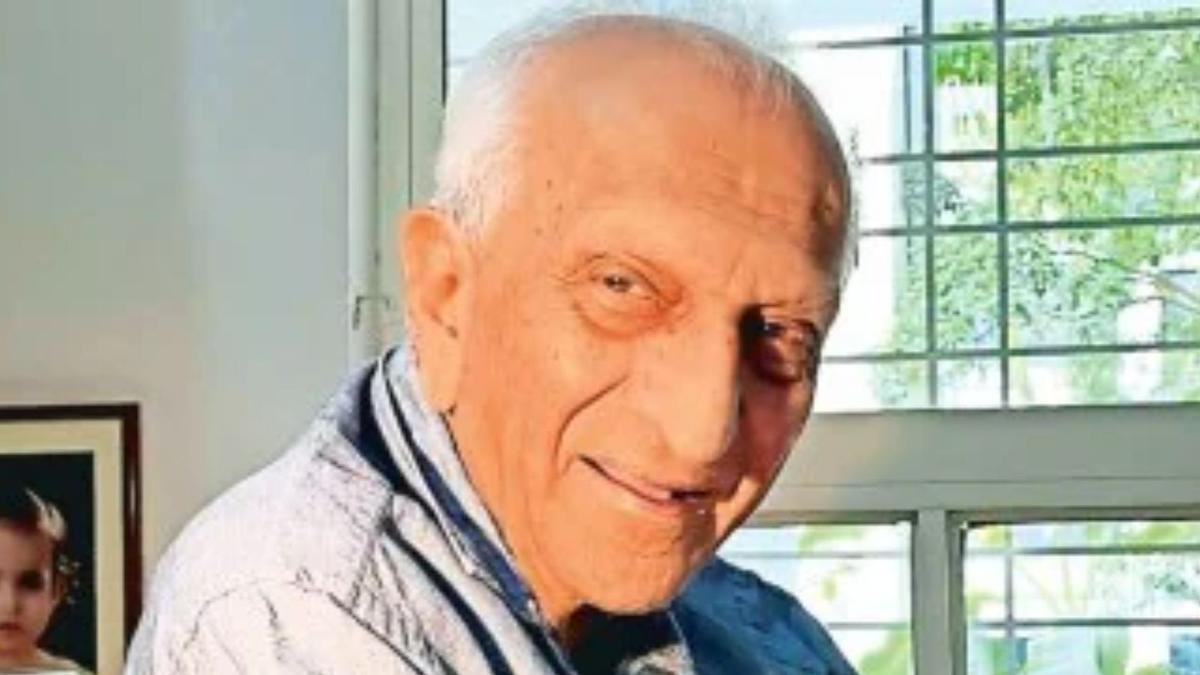
Former DAE Chairman Anil Kakodkar has explained that the doubling time — the time taken for one fast breeder reactor to produce enough fuel to start a second — is currently 15-20 years. To generate 100 GW, then, India has to go through several doubling cycles, which could explain the multiple deals now to secure the supply of uranium.

mukunth.v@thehindu.co.in

Published – March 05, 2026 04:29 pm IST



Source link

Science

Post navigation

Previous Post: Access Denied
Next Post: Access Denied

Related Posts

  • Space Wrap: From Sriharikota to Leh, preparations for Gaganyaan mission in full swing
    Space Wrap: From Sriharikota to Leh, preparations for Gaganyaan mission in full swing Science
  • ‘Defect to win’: science is set to be overwhelmed by fraud papers
    ‘Defect to win’: science is set to be overwhelmed by fraud papers Science
  • Daily Quiz | On World Organ Donation Day
    Daily Quiz | On World Organ Donation Day Science
  • India to submit updated climate targets to U.N. by December end: Bhupender Yadav
    India to submit updated climate targets to U.N. by December end: Bhupender Yadav Science
  • Apple leaf waste yields green anti-corrosion solution for metals
    Apple leaf waste yields green anti-corrosion solution for metals Science
  • Qianhai Shenzhen–Hong Kong Youth Innovation and Entrepreneur Hub Debuts at GITEX AI ASIA
    Qianhai Shenzhen–Hong Kong Youth Innovation and Entrepreneur Hub Debuts at GITEX AI ASIA Science

More Related Articles

Scientists gather to decode puzzle of world’s rarest whale Scientists gather to decode puzzle of world’s rarest whale Science
Writing by hand is better for learning, memory Writing by hand is better for learning, memory Science
Budget 2024: Under-spending brightens allocations for science ministries, depts. Budget 2024: Under-spending brightens allocations for science ministries, depts. Science
Understanding insect societies with Bengaluru-based Raghavendra Gadagkar Understanding insect societies with Bengaluru-based Raghavendra Gadagkar Science
Wayanad landslide: How accurate are Amit Shah’s claims on early warnings for Kerala ahead of the Wayanad landslide Wayanad landslide: How accurate are Amit Shah’s claims on early warnings for Kerala ahead of the Wayanad landslide Science
Naturally occurring bile acid can blunt statin-induced diabetes Naturally occurring bile acid can blunt statin-induced diabetes Science
SiteLock

Archives

  • May 2026
  • April 2026
  • March 2026
  • February 2026
  • January 2026
  • December 2025
  • November 2025
  • October 2025
  • September 2025
  • August 2025
  • July 2025
  • June 2025
  • May 2025
  • April 2025
  • March 2025
  • February 2025
  • January 2025
  • December 2024
  • November 2024
  • October 2024
  • September 2024
  • August 2024
  • July 2024
  • June 2024
  • May 2024
  • April 2024
  • March 2024
  • February 2024
  • January 2024
  • December 2023
  • November 2023
  • October 2023
  • September 2023
  • August 2023
  • July 2023
  • June 2023
  • May 2023
  • April 2023
  • March 2023
  • February 2023
  • January 2023
  • December 2022
  • November 2022
  • October 2022
  • September 2022
  • August 2022
  • July 2022
  • June 2022
  • May 2022

Categories

  • Business
  • Nation
  • Science
  • Sports
  • World

Recent Posts

  • France allows asymptomatic passengers off new cruise ship struck by stomach bug outbreak
  • Sensex jumps nearly 790 points on buying in telecom, banking shares
  • V.D. Satheesan calls on A.K. Antony
  • BEST conductor dies in accident involving four buses in Mumbai
  • U.K. Health Minister Wes Streeting resigns

Recent Comments

  1. JamesHeR on UP Teacher Who Asked Students To Slap Muslim Classmate
  2. RafaelNar on UP Teacher Who Asked Students To Slap Muslim Classmate
  3. CarlosExorb on UP Teacher Who Asked Students To Slap Muslim Classmate
  4. Robertfloup on UP Teacher Who Asked Students To Slap Muslim Classmate
  5. Davidcag on UP Teacher Who Asked Students To Slap Muslim Classmate
  • Access Denied
    Access Denied Nation
  • Access Denied Sports
  • UP Woman Kills Infant Daughter After Argument With Husband Over Phone: Cops
    UP Woman Kills Infant Daughter After Argument With Husband Over Phone: Cops Nation
  • Rebel Samajwadi Party MLA’s Manoj Pandey Praise For PM Modi After Meeting Amit Shah
    Rebel Samajwadi Party MLA’s Manoj Pandey Praise For PM Modi After Meeting Amit Shah Nation
  • “We Focus Only On Hindu Society Because…”: Mohan Bhagwat
    “We Focus Only On Hindu Society Because…”: Mohan Bhagwat Nation
  • Sensex, Nifty advance in early trade on positive global cues
    Sensex, Nifty advance in early trade on positive global cues Business
  • Slovak prime minister’s condition remains serious but prognosis positive after assassination bid
    Slovak prime minister’s condition remains serious but prognosis positive after assassination bid World
  • Top BBC News Anchor Huw Edwards Resigns 9 Months After Explicit Photos Row
    Top BBC News Anchor Huw Edwards Resigns 9 Months After Explicit Photos Row World

Editor-in-Chief:
Mohammad Ariff,
MSW, MAJMC, BSW, DTL, CTS, CNM, CCR, CAL, RSL, ASOC.
editor@artifex.news

Associate Editors:
1. Zenellis R. Tuba,
zenelis@artifex.news
2. Haris Daniyel
daniyel@artifex.news

Photograher:
Rohan Das
rohan@artifex.news

Artifex.News offers Online Paid Internships to college students from India and Abroad. Interns will get a PRESS CARD and other online offers.
Send your CV (Subjectline: Paid Internship) to internship@artifex.news

Links:
Associate Journalism
About Us
Privacy Policy

News Links:
Breaking News
World
Nation
Sports
Business
Entertainment
Lifestyle

Registered Office:
72/A, Elliot Road, Kolkata - 700016
Tel: 033-22277777, 033-22172217
Email: office@artifex.news

Editorial Office / News Desk:
No. 13, Mezzanine Floor, Esplanade Metro Rail Station,
12 J. L. Nehru Road, Kolkata - 700069.
(Entry from Gate No. 5)
Tel: 033-46011099, 033-46046046
Email: editor@artifex.news

Copyright © 2023 Artifex.News Newsportal designed by Artifex Infotech.