
Skip to content
  • Facebook
  • X
  • Linkedin
  • WhatsApp
  • YouTube
  • Associate Journalism
  • About Us
  • Privacy Policy
  • 033-46046046
  • editor@artifex.news
Artifex.News

Artifex.News

Stay Connected. Stay Informed.

  • Breaking News
  • World
  • Nation
  • Sports
  • Business
  • Science
  • Entertainment
  • Lifestyle
  • Toggle search form
  • Elon Musk Spent Over A Quarter Billion Dollars To Help Elect Donald Trump
    Elon Musk Spent Over A Quarter Billion Dollars To Help Elect Donald Trump World
  • Access Denied World
  • Jalaj, Ostwal shine as Maharashtra takes the lead
    Jalaj, Ostwal shine as Maharashtra takes the lead Sports
  • Access Denied World
  • “Satisfied” With Indian Construction Workers, Expecting More To Arrive: Israel
    “Satisfied” With Indian Construction Workers, Expecting More To Arrive: Israel Nation
  • “India’s Momentum Today Has To Be Experienced To Be Believed”: S Jaishankar In Singapore
    “India’s Momentum Today Has To Be Experienced To Be Believed”: S Jaishankar In Singapore World
  • List Of Trains Cancelled, Diverted
    List Of Trains Cancelled, Diverted Nation
  • Olympic Esports Games Will Elevate Status Of The Sport: ESFI Chief
    Olympic Esports Games Will Elevate Status Of The Sport: ESFI Chief Sports
U.S. drops a core radiation safety rule as global reforms near

U.S. drops a core radiation safety rule as global reforms near

Posted on February 17, 2026 By admin


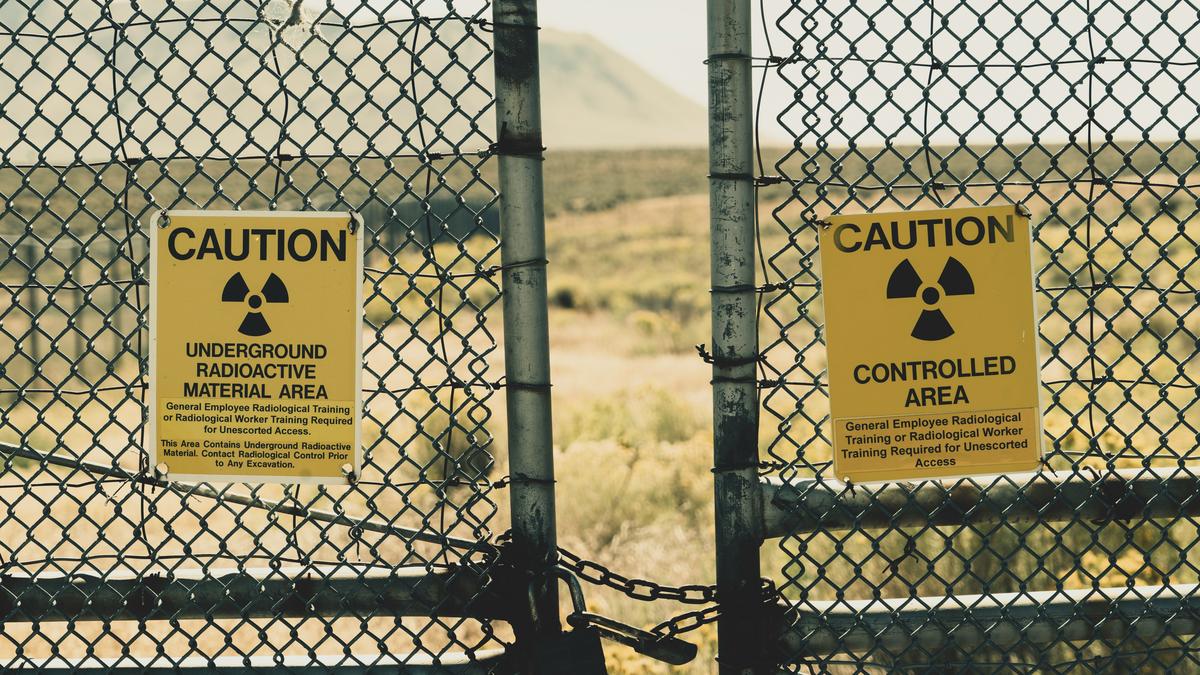
The linear no-threshold (LNT) model and the ALARA principle have served as the conceptual and operational foundations of the global radiation protection framework for many decades.

The LNT model is a risk estimation framework that says any amount of ionising radiation, no matter how small, carries some risk of causing harm, especially cancer. In other words, there is no threshold below which radiation is considered completely risk‑free. And the risk increases linearly with dose.

ALARA, short for “as low as reasonably achievable”, is the operational philosophy of radiation protection. ‘Reasonably’ is the most important condition. The philosophy balances safety with feasibility, cost, and societal need, and its aim is to improve continuously, including better shielding, administrative procedures, and training.

Thus in practice ALARA aims to reduce unnecessary exposure using engineering controls and encourages a safety culture.

Unfortunately, when these principles are misapplied, as they have often been, they create a baggage of woes. The International Commission on Radiological Protection (ICRP) and other stakeholders are realising that modern radiological protection requires a different approach.

ICRP actions

At present, the ICRP is modernising its latest (2007) recommendations. Over 25 dedicated ICRP task groups have been undertaking a comprehensive revision of the entire system to address several issues to fill the gaps. However, the agency has yet to provide a target year: perhaps later this decade, not imminently. The International Atomic Energy Agency will also update its 2014 Basic Safety Standards using the ICRP’s inputs and publish it for universal acceptance.

But it seems not everyone is prepared to wait. On January 12, the U.S. Department of Energy (DOE) “eliminated” ALARA from its directives and regulations, departing significantly from long‑standing national and international practice. 

“The DOE’s decades of nuclear facility operating experience confirms that DOE’s mission to foster nuclear innovation and advanced nuclear technologies could be met more effectively if the current radiation framework were reformed,” a Department memorandum said in a follow-up to President Donald Trump’s orders.

Critics have argued that the shift appears politically motivated and relies on non‑peer‑reviewed internal reports, and risks undermining worker protection, public trust, and regulatory coherence. Indeed, the U.S is now at odds with international bodies such as the ICRP, the U.N. Scientific Committee on the Effects of Atomic Radiation, the World Health Organization, and the Nuclear Regulatory Commission (NRC), all of which continue to rely on LNT as a precautionary basis for radiation protection. In 2021, the NRC had decisively upheld the LNT model to prescribe radiation safety standards. Will they change as well?

In spite of recurring scientific debate, no large‑scale, high‑quality epidemiological or mechanistic evidence has emerged to justify replacing LNT with alternative dose-response models, including hormesis (which says low dose radiation is okay). While hormesis remains biologically plausible, its variability across populations, ethical limitations, and lack of reproducible human data render it unsuitable for regulatory use.

Unpredictable future

The ICRP hasn’t shown any indication that the dose limits to workers and members of the public will be revised. There may be a renewed effort to accept a low dose level below which no regulation is required.

Finally, critics have emphasised the importance of public perception. Even if some experts believe higher dose thresholds could be justified scientifically, the optics of abandoning ALARA and LNT are problematic. For those living near nuclear facilities, the change may look like a lowering of safety standards rather than a refinement of scientific assumptions.

Without broad scientific consensus, transparent communication, and meaningful public engagement, critics fear that the policy shift will deepen mistrust, fuel opposition to nuclear projects, and make it harder to secure social license for existing and future facilities. Public communication on nuclear issues will continue to be an onerous task.

Possible evidence of cancer and non-cancer effects at low doses have also appeared in more recent studies, such as the ongoing ‘Million Person Study’. Another study of nearly a million young individuals revealed that a few of them may suffer blood related cancers at very low doses (Nature Medicine, November 9, 2023). We can no longer ignore them, and expect the ICRP will take note of such work as well.

Finally, scientists must face the blame for not communicating with the public after arriving at a consensus on contentious issues using the best available science. If experts start fighting among themselves, what will the non-experts do? Whom will they trust?

For its part, India has been at the forefront of complying with the internationally accepted radiation protection practices and must continue to stay there.

K.S. Parthasarathy is former secretary, Atomic Energy Regulatory Board.

Published – February 18, 2026 06:15 am IST


Source link

Science

Post navigation

Previous Post: Access Denied
Next Post: Access Denied

Related Posts

  • Gaganyaan test flight mission successful, crew escape module splashes down
    Gaganyaan test flight mission successful, crew escape module splashes down Science
  • Scientists are working on a way to detect cancer with ultrasound waves
    Scientists are working on a way to detect cancer with ultrasound waves Science
  • Building blocks of life found in samples from asteroid Bennu
    Building blocks of life found in samples from asteroid Bennu Science
  • What do two PSLV mission failures in a row mean for ISRO? | Analysis
    What do two PSLV mission failures in a row mean for ISRO? | Analysis Science
  • How the deadliest virus in human history paved the way for new cures
    How the deadliest virus in human history paved the way for new cures Science
  • Chandrayaan-3 | ISRO one step away from landing on Moon as Lander Module completes second deboost operation  
    Chandrayaan-3 | ISRO one step away from landing on Moon as Lander Module completes second deboost operation   Science

More Related Articles

What is mineral water and how does it naturally contain dissolved minerals? What is mineral water and how does it naturally contain dissolved minerals? Science
Cashew nutshell marine biofuel causes problems for some ships: testing agency Cashew nutshell marine biofuel causes problems for some ships: testing agency Science
Fossils, genomes clash as scientists debate the mosquito’s origins Fossils, genomes clash as scientists debate the mosquito’s origins Science
Blood bank study reveals true incidence of Long COVID Blood bank study reveals true incidence of Long COVID Science
India space strategy: harness data, tiny satellites to capture market beyond SpaceX India space strategy: harness data, tiny satellites to capture market beyond SpaceX Science
New state of matter is a solid-liquid hybrid New state of matter is a solid-liquid hybrid Science
SiteLock

Archives

  • May 2026
  • April 2026
  • March 2026
  • February 2026
  • January 2026
  • December 2025
  • November 2025
  • October 2025
  • September 2025
  • August 2025
  • July 2025
  • June 2025
  • May 2025
  • April 2025
  • March 2025
  • February 2025
  • January 2025
  • December 2024
  • November 2024
  • October 2024
  • September 2024
  • August 2024
  • July 2024
  • June 2024
  • May 2024
  • April 2024
  • March 2024
  • February 2024
  • January 2024
  • December 2023
  • November 2023
  • October 2023
  • September 2023
  • August 2023
  • July 2023
  • June 2023
  • May 2023
  • April 2023
  • March 2023
  • February 2023
  • January 2023
  • December 2022
  • November 2022
  • October 2022
  • September 2022
  • August 2022
  • July 2022
  • June 2022
  • May 2022

Categories

  • Business
  • Nation
  • Science
  • Sports
  • World

Recent Posts

  • PM’s Telangana visit: Did BJP internal wranglings upset Modi?
  • Tamil Nadu Assembly: Churning in AIADMK becomes evident with split over Leader of Legislature Party post
  • EU sanctions officials over deportation of Ukrainian children
  • U.K. PM Starmer told by Interior Minister to consider departure
  • EU agrees sanctions on West Bank settlers and Hamas leaders

Recent Comments

  1. RonaldLam on UP Teacher Who Asked Students To Slap Muslim Classmate
  2. Robertsheds on UP Teacher Who Asked Students To Slap Muslim Classmate
  3. Jamescax on UP Teacher Who Asked Students To Slap Muslim Classmate
  4. Jameszoppy on UP Teacher Who Asked Students To Slap Muslim Classmate
  5. MatthewTub on UP Teacher Who Asked Students To Slap Muslim Classmate
  • China’s captivating ‘heroes’ dance blends kung-fu and opera
    China’s captivating ‘heroes’ dance blends kung-fu and opera World
  • Access Denied Business
  • Boeing, Airbus Struggle To Deliver Planes As Supply Chain Disruptions Persist
    Boeing, Airbus Struggle To Deliver Planes As Supply Chain Disruptions Persist World
  • Access Denied Sports
  • In Prime Minister Narendra Modi And Sundar Pichai’s Chat, AI For Good Governance To Reach Of GPay
    In Prime Minister Narendra Modi And Sundar Pichai’s Chat, AI For Good Governance To Reach Of GPay Nation
  • Warangal Girl Creates New Record At World Para Athletics Championship
    Warangal Girl Creates New Record At World Para Athletics Championship Sports
  • “Third Umpire Did Make…”: On Yashasvi Jaiswal Controversy, Simon Taufel’s Blunt Verdict
    “Third Umpire Did Make…”: On Yashasvi Jaiswal Controversy, Simon Taufel’s Blunt Verdict Sports
  • R Ashwin Still In Awe Of MS Dhoni’s Tactical Brilliance, Recalls Genius Move In Champions Trophy 2013 Final
    R Ashwin Still In Awe Of MS Dhoni’s Tactical Brilliance, Recalls Genius Move In Champions Trophy 2013 Final Sports

Editor-in-Chief:
Mohammad Ariff,
MSW, MAJMC, BSW, DTL, CTS, CNM, CCR, CAL, RSL, ASOC.
editor@artifex.news

Associate Editors:
1. Zenellis R. Tuba,
zenelis@artifex.news
2. Haris Daniyel
daniyel@artifex.news

Photograher:
Rohan Das
rohan@artifex.news

Artifex.News offers Online Paid Internships to college students from India and Abroad. Interns will get a PRESS CARD and other online offers.
Send your CV (Subjectline: Paid Internship) to internship@artifex.news

Links:
Associate Journalism
About Us
Privacy Policy

News Links:
Breaking News
World
Nation
Sports
Business
Entertainment
Lifestyle

Registered Office:
72/A, Elliot Road, Kolkata - 700016
Tel: 033-22277777, 033-22172217
Email: office@artifex.news

Editorial Office / News Desk:
No. 13, Mezzanine Floor, Esplanade Metro Rail Station,
12 J. L. Nehru Road, Kolkata - 700069.
(Entry from Gate No. 5)
Tel: 033-46011099, 033-46046046
Email: editor@artifex.news

Copyright © 2023 Artifex.News Newsportal designed by Artifex Infotech.